
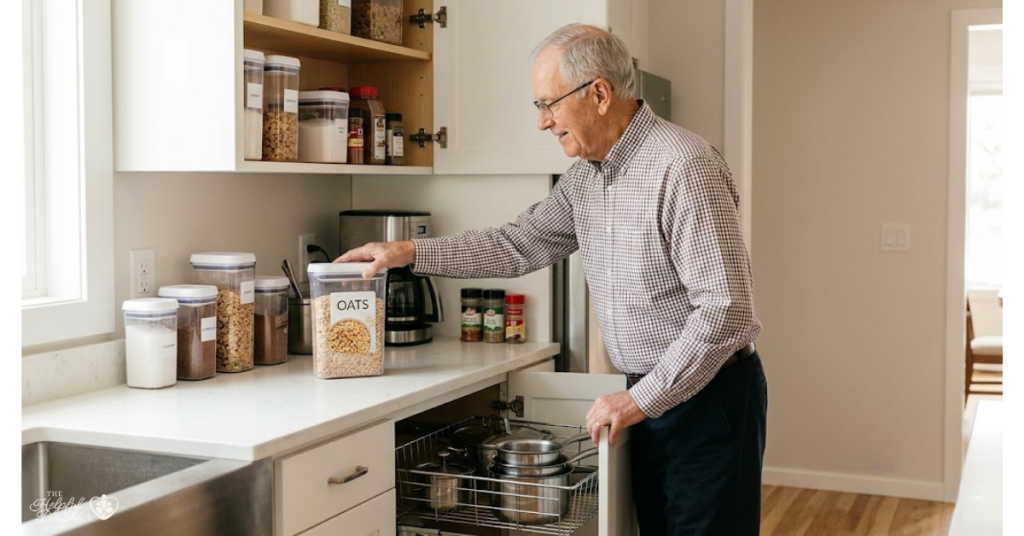
As my parents have gotten older, I’ve noticed something interesting. It’s often not the major health issues that When caring for aging parents, it doesn’t take long to realize that major health issues aren’t always the biggest daily hurdle. Often, it’s the routine household chores that slowly turn into exhausting, high-strain tasks.
As caregivers, our instinct is frequently to step in and do everything ourselves—but that can quickly lead to burnout. Instead, the most impactful thing we can do is help our loved ones simplify their routines. True independence comes from eliminating unnecessary work so they can conserve their energy for what truly matters.
Here are 7 practical independent living tips for seniors to help manage their homes safely and with minimal physical strain.
1. Opt for Lightweight Cleaning Tools
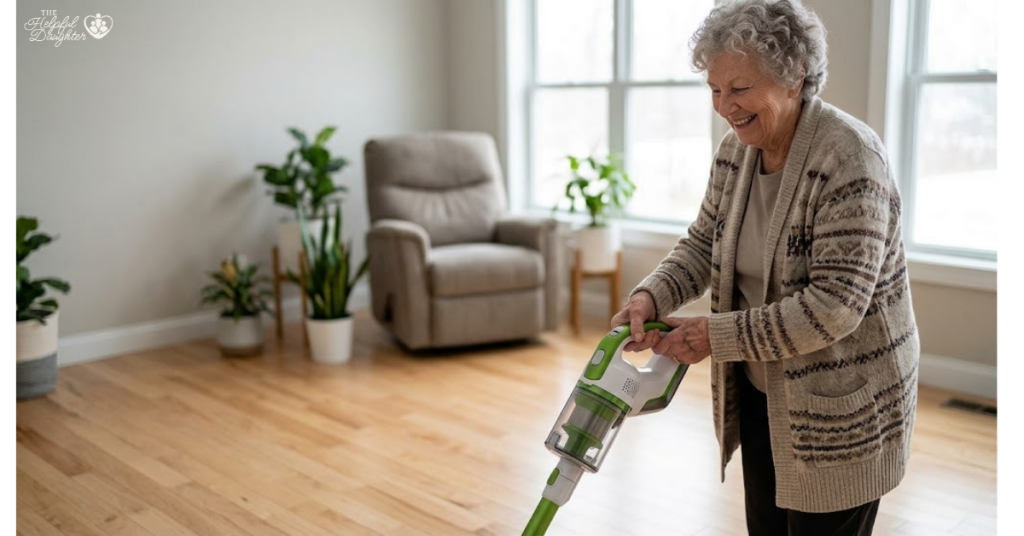
Traditional cleaning equipment—heavy upright vacuums, bucket-and-mop systems, and cumbersome scrub brushes—can turn routine housekeeping into an exhausting physical ordeal. Pushing a 15-pound vacuum across carpets, bending repeatedly to dip a mop into a sloshing bucket, or twisting your wrists to wring out dirty water puts unnecessary strain on your back, shoulders, wrists, and knees. For seniors or anyone with arthritis, reduced grip strength, or mobility limitations, these old-school tools can make cleaning feel impossible.
The solution? Modern, lightweight cleaning tools designed with ergonomics and ease-of-use in mind. These innovations allow you to maintain a clean, comfortable home without the physical toll.
What to look for:
Cordless stick vacuums: Choose models weighing under 5 pounds with “one-touch” dustbin emptying—no bending, no touching dirt, just press a button and it drops into the trash. Cordless designs eliminate the hassle of plugging and unplugging or tripping over cords as you move from room to room.
Automatic spray mops: These game-changing tools have built-in spray triggers and reusable microfiber pads, completely eliminating the need for heavy water buckets, wringing, or bending. Just fill the reservoir, spray as you go, and toss the pad in the wash when you’re done.
Extendable microfiber dusters: Telescoping handles let you reach ceiling fans, high shelves, and baseboards without climbing on step stools or straining your back. Microfiber heads trap dust electrostatically rather than just pushing it around, and they’re machine-washable for repeated use.
Lightweight handheld vacuums: Perfect for quick cleanups of crumbs, pet hair, or spills without dragging out the full-size vacuum. Look for models with ergonomic grips and easy-empty canisters.
2. Streamline the Kitchen Layout
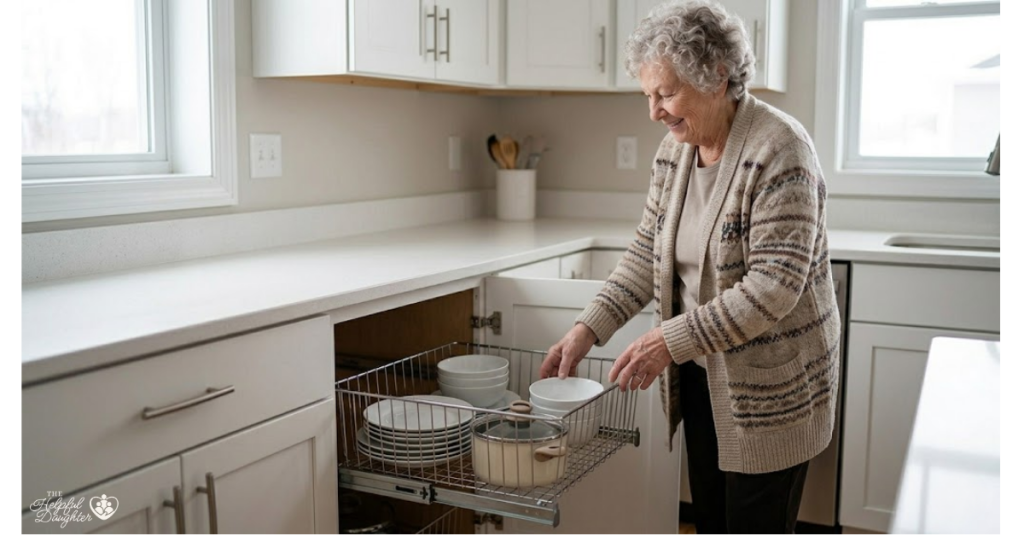
The kitchen is the heart of the home, but it can also be one of the most hazardous spaces for seniors. Traditional kitchen organization—with everyday items stored in high overhead cabinets or deep lower drawers—forces constant reaching, stretching, bending, and balancing. These repetitive movements introduce serious fall risks and put strain on aging joints, particularly knees, hips, and shoulders. A simple stumble while reaching for a coffee mug or struggling to retrieve a heavy pot from a bottom cabinet can lead to devastating injuries.
The good news? A thoughtful kitchen reorganization can dramatically improve safety and preserve independence without expensive renovations.
The caregiver strategy: Master the “Strike Zone”
Think of your kitchen storage in zones. The “Strike Zone” is the golden area between waist and chest height—the easiest, safest space to access without bending, stretching, or climbing. This is your prime real estate, and it should house everything used daily.
What to move into the Strike Zone:
- Everyday dishes, glasses, and mugs
- Frequently used pantry staples (coffee, tea, cereal, snacks)
- Cooking oils, spices, and seasonings
- Lightweight pots, pans, and cooking utensils
- Medications and supplements taken with meals
- Commonly used small appliances (toaster, coffee maker)
What can stay in harder-to-reach areas:
- Seasonal items (holiday platters, special occasion dishes)
- Rarely used appliances (fondue set, bread maker)
- Bulk purchases and backup supplies
- Items used only a few times per year
Upgrade the cabinets:
You don’t need a complete kitchen remodel to make a massive difference. Affordable, easy-to-install solutions can transform existing cabinets:
Pull-out wire baskets or sliding shelves: These ingenious additions install in lower cabinets and glide out smoothly, bringing items directly to eye level. No more kneeling on the floor or blindly groping in dark cabinet corners hoping to find the right pot.
Lazy Susans (turntables): Perfect for corner cabinets and deep shelves, these rotating platforms let you spin items into view with a simple turn—no reaching, no rearranging everything in front to access what’s in back.
Drawer organizers and dividers: Keep utensils, tools, and small items neatly arranged so nothing gets lost in the back of a drawer, eliminating frustrating searches.
Clear storage containers: Transfer pantry staples into transparent containers so you can see exactly what you have and how much is left without pulling everything out.
The step stool rule:
Here’s a non-negotiable safety principle: keep step stools out of the kitchen altogether. If something requires a step stool to reach, it’s stored in the wrong place. Period. Step stools are a leading cause of falls among seniors, and the kitchen—with its hard floors and sharp corners—is the worst place for a tumble.
Pro tip: Label shelves with large, clear text or pictures showing what belongs where. This makes it easier for everyone to maintain the new system and helps if memory becomes an issue. It also allows caregivers, family members, or home health aides to quickly find what they need without disrupting the organization.
3. Outsource Nutrition with Mom’s Meals

Grocery shopping, meal planning, cooking, and cleanup can consume hours of a senior’s day and drain precious energy reserves. For many older adults living independently, meal preparation becomes increasingly overwhelming—heavy grocery bags, standing at the stove, managing multiple cooking steps, and tackling piles of dishes afterward. Unfortunately, cooking is often the first daily routine to decline, which can quickly lead to poor nutrition, unintentional weight loss, or failure to follow important dietary restrictions for conditions like diabetes or heart disease.
This is where a dedicated meal delivery service like Mom’s Meals becomes truly transformative for maintaining independence and health.
Why it works:
Mom’s Meals delivers fully prepared, dietitian-designed meals right to your doorstep—no shopping, no chopping, no cooking required. Each meal is ready to eat in just two minutes in the microwave, making proper nutrition accessible even on low-energy days. The meals arrive shelf-stable or refrigerated, eliminating the need for immediate meal prep or worry about food spoiling.
Special dietary options:
Mom’s Meals offers specialized menus tailored to specific health needs, including:
- Heart-healthy options (low sodium, low cholesterol)
- Diabetes-friendly meals (carb-controlled, blood sugar management)
- Renal-friendly choices (kidney disease support)
- Pureed meals (for those with swallowing difficulties)
- General wellness menus (balanced nutrition for overall health)
Coverage and affordability:
Here’s an often-overlooked benefit: these meals may be partially or fully covered under certain Medicare Advantage plans, Medicaid programs, or veterans’ benefits. It’s worth checking with your insurance provider, as many plans now recognize that proper nutrition prevents costly hospitalizations and health complications down the road.
Read my full review on Mom’s Meals Here
4. Switch to No-Iron, Easy-Care Fabrics
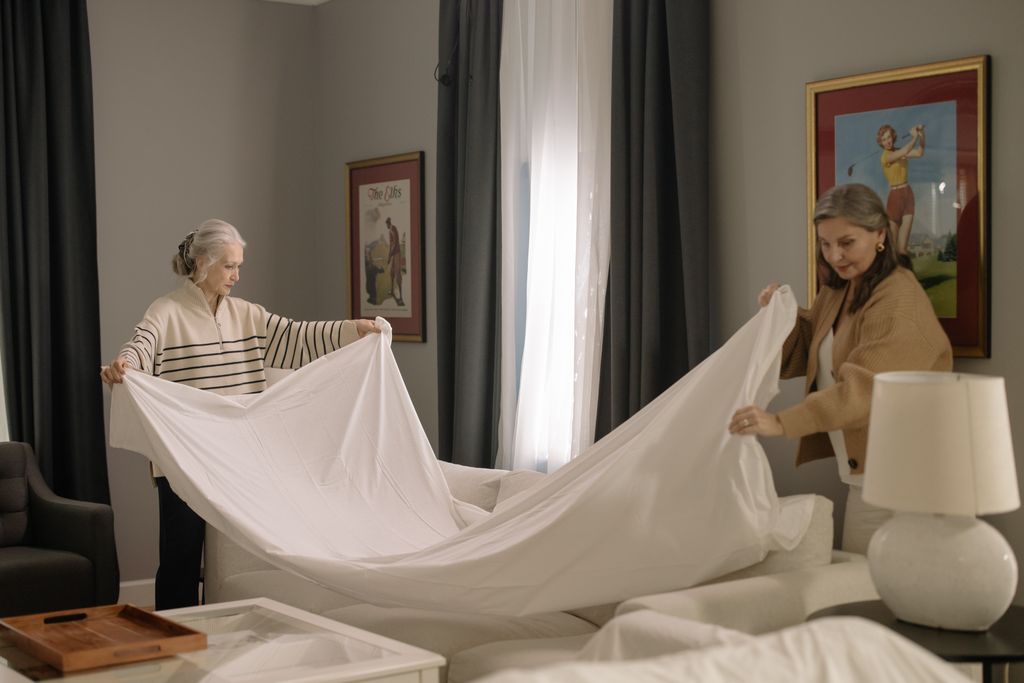
Ironing is one of those household tasks that becomes increasingly difficult with age or mobility challenges. Standing over an ironing board for extended periods can strain your back and legs, while handling a hot iron poses real burn risks—especially if balance or grip strength is an issue. The good news? Modern fabric technology has made this chore almost entirely optional.
By transitioning to low-maintenance, wrinkle-resistant textiles throughout your home, you can eliminate hours of tedious ironing while keeping your wardrobe and linens looking crisp and presentable.
What to look for:
- Bedding: Wrinkle-free or wrinkle-resistant sheets made from microfiber, bamboo blends, or specially treated cotton that emerge from the dryer smooth and ready to use
- Clothing: Cotton-polyester blends, performance fabrics, and knit materials that naturally resist creasing and maintain their shape wash after wash
- Window treatments: Machine-washable curtains in synthetic or blended fabrics that don’t require professional cleaning or pressing
- Table linens: Easy-care tablecloths, placemats, and napkins that can go straight from the dryer to the table
Pro tip: When shopping, look for labels that say “wrinkle-resistant,” “easy-care,” “no-iron,” or “permanent press.” These fabrics are specifically engineered to maintain a smooth appearance with minimal effort, giving you more time and energy for the things you actually enjoy.
5. Invest in Hassle-Free, Low-Maintenance Bedding
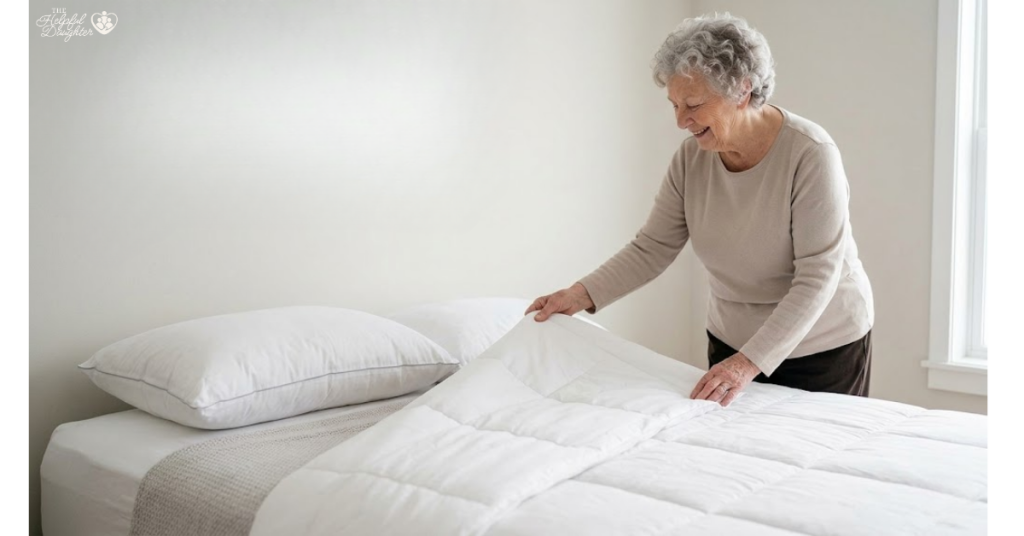
Traditional down pillows and heavy comforters require constant fluffing and specialty cleaning, turning a comfortable bed into a physically demanding chore. Bedding should support rest, not cause extra strain.
- The Caregiver Strategy: Replace heavy linens with lightweight blankets and switch to high-quality, easy-care alternatives. Investing in options like the Sleep Serenity Series Dual Pack Pillow gives seniors that plush, down-like luxury comfort without any of the high-maintenance upkeep. Because they feature a machine-washable design and box-edge construction that won’t flatten out over time, they cut down on unnecessary physical chore work entirely.
6. Reduce Laundry Stress
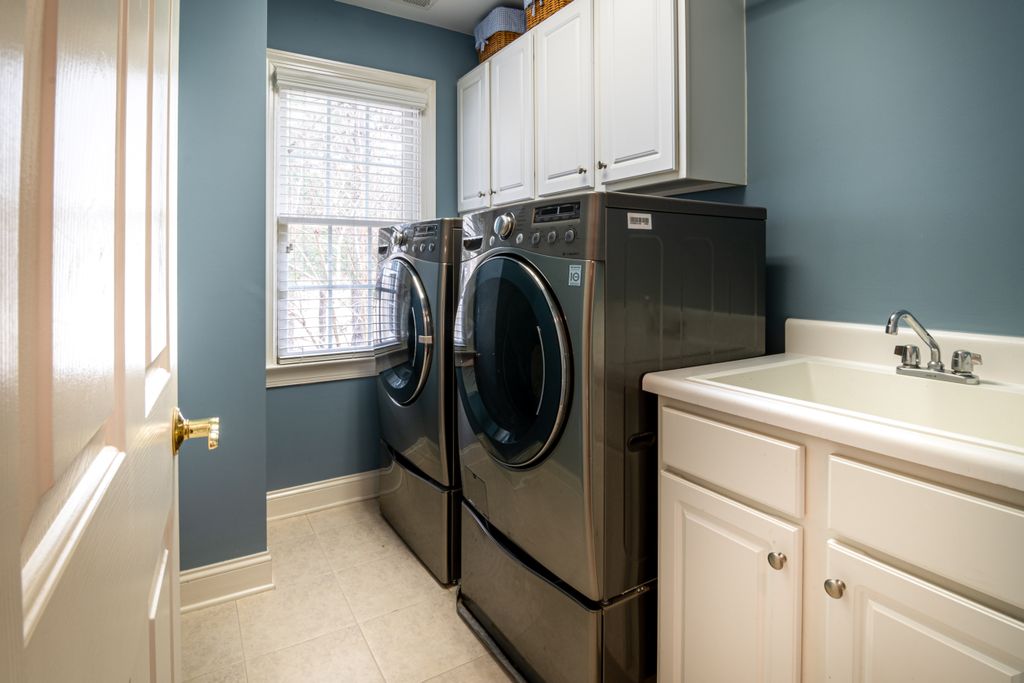
Utilize a “Rolling” Laundry Station: Instead of carrying baskets, switch to a multi-compartment rolling laundry sorter. This allows your loved ones to separate darks and lights on the spot, entirely eliminating the need to lift heavy loads or bend down to sort through a pile on the floor.
Raise the Appliances: If they have a front-loading washer and dryer, consider placing them on manufacturer laundry pedestals. Raising the machines by 10 to 14 inches drastically reduces the need to bend down or kneel when transferring wet, heavy clothes.
The “Never-Fold” Strategy: Simplify the post-laundry routine by hanging as many clothes as possible directly from the dryer onto hangers, or simply transitioning to open bins for daily essentials like socks and undergarments. Skipping the precise folding step saves a significant amount of standing energy and wrist strain.
7. Build a Distributed Maintenance Schedule
Trying to clean an entire house in a single afternoon is physically exhausting and introduces a high risk of overexertion, joint pain, or falls for older adults. Instead of a massive weekend deep-clean, the most effective strategy is to break household maintenance down into bite-sized, 10-to-15-minute daily micro-tasks.
By spreading the workload across the week, the home stays consistently tidy without ever becoming a daunting, high-strain chore.
Work with your loved one to establish a predictable, low-energy rhythm. The goal is to focus on either one specific room or one specific task per day, leaving the rest of the house alone. If a chore doesn’t get finished perfectly, let it go—comfort, energy conservation, and safety always beat a pristine, spotless house.
Here is a great example of the 5 day cleaning schedule I made for my own parents.
| Day | Task | Energy-Saving Tip |
|---|---|---|
| Monday | Light Dusting & Surfaces | Use a long-handled microfiber duster to clear high shelves and baseboards without bending or stretching. |
| Tuesday | Floor Care (High-Traffic Only) | Focus only on the main walkways using a lightweight, cordless stick vacuum. Skip moving heavy furniture. |
| Wednesday | Kitchen Refresh | Check the refrigerator for expired items, wipe down the countertops at waist-height, and empty the trash using a rolling cart. |
| Thursday | Bathroom Touch-Up | Use a long-handled tub and tile scrubber to clean the shower or bath without kneeling or leaning over precariously. |
| Friday | Linen & Laundry Day | Wash a single, small load of easy-care fabrics. Sort clothes while sitting comfortably at the kitchen table rather than standing. |
| Weekend | Rest & Recharge | Strictly designated for relaxation, hobbies, and family time. |
3 Ways to Improve This Routine
- Set a Timer: Encourage your loved one to set a kitchen timer for 15 minutes. When the timer goes off, the cleaning stops for the day—regardless of whether the room is perfectly clean.
- Create Visual Checklists: A simple, laminated weekly chart on the refrigerator with dry-erase checkboxes provides a satisfying visual reminder and helps seniors with mild cognitive decline stay on track without feeling overwhelmed.
- Incorporate “Sit-Down” Chores: Pair physical tasks with rest periods. For example, sorting mail, folding towels, or organizing a junk drawer can all be done while comfortably seated in a supportive chair.
Final Thoughts

As caregivers, it is so easy to fall into the trap of thinking we have to do it all—and that we have to do it flawlessly. We look at our parents’ homes and see a never-ending to-do list, mistakenly believing that a perfectly pristine house is the ultimate measure of good care.
But if there is one thing I have learned on this journey, it’s this: our parents don’t need a spotless home; they need a safe, happy, and stress-free one.
Take a deep breath, take it one small micro-task at a time, and remember—you are doing a wonderful job.
Frequently Asked Questions
What are the best independent living tips for seniors?
Some of the most effective tips include using lightweight household tools, organizing frequently used items within easy reach, choosing easy-care fabrics, creating manageable cleaning schedules, and reducing unnecessary physical strain wherever possible.
How can seniors make cleaning easier?
Lightweight cordless vacuums, microfiber dusters, long-handled cleaning tools, and smaller daily cleaning tasks can make housekeeping much easier and less exhausting.
Why is energy conservation important for older adults?
As we age, physical energy often becomes more limited. Conserving energy helps seniors stay active, maintain independence, and reduce the risk of injury or overexertion.
What bedding is easiest for seniors to maintain?
Machine-washable sheets, lightweight comforters, and washable down-alternative pillows are generally easier to maintain than traditional bedding that requires special care.
How often should seniors clean their homes?
The schedule depends on individual needs and abilities. Many seniors find success by spreading chores throughout the week instead of attempting all cleaning tasks in one day.
What household chores become most difficult with age?
Vacuuming, laundry, changing bedding, scrubbing bathrooms, carrying heavy items, and reaching high shelves are among the most commonly reported challenges.
Can small household changes really improve independence?
Absolutely. Even minor adjustments can reduce physical strain, improve safety, and help seniors remain comfortable and independent in their homes for longer.