
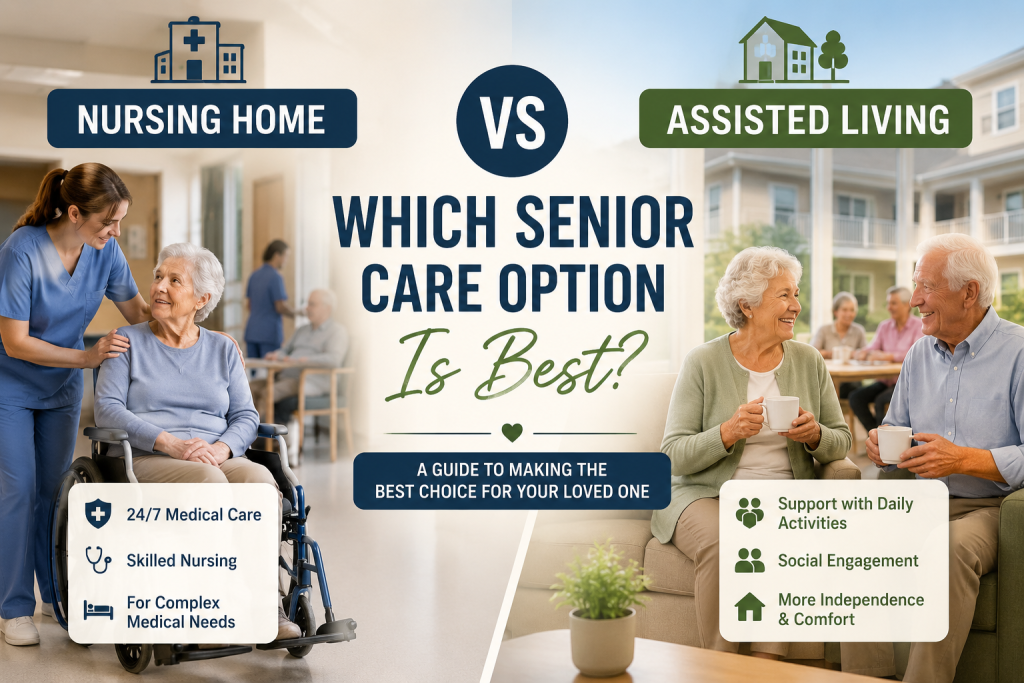
Choosing between a nursing home and assisted living can feel overwhelming. However, understanding the key differences makes the decision much easier. While both options support seniors, they serve entirely different medical and lifestyle needs.
Assisted living focuses on independence and daily personal support. Meanwhile, nursing homes provide advanced, around-the-clock medical care and supervision.
When aging parents begin to struggle at home, families often compare nursing home vs assisted living to find the safest environment. The right choice ultimately depends on your loved one’s health, mobility, and lifestyle preferences.
What Is Assisted Living?

Assisted living communities are designed for seniors who want to maintain their independence but need help with daily tasks, also known as Activities of Daily Living (ADLs). Residents typically live in private apartments or suites, allowing them to retain a sense of home while having access to a community.
Most assisted living facilities offer:
- Daily assistance with bathing, dressing, and grooming
- Medication reminders and management
- Freshly prepared meals served in shared dining areas
- Housekeeping and laundry services
- Scheduled transportation for shopping and medical appointments
- Robust social calendars featuring exercise classes, hobbies, and group outings
Because residents retain their freedom, many seniors find that these communities actually boost their social connection and emotional well-being.
What Is a Nursing Home?

A nursing home (also called a skilled nursing facility) provides full-time, high-level medical care for seniors with serious, chronic health conditions. These facilities operate like clinical medical environments and employ licensed nurses and trained healthcare professionals around the clock.
Nursing homes typically care for seniors who require:
- 24/7 skilled nursing care and continuous medical monitoring
- Intensive rehabilitation therapy (physical, occupational, or speech therapy)
- Chronic illness management that cannot be handled at home
- Advanced mobility assistance (such as residents who are bedridden)
- Complex wound care or post-surgery recovery
- Specialized memory care support for late-stage dementia or Alzheimer’s
Unlike assisted living, nursing homes prioritize healthcare services over independent residential living.
Nursing Home vs Assisted Living: Main Differences
The fundamental difference between a nursing home vs assisted living comes down to the level of medical care required. Assisted living supports seniors who are mostly independent but need a helping hand. On the other hand, nursing homes care for those with significant, ongoing clinical needs.
Here is a quick comparison to help guide your decision:
| Feature | Assisted Living | Nursing Home |
|---|---|---|
| Medical Care | Limited (Reminders & basic aid) | Extensive (24/7 skilled nursing) |
| Independence | High autonomy & private living | Structured, supervised care |
| Environment | Residential, apartment-style | Clinical, medical facility |
| Social Activities | Frequent, community-focused | Moderate, therapy-focused |
| Average Cost | Lower ($3,000 – $7,000+/month) | Higher ($8,000 – $10,000+/month) |
| Best For | Active seniors needing daily help | Seniors needing constant medical care |
Lifestyle and Daily Activities
Lifestyle is a major factor when choosing senior care. Assisted living communities often feel warm, vibrant, and welcoming. Residents are encouraged to stay mentally and socially active by participating in game nights, fitness classes, and local outings.
Nursing homes also offer activities, but healthcare always comes first. Residents may attend structured wellness programs, physical therapy sessions, or religious services. While the environment is more clinical, it provides vital peace of mind for families managing serious health concerns.
Cost Comparison Between Nursing Homes and Assisted Living

Cost remains a critical factor for most families. Because residents require fewer hands-on medical services, assisted living is generally the more affordable option. Monthly expenses typically range from $3,000 to $7,000, depending heavily on your location and chosen amenities.
Nursing homes cost significantly more, frequently exceeding $10,000 per month. The requirement for around-the-clock skilled nursing care, specialized equipment, and medical supervision drives these costs up.
Financial Assistance Options
- Private Pay & Long-Term Care Insurance: Commonly used for both options.
- Medicare: Covers short-term rehab stays in a nursing home, but does not pay for long-term custodial care in either facility.
- Medicaid: May cover nursing home care for low-income seniors, but options for assisted living coverage vary widely by state.
Who Should Choose Assisted Living?
Assisted living works best for older adults who:
- Need minor help with daily tasks like bathing or cooking
- Are experiencing social isolation or loneliness at home
- Want to remain independent but don’t want the burden of home maintenance
- Do not require complex, ongoing medical supervision
Who Should Choose a Nursing Home?
A nursing home is likely necessary for seniors who:
- Have severe mobility issues and cannot get out of bed safely without help
- Require 24/7 monitoring by licensed medical staff
- Are dealing with advanced dementia or severe cognitive decline
- Are recovering from a major medical event, like a stroke or surgery
Signs It May Be Time for Senior Care

Families often delay making a decision due to emotional stress, but waiting for an emergency can limit your options. Keep an eye out for these common warning signs:
- Frequent falls, unexplained bruises, or unsteadiness
- Missed or improperly taken medications
- Neglected personal hygiene or sudden weight loss
- Unopened mail, unpaid bills, or a messy living environment
- Forgetfulness that compromises safety (e.g., leaving the stove on)
Recognizing these indicators early gives your family the time needed to research and tour facilities calmly.
How to Choose the Right Senior Living Option
Once you assess your loved one’s physical and medical needs, take the following steps to find the perfect fit:
- Visit in Person: Tour multiple facilities. Pay attention to cleanliness, safety features, and the overall happiness of current residents.
- Observe Staff Interactions: Are the caregivers patient, warm, and attentive?
- Ask the Right Questions:
- What specific services are included in the base monthly rate?
- How does the staff handle medical emergencies?
- What is the staff-to-resident ratio during the day and at night?
- Are there additional fees as a resident’s care needs increase?
Final Thoughts on Nursing Home vs Assisted Living

The choice between a nursing home vs assisted living ultimately hinges on balancing your loved one’s current independence with their long-term medical safety. Both options provide pathways to a better quality of life.
By doing thorough research and planning ahead, you can ensure your aging parent receives compassionate, dignified care in the setting that suits them best.