
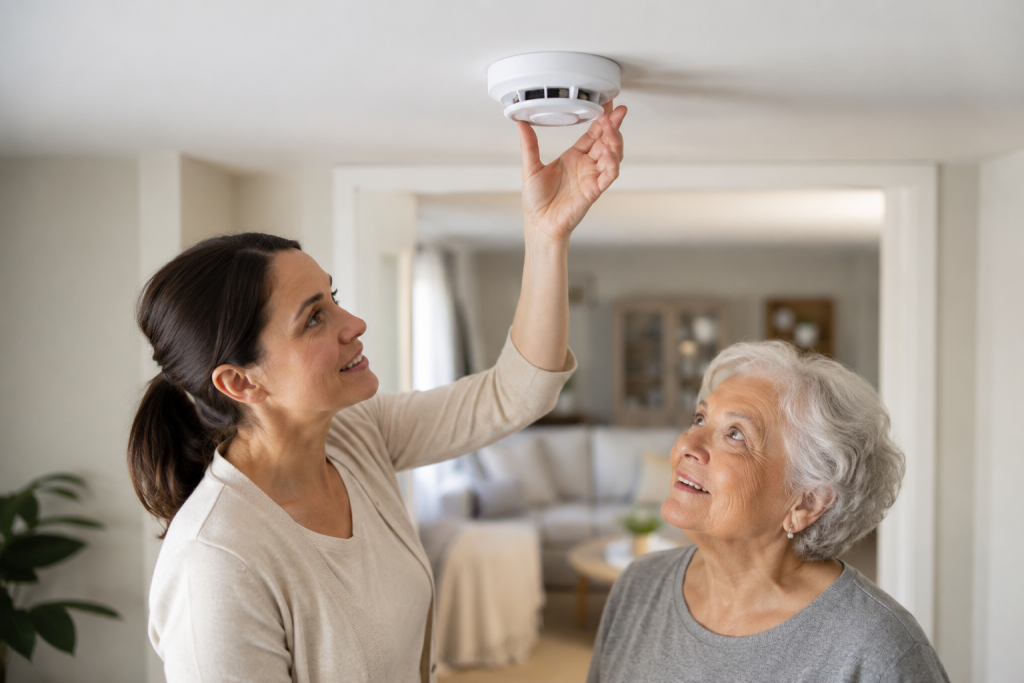
Last Tuesday, my friend Sarah called me, her voice shaking slightly. She had gone to visit her 82-year-old mother, Clara, who lives alone in a lovely, split-level home. When Sarah walked in, the kitchen was filled with haze, and the toaster oven was scorched. Clara was sitting quietly in her favorite basement armchair, completely unaware of the drama upstairs. The upstairs hallway smoke detector had been shrieking, but down in the quiet of the basement, Clara simply could not hear it over the sound of her television.
It is a terrifying realization that hits many family caregivers: a standard smoke detector in the hallway is only helpful if your parent is close enough to hear it. If they are sleeping deeply, relaxing in a basement recreation room, or dealing with mild hearing loss, a single isolated alarm might as well be silent.
This is where interconnected smoke alarms make all the difference. Unlike traditional detectors that only make noise in the room where fire or smoke is present, interconnected smoke detectors communicate with one another. When one goes off, they all go off. If a burner is left on in the kitchen, the alarm right next to your parent’s pillow will instantly sound the alert, giving them those vital extra minutes to exit safely.
This guide will break down the absolute best interconnected smoke alarms for seniors, comparing features, installation methods, and practical real-world safety considerations to help you protect your aging parents.
What Are Interconnected Smoke Alarms?
To understand why these systems are so critical for senior home fire safety, it helps to look at how smoke detectors have traditionally functioned.
In a standard setup, each smoke detector acts as an independent island. If toast burns in the kitchen, only the kitchen unit screams. If a fire starts in the laundry room, the laundry room alarm sounds. If your parent is at the opposite end of the house, the sound has to travel through closed doors, down corridors, and across floors before it reaches their ears.
Interconnected smoke detectors, however, are a team. They are linked together either by physical electrical wires inside the walls or through a secure, local wireless radio frequency.
Kitchen Detector
Detects smoke or heat
Wireless or Wired Link
Instantly transmits signal across local network
All Detectors Sound Simultaneously
Provides early warning zones:
By linking the alarms, you ensure that a threat detected anywhere in the home is instantly announced everywhere in the home. For an aging parent, this removes the dangerous delay of waiting for smoke to travel to their bedroom before they are alerted to a fire starting on the main floor.
Why Interconnected Smoke Alarms Are Helpful for Seniors

For older adults living independently, standard alarms often fall short of providing real, life-saving protection. Interconnected systems solve several specific challenges that come with aging in place.
1. Faster Warning Throughout the Home
Reaction times can slow down as we grow older, and mobility challenges can make escaping a burning home take longer. A connected system buys valuable seconds. If a fire starts in the basement garage, your parent gets an immediate alert in their first-floor bedroom, rather than waiting for the smoke to billow up the stairs and trigger the local bedroom alarm.
2. Overcoming Hearing Challenges
High-frequency hearing loss is incredibly common in older adults. The classic high-pitched shriek of an old-fashioned smoke detector is often the exact frequency that senior ears struggle to register, especially when they are asleep. Many interconnected units offer lower-frequency voice alerts or are designed to connect with accessory devices like bed shakers or strobe lights.
3. Vital Support for Larger Homes
If your parent is living in a multi-story house, sound simply does not travel well between floors. An alarm going off in the attic or utility room might be completely inaudible from the master bedroom. Interconnection ensures the warning is delivered right to where they are.
4. Direct Caregiver Peace of Mind
Many modern wireless interconnected smoke alarms offer smart features. This means if an alarm goes off at your mom’s house three states away, you will receive an immediate notification on your smartphone. You can call her, check in, or coordinate emergency services even if you are at work or traveling.
Wired vs. Wireless Interconnected Smoke Alarms
When choosing a system for your parent’s home, you will need to decide between a hardwired setup or a wireless radio frequency system. Both options have distinct advantages and drawbacks.
| Feature | Wired Interconnected | Wireless Interconnected |
|---|---|---|
| Primary Connection | Physical 3-wire electrical cabling | Wireless radio frequency (RF) signals |
| Installation Complexity | High (requires running wire through walls) | Low to Moderate (typically DIY-friendly) |
| Best For | New builds or major home renovations | Existing homes without pre-linked wiring |
| Power Source | Household electricity with battery backup | Long-life sealed batteries or standard batteries |
| Cost | Higher upfront/labor costs | Moderately priced per unit, no electrician needed |
| Reliability | Highly reliable; unaffected by RF interference | Highly reliable; operates on local secure networks |
For most adult children looking to upgrade an aging parent’s current home, wireless interconnected smoke alarms are the most practical route. They require no expensive wall cutting, no messy wiring, and can be configured on a kitchen table before you mount them on the ceiling.
Features to Look For in Smoke Alarms for Elderly Parents

Not all alarms are created equal. When shopping for caregiver safety devices, keep these specific user-friendly features in mind.
Voice Alerts with Location Names
Instead of a generic, terrifying siren that can disorient a senior—especially one living with mild cognitive decline or dementia—voice alarms speak directly to the occupant. They will say, “Warning: Smoke in the basement,” or “Warning: Carbon Monoxide in the hallway.” This clear, calm explanation helps seniors immediately understand what the danger is and which exit path to avoid.
Dual Smoke and Carbon Monoxide (CO) Detection
Rather than cluttering the ceiling with separate devices, look for combination units. Carbon monoxide is an invisible, odorless killer. Having one interconnected system that monitors both fire and gas leaks simplifies maintenance and ensures your parent is protected from both threats simultaneously.
Long-Life Sealed Batteries
Changing smoke detector batteries requires climbing a stepladder—a major fall risk for seniors. Look for units that feature a 10-year sealed lithium battery. These require zero battery changes for the entire decade-long lifespan of the alarm, completely eliminating the annoying “chirp” of a dying battery at 2:00 AM.
App-Based Testing and Silencing
Traditional alarms require you to poke a tiny ceiling button with a broom handle to test them. Smart systems allow you to test all connected alarms right from a phone app. Some even allow you to silence a false alarm (like burnt toast) with a quick tap on your screen, saving your parent from panicking or climbing on a chair to quiet the noise.
Best Interconnected Smoke Alarm Options to Consider
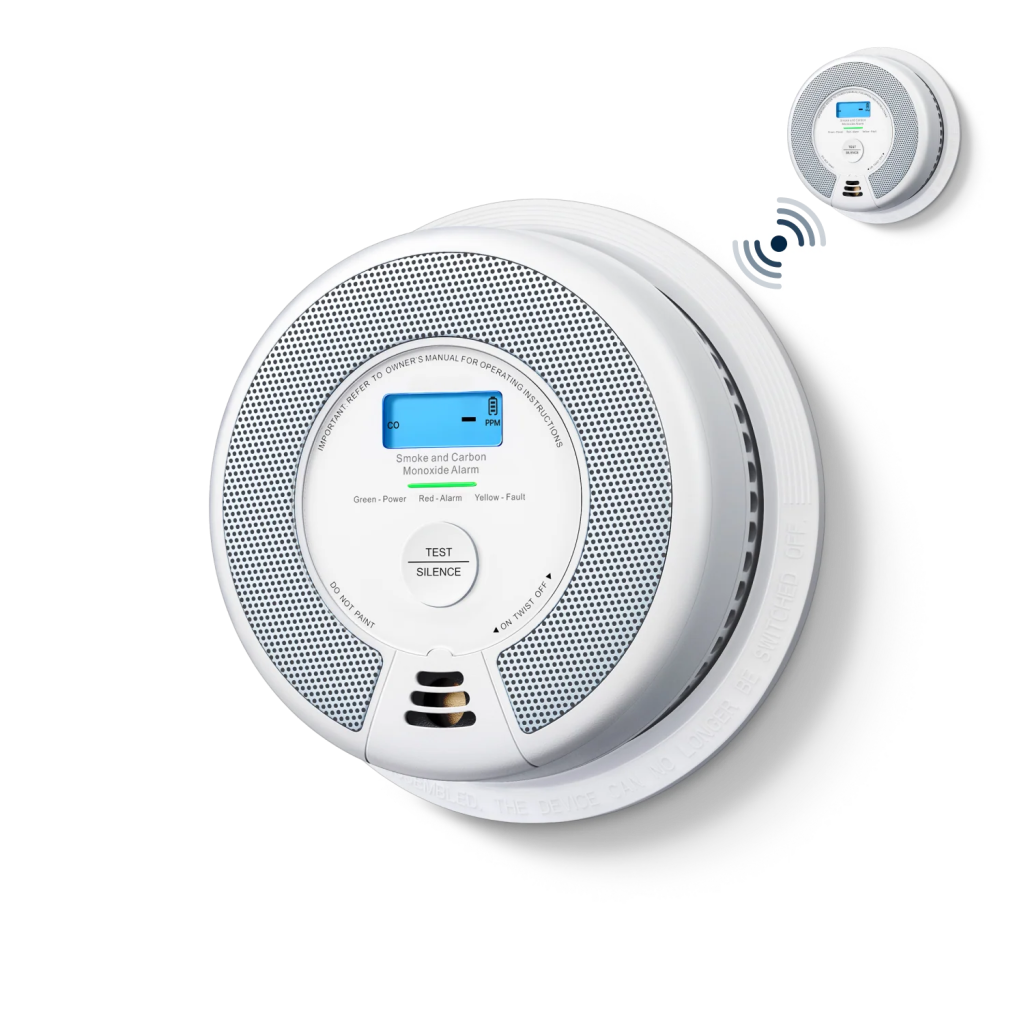
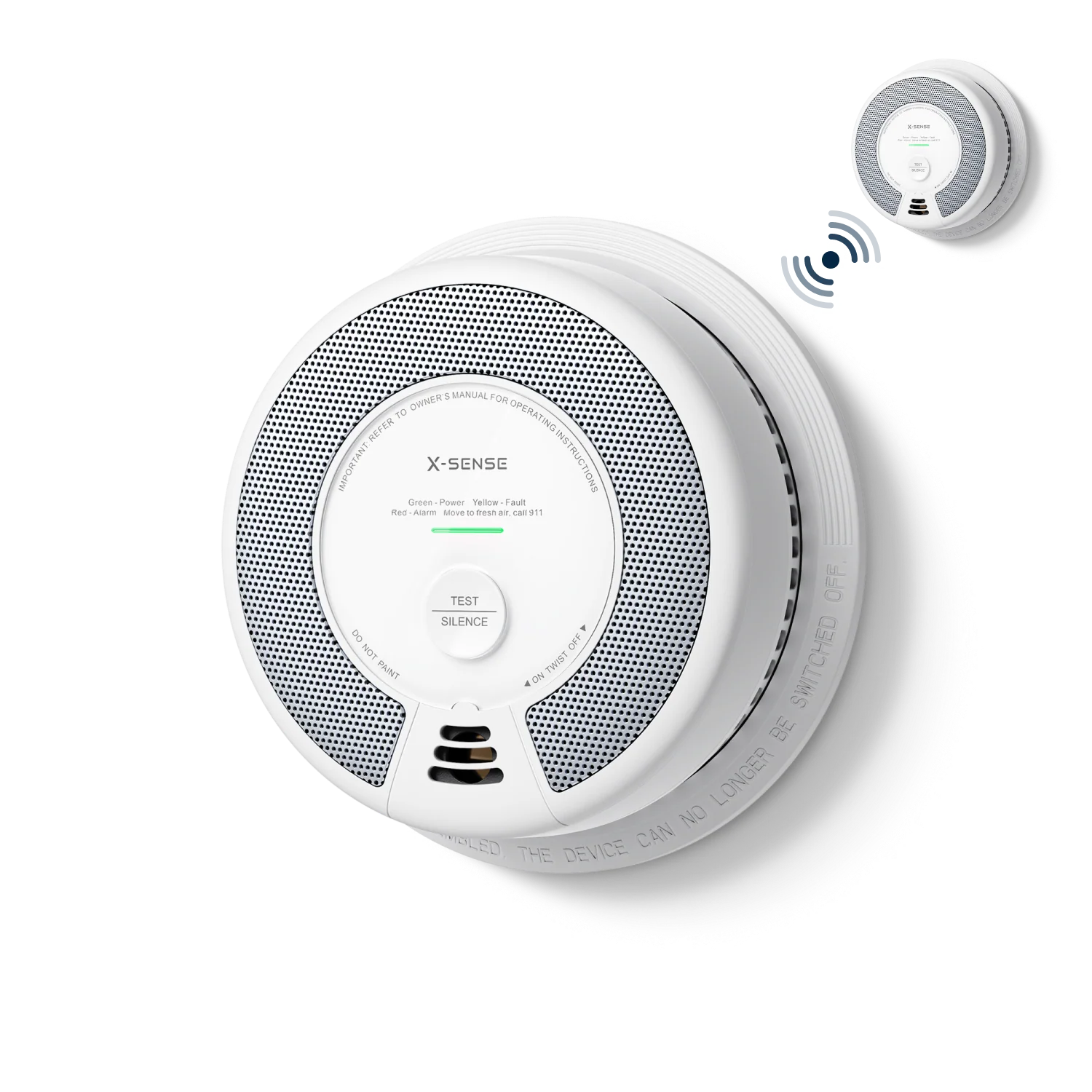
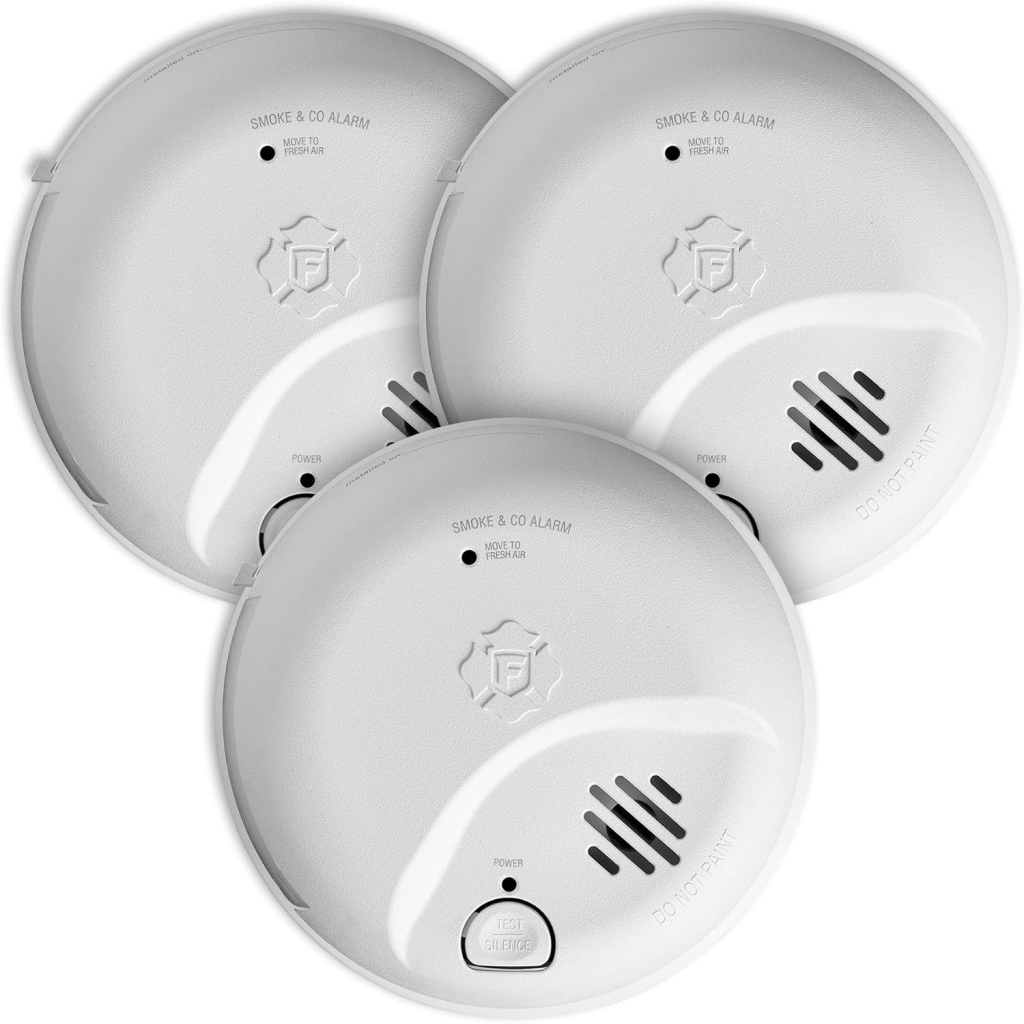
Here is a breakdown of the top recommended interconnected alarms, evaluated through the lens of senior usability and caregiver support.
How Many Interconnected Smoke Alarms Does a Senior Need?
It can be tempting to buy a “starter pack” of two alarms and call it a day, but real safety requires proper coverage.
According to the National Fire Protection Association (NFPA), you should install smoke alarms:
- Inside every bedroom (this is vital, as closed doors block sound and smoke).
- Outside each separate sleeping area (like a hallway).
- On every level of the home, including the basement.
- Near the living room, den, or any utility rooms where heating equipment is kept.
For a standard two-story home with three bedrooms and a basement, you will likely need at least six interconnected units. It sounds like a lot, but remember: in an interconnected system, more alarms don’t just mean more noise—they mean faster detection and localized warnings right where your parent is resting.
Step-by-Step Guide: Setting Up a Wireless Interconnected System
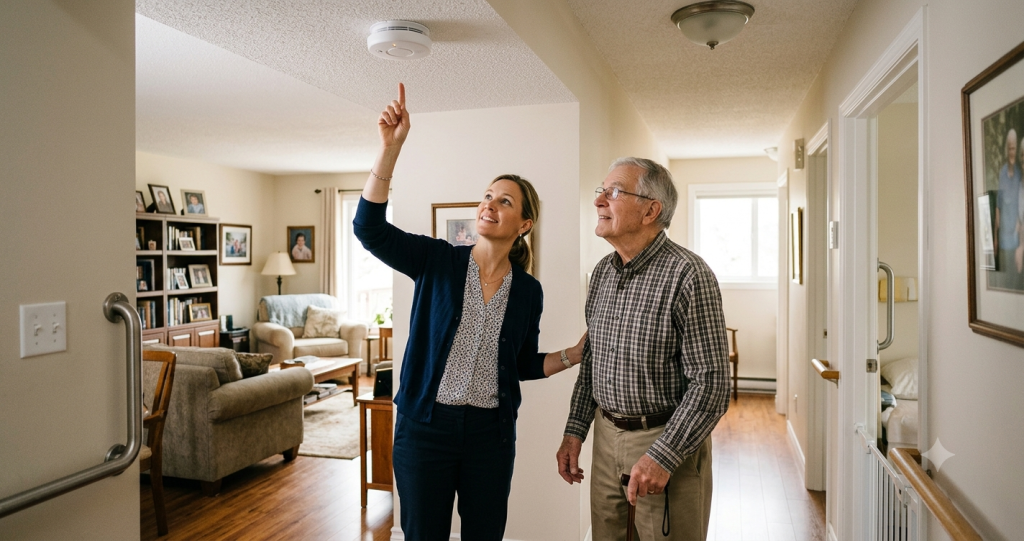
If you are setting up a wireless system for your parent, follow these steps to make sure the devices are correctly configured before you mount them.
1.Unpack and label each alarm:Before pairing.
Take all the alarms out of their boxes. Use a small piece of painter’s tape to write where each one will go (e.g., “Mom’s Bedroom,” “Kitchen,” “Basement”).
2.Activate the batteries:Tabletop setup.
Pull the battery activation tabs on all units while keeping them close together on a table or counter.
3.Initiate pairing mode:Link the network.
Press the test/pair button on your first alarm to designate it as the “host.” Follow the manufacturer’s instructions to pair each subsequent alarm to this host one by one.
4.Conduct a tabletop test:Verify communication.
Press the test button on one alarm. Watch and listen to verify that every other alarm on the table also starts sounding and flashing.
5.Mount the alarms:Installation.
Take the labeled alarms to their designated rooms and mount them to the ceilings. Use anchors if you are drilling into drywall, or use the manufacturer-approved heavy-duty adhesive pads if drilling isn’t an option.
Interconnected Smoke Alarm Mistakes to Avoid
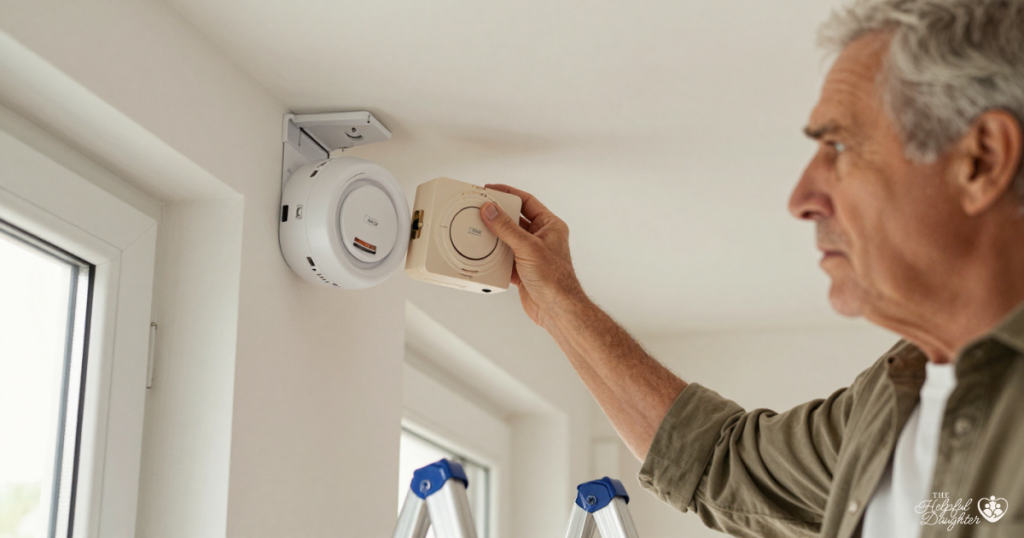
Even the best technology can fail if it isn’t deployed correctly. Watch out for these common pitfalls.
- Mistake #1: Mixing different brands. Wireless systems use proprietary radio frequencies. A Kidde wireless alarm will not talk to a First Alert wireless alarm. If you are building an interconnected system, buy the exact same brand and series of alarms for the entire house.
- Mistake #2: Forgetting the hush button’s location. If your parent burns toast, they may panic if the system begins screaming throughout the entire house. Show them exactly how to use the “hush” feature on the kitchen unit, or make sure you have the app set up on their phone (or yours) to quiet the system easily.
- Mistake #3: Neglecting dust and cooking fumes. Mounting an alarm directly above a stove or right outside a steamy bathroom door leads to frequent false alarms. Place kitchen alarms at least 10 feet away from cooking appliances to avoid unnecessary scares.
Caregiver Interconnected Smoke Alarm Checklist
Keep this checklist handy—or tick the boxes as you go—to ensure your parent’s home is fully protected.
Final Thoughts
As caregivers, we spend a lot of time worrying about the “what-ifs.” We worry about fall risks, medication schedules, and whether our parents are eating well. But home fire safety is one of those critical areas that often gets overlooked until a close call—like the one my friend Sarah experienced—forces us to pay attention.
Upgrading to an interconnected smoke alarm system is one of the most straightforward, high-impact changes you can make to secure your elderly parent’s home. It bridges the gap between their changing physical abilities—like mild hearing loss or slower mobility—and the urgent need for early detection. Whether you choose a budget-friendly wireless set or integrate a hardwired system, you aren’t just installing alarms; you are buying precious, life-saving minutes and, ultimately, your own peace of mind.
Don’t wait for a scary moment to prompt the change. Take a weekend, grab a small ladder, and set up a linked safety net for the people who watched over you for so many years.
Frequently Asked Questions
Are interconnected smoke alarms really better for seniors?
Yes. Traditional alarms only sound in the room where smoke is detected, which can make them impossible to hear from other parts of the house. Interconnected alarms sound everywhere at once. If a fire starts in the basement, the alarm next to your parent’s bed will instantly alert them, giving them the maximum possible time to safely escape.
Are wireless interconnected smoke alarms worth the extra cost?
Absolutely. Upgrading an older home to a hardwired interconnected system requires an electrician to run wires through your walls, which can cost thousands of dollars. Wireless interconnected alarms can be set up in under an hour for a fraction of the cost, making them one of the most cost-effective caregiver safety devices you can buy.
Can caregivers receive alerts from smart smoke alarms if they live far away?
Yes, if you choose smart smoke alarms like the Google Nest Protect or First Alert Onelink. These devices connect to the home’s Wi-Fi network and will send real-time push notifications to your smartphone if they detect smoke, carbon monoxide, or if their batteries are running low. This is a massive reassurance for long-distance caregivers.
Do wireless interconnected alarms need home Wi-Fi to talk to each other?
No. Most standard wireless interconnected alarms (like the X-Sense SC07-W or X-Sense SC06-W) use localized Radio Frequency (RF) signals to communicate directly with one another. They do not need an internet connection or a router to stay linked. However, if you choose a “smart” system and want to receive real-time alerts on your smartphone while you are away from the house, that specific feature will require the system to connect to the home’s Wi-Fi network.
What should I do if one interconnected alarm goes off by mistake?
Because the alarms are linked, a false alarm in the kitchen (like burnt toast) will cause every unit in the house to sound.
- Find the source: Look for the unit with a rapidly flashing red LED light—this is the “initiating” alarm that actually detected the smoke.
- Silence the system: Press the Test/Silence button on that initiating unit (or use your companion smartphone app if you have a smart system). Pressing silence on the initiating unit will temporarily quiet all the other linked alarms in the house.
How often do interconnected smoke alarms need to be tested?
You should test your parent’s interconnected alarms at least once a month. The beauty of an interconnected system is that you only need to press the test button on one unit; if the system is working correctly, every single alarm in the house will sound in response. This makes monthly check-ups incredibly fast and eliminates the need to climb ladders in every single room just to push buttons.