
Watching an aging parent struggle to stand up from a standard, low toilet bowl is something that sticks with you. When my own father started needing extra help in the bathroom after a bout with severe knee pain, every trip to the restroom turned into a tense, nerve-wracking moment for both of us. Standard modern toilets are built low to the ground—usually around 15 inches from floor to bowl rim—which places an immense amount of strain on aging knees, hips, and lower back muscles.
When bending down and pushing back up becomes a daily physical hurdle, bathroom safety moves to the very top of your priority list. A quality raised toilet seat with handles bridges that gap. It elevates the seating surface by three to six inches and provides sturdy, reliable armrests so a senior can push up smoothly using their upper body strength instead of relying entirely on fragile joints.
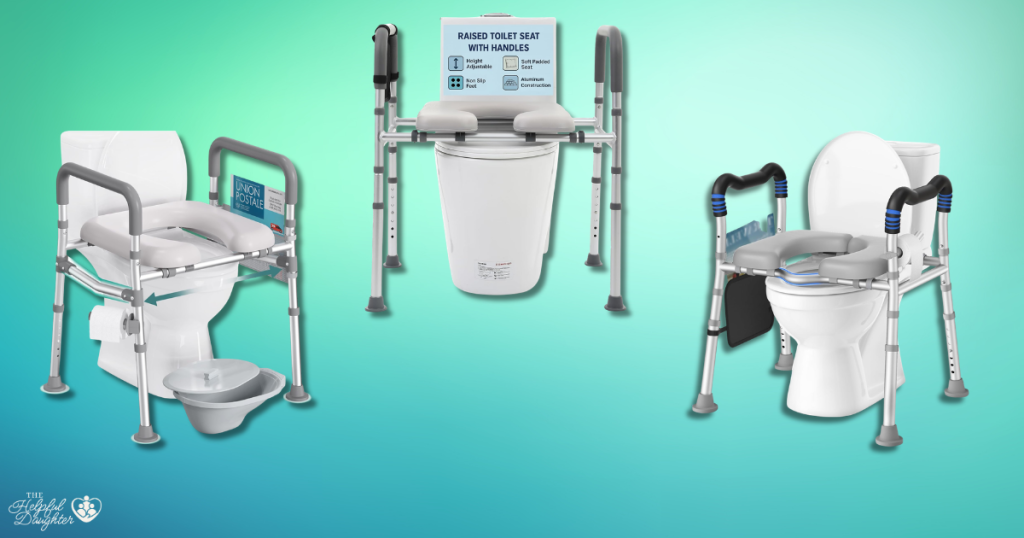
If you are trying to figure out which model makes the most sense for your parent’s home, you are in the right place. Below, we break down how these devices work, what features matter most, and review three of the most popular options available right now.
Quick Comparison: Top Raised Toilet Seats with Handles at a Glance
If you are pressed for time and need to find a dependable solution right away, this quick comparison table highlights our top-rated options based on weight capacity, frame design, and primary advantages.
How Raised Toilet Seats with Handles Work
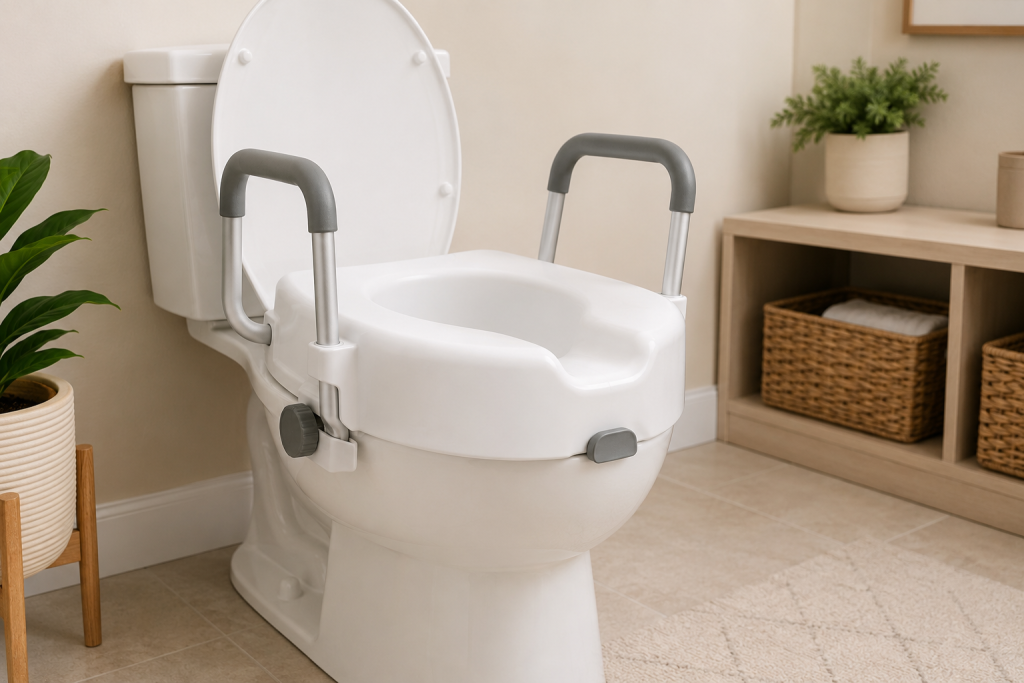
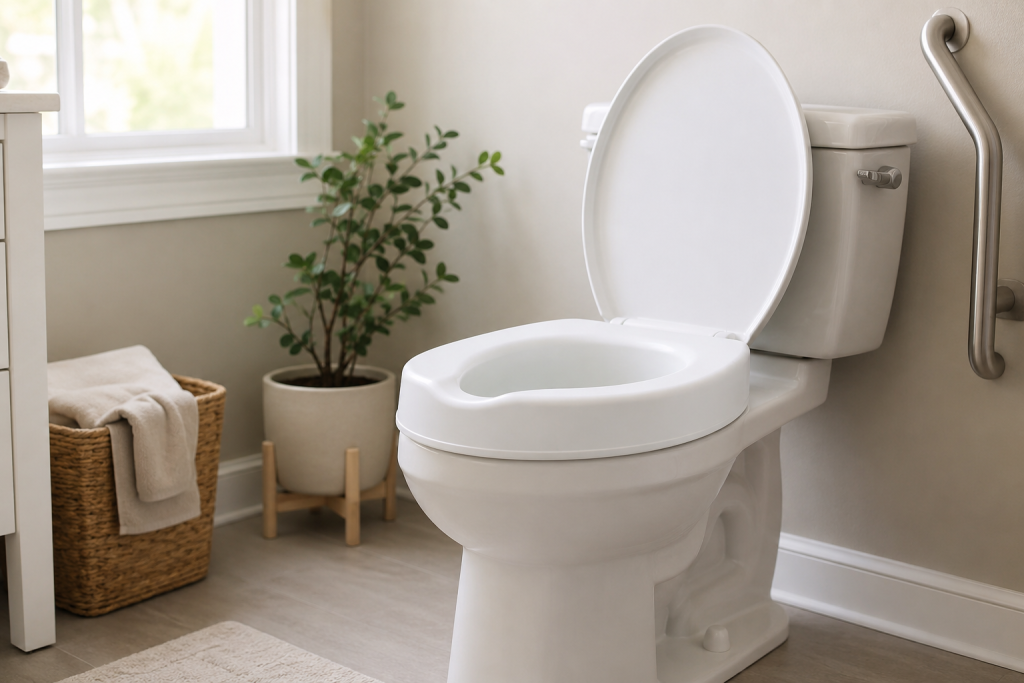
A raised toilet seat with handles—often called an elevated toilet seat frame or toilet safety rail combination—is designed to sit either directly on top of the porcelain bowl or span over the toilet bowl as a standalone frame.
The mechanism is straightforward. Standard toilets sit low, forcing deep knee flexion. When someone has arthritis, has undergone hip replacement surgery, or simply lacks lower-body stamina, that deep bend makes it exceptionally difficult to rise without losing balance. Raised seats elevate the seating plane, shortening the distance the user has to drop down or push up.
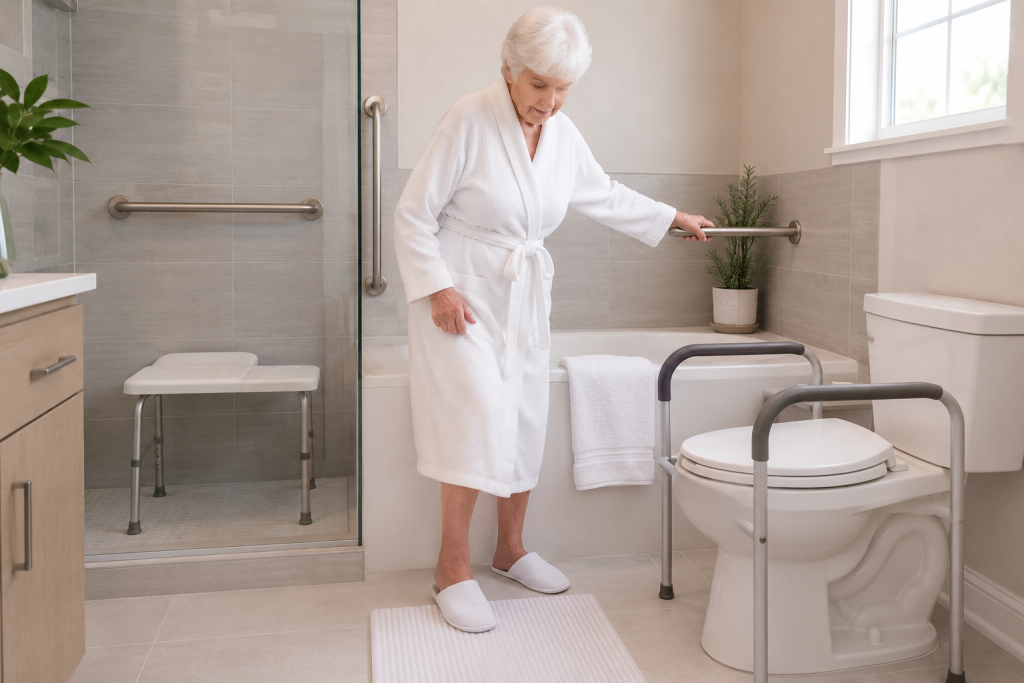
Simultaneously, integrated side armrests provide parallel leverage points. Instead of pushing off slippery walls or grabbing a towel rack that could pull out of the drywall, the senior places their hands securely on padded handles, shifts their weight forward, and pushes straight up into a standing position.
Why These Devices Benefit Seniors and Family Caregivers
Bathroom falls are among the most dangerous household accidents for older adults. Hard tile floors, cramped spaces, and moisture create a high-risk environment. Introducing a raised seat with handles changes the dynamic in several important ways:
- Reduces Joint Strain: Elevating the seat by several inches drastically decreases the angular stress placed on knee and hip joints.
- Restores Independence: When a senior can visit the restroom safely on their own, it preserves their dignity and reduces the round-the-clock burden on family caregivers.
- Prevents Forward Falls: Integrated handles give users a secure place to steady themselves before they even begin the transition from sitting to standing.
- Peace of Mind for Caregivers: Knowing your parent has a solid, non-slip structure to lean on reduces the constant anxiety of waiting outside the door listening for a slip or fall.
Top 5 Raised Toilet Seats with Handles Reviewed
I have closely evaluated the leading options on the market. Here is an honest look at what works, what doesn’t, and who each product is genuinely designed to help based on my research
1. HOMLAND Toilet Seat Riser with Handles for Seniors
Heavy Duty & Most Versatile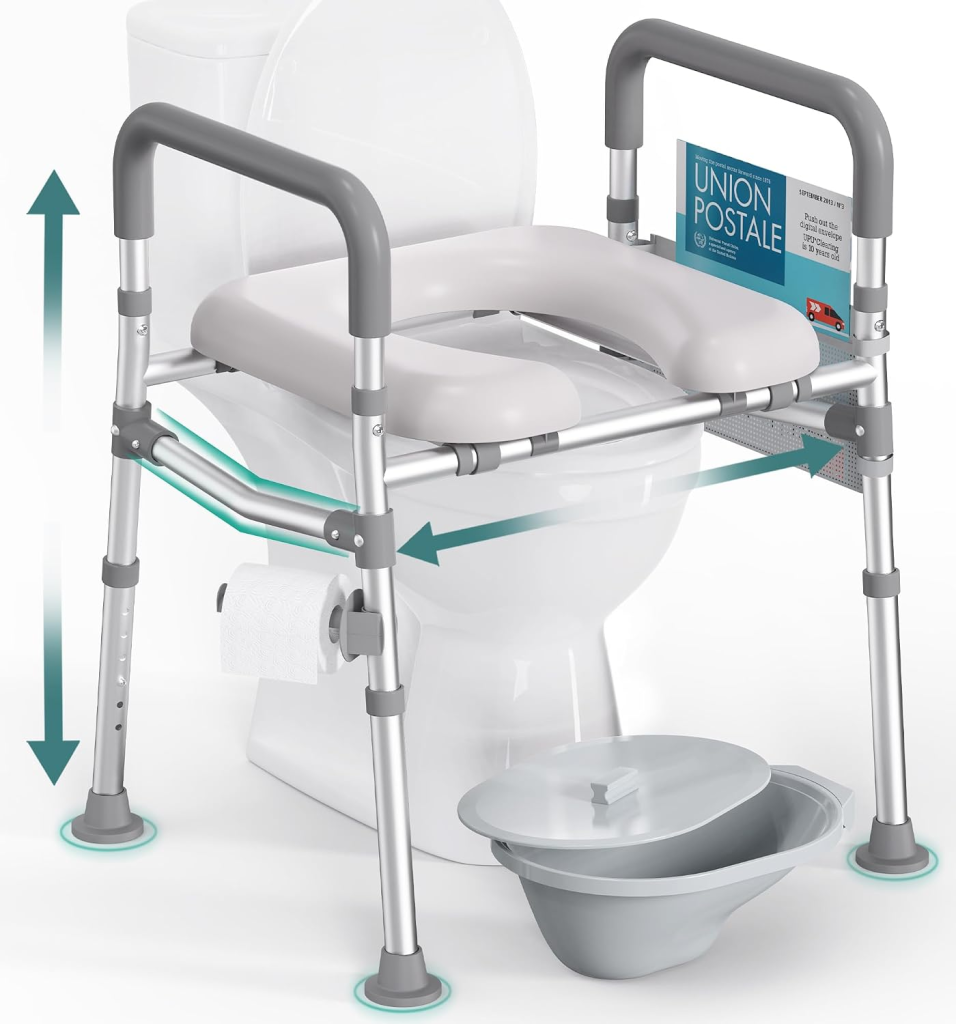
Best For: Heavier individuals, seniors recovering from major lower-limb surgeries, or households needing a high weight capacity and multi-use frame.
Not Ideal For: Very small bathrooms where a wide, heavy-duty frame might block normal walking paths.
My Opinion
If stability is your absolute number one concern, this is a strong contender. The frame feels exceptionally rigid, and the padded seat makes a big difference for seniors who experience discomfort from sitting on hard plastic.
Key Features & Specifications
- Weight Capacity: Exceptional 500 lbs capacity with aluminum-reinforced crossbar
- Approx. Price: ~$65.99
- Comfort: Includes comfortable padded seat cushion and built-in accessories
- Versatility: Doubles as an over-the-toilet safety frame or standalone bedside commode
- Primary Advantage: Heavy-duty crossbar & removable bedpan option
Things We Loved
- Exceptionally high 500 lb weight limit
- Comfortable padded seat cushion included
- Can transition into a bedside commode for overnight safety
- Sturdy, rigid aluminum construction
Things to Know Before Buying
- Takes up more floor space than minimalist clamp-on risers
- Assembly takes a bit more time due to the crossbar structure
2. Housables Raised Toilet Seat with Handles
Best Budget Option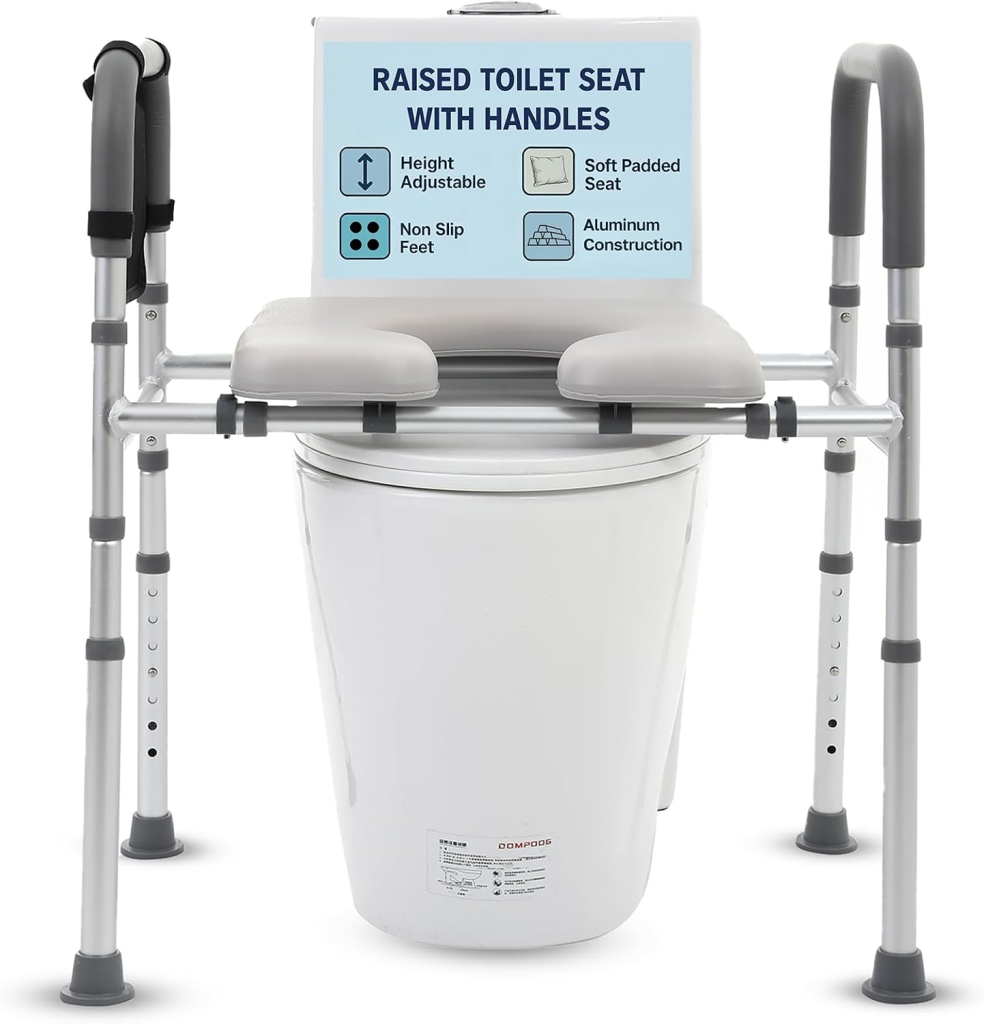
Best For: Caregivers looking for a budget-friendly, dependable standalone frame that does not require bolting directly into fragile porcelain fixtures.
Not Ideal For: Users wanting a soft, cushioned seating surface right out of the box, as this model features a standard molded plastic seat.
My Opinion
This is a solid mid-tier option if you don’t want to spend a fortune. It gets the job done securely, though you may want to add a padded seat cover for extra comfort.
Key Features & Specifications
- Weight Capacity: 300 lbs standard support
- Approx. Price: ~$45.00
- Design: Lightweight standalone commode frame surrounding the bowl
- Maintenance: Non-porous molded plastic that is exceptionally easy to clean
- Primary Advantage: Standalone design avoids direct pressure or bolting into porcelain
Things We Loved
- Affordable price point for families on a fixed income
- Simple, uncluttered design that is easy to wipe down
- Independent frame doesn’t put pressure on the porcelain bowl
- Reliable barrier of support for smooth sit-to-stand transitions
Things to Know Before Buying
- Plastic seat can feel cold and hard during winter months
- Adjustment mechanisms for height can occasionally feel stiff
3. KingPavonini Raised Toilet Seat with Handles
Most Customizable Fit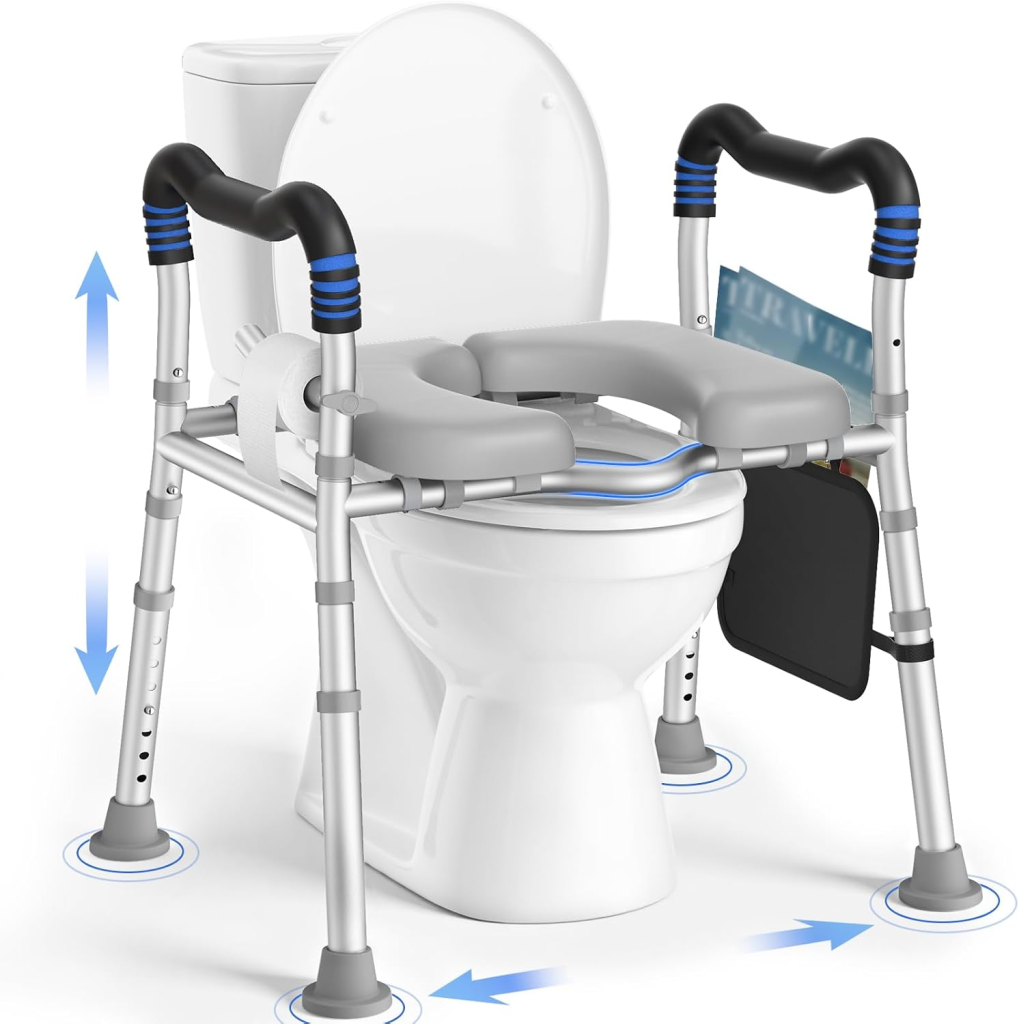
Best For: Households where multiple people use the same bathroom and need custom height adjustments, or where floor space beside the toilet is restricted.
Not Ideal For: Caregivers who want a permanent, bolt-down fixture that never shifts position.
My Opinion
The adjustability of this model is fantastic. If your parent has a wider frame or if you share a bathroom and need to tweak the dimensions to fit tightly against a vanity cabinet, this model offers great versatility.
Key Features & Specifications
- Weight Capacity: Robust 500 lbs weight capacity suitable for heavy-duty use
- Approx. Price: ~$59.99
- Adjustability: Fully adjustable width and height settings
- Grip Handles: Textured, non-slip armrests for secure hold with damp hands
- Primary Advantage: Customizing fit for narrow or unusually shaped bathrooms
Things We Loved
- Highly customizable width and height settings
- Generous 500 lb weight capacity
- Textured, non-slip armrests provide a secure grip
- Great for narrow bathrooms or fitting near vanities
Things to Know Before Buying
- Relies on push-pin adjustments which should be checked periodically
- Bulkier packaging requires careful initial assembly
How to Choose the Right Model for Yourself or Your Loved One
With so many configurations on the market, choosing the right raised toilet seat comes down to evaluating three main factors: physical needs, your bathroom layout, and your installation preferences.
1. Assess Mobility and Strength Levels
If your loved one has good upper-body strength and just needs a few extra inches of height to make sitting down easier, a simple clamp-on riser might suffice. However, if they experience significant leg weakness, poor balance, or generalized fatigue, a full standalone frame with sturdy armrests is essential.
2. Check Your Toilet Shape (Round vs. Elongated)
Take a quick tape measure to your toilet bowl before ordering. Standard round bowls are shorter and circular, while elongated bowls are oval-shaped. Many modern risers are universal, but double-checking specifications prevents the frustration of returns.
3. Consider Weight Capacities
Always look closely at the manufacturer’s weight limit. Selecting a model with a higher weight capacity than strictly necessary provides an extra safety margin, ensuring the frame will not flex or wobble when your parent puts their full body weight onto one side armrest.
Final Thoughts
Helping a loved one maintain their independence while keeping them safe at home is a profound act of love. Upgrading your bathroom with a dependable raised toilet seat with handles might feel like a big step, but it is often the single most effective way to prevent scary slips and restore daily confidence.
Take your time measuring your space, consider your parent’s specific physical needs, and choose a model that gives you both peace of mind.
Frequently Asked Questions
Will a raised toilet seat with handles fit on any standard toilet?
Most modern raised toilet seats and safety frames are engineered with universal mounting brackets or adjustable widths designed to fit standard round and elongated porcelain toilets. However, unusual designer toilets, bidets, or square bowls can sometimes present compatibility hurdles. Always check the manufacturer’s dimensional guidelines before purchasing to ensure a secure, flush fit against your specific toilet bowl shape.
Are raised toilet seats difficult to install for someone who isn’t handy?
Many freestanding safety rails and modular risers require zero tools and can be assembled in less than ten minutes following simple visual instructions. Clamp-on models typically feature a large tightening screw at the front or back that you twist by hand. Standalone frames simply slide into position around the toilet base, meaning you won’t need to hire a plumber or break out heavy toolbox equipment.
How do you clean and sanitize a raised toilet seat properly?
Because hygiene is vital in the bathroom, most raised seats are constructed from medical-grade, non-porous molded plastic or sealed aluminum tubing. You can clean them using standard antibacterial household wipes, mild dish soap, or hospital-grade disinfectant sprays. Avoid abrasive scouring pads that can scratch the plastic surface and harbor bacteria over time.
Can a raised toilet seat damage the porcelain toilet bowl?
Certain clamp-style risers apply direct pressure against the porcelain rim. If overtightened or left loose enough to shift constantly, they can potentially chip ceramic. To prevent this, look for models equipped with rubber bumpers or choose a standalone frame that rests entirely on the floor, bypassing direct pressure on the toilet bowl altogether.
What is the difference between a toilet seat riser and a toilet safety rail?
A standard toilet seat riser attaches directly onto the bowl to elevate the sitting height by a few inches without necessarily providing side arms. A toilet safety rail or frame features floor-standing legs with armrests that surround the toilet. Many modern products combine both features into a single unit, providing both extra height and supportive side rails.
How much weight can a typical raised toilet seat support?
Standard residential raised toilet seats and safety frames generally support anywhere from 300 to 500 pounds, depending on the materials used. Heavy-duty models reinforced with aluminum crossbars are specifically rated for higher capacities up to 500 pounds, offering superior stability for larger individuals or post-surgical recovery periods.
Can these seats be adjusted if my parent gains or loses height?
Standalone safety frames and modular risers usually feature adjustable telescoping legs with push-pins, allowing you to raise or lower the overall height by several inches. This flexibility is particularly useful if multiple family members share the bathroom or if your parent’s mobility needs change over time.
Do raised toilet seats feel cold when sitting down?
Standard hard plastic and molded resin seats can feel chilly, especially during winter months. Many caregivers solve this by purchasing washable fabric seat covers designed specifically for medical commodes, or by choosing models that feature soft, waterproof padding built directly into the seat surface.
What should I do if the frame feels wobbly on tile floors?
Bathroom tile floors can sometimes be slick or uneven, causing rubber suction feet to slide slightly. Ensure the anti-slip rubber pads on the bottom of the frame legs are clean and dry. If the floor has slight slopes, adjust the individual telescoping legs until all four corners make firm, flush contact with the ground.