
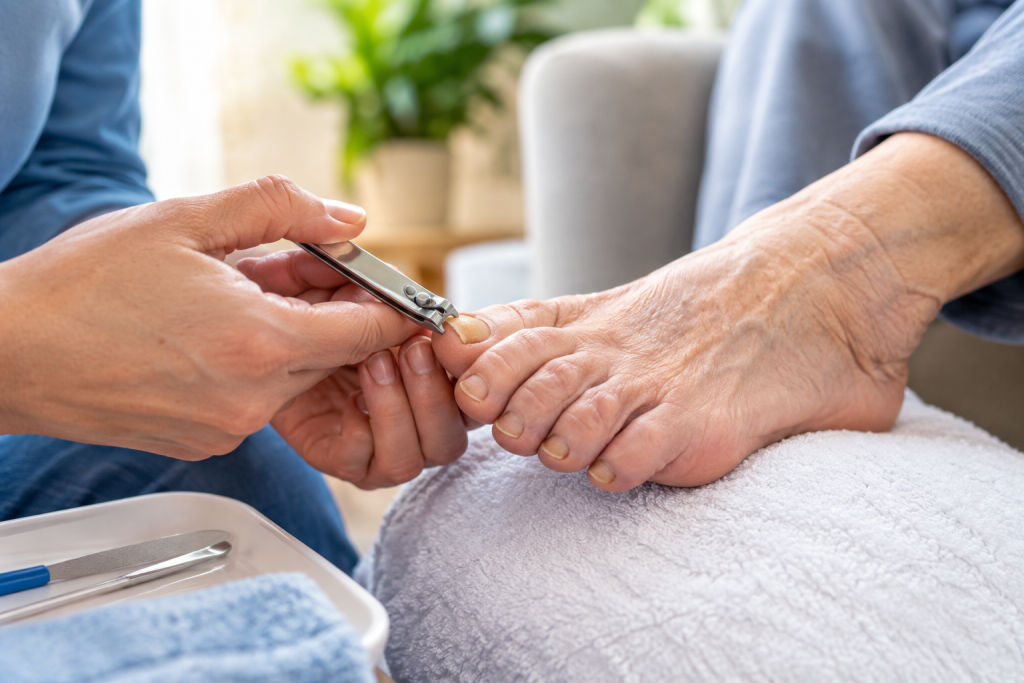
Helping an aging loved one with their foot care can start as a small task and quickly become a source of anxiety for both of you. When you look closely, you might find thick nails that are difficult to manage, while your parent feels embarrassed about needing help.
Learning how to cut elderly toenails safely is a critical part of senior health. Poorly trimmed nails can lead to pain, infections, and reduced mobility. Understanding why this task is challenging, using the right tools, and knowing when to call a professional can make all the difference.
Why Elderly Toenails Can Be Difficult to Manage
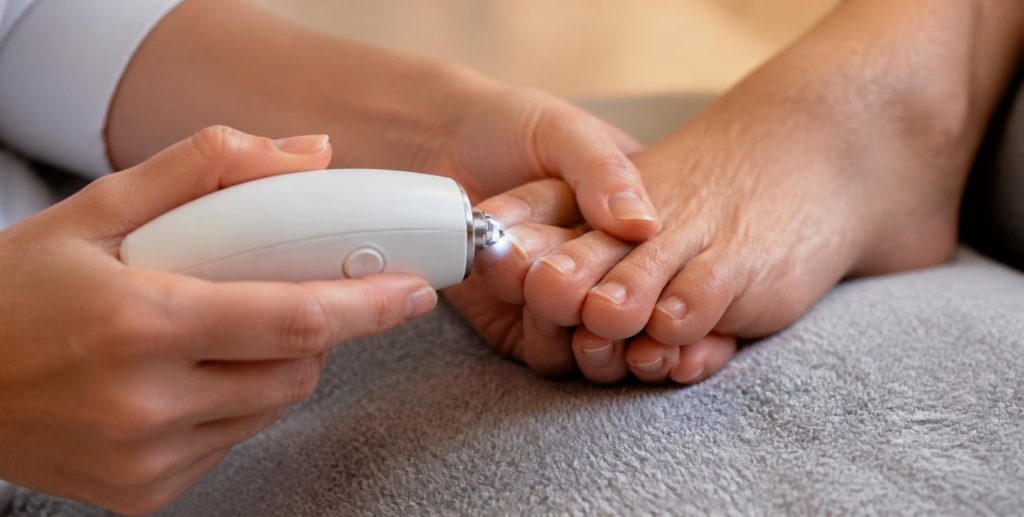
It is not your imagination—aging changes the structure and growth of toenails. The nail plate frequently thickens, a condition known as onychauxis, making standard household clippers completely ineffective. Nails also grow more slowly, leaving more time for them to become brittle, ridged, and discolored.
Overall health heavily influences foot care as well. Conditions like peripheral artery disease or diabetes significantly reduce blood flow to the feet, slowing healing and leaving nails more vulnerable to fungal infections. Because diabetes can cause nerve damage, seniors might not feel pain if the skin is accidentally nicked, turning a minor cut into a slow-healing, serious infection.
Beyond the nails themselves, physical hurdles make self-care nearly impossible for many older adults. Reduced flexibility from arthritis or back pain prevents seniors from reaching their feet. Vision impairments and decreased hand dexterity add even more frustration, transforming what used to be a simple hygiene routine into a major obstacle.
Essential Tools for Safely Trimming Thick Toenails
You cannot do this job well with a standard pair of fingernail clippers. You need the right equipment to make the process safe and effective for you and your parent.
The Importance of the Right Clippers
Invest in a quality pair of podiatrist-recommended tools.
Nail Nippers
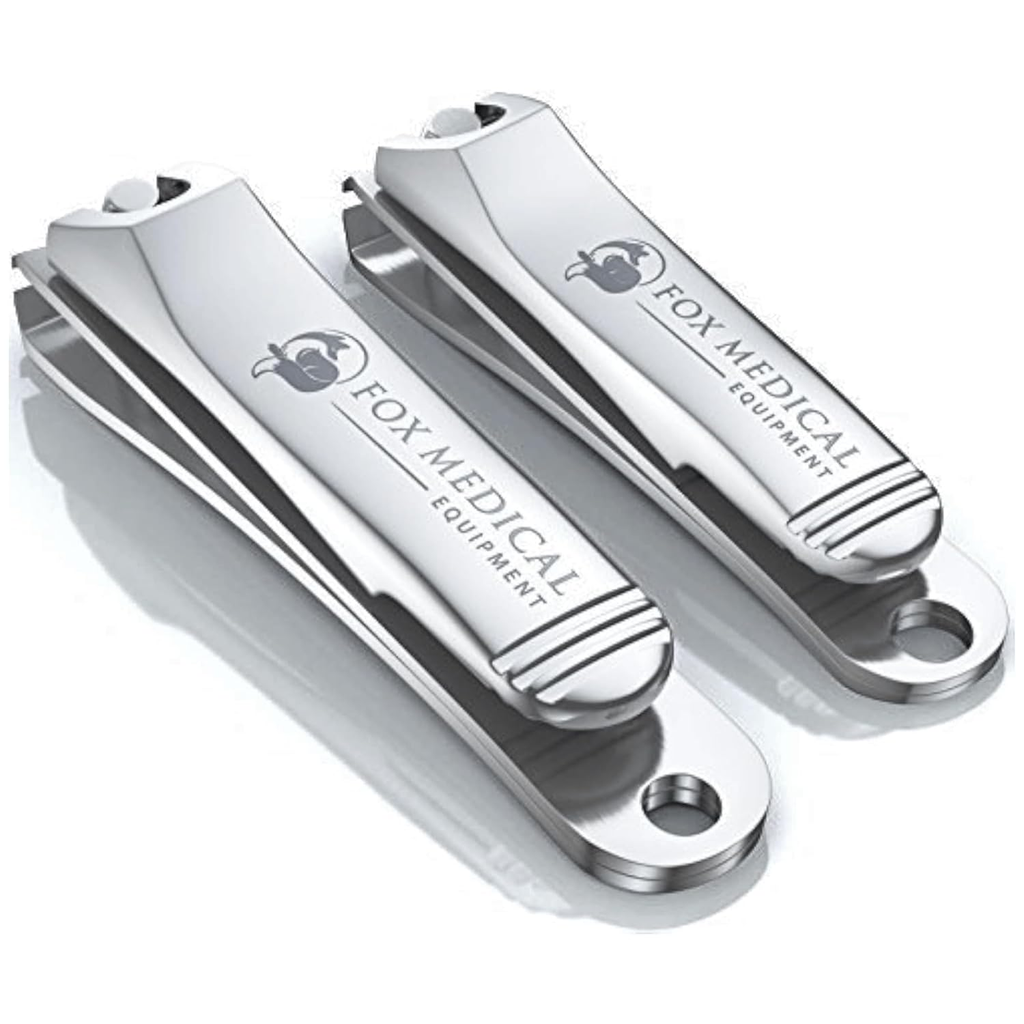
Unlike standard clippers, these look like small pliers with a very sharp, powerful jaw. They provide much more leverage, allowing you to cut through thick, hard nails with minimal effort.
Barrel Spring Nippers
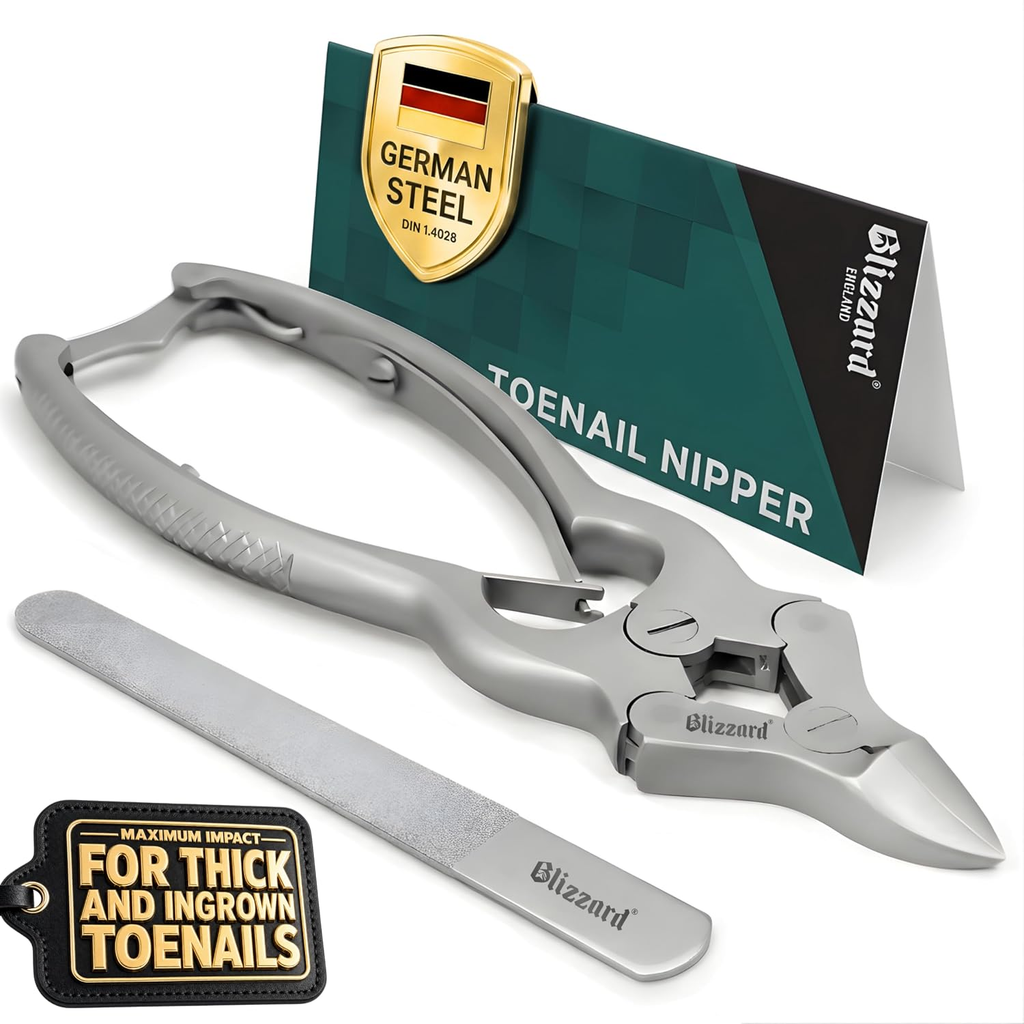
Look for a model with a barrel spring. This mechanism automatically opens the nippers after each squeeze, making them much easier to use if you or your parent have arthritis.
Long-Handled Clippers:
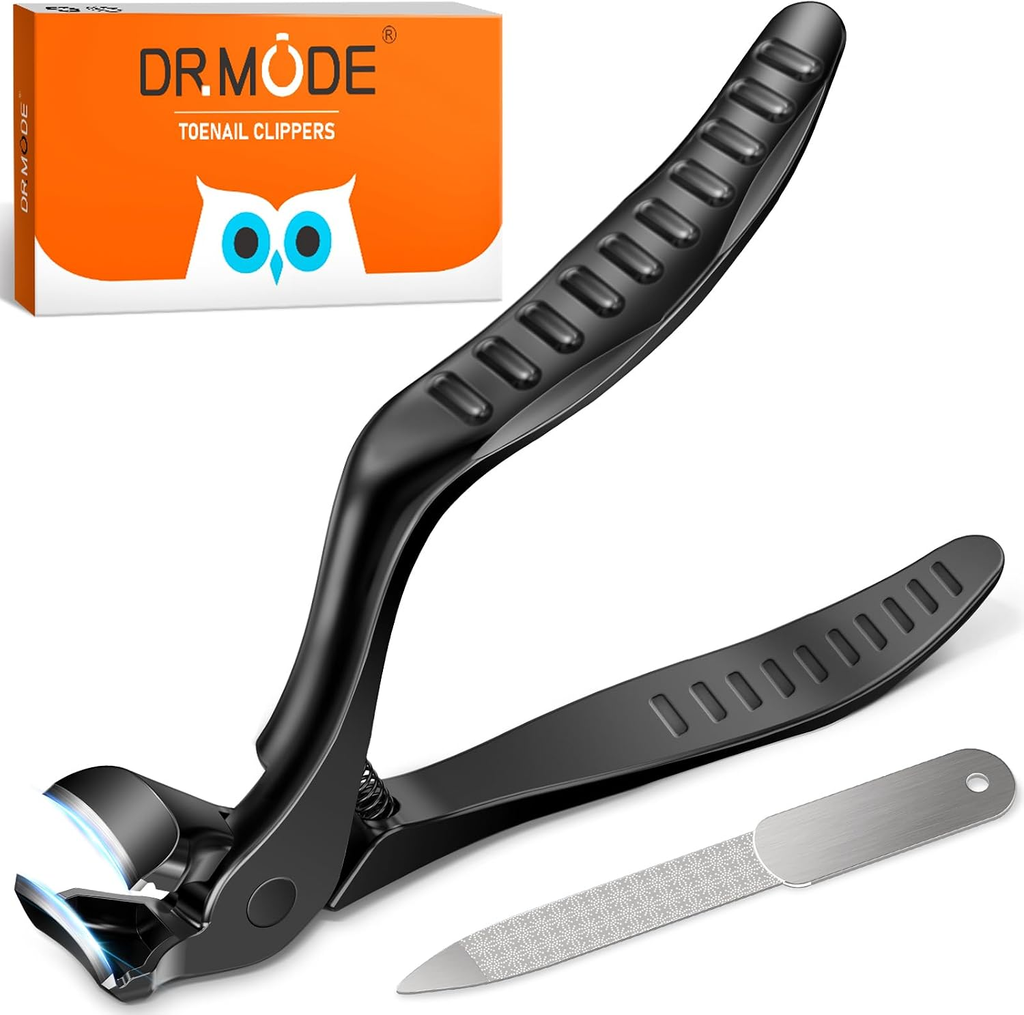
If your parent can still do some self-care but can’t reach their feet, a pair of long-handled clippers can be a great solution.
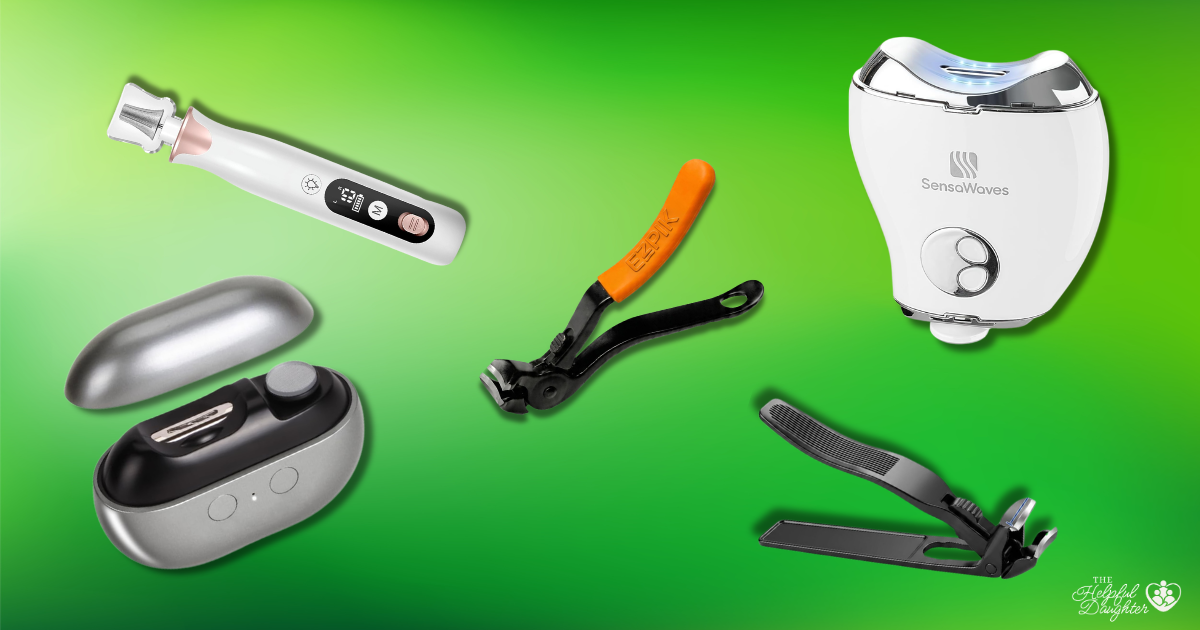
Top 5 Toenail Clippers for Seniors (2026)
Looking for the best toenail clippers for seniors? Compare the top 5 clippers with honest reviews, safety tips, and caregiver advice.
Read More →The Complete Foot Care Kit
Your goal is to create a safe, clean, and effective “salon” experience at home.
A Basin for Soaking
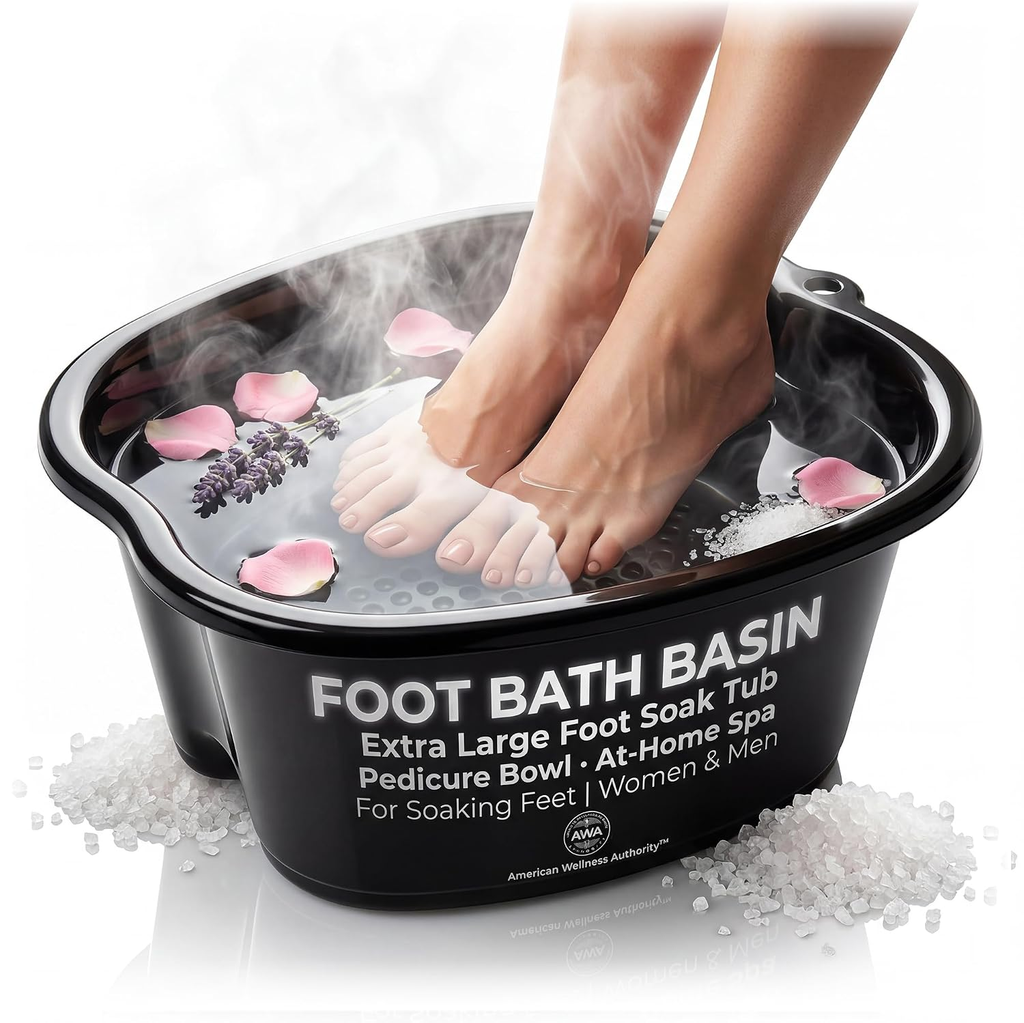
This is non-negotiable for thick nails. Any small basin or even a clean plastic storage tub will work, as long as their feet fit comfortably.
A Soft Towel:
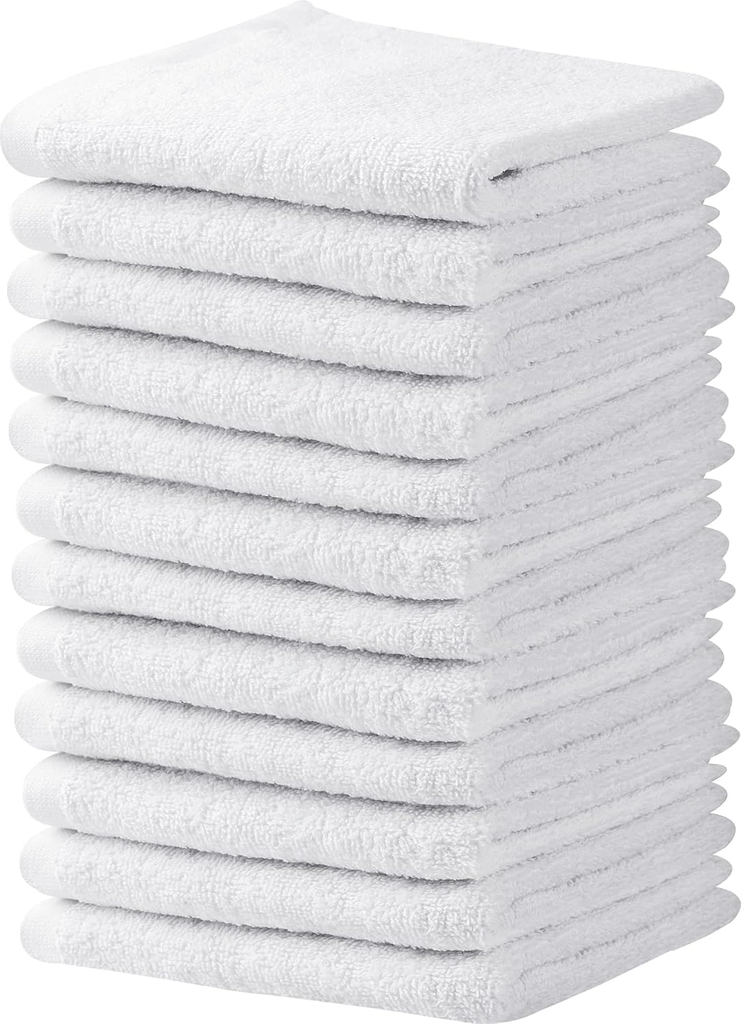
To thoroughly dry the feet, especially between the toes.
An Emery Board
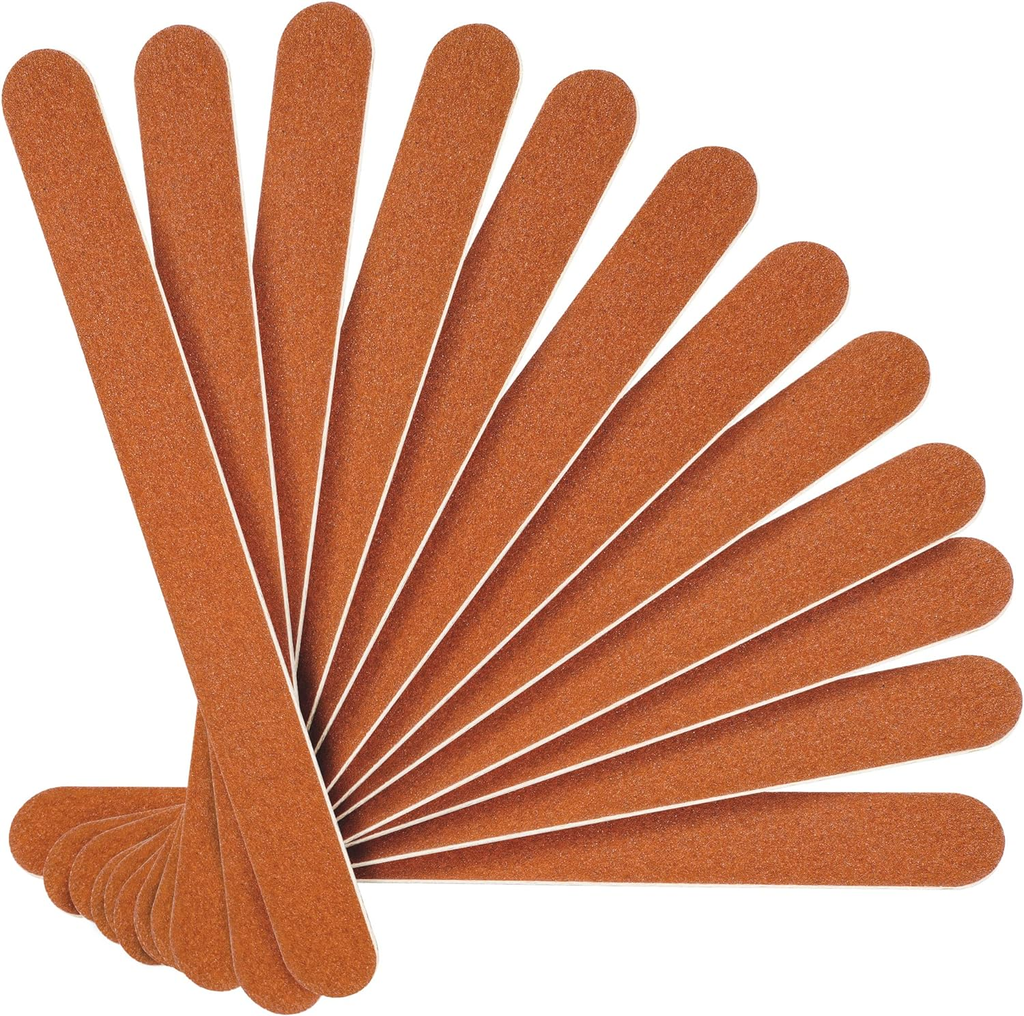
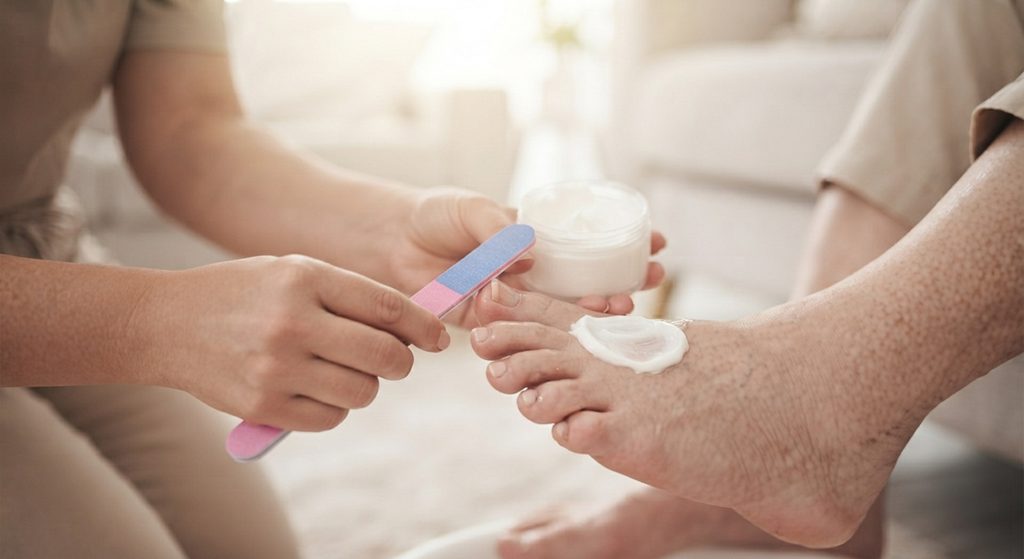
Essential for smoothing any sharp edges after cutting, which prevents snagging on socks or blankets.
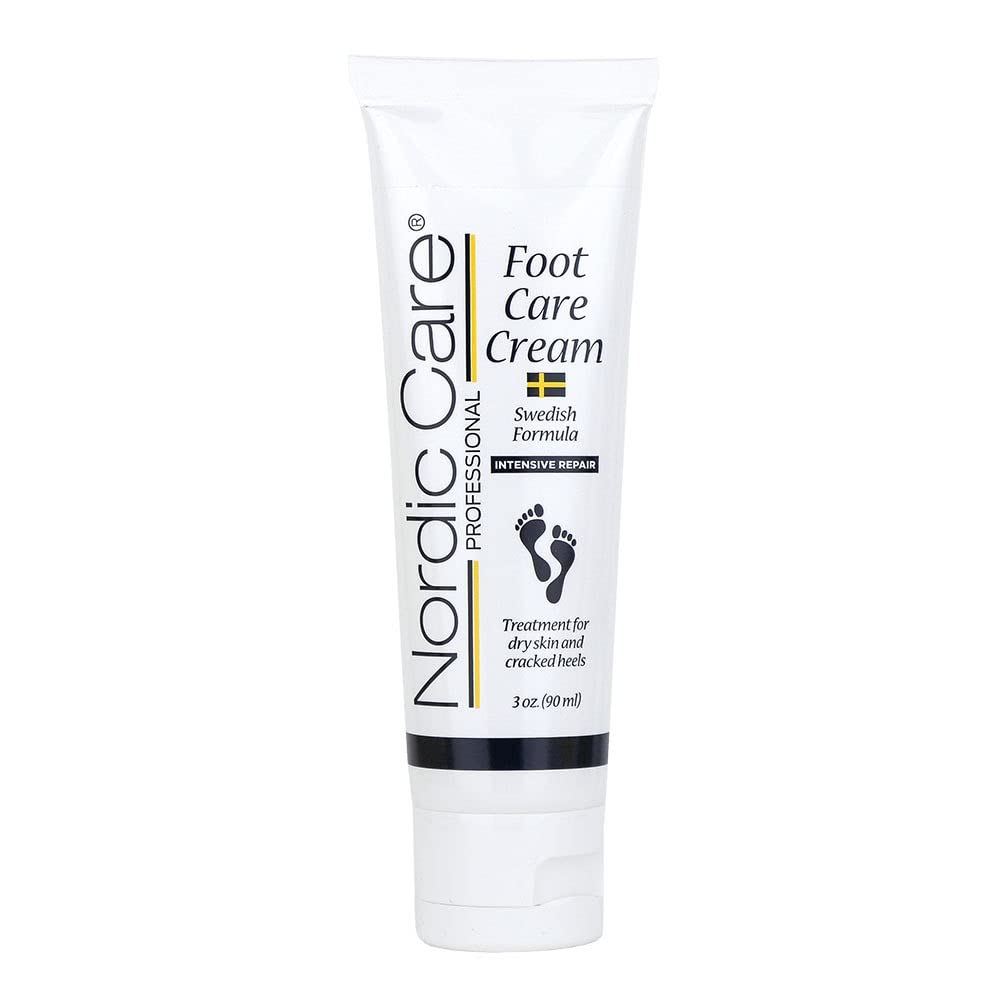
A Gentle Foot Cream
To moisturize the skin after the procedure. Avoid putting lotion between the toes, as this can create a moist environment where fungus can thrive.

Optional: Antiseptic Wipes
Good for a final clean of your tools before and after use.
Trust & Credibility Check: I always recommend buying a dedicated set of tools that are only used for your parent’s feet. This reduces the risk of introducing bacteria or fungus from other family members’ nails. You can find high-quality nippers for under $20 on Amazon or at most pharmacies.
Step-by-Step Guide: How to Cut Elderly Toenails Safely
Never attempt to cut thick, dry nails, as this increases the risk of cracking and injury. Follow these steps for a safe trimming session:
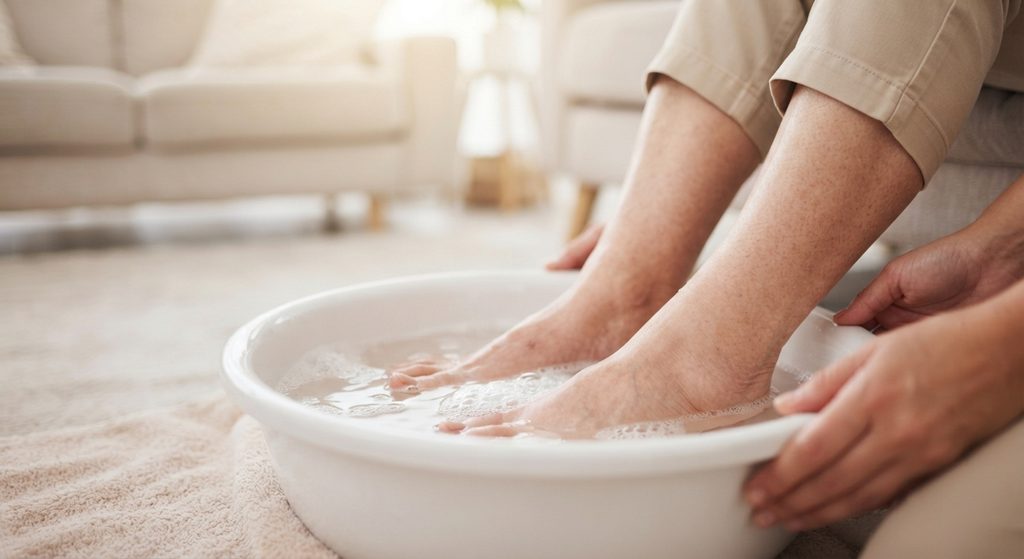
Soak the Feet
Fill a basin with warm, soapy water and let your parent’s feet soak for 10 to 15 minutes. This softens the nail plate and makes the surrounding skin pliable.
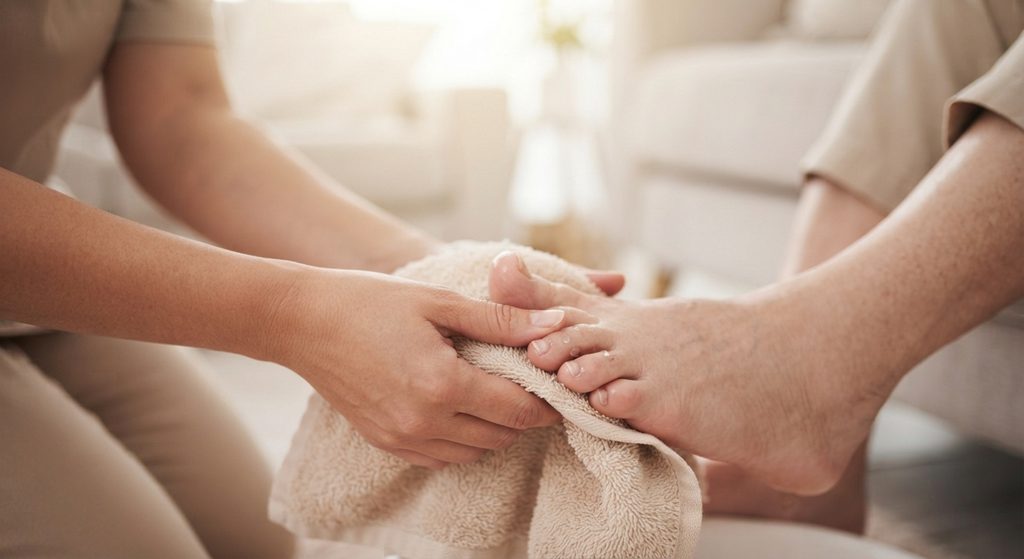
Dry Completely
Lift the feet out and dry them thoroughly with a towel, paying careful attention to the spaces between the toes to prevent moisture-trapping fungal growth.
Get Positioned
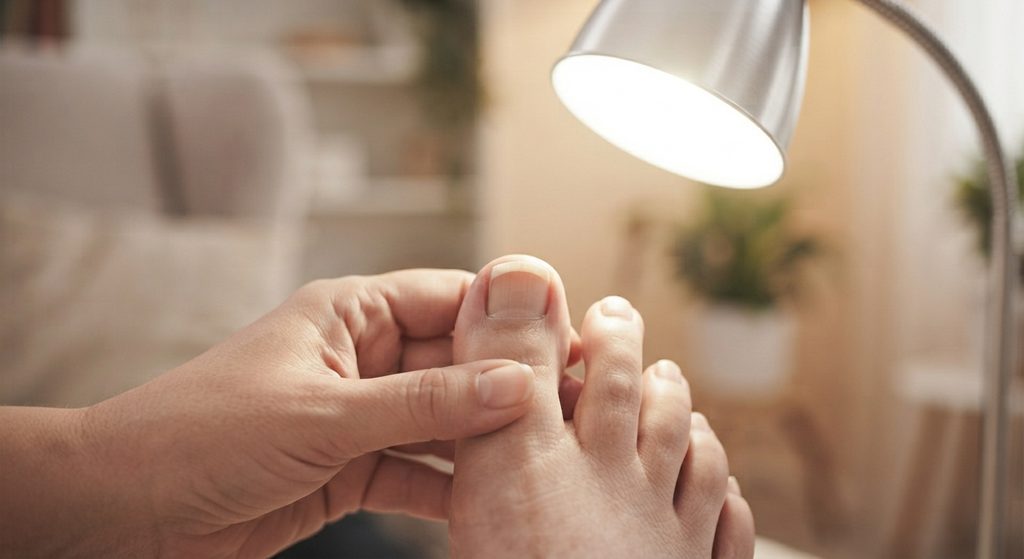
Ensure your parent is seated in a stable armchair with bright lighting, such as a gooseneck lamp positioned near their feet.

Secure the Toe
Gently but firmly hold the target toe with one hand to steady it, keeping your fingers safely away from the blades.
Cut Straight Across
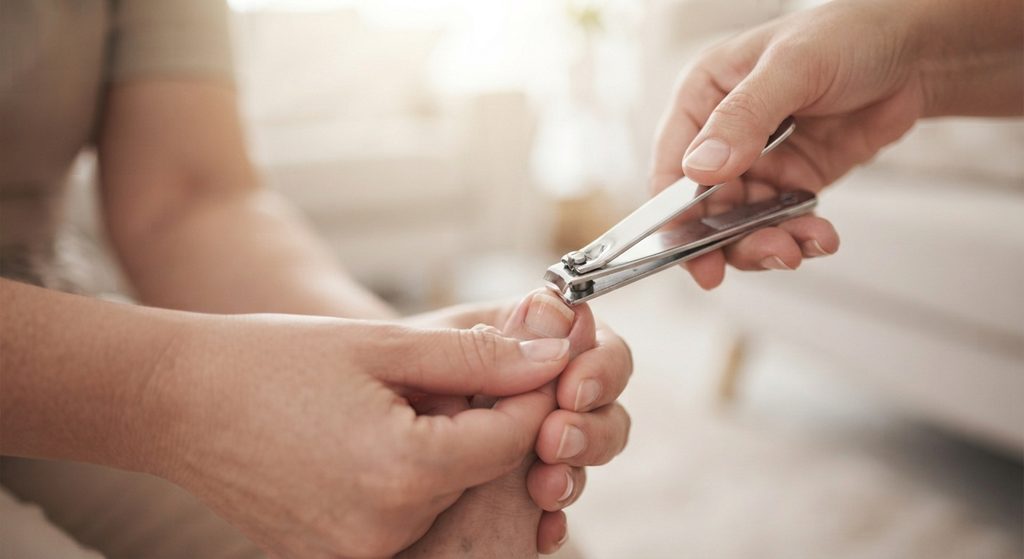
Never curve the edges down into the corners, as deep cuts cause painful ingrown toenails. Make small, controlled snips across the nail rather than trying to cut the entire width at once.
Leave a Safe Margin
Avoid cutting too close to the quick. Leave a tiny sliver of the white part visible to prevent pain and bleeding.
File and Moisturize
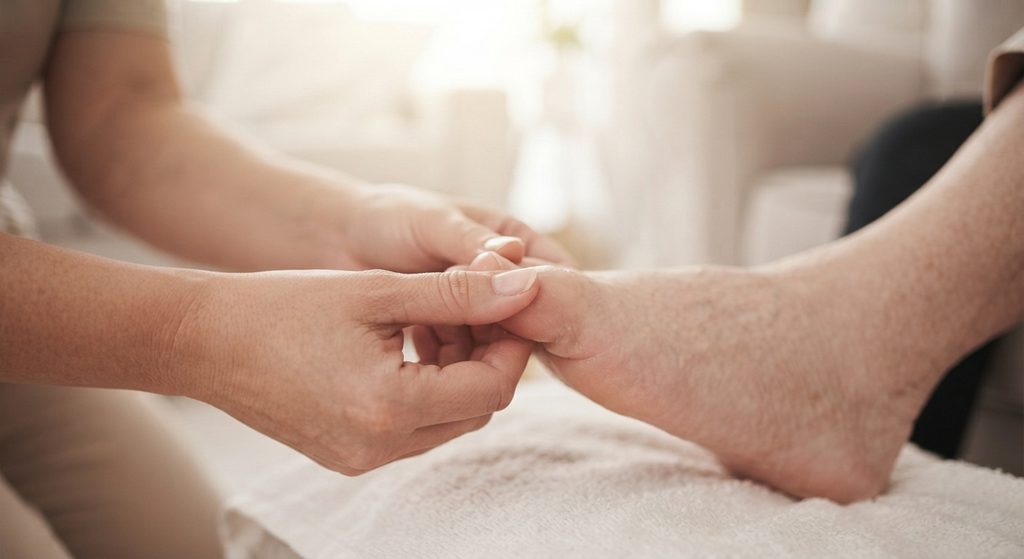
Smooth any sharp corners or rough edges with an emery board. Apply a gentle foot cream to the tops and soles of the feet, carefully avoiding the skin between the toes.
When to Call a Professional
Some circumstances mean home care is simply too risky. Seniors with diabetes, peripheral artery disease, severe nail fungus, or a history of chronic ingrown toenails should always have their feet managed by a podiatrist. Insurance often covers these preventative visits.
Furthermore, stop an at-home session immediately if you notice signs of infection (like redness, swelling, or warmth), if the nail is actively ingrown, if your parent complains of pain, or if you feel too anxious to proceed safely. Handing the task over to an expert ensures your parent gets the highest standard of care without unnecessary stress.
Final Thoughts

Taking care of your parent’s feet is a tangible act of love and an essential part of maintaining their independence. Pain-free feet mean they can walk, stand, and stay active, which is crucial for their overall health and well-being.
By understanding the unique challenges of elderly toenails, equipping yourself with the right tools, and following a careful, patient process, you can manage this task safely at home.
But the most important lesson I’ve learned is to know when to say, “This is a job for a professional.” Whether it’s because of a chronic condition like diabetes or simply because you are uncomfortable or anxious about the task, calling a podiatrist is always the right choice. It removes the stress for you and ensures your parent receives the highest standard of care.
You’re doing a wonderful job. Taking the time to learn how to do this safely shows just how much you care.
Important Note on Health & Safety Content
The information provided on TheHelpfulDaughter.com is for informational and educational purposes only and should not be construed as professional medical advice. Always consult a qualified physician or podiatrist regarding any questions or concerns you have about your parent’s physical health, circulation, or foot care.
Frequently Asked Questions (FAQ)
Should you soak elderly toenails before cutting?
Yes, absolutely. Soaking elderly toenails in warm, soapy water for 10 to 15 minutes is the single most important step you can take. As we age, nails become incredibly thick, hard, and brittle. Soaking softens the nail plate, making it flexible and much easier to cut cleanly without causing it to split or crack.
How often should elderly toenails be cut?
As a general rule of thumb, check your parent’s nails every 3 to 4 weeks. Because toenails grow more slowly in seniors, they do not need to be trimmed as frequently as a younger person’s nails. Some individuals may only need attention every 6 weeks.
How do you cut extremely thick elderly toenails?
Cutting extremely thick nails requires a pair of high-quality, sharp nail nippers rather than standard fingernail clippers. After a thorough soaking, use the nippers to make a series of small, controlled snips across the nail width rather than trying to cut through everything in one go. If the nail is too thick for safe home management, consult a podiatrist.
How do you prevent ingrown toenails in the elderly?
The most effective way to prevent painful ingrown toenails is to always cut the nails straight across and never curve them down into the corners. Cutting too deeply into the sides is the primary cause of this painful issue. Additionally, ensure your parent’s shoes fit properly and are not overly tight.
Can you use an electric nail file on elderly toenails?
While electric nail files can thin down very thick nails, they require extreme caution and a steady hand because they can easily burn the skin or damage the nail bed. For most caregivers, manual nippers and a standard emery board offer a much safer, more controllable alternative. Always consult a podiatrist before introducing an electric file.
How do you trim toenails if you have arthritis?
Trimming toenails can be exceptionally difficult if you or your parent suffer from hand arthritis. Look for tools designed to provide better leverage and reduce required force, such as nail nippers featuring a barrel spring that automatically opens the handles after each squeeze. If hand pain or stiffness makes it too difficult, hand the task over to a professional.