
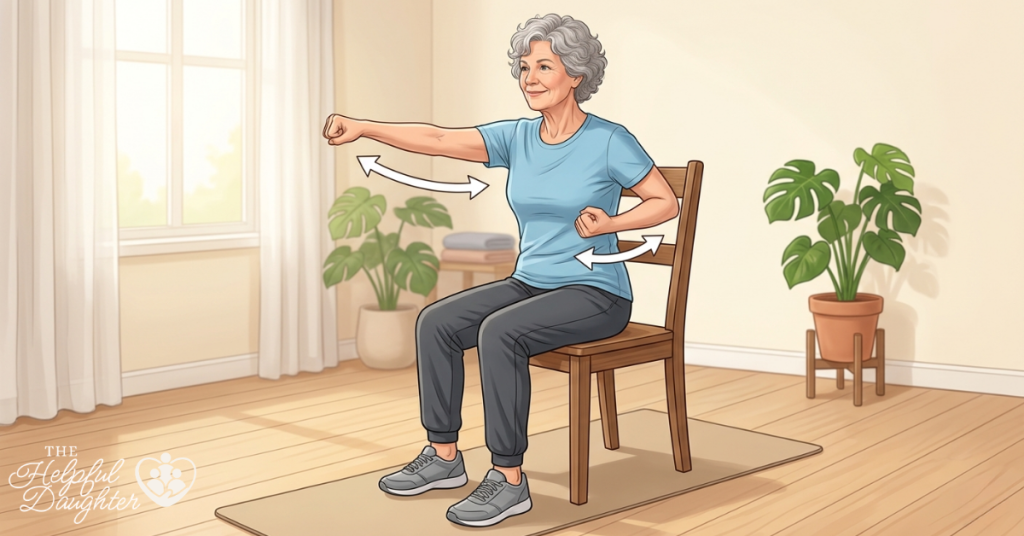
Aging doesn’t have to mean losing your independence or your spark. While it’s true our bodies change, staying active remains the best way to keep your mobility, support your joints, and feel energized. For many, high-impact workouts aren’t the right fit anymore—and that’s okay.
These chair exercises for seniors are a game-changer. They offer a safe, low-impact way to improve strength, balance, and flexibility without putting unnecessary strain on your body. Whether you’re managing arthritis or just looking for a way to stay active from the comfort of home, these movements will help you feel more confident and steady on your feet.
Benefits of Chair Exercises for Seniors

The beauty of chair exercises for seniors is that they make fitness accessible without the “ouch” factor. By taking the weight off your joints, you can focus on building strength, balance, and flexibility in a way that feels safe and sustainable.
When my parents started these, the change wasn’t just physical—they felt more capable. Consistent chair workouts help reduce pressure on the knees and lower back, making it easier to stay active without the fear of a fall. It’s about more than just “working out”; it’s about making sure your body is ready for real-life movements, like getting out of a car or reaching for a high shelf.
How to Prepare for Chair Exercises
Your 5-Step Pre-Workout Checklist
Before you begin your chair exercises, take a quick moment to set yourself up for a safe, comfortable, and highly effective session.
- ✓ The “No-Wiggle” Base: Choose a firm, high-back chair without wheels (like a sturdy kitchen or dining chair). Avoid soft sofas or recliners that make it hard to sit tall.
- ✓ Gear Up for Comfort: Put on a pair of supportive, closed-toe shoes and wear loose, comfortable clothing that allows your arms and legs to move freely.
- ✓ Clear Your Runway: Make sure you are in a well-lit space with enough room to fully extend your arms out to the sides and straighten your legs in front of you without hitting any furniture.
- ✓ Keep a Steady Rhythm: Remember to breathe! Take deep, steady inhales and exhales throughout each movement to keep your blood pressure stable and your muscles energized.
- ✓ Hydration at Hand: Place a glass or bottle of water within arm’s reach. Taking a small sip after every few exercises keeps dizziness at bay and keeps you feeling refreshed.
💡 Small Step, Big Win: Even 15 minutes of consistent chair workouts a day can lead to incredible breakthroughs for your long-term mobility and independence!
1. Seated Marches
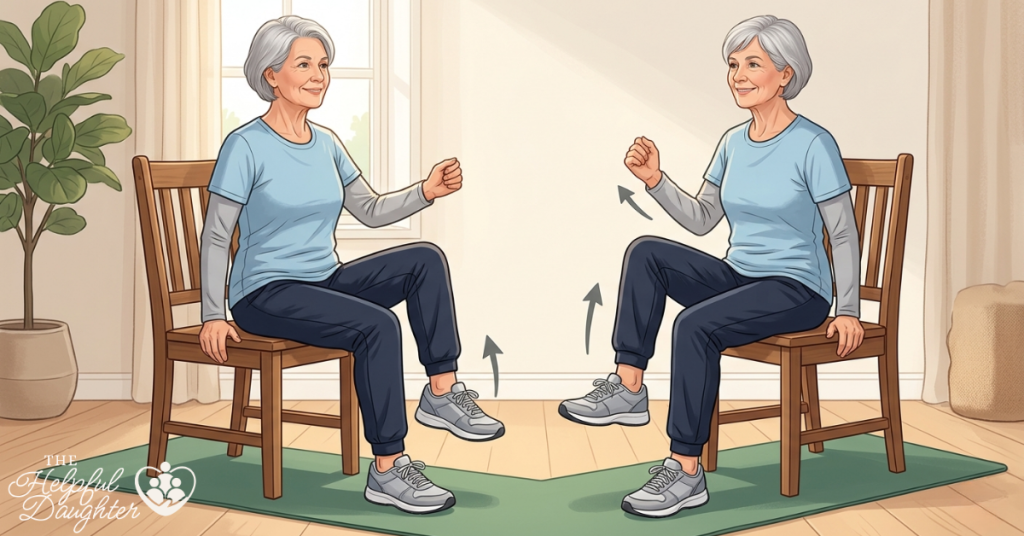
Seated marches improve circulation, strengthen the hips and thighs, and gently raise the heart rate. This movement also enhances coordination and mobility.
How to Perform Seated Marches
- Sit upright in the chair
- Keep feet flat on the floor
- Lift one knee toward the chest
- Lower it slowly
- Repeat with the opposite leg
- Continue alternating legs for 30 to 60 seconds.
Muscles Targeted
- Hip flexors
- Quadriceps
- Core muscles
2. Chair Leg Extensions
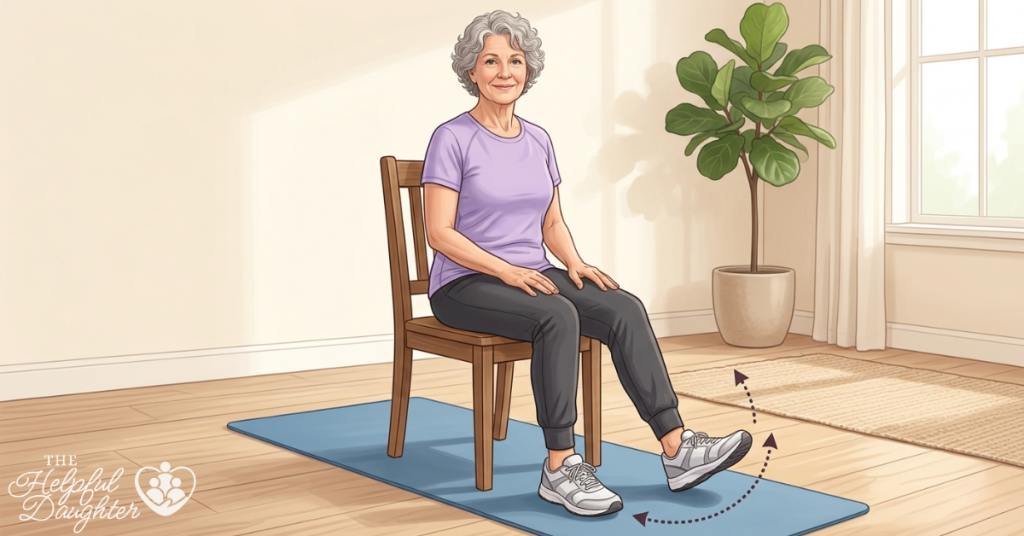
Leg extensions help strengthen the quadriceps, which are essential for standing, walking, and climbing stairs. Strong upper leg muscles help support balance and reduce fall risk.
How To Do Chair Leg Extensions
- Sit tall with knees bent
- Slowly extend one leg straight out
- Hold for 2 to 3 seconds
- Lower slowly
- Repeat on the other side
- Aim for 10 to 15 repetitions per leg.
3. Seated Arm Circles
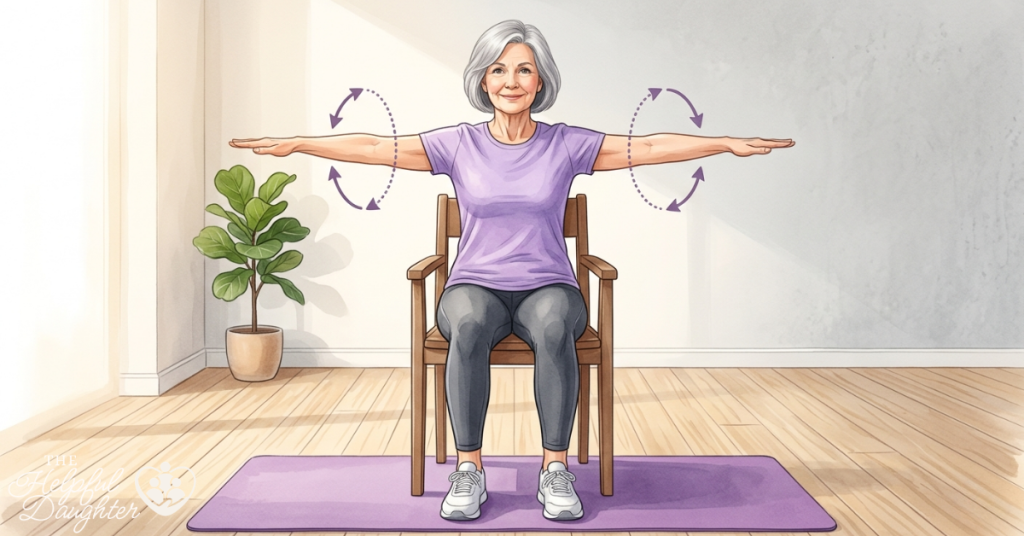
This simple exercise loosens the shoulders, improves circulation, and strengthens the upper body.
Instructions
- Sit upright
- Extend arms out to the sides
- Make small forward circles
- Continue for 15 seconds
- Reverse direction
- Increase circle size gradually if comfortable.
Primary Muscles Worked
- Shoulders
- Upper back
- Arms
4. Chair Sit-to-Stands
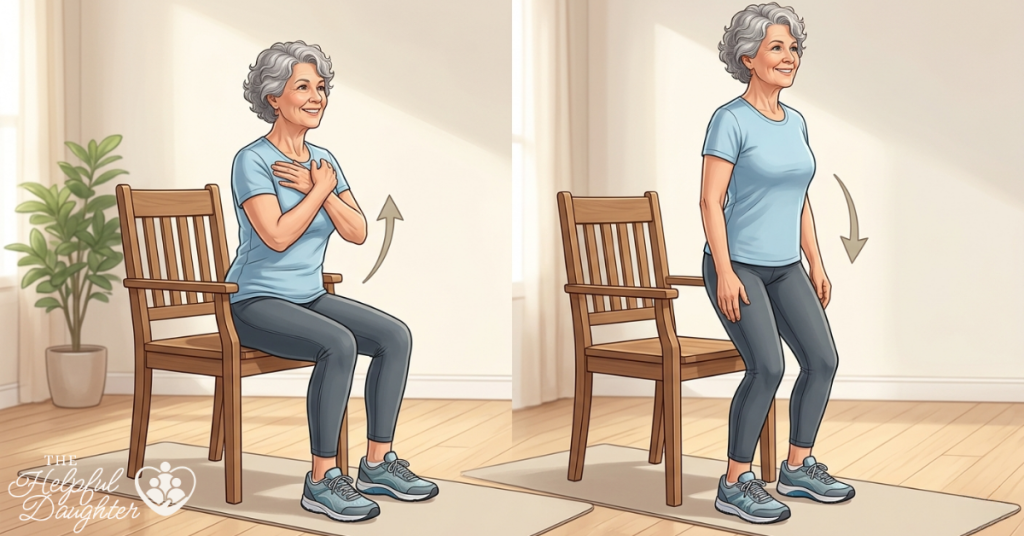
Chair sit-to-stands mimic everyday movements and improve lower body strength dramatically.
How to Perform Safely
- Sit near the edge of the chair
- Place feet shoulder-width apart
- Lean slightly forward
- Push through the heels to stand
- Slowly sit back down
- Perform 8 to 12 repetitions.
Benefits of Sit-to-Stands
- Builds leg strength
- Improves balance
- Enhances independence
- Supports safer movement
5. Seated Toe Taps
Toe taps improve ankle mobility and circulation while helping reduce stiffness in the lower legs.
Instructions
- Keep heels on the floor
- Lift toes upward
- Lower toes slowly
- Repeat rhythmically
- Continue for 30 seconds.
This low-impact movement is excellent for beginners and individuals recovering from inactivity.
6. Seated Knee Lifts
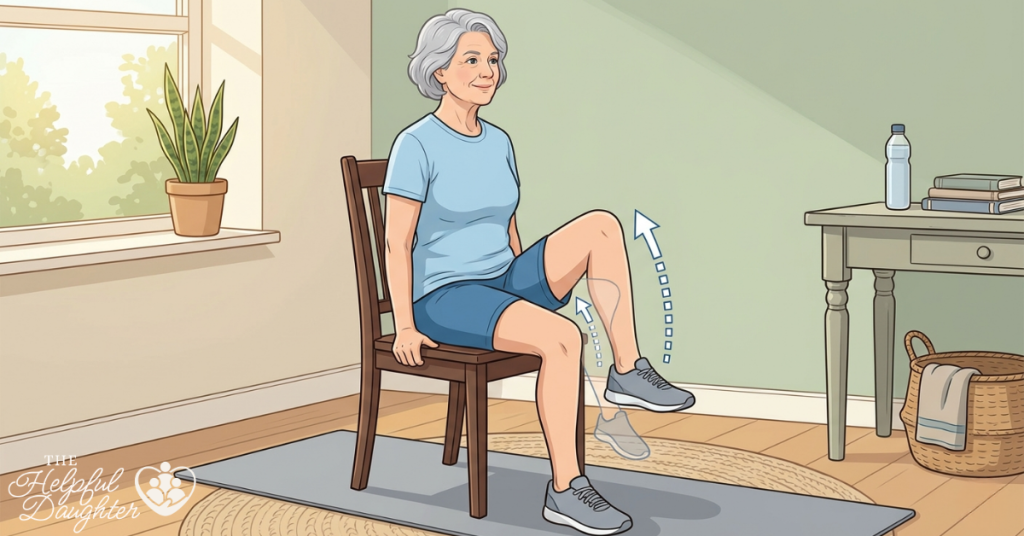
Knee lifts strengthen the abdominal muscles and improve posture. They also help with improving hip flexibility, supporting spinal alignment, and enhancing cordination
How to Do Knee Lifts
- Sit upright without leaning back
- Lift one knee toward the chest
- Hold briefly
- Lower with control
- Alternate sides
- Complete 10 repetitions per side.
7. Chair Side Bends
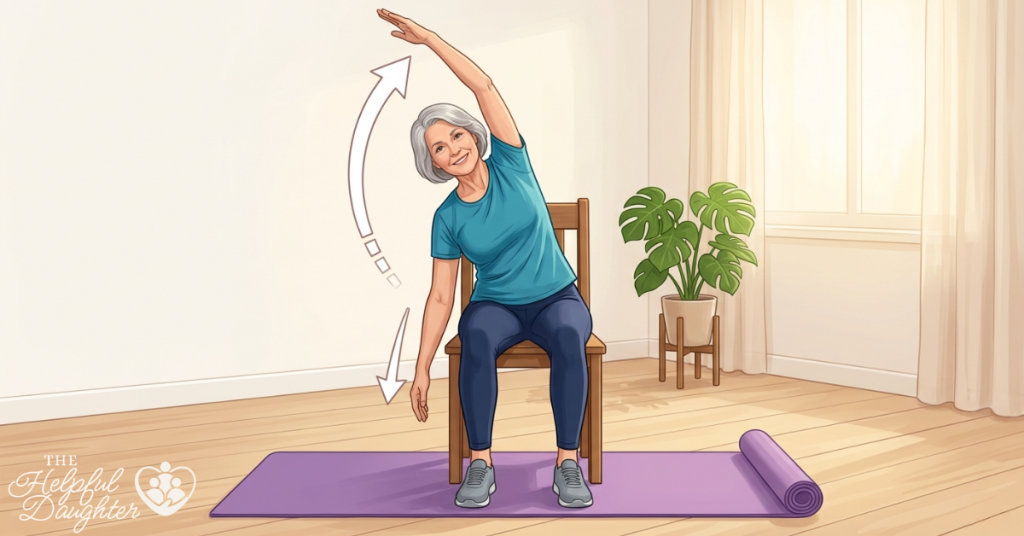
Side bends stretch the torso and help improve flexibility throughout the spine and waist. This movement helps maintain flexibility needed for daily tasks like reaching and bending.
Directions
- Sit tall
- Raise one arm overhead
- Lean gently to the opposite side
- Hold for several seconds
- Return to center
- Repeat on both sides.
8. Seated Heel Raises
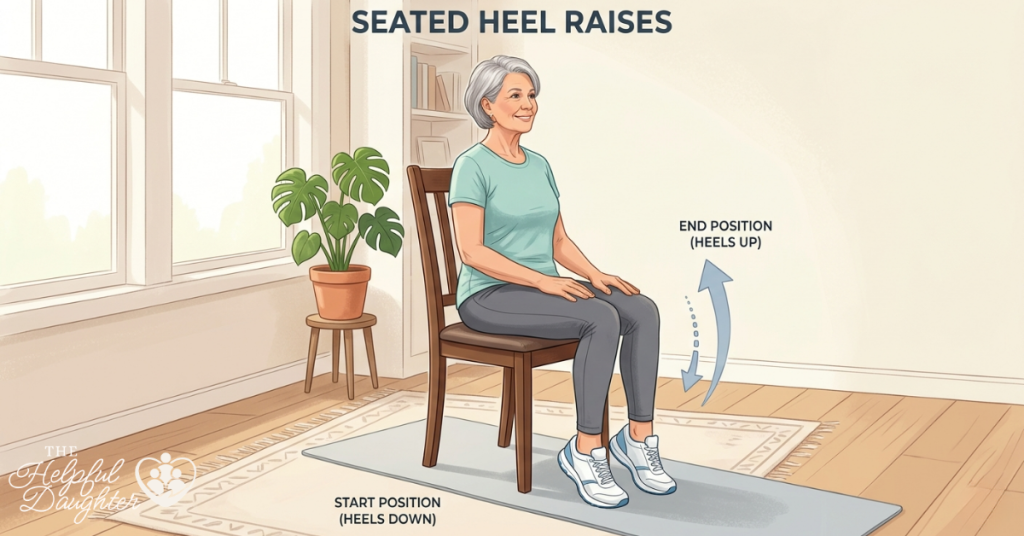
Heel raises activate the calf muscles and improve circulation in the legs. Strong calves assist with walking stability and balance control.
How to Perform Heel Raises
- Sit with feet flat
- Lift heels while keeping toes down
- Hold briefly
- Lower slowly
- Repeat for 15 repetitions.
9. Seated Punches
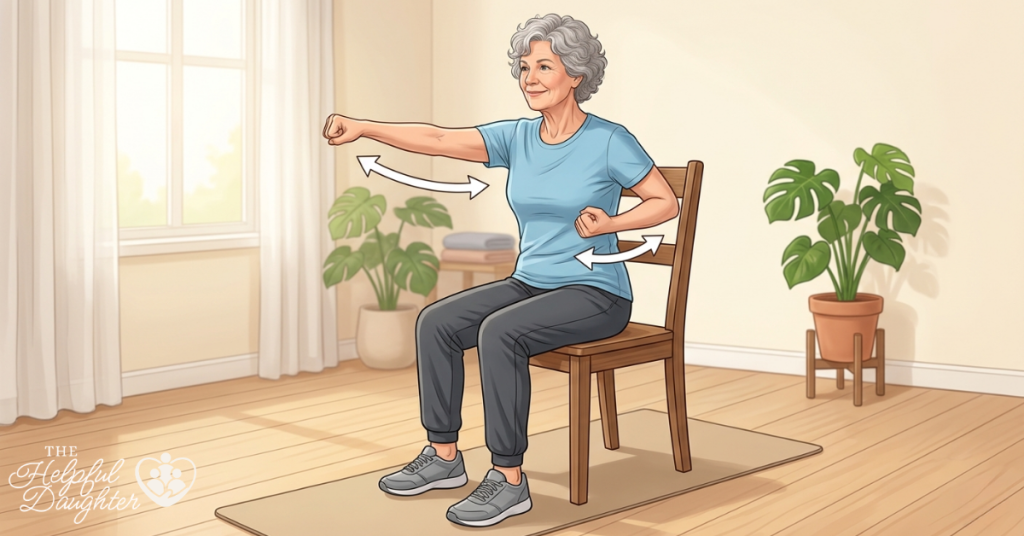
Seated punches increase heart rate while improving arm strength and coordination.
Instructions
- Sit upright
- Make loose fists
- Punch forward alternately
- Maintain a steady rhythm
- Continue for 30 to 60 seconds.
Benefits
- Improves endurance
- Raises energy levels
- Supports cardiovascular health
10. Neck and Shoulder Rolls
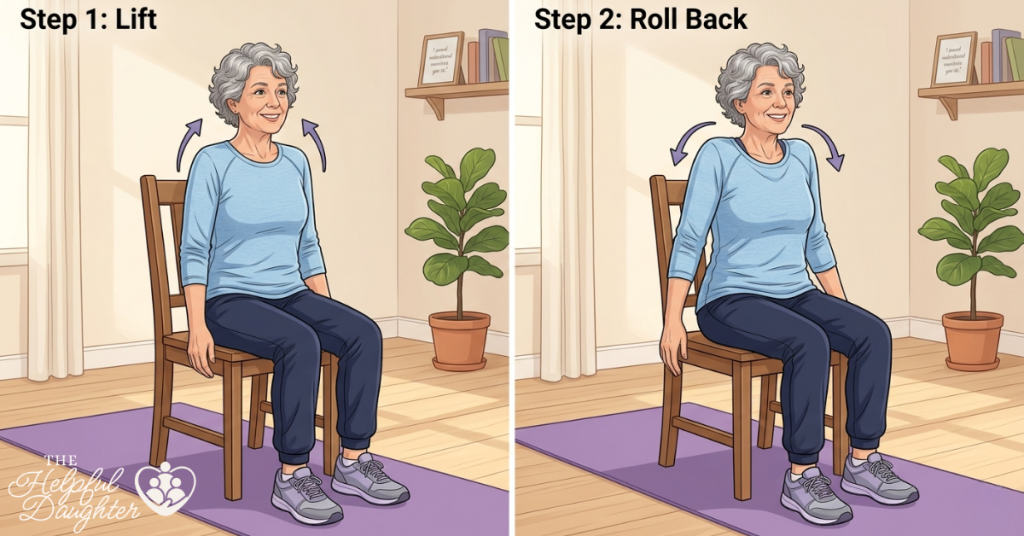
Many seniors carry tension in the neck and shoulders. Gentle rolls can relieve stiffness and improve mobility.
How to Perform
- Sit comfortably
- Slowly roll shoulders backward
- Repeat several times
- Gently tilt the head side to side
- Avoid rapid movements.
Benefits
- Relieves tension
- Improves flexibility
- Supports healthy posture
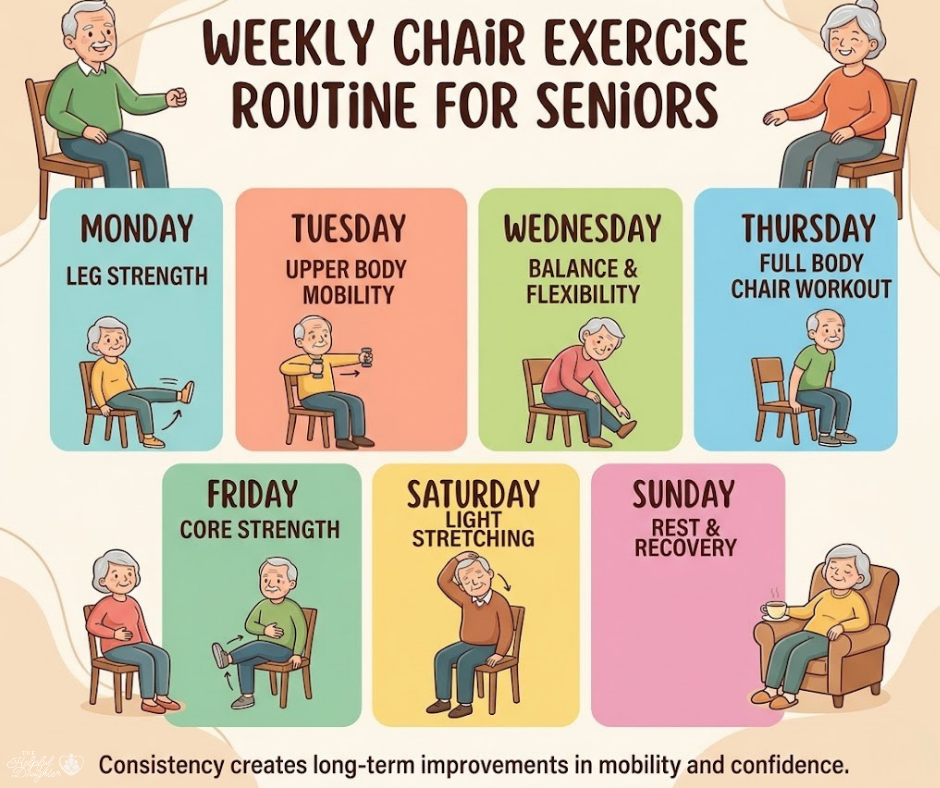
Weekly Chair Exercise Routine for Seniors
5 Golden Rules for Safe Chair Exercises for Seniors
Staying active is the goal, but staying safe is the priority. When I was helping my parents get started, we came up with these simple rules to make sure they felt confident and pain-free every single time they sat down to exercise.
1. Check in With Your Doctor
Before you start any new routine, have a quick chat with your healthcare provider. This is especially important if you are managing heart disease, osteoporosis, or severe arthritis. They can tell you exactly which movements to focus on and which ones to skip.
2. The “No-Wiggle” Rule
Always use a sturdy, flat-bottomed chair without wheels. My dad once tried to do seated marches in his favorite recliner—it was too soft and he almost tipped! A kitchen chair or a dedicated folding chair is usually your best bet. Avoid anything that swivels or rolls.
3. Listen to “Good Pain” vs. “Bad Pain”

A little muscle fatigue or a “burn” is great—that’s progress! But if you feel sharp, stabbing, or sudden pain in your joints, stop immediately. I always say: “If it hurts, we don’t do it today.” There is no trophy for pushing through a potential injury.
4. Hydrate Early and Often
Seniors are more prone to dehydration, which can lead to dizziness during movement. Keep a glass of water within arm’s reach. We make it a habit to take a small “water break” after every three exercises.
5. Move Like a Sloth (Slow & Steady)
In the world of senior fitness, speed is not your friend. Slow, controlled movements actually build more muscle and keep your blood pressure steady. If you find yourself holding your breath to finish a move, slow down and focus on deep, steady exhales.
How Chair Exercises Improve Daily Life
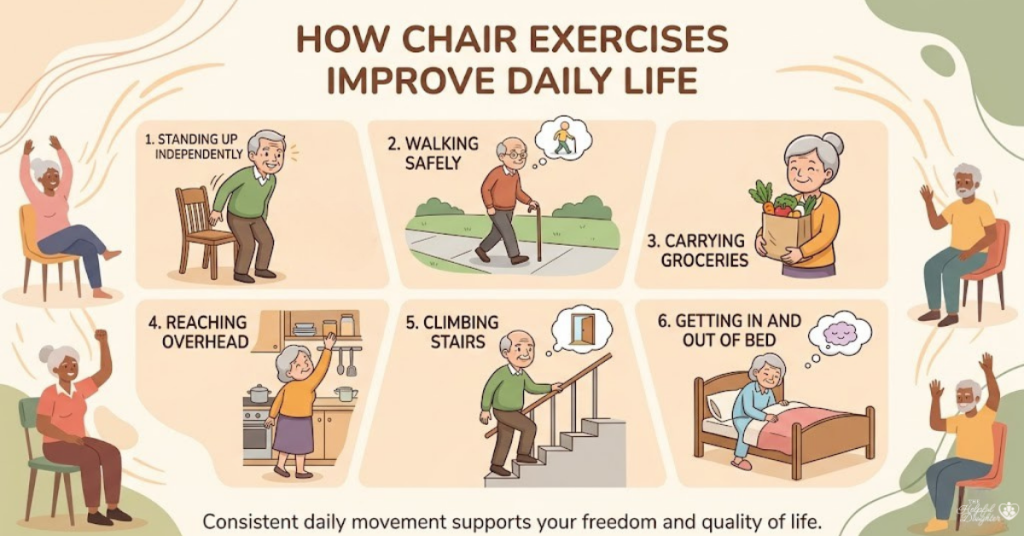
Chair exercises do far more than strengthen muscles. They improve the ability to perform daily activities such as:
- Standing up independently
- Walking safely
- Carrying groceries
- Reaching overhead
- Climbing stairs
- Getting in and out of bed
Maintaining these abilities supports independence and improves overall quality of life.
Best Time of Day for Chair Exercises
Many seniors find morning exercise helpful because it reduces stiffness and boosts energy throughout the day. However, the ideal time depends on personal comfort and routine.
For better consistency:
- Schedule exercise at the same time daily
- Start with short sessions
- Gradually increase duration
Even a few minutes of movement can produce meaningful benefits.
Chair Exercises for Seniors With Arthritis
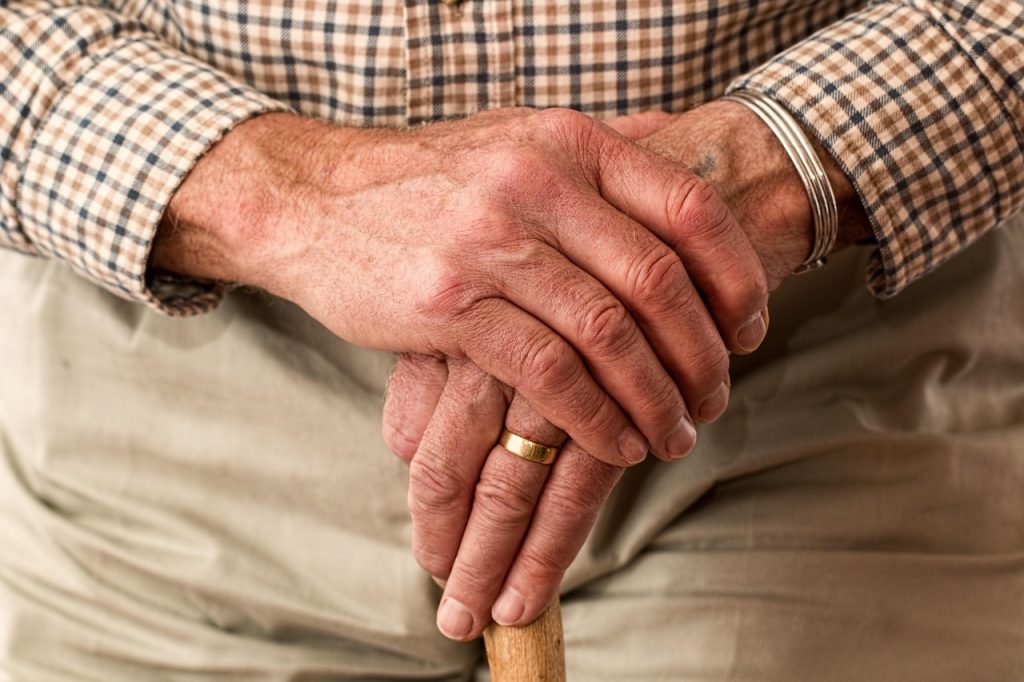
If you’re living with arthritis, the idea of moving more might feel a little daunting. But here’s the secret: motion is lotion for your joints! Chair exercises are incredibly valuable because they take away the heavy joint impact while encouraging the kind of gentle movement that actually reduces stiffness over time.
I always tell my parents to think of these as a “warm-up” for their day. By moving within a comfortable range, you’re helping your body stay lubricated and limber. It’s not about pushing through the pain; it’s about finding that sweet spot where you feel a gentle stretch that leaves you feeling better than when you started.
Simple Equipment That Enhances Chair Workouts
While you don’t need anything other than a sturdy chair to get moving, I’ve found that adding a few simple tools made a huge difference. It kept them from getting bored and helped them build strength a little faster. Here are the three items they actually use and love:
1. Simple Resistance Bands
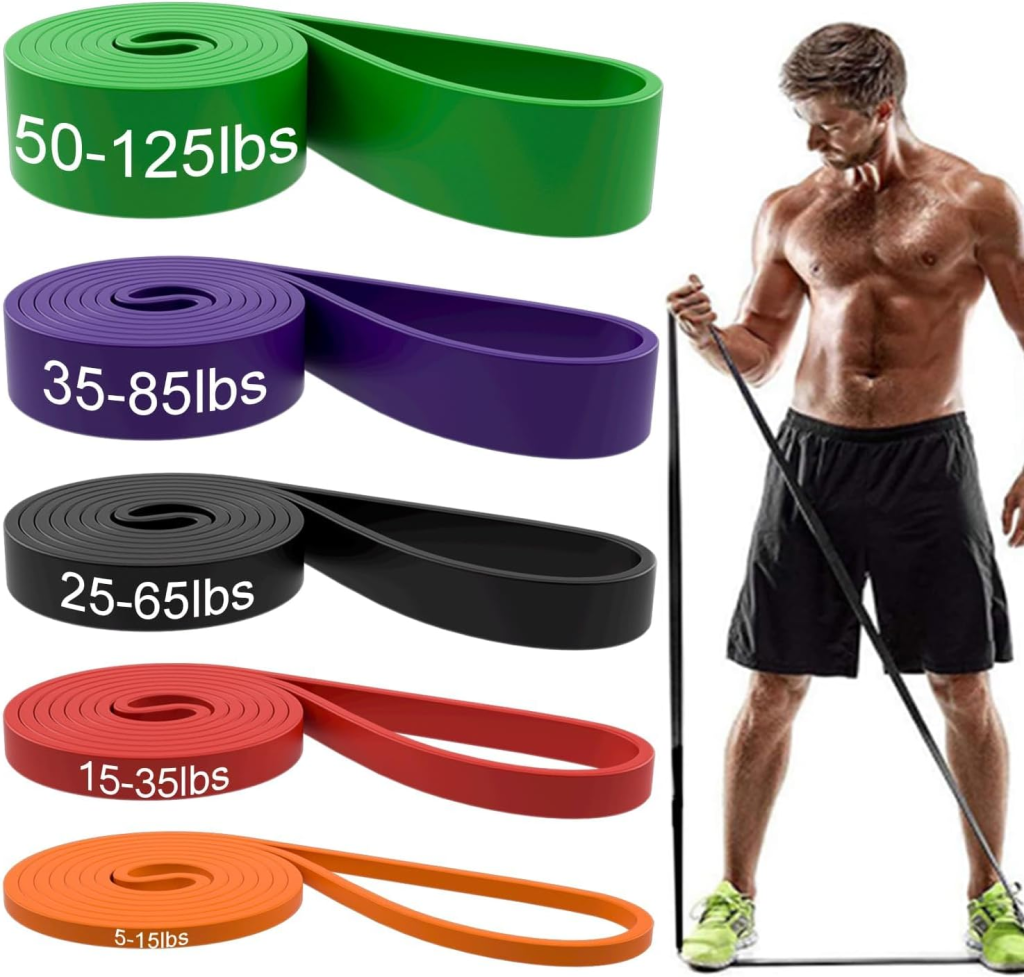
My dad was a bit skeptical of these “giant rubber bands” at first, but now they are his favorite. We love them because they are much easier on his joints than heavy metal weights. They are perfect for doing seated rows or bicep curls, and they weigh almost nothing, so Mom can tuck them into a drawer when they aren’t in use.
2. Light Dumbbells (1–3 lbs)
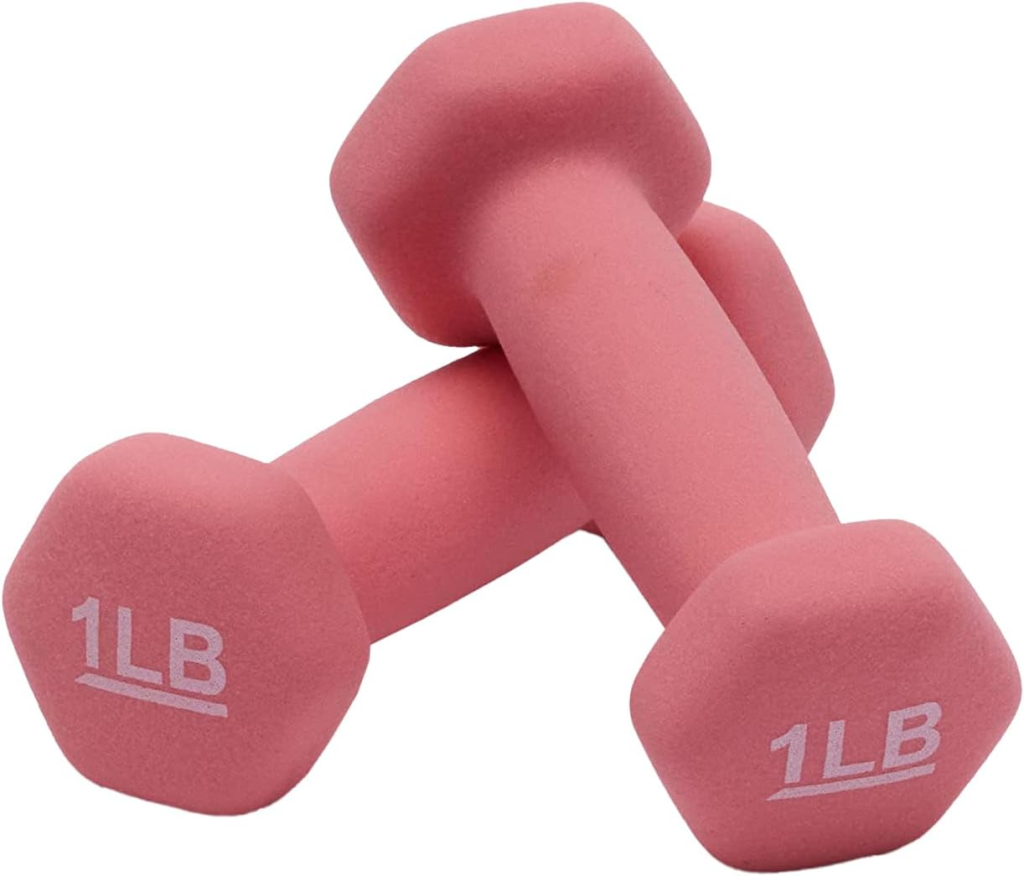
We started my mom with just a pair of 1-pound weights. Having something physical to hold onto helped her focus on her form during arm circles and overhead reaches. We made sure to get the “neoprene” coated ones because they have a soft grip that doesn’t slip out of her hands, even if her arthritis is acting up that day.
3. A Small Exercise Ball
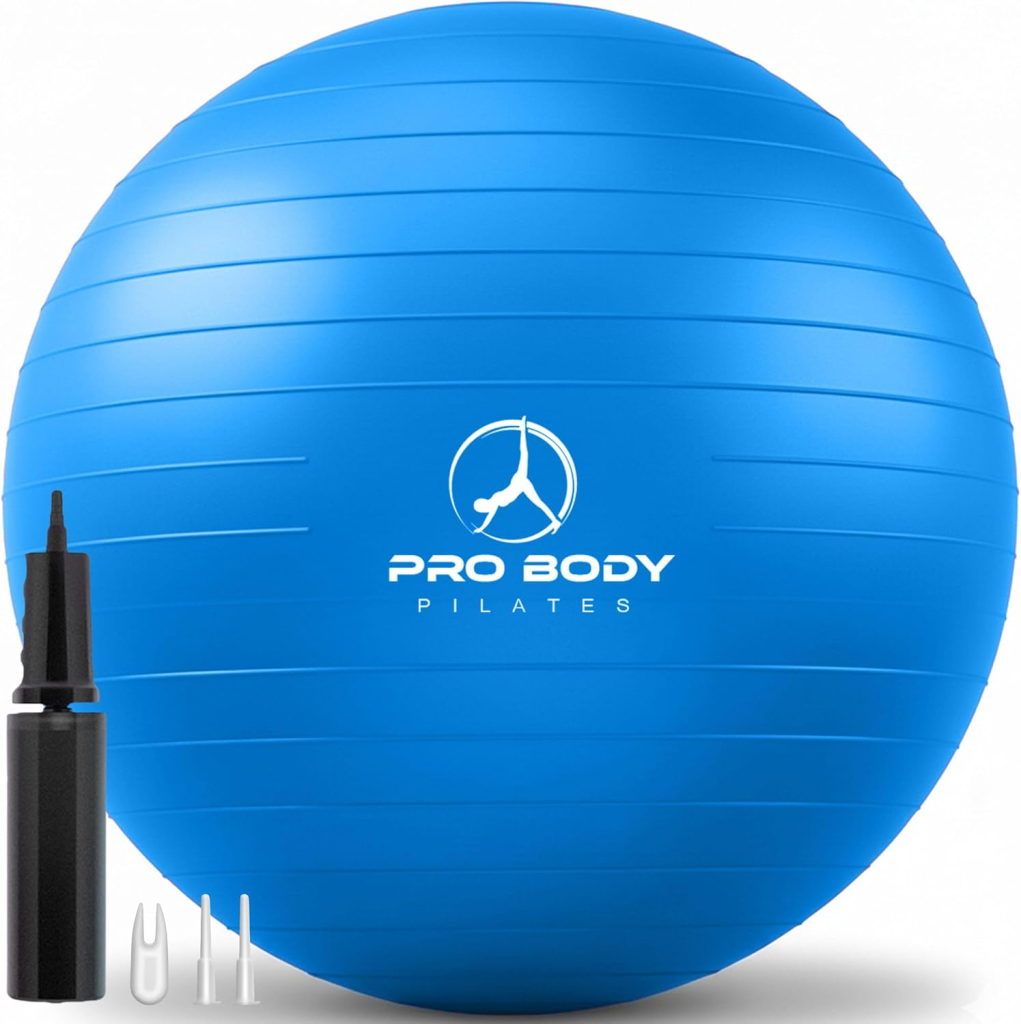
This was a game-changer for my mom’s leg strength. She places a small, soft inflatable ball between her knees while doing her seated leg extensions. Squeezing the ball helps engage her inner thighs and core more than just the movement alone. Plus, it doubles as a great stress ball for her hands!
Final Thoughts
Taking that first step toward a new routine can feel like a big deal, but I’ve seen firsthand how much of a difference these chair exercises for seniors can make. It’s not about becoming an athlete overnight; it’s about making sure you can keep doing the things you love—whether that’s gardening, playing with grandkids, or just moving around your home with ease.
The real secret to success is simply showing up for yourself. Small, daily movements lead to big wins for your strength, balance, and flexibility.
By sticking with these chair workouts, you aren’t just “staying busy”—you’re protecting your independence and choosing a healthier, more confident path forward. You’ve got this!
Frequently Asked Questions About Chair Exercises
How often should seniors do chair exercises?
For the best results in strength, balance, and flexibility, I usually recommend starting with 10–15 minutes, three times a week. Once you feel comfortable, moving a little bit every day is a great way to keep stiffness at bay. Consistency is much more important than intensity!
Can you really lose weight or get fit just by sitting down?
Absolutely. While chair exercises for seniors are low-impact, they still engage major muscle groups and get your heart rate up. When you pair these movements with a healthy diet, they are a powerful tool for maintaining a healthy weight and improving cardiovascular health without the risk of high-impact workouts.
Do I need special equipment to start?
Not at all! All you really need is a sturdy, armless chair (like a dining chair). As you progress, you might want to add light dumbbells or resistance bands to keep things challenging, but you can get a great workout using just your own body weight.
Is it safe to do these exercises alone?
Generally, yes, because the chair provides a stable base that reduces the risk of falls. However, if you’re prone to dizziness or are just starting out, it’s always a good idea to have a phone nearby or let someone in the house know you’re starting your routine. Safety is always the top priority in senior fitness.
What should I do if my joints feel stiff during the workout?
Stiffness is common, especially with arthritis. The key is to start slow. Think of the first few minutes as a “gentle hello” to your joints. If a specific movement feels tight, reduce the range of motion (don’t reach as high or kick as far) until you feel warmed up.
This article is for informational purposes only and should not replace professional medical advice. Always consult a healthcare provider before starting a new exercise program.