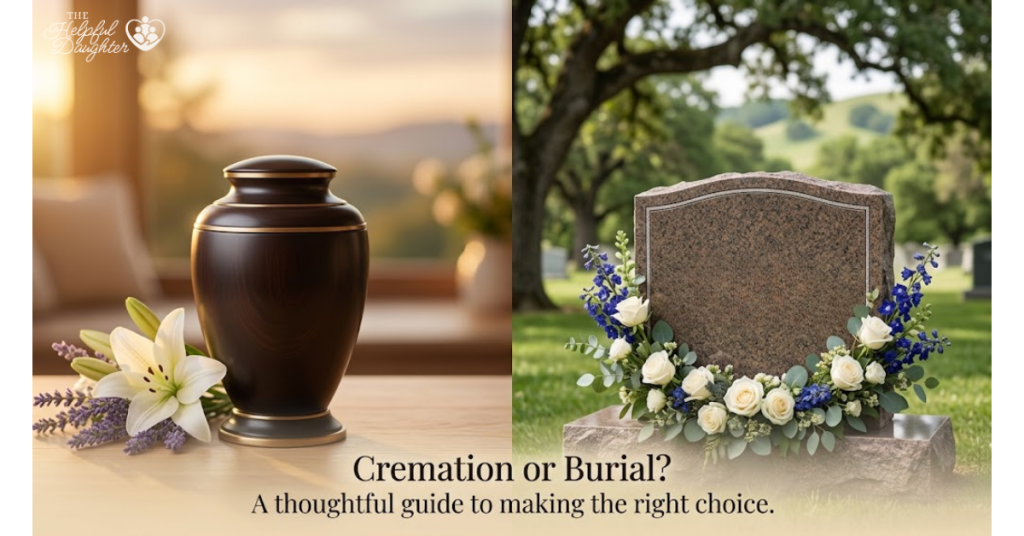
Choosing how to honor a loved one after they pass is one of the most deeply personal decisions a family will ever make. When I was helping my own parents navigate their end-of-life planning, I realized how overwhelming this choice can feel. Every family brings a unique blend of traditions, emotional preferences, financial realities, and spiritual beliefs to the table.
Understanding the practical and emotional differences between cremation vs. burial allows us to make informed choices—decisions that truly honor a beautiful life while meeting your family’s practical needs.
This guide explores the exact costs, environmental impacts, pros, cons, and timeline flexibilities of cremation versus burial to help you confidently decide what is best for your family.
What Is Cremation?
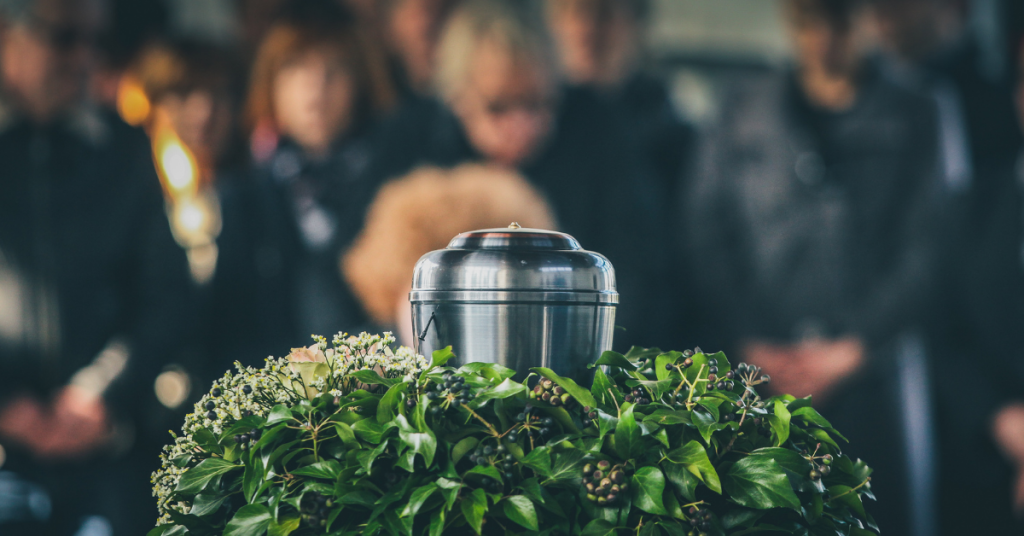
Cremation uses intense heat to reduce the body to its basic elements, resulting in bone fragments and ashes. These remains are then placed in an urn or a memorial container of your choosing.
What makes cremation so unique is the incredible flexibility it offers. Because it doesn’t demand an immediate, permanent resting place, it gives families the gift of time to plan a meaningful farewell without feeling rushed.
Common Paths After Cremation:
- Keep the Urn at Home: To maintain a physical sense of closeness and comfort every day.
- Scatter the Ashes: In a place that held deep meaning, such as a favorite hiking trail, a garden, or the ocean.
- Create Memorial Jewelry: Turning a small portion of the ashes into a wearable keepsake to keep them close wherever you go.
- Traditional Interring: Placing the urn inside a cemetery columbarium niche or burying it in a family plot.
Pros and Cons of Cremation
- Pros: Significantly lower cost; extreme timeline flexibility for memorial services; unique memorialization options; saves physical land space.
- Cons: Lacks a single permanent historical gravesite for future generations to visit (unless interred); some religious traditions strictly forbid or discourage it.
What Is Burial?
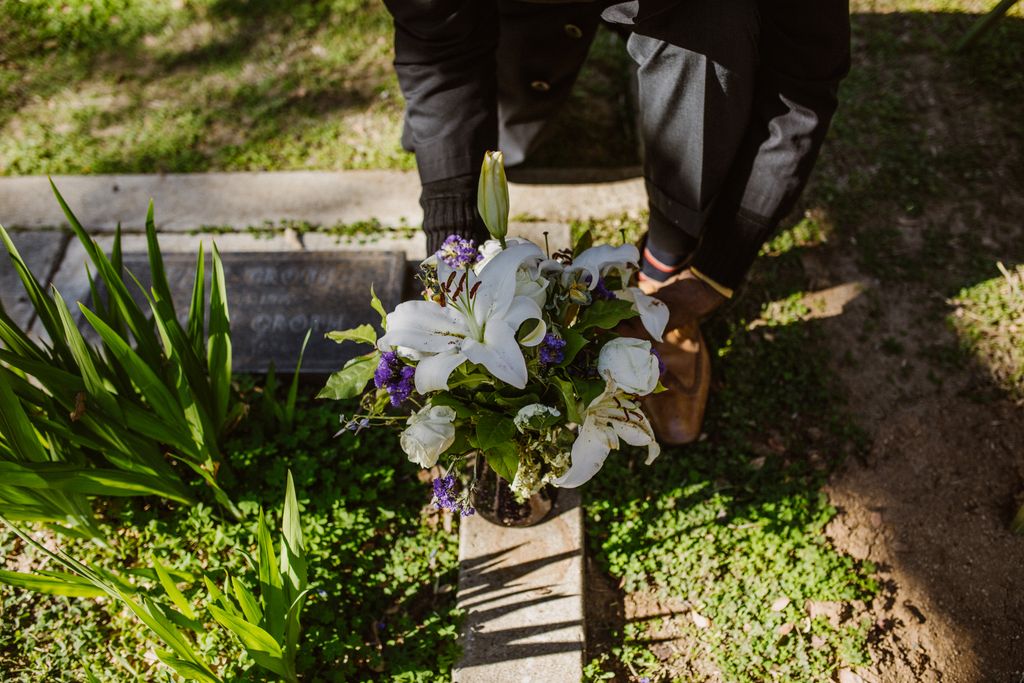
Burial is the traditional practice of placing the deceased in a casket and interring them within the earth—usually in a cemetery plot, a mausoleum, or private family grounds.
For many, there is a profound sense of permanence, closure, and “home” in a traditional burial. It provides a distinct, physical destination—a specific patch of earth where you can sit, leave flowers, reflect, and talk to your loved one.
Traditional Burial Elements Often Include:
- Embalming and Visitation: Allowing family and friends an open- or closed-casket final physical goodbye.
- A Formal Funeral Ceremony: A structured event to honor their legacy before the burial.
- A Graveside Service: A final, communal farewell as the casket is lowered.
- A Lasting Monument: A headstone or marker that stands as a historic tribute for generations to come.
Pros and Cons of Burial
- Pros: Provides a permanent, physical place for ongoing grief support and visitation; aligns seamlessly with many traditional religious and cultural customs.
- Cons: Substantially higher financial cost; rigid timeline constraints (usually must happen within days of passing); larger environmental resource footprint.
Cremation vs. Burial Costs
One of the most immediate differentiators between these two options is the financial impact.
Note on Cost Context: The estimates below reflect average national ranges for industry standards. Actual costs can vary widely based on your geographic location, funeral home pricing, and the specific merchandise you choose.
Average Cost of Cremation
A direct cremation (cremation without a formal viewing or funeral beforehand) is generally the most affordable end-of-life option available.
| Cremation Service / Item | Average Cost Range (USD) |
| Direct Cremation | $1,000 – $3,000 |
| Cremation with a Memorial Service | $3,000 – $6,000 |
| Urn and Keepsakes | $100 – $2,000 |
Why it costs less: Direct cremation eliminates major traditional funeral expenses, including embalming, expensive metal/wood caskets, and large cemetery plot fees.
Average Cost of Burial
Traditional burial is typically more expensive because it involves several mandatory structural and logistical components.
| Burial Expense / Item | Average Cost Range (USD) |
| Funeral Home Professional Services | $2,000 – $5,000 |
| Casket | $2,000 – $10,000+ |
| Cemetery Plot | $1,000 – $4,000 |
| Headstone or Monument | $1,000 – $5,000 |
| Vault & Opening/Closing Fees | $1,500 – $4,000 |
When adding up the professional fees, casket, vault, and plot, the total cost of a traditional burial can easily exceed $10,000.
Environmental Impact of Cremation vs. Burial
When we think about our final footprint on the planet, the choice between cremation vs. burial often becomes an act of environmental stewardship. Both traditional paths carry an ecological cost, but understanding them can help you align your decision with your loved one’s values.
The Footprint of Traditional Burial
While returning to the earth sounds entirely natural, modern traditional burial is a resource-heavy process:
- Material Resources: The production of hardwood or metal caskets and concrete burial vaults consumes significant raw materials designed to resist natural biodegradation.
- Land and Water Use: Dedicated cemetery spaces require perpetual chemical landscaping, mowing, and heavy water usage for generations.
- Preservation Chemicals: Traditional embalming fluids contain chemicals like formaldehyde, which can eventually leach into the surrounding soil.
The Footprint of Cremation
Cremation is frequently viewed as the “greener” option because it preserves physical land, but it carries a different type of impact:
- Atmospheric Emissions: The flame-based combustion process releases carbon dioxide and minor trace elements into the air.
- Energy Consumption: A traditional cremation retort requires a high amount of natural gas or energy to reach the temperatures necessary for the process.
Eco-Friendly & Budget-Conscious Alternatives
If protecting the Earth or keeping costs simple is a major priority for your family, there are beautiful modern alternatives that soften both your ecological footprint and your final invoice:
- Green Burial: This is a gentle return to pure simplicity. It avoids chemical embalming entirely and utilizes biodegradable burial shrouds or woven wicker caskets, allowing the body to return naturally to the earth and nourish the soil.
- Water Cremation (Alkaline Hydrolysis): Often called “green cremation,” this process uses water, heat, and natural alkaline salts instead of an open flame. It boasts a carbon footprint that is roughly 75% lower and uses up to 90% less energy than flame-based cremation.
- Eco-Friendly Urns: If you choose traditional cremation, you can select biodegradable urns designed to dissolve beautifully in water, or “tree urns” that incorporate the ashes into soil to grow a living tree.
A Thoughtful Tip: When my family started looking at the numbers during a time of grief, I realized how quickly traditional funeral home markups add up. If you are looking for a way to keep things direct, simple, and deeply dignified without the stress of an enormous bill, resources like Cremation Club are wonderful for families who want to focus entirely on the memories rather than a stressful invoice.
Questions Families Should Ask Before Deciding
To help your family find clarity and peace of mind on the cremation vs. burial decision, try sitting down together in a quiet space and reflecting on these personal questions:
- Did our loved one ever explicitly voice a preference? Did they write anything down in a will, or mention a wish in passing?
- What does our budget honestly look like? Can we comfortably afford a traditional burial layout, or would a direct cremation alleviate immense financial pressure during our grief?
- Is a permanent, physical visitation site important to us long-term? Do family members need a specific headstone to visit on anniversaries, or do we prefer the flexibility of scattering ashes in a favorite location?
- Are there religious or cultural traditions we want to honor? Does our faith dictate a specific timeline or method for handling the remains?
Final Thoughts
There is no universally “right” or “wrong” answer when choosing between cremation and burial. The best choice is simply the one that honors your loved one’s wishes, respects your financial realities, and brings your family a sense of peace and closure. By evaluating these emotional, financial, and practical pieces together, you can create a beautiful, dignified tribute to a life well-lived.
Frequently Asked Questions About Cremation vs. Burial
Is cremation always cheaper than burial?
In almost all cases, yes. Cremation is significantly more affordable because it allows you to skip the heavy expenses of a cemetery plot, outer burial vault, chemical embalming, and high-end caskets.
Can we still have a traditional funeral service if we choose cremation?
Absolutely. This is a common misconception! You can absolutely rent a casket from a funeral home to hold a traditional visitation, wake, or formal funeral service before the cremation takes place. Alternatively, you can host a memorial service with the urn present at a later date.
Is cremation entirely environmentally friendly?
While it reduces land usage compared to a traditional cemetery plot, flame cremation still requires high energy consumption and produces emissions. For a truly eco-friendly path, look into green burials or water cremation (alkaline hydrolysis).
Which option is more popular today?
Cremation rates have risen steadily across North America over the last few decades and now surpass traditional burials. This shift is primarily driven by its affordability, flexibility for traveling family members, and changing cultural viewpoints.