
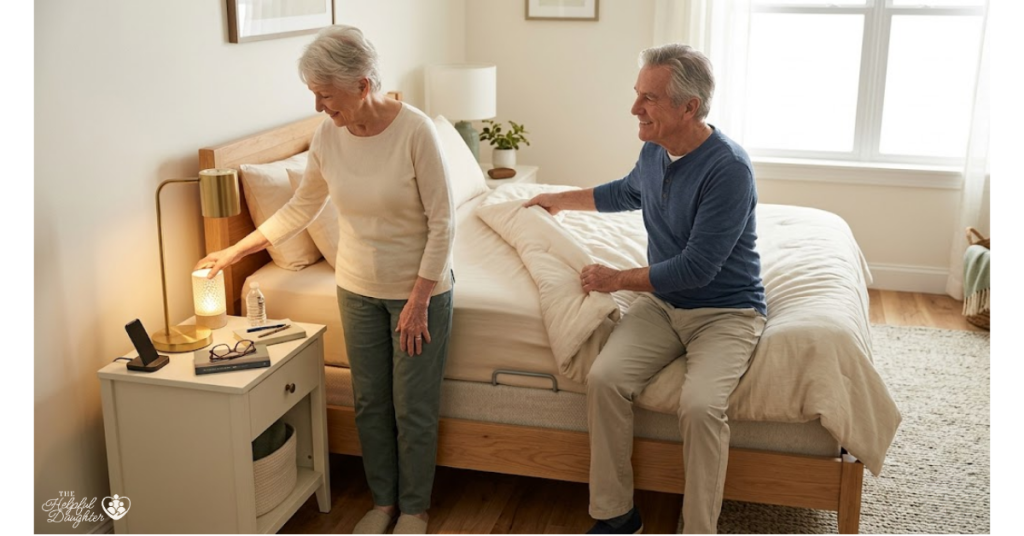
When my parents started getting older, I assumed the biggest challenges would happen in places like the bathroom or kitchen. Those areas tend to get most of the attention when people talk about aging in place home modifications.
What surprised me was how much time my parents spent in their bedroom—and how many small frustrations and safety concerns existed right there.
If you’re helping an aging parent remain in their home, the bedroom is one of the best places to start. A few quick changes can improve safety, promote better sleep, and reduce the risk of falls without turning the room into something that feels clinical or institutional.
The 5-Minute Bedroom Safety Check
Pressed for time? Walk through your parent’s bedroom right now and verify these three critical safety baselines:
- ✓ The Lighting Check: Can they see the floor clearly the exact second their feet hit the ground at night?
- ✓ The Floor Check: Are all loose throw rugs completely removed, or at least heavily secured with non-slip backing/tape?
- ✓ The Height Check: When sitting on the edge of the mattress, are both of their feet flat on the floor with knees at a comfortable 90° angle?
Why Bedroom Modifications Matter for Aging in Place
Most seniors spend between seven and nine hours sleeping each night, along with additional time reading, resting, dressing, or relaxing in their bedrooms.
As mobility, balance, vision, and flexibility change with age, even simple bedroom tasks can become more difficult. Getting out of bed, reaching for a lamp, or walking across the room in the dark can suddenly present risks.
The good news is that many of the most effective aging in place home modifications are inexpensive and easy to implement.
How to Talk To Your Loved Ones About These Changes

It is completely normal to run into a little resistance when you suggest making changes to your parent’s bedroom. For many seniors, upgrades like bed rails or removing a cherished heirloom rug don’t feel like “safety measures”—they feel like a loss of independence, or a sign that their home is being turned into a clinical nursing facility.
If you want the conversation to go smoothly, the secret is all in how you frame it. Here are a few strategies that worked beautifully for my family:
- Focus on Comfort and Luxury, Not “Aging”: Instead of saying, “We need to change your pillows and lighting so you don’t fall,” try framing it as a comfort upgrade. Talk about replacing a deflating pillow with a “supportive, hotel-quality alternative” or upgrading a stiff twist-switch lamp to a “convenient, touch-activated model.”
- Blame Yourself (or the Lightbulbs): Sometimes, taking the pressure off them makes all the difference. You can say something like, “I noticed the lighting in here feels really harsh on my eyes when I visit. Mind if we try these warm, automatic nightlights? They’ve been a lifesaver for my own nighttime trips to the bathroom.”
- Emphasize Autonomy: Frame these modifications as tools that help them maintain their independence, not take it away. Remind them that a bed at the perfect height or an organized nightstand means they won’t have to rely on anyone else to get what they need.
- Take It One Small Step at a Time: You don’t need to overhaul the entire bedroom in a single weekend. Start with a “quick win” like a motion-sensor nightlight. Once they experience how much easier it makes their nightly routine, they’ll likely be much more open to adjusting the bed height or taping down a rug.
Here are 8 aging in place home modifications you can try today
1. Improve Bedroom Lighting for Better Safety

One of the first upgrades we made was improving lighting.
As we age, our eyes require more light to see clearly. Poor lighting can increase fall risks, especially during nighttime trips to the bathroom.
Consider these bedroom lighting improvements:
- We swapped out my parents’ old twist-switch lamps for a Touch-Activated Bedside Lamp—it made a massive difference for my mom’s arthritis
- Add motion-sensor nightlights
- Use brighter LED bulbs with warm color temperatures
- Place light switches within easy reach of the bed
- Illuminate pathways between the bed and bathroom
Motion-sensor lighting was particularly helpful for my parents. It eliminated the need to fumble for switches in the dark and made nighttime movement much safer.
2. Remove Tripping Hazards
Area rugs may look beautiful, but they are one of the most common causes of falls among older adults.
My parents had several decorative rugs throughout their bedroom. While they added warmth and style, they also created curled edges and uneven surfaces that became potential hazards.
If removing rugs isn’t an option, consider:
- Using non-slip rug pads
- Securing corners with rug tape
- Choosing low-pile rugs
- Eliminating rugs in high-traffic walking paths
Clearing clutter is equally important. Shoes, storage bins, electrical cords, and small furniture pieces can quickly become obstacles, especially during nighttime movement.
3. Choose the Right Bed Height
Bed height plays a much bigger role in aging in place than many people realize. A bed that is too low makes standing up physically exhausting, while a bed that is too high creates dangerous instability when getting in or out.
📏 The Golden Rule: Seniors should be able to sit comfortably on the edge of the bed with both feet flat on the floor and their knees bent at approximately a 90-degree angle.
⚠️ Warning Signs Your Bed Height Needs Adjusting:
- ✓ Experiencing noticeable difficulty standing up in the morning
- ✓ Needing multiple physical attempts or rocking momentum to rise
- ✓ Sliding off the edge unstablely when trying to sit down
- ✓ Feet dangling helplessly without touching the floor while seated
4. Upgrade Bedding for Comfort and Independence
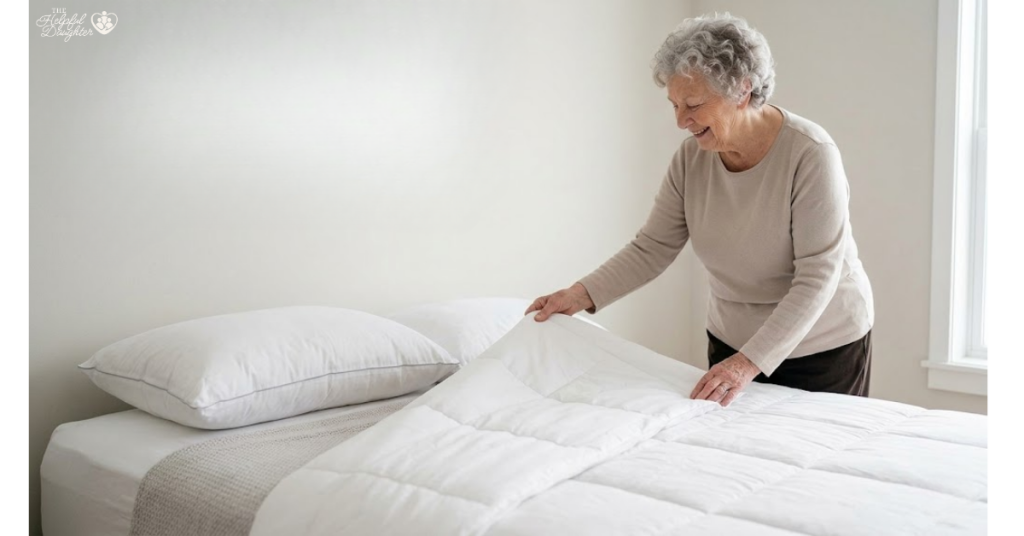
Comfortable bedding isn’t just about luxury. It can directly affect sleep quality, mobility, and overall well-being.
As people age, they often become more sensitive to temperature changes and pressure points.
Helpful bedding upgrades include:
- Lightweight comforters that are easier to manage
- Breathable sheets for temperature regulation
- Fitted sheets that stay securely in place
- Easy-grip blanket designs
- Soft yet supportive mattress toppers
Making the bed should not feel physically exhausting. Lightweight bedding can make daily tasks more manageable for seniors with arthritis or reduced strength.
5. Investing in Proper Neck and Spine Alignment

One issue my mother frequently mentioned was waking up with neck stiffness and shoulder discomfort.
Many older adults experience increased muscle tightness, arthritis-related pain, and reduced flexibility. Sleep posture becomes even more important with age.
A supportive pillow can help maintain proper alignment of the neck and spine throughout the night. When researching options for my parents, I found that medical-grade down alternative pillows with box-edge construction tend to provide more consistent support than traditional pillows.
The box-edge design helps prevent flattening while maintaining even loft across the entire pillow. This can help keep the neck aligned with the spine, reducing strain that often contributes to morning aches and stiffness.
While no pillow can eliminate every source of discomfort, proper support during sleep can make a noticeable difference in overall comfort and sleep quality.
6. Make Frequently Used Items Easy to Reach
Many seniors unintentionally put themselves at risk by stretching, bending, or climbing to access everyday items.
We reorganized my parents’ bedroom so that frequently used items remained within easy reach.
Consider placing these essentials nearby:
- Glasses
- Medications
- Phone
- Water bottle
- Reading materials
- Emergency contact information
- Flashlight
The goal is to reduce unnecessary reaching, twisting, or standing during the night.
Consider Bedside Support Options
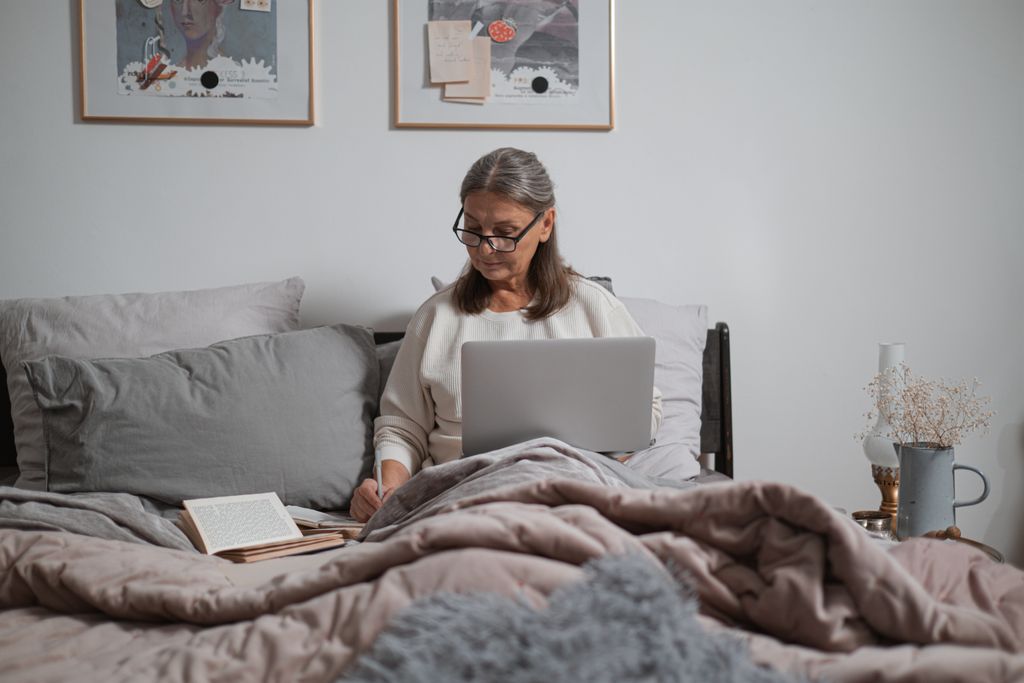
For seniors with balance or mobility challenges, bedside support devices can provide additional stability.
Depending on individual needs, options may include:
- Bed rails
- Transfer poles
- Grab handles
- Adjustable bed frames
These supports can make getting into and out of bed safer while helping seniors maintain independence.
It’s important to choose products that fit properly and are designed specifically for senior safety.
Keep Emergency Communication Accessible

One upgrade I strongly recommend is keeping communication devices within arm’s reach.
Whether it’s a mobile phone, medical alert device, or cordless phone, immediate access can provide peace of mind for both seniors and caregivers.
Some families also place a small charging station beside the bed to ensure devices remain powered and ready when needed.
Final Thoughts
When people think about aging in place home modifications, they often imagine major renovations and significant expenses.
My experience helping my parents taught me that some of the most meaningful improvements are surprisingly simple.
Better lighting, safer flooring, proper bed height, supportive bedding, and thoughtful organization transformed their bedroom into a safer and more comfortable space without requiring a full remodel.
The bedroom should be a place of rest, recovery, and independence. By making a few targeted upgrades, seniors can continue enjoying their homes safely and comfortably for years to come.
Frequently Asked Questions
What are the most important aging in place home modifications for a bedroom?
The most important modifications include improved lighting, removing tripping hazards, adjusting bed height, installing nightlights, and ensuring frequently used items are easily accessible.
How high should a bed be for seniors?
A bed should allow the person to sit with both feet flat on the floor and knees at approximately a 90-degree angle. This makes standing and sitting much easier and safer.
Are area rugs safe for older adults?
Area rugs can increase fall risk if they slide, curl, or create uneven surfaces. If rugs are used, they should be secured with non-slip backing and placed away from primary walking paths.
Can bedroom modifications help prevent falls?
Yes. Better lighting, clear pathways, proper bed height, and reduced clutter can significantly lower the risk of falls and injuries.
What type of bedding is best for seniors?
Lightweight, breathable bedding that is easy to handle generally works best. Supportive pillows and pressure-relieving mattress toppers can also improve comfort and sleep quality.
Do aging in place modifications require major renovations?
Not at all. Many of the most effective improvements are inexpensive and can be completed in a single day without professional construction.
How can I help my parent start aging in place safely?
Begin by assessing daily challenges in frequently used spaces such as the bedroom, bathroom, and kitchen. Small upgrades often provide immediate benefits and help maintain independence.