

Watching your parent start to lose their steady stride is one of those quiet, heartbreaking milestones of caregiving. Maybe you noticed it during a weekend visit—a slight hesitation before stepping off the rug, a white-knuckled grip on the hallway wall, or an exhausted sigh after walking just to the mailbox. When the conversation about getting some extra support finally happens, searching online can feel overwhelming. Type amazon walkers for elderly into a search bar, and you are instantly hit with dozens of confusing acronyms, weight limits, wheel sizes, and flashing promotional banners.
You do not need a sales pitch. You need something that works, something safe, and something your parent will actually use without feeling like their independence is being stripped away.
This guide is designed to cut through the noise. Drawing from years of hands-on caregiving experience, product research, and conversations with physical therapists, we will walk through what actually matters when picking a mobility aid, break down the best options available online, and help you find the exact fit for your parent’s daily life.
Understanding Their Mobility Needs First
Before looking at a single product listing online, take a moment to observe how your parent moves around their home and community. A walker is not a one-size-fits-all medical device. Choosing the wrong style can lead to frustration, abandoned equipment, or worse, a dangerous fall.

Ask yourself these three core questions:
- Where will they use it most? If your parent primarily needs help getting from the bed to the bathroom in a narrow apartment, a wide, heavy outdoor rollator will be impossible to manage. Conversely, if they love walking around the neighborhood garden club, a basic indoor frame with tiny wheels will get snagged on every sidewalk crack.
- Do they need to sit down frequently? Some seniors only need a bit of balance support while standing, while others experience fatigue or breathlessness and need a built-in seat to rest on every few hundred feet.
- What is their upper body strength like? Lifting a heavy steel frame requires core and arm strength that not every senior possesses. Hand arthritis can also make standard squeeze-brakes excruciatingly painful to operate.
The Core Types of Walkers Available Online
When sorting through online marketplaces, you will generally find three distinct categories. Understanding the differences prevents costly mistakes.
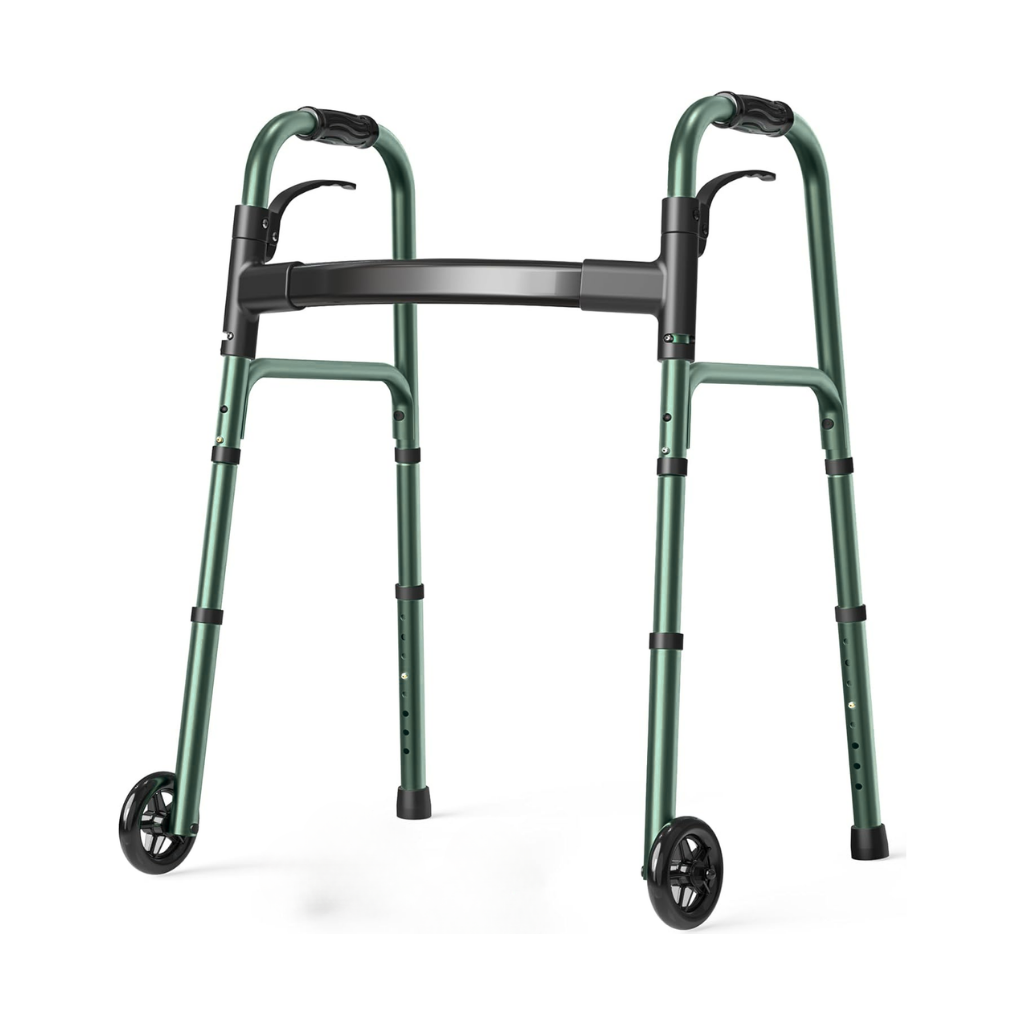
1. Standard and Two-Wheel Walkers
Rigid frames made of aluminum or steel. Traditional standard walkers require the user to lift the entire frame and place it forward with every step.
Two-wheel versions add small wheels to the front legs and rubber glide caps to the back.
- Best for: Seniors with significant balance issues who bear a lot of their weight on the frame, or those recovering from major surgery who are primarily moving indoors.
- The downside: They lack seats, require physical lifting (for non-wheeled versions), and can slow movement down considerably.
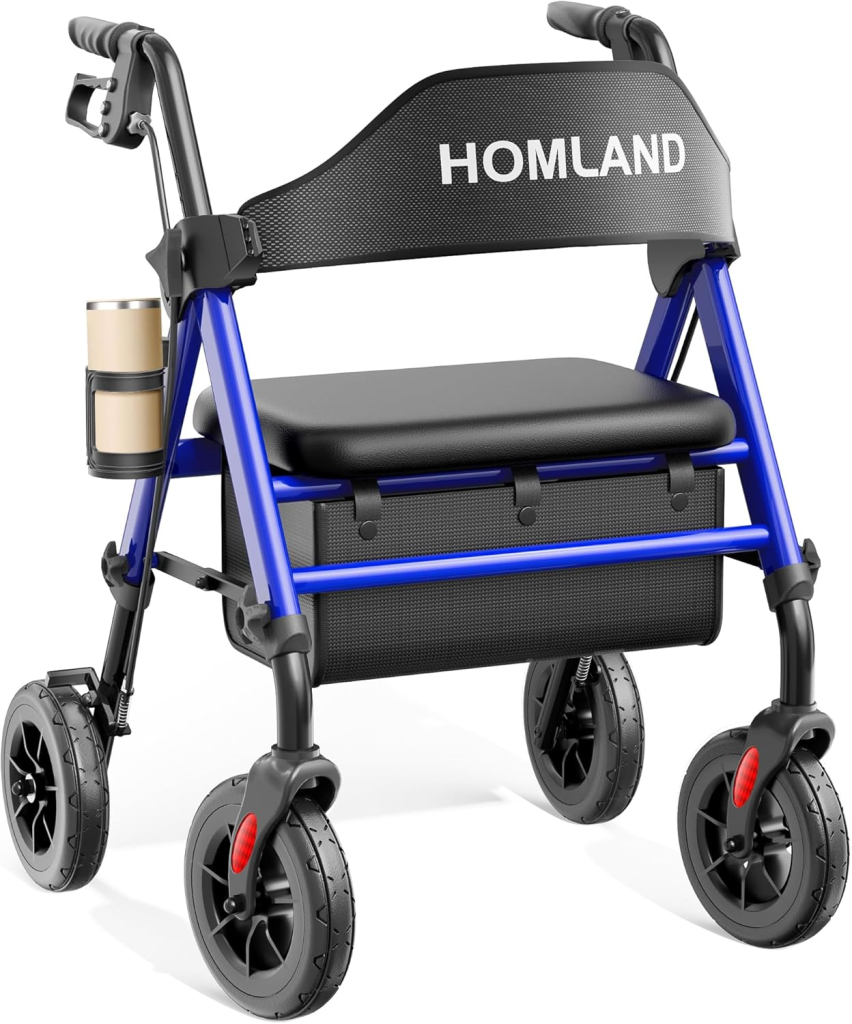
2. Four-Wheel Rollators
Rolling frames equipped with four larger wheels, hand brakes, a padded seat, and a storage basket or pouch underneath.
- Best for: Active seniors who have good cognitive awareness and moderate balance issues, but tire easily and want a portable seat wherever they go.
- The downside: They roll freely, which means they require a steady hand and are generally not suitable for someone who leans their full body weight forward for support.
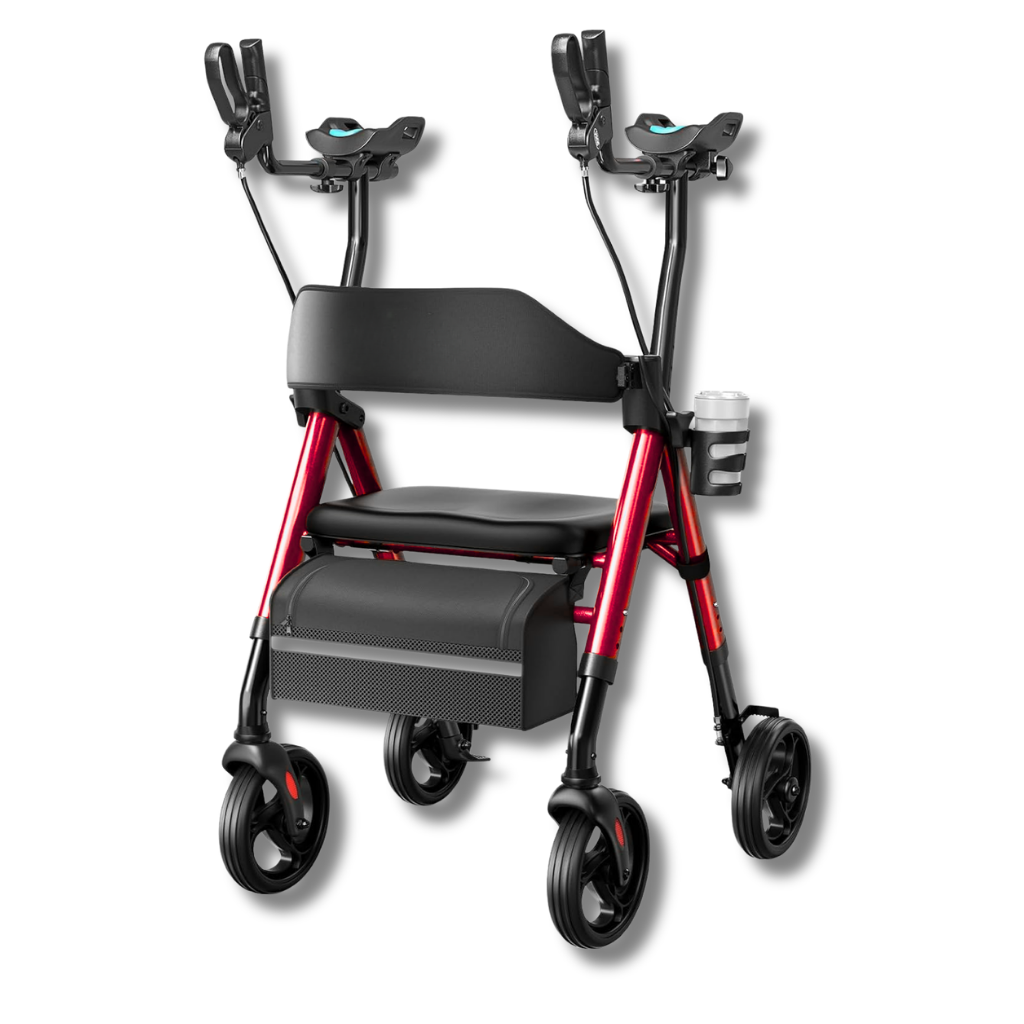
3. Upright Posture Walkers
Specialty rollators featuring forearm support platforms instead of standard handgrips, allowing the user to stand tall rather than hunching over.
- Best for: Seniors with chronic lower back pain, spinal stenosis, or wrist arthritis who struggle to look straight ahead when using traditional mobility aids.
- The downside: They are significantly heavier, bulkier to store in car trunks, and carry a higher price tag
Top-Rated Amazon Walkers Reviewed Honestly
To save you hours of reading through thousands of conflicting customer reviews, we have evaluated the standout models commonly found on Amazon that consistently earn high marks from real families and physical therapists.
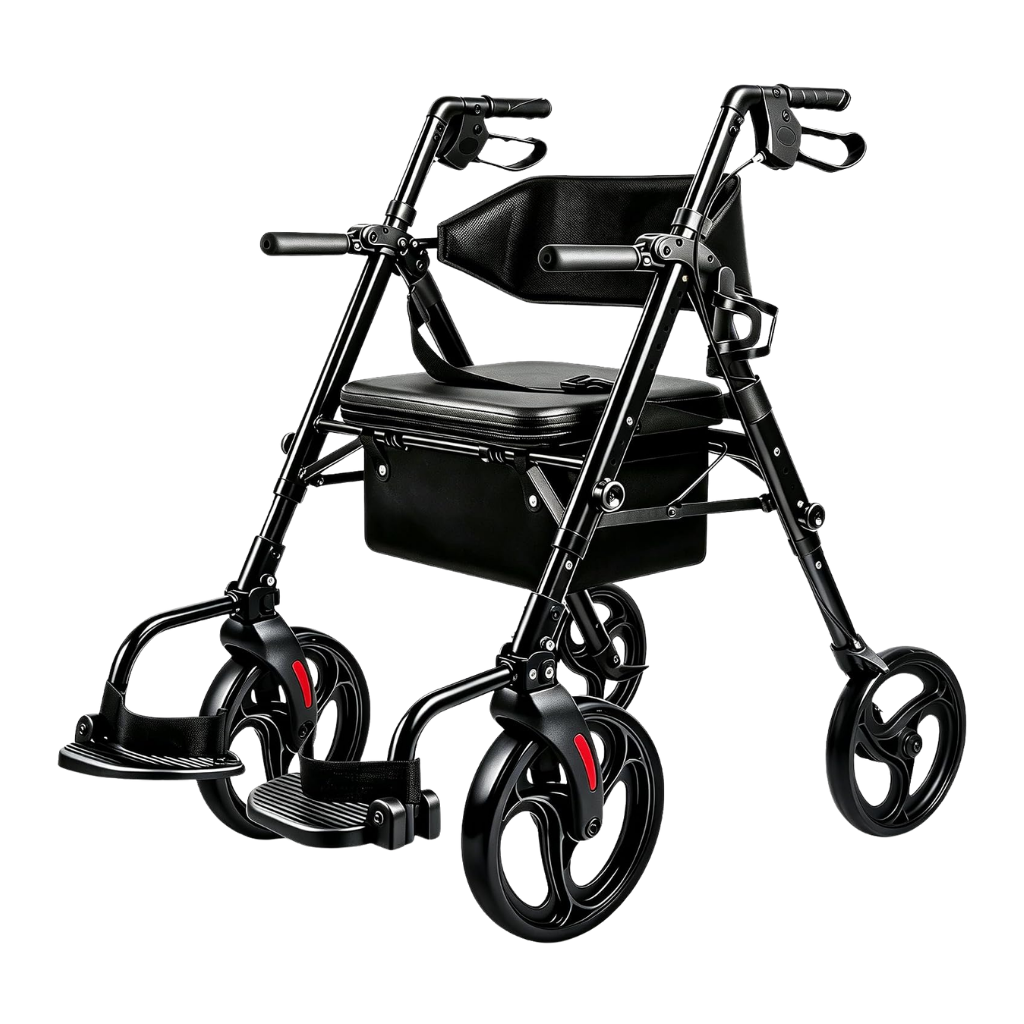
FlyingJoy 2-in-1 Rollator Walker & Transport Chair
Best For: Active seniors who need standard walking support but want the flexibility of a transport chair for longer outings.
Pros
10-inch wheels handle outdoor terrain effortlessly; seamless 2-in-1 chair conversion.
Cons
Slightly heavier frame due to dual-functionality design.
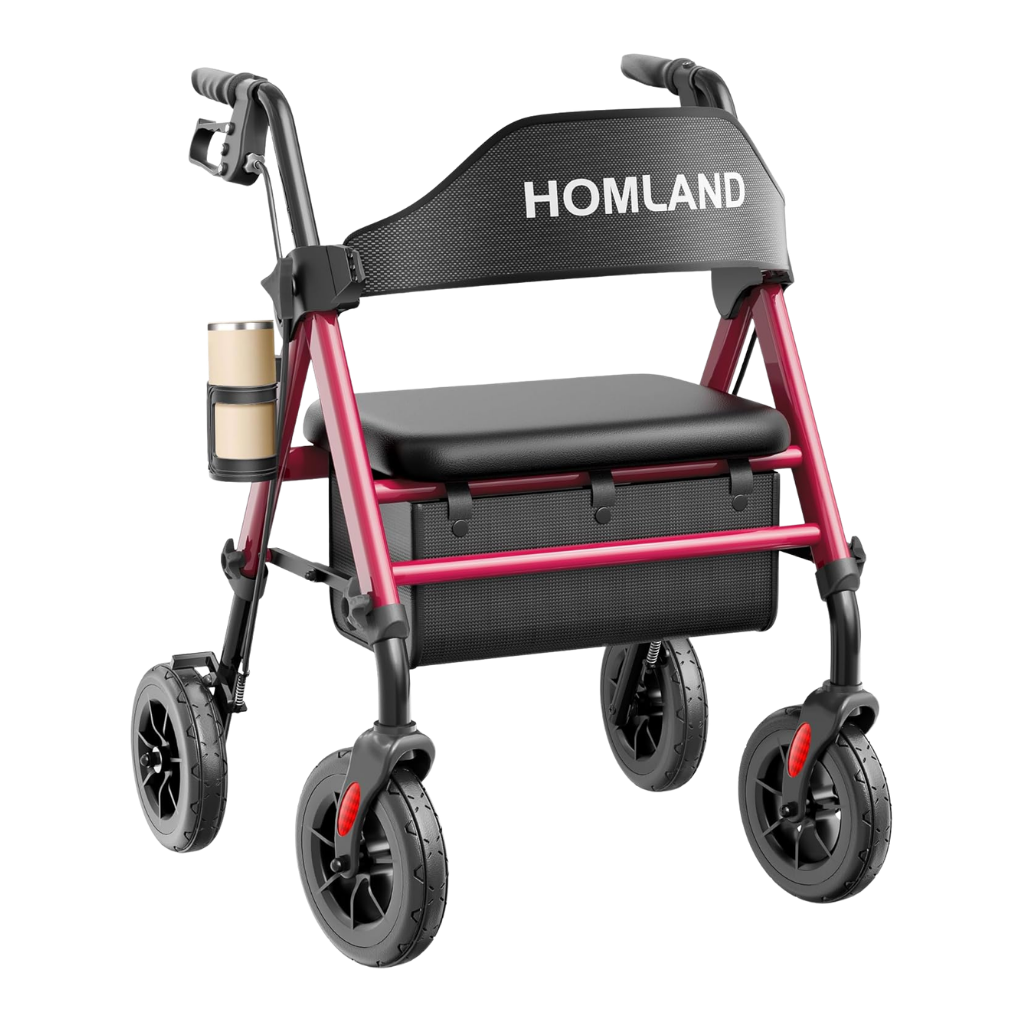
HOMLAND Lightweight Foldable Rollator Walker
Best For: Daily routine use, easy car loading, and seniors prioritizing extra seating comfort with convenience features.
Pros
Ultra-manageable 17 lb frame; wide comfortable seat with handy cup holder included.
Cons
Standard frame width requires careful maneuvering in narrow doorways.
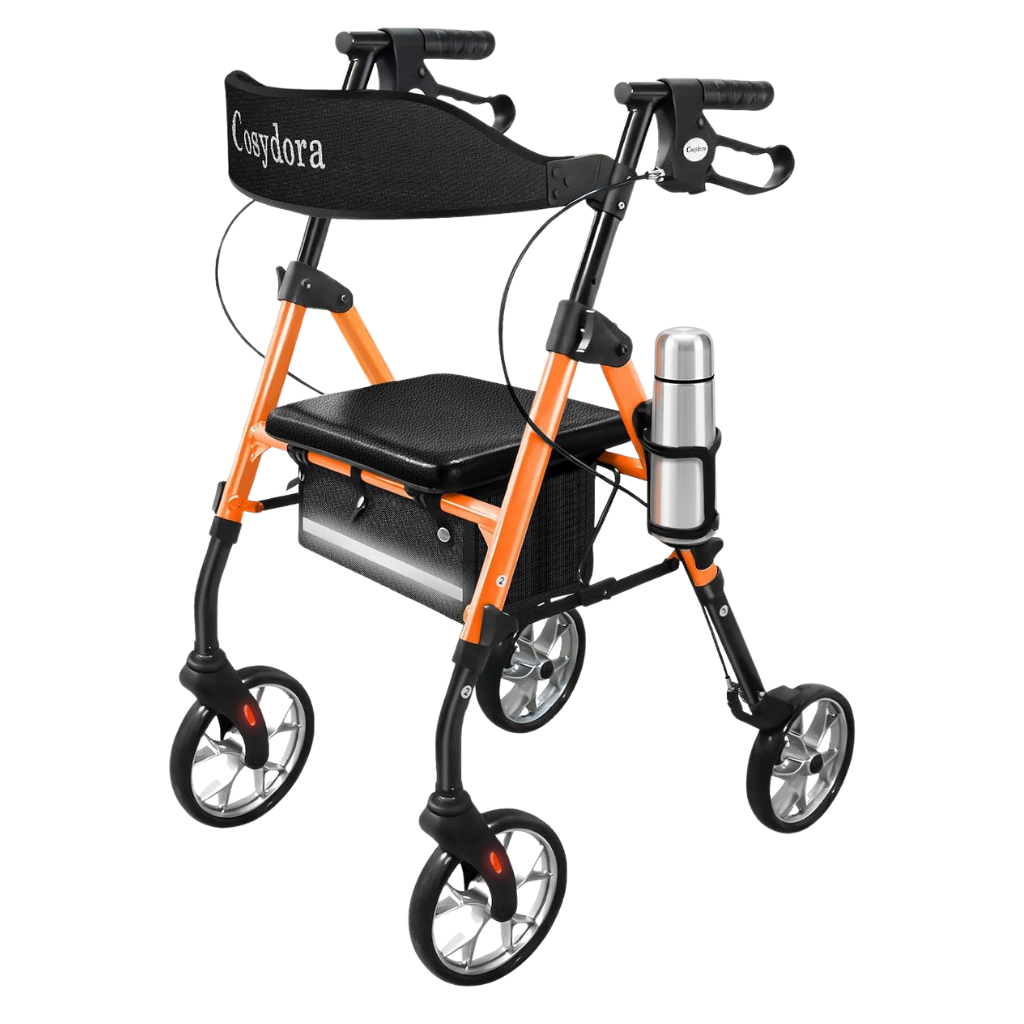
Cosydora Heavy-Duty Ultra Lightweight Walker
Best For: Seniors who require high weight-capacity stability without sacrificing light portability or stylish visibility.
Pros
Supports 350 lbs while weighing only 15 lbs; dual height adjustability for custom fit.
Cons
Vibrant colorway may not suit users preferring traditional neutral colors.
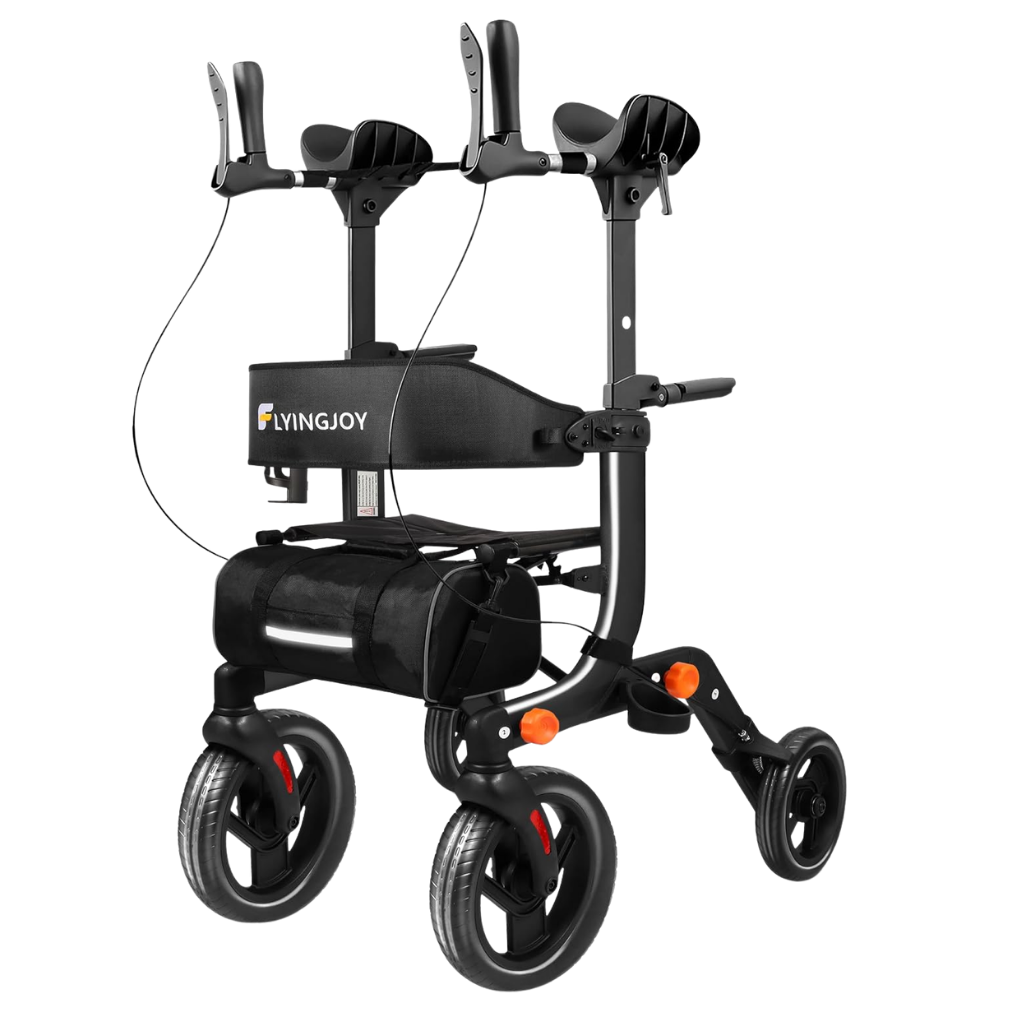
FlyingJoy Lightweight Upright Rollator Walker
Best For: Seniors with back pain or posture issues who benefit from upright armrests, stable terrain navigation, and built-in cane storage.
Pros
Upright design relieves lower back strain; large front wheels easily roll over obstacles.
Cons
Upright armrest frame makes it slightly bulkier when folded than basic rollators.
Safety Considerations: Sizing and Adjustments
Buying the right walker online is only half the battle. If the height or fit is incorrect, it creates a fall hazard rather than preventing one.
How to Measure Your Loved One Correctly
- Have your parent wear their normal walking shoes and stand up straight with their arms hanging naturally at their sides.
- Measure the distance from the floor to the crease of their wrist.
- Adjust the walker handgrips so they match that exact height. When your parent holds the grips, their elbows should bend at a comfortable 15-to-20-degree angle.
If the walker is too low, your parent will hunch forward, putting dangerous pressure on their lower back. If it is too high, their shoulders will bunch up near their ears, reducing their steering control and increasing shoulder fatigue.
⚠️ Caregiver Safety Check: Watch the Glides and Tips
Rubber tips on standard walkers and rear glide caps wear out surprisingly fast on abrasive outdoor concrete or rough indoor tile. Check these rubber components once a month. Worn-out rubber turns slick, dramatically increasing the risk of the walker slipping out from under your parent.
Tips for Transitioning to a Walker

Getting a walker delivered to the front door is often met with resistance. It is completely normal for a parent to feel embarrassed or emotionally resistant to using a mobility aid. Here are a few compassionate strategies learned through real caregiving experience to make the transition smoother:
- Frame it around freedom, not limitation: Instead of saying, “You need this so you don’t fall,” try framing it as, “This is going to let us go out to the botanical gardens without your legs aching halfway through.” Focus on what the device enables them to do, not what it restricts.
- Practice indoors first: Do not unbox a brand-new rollator on a busy sidewalk or hospital discharge day. Have your parent practice walking down the hallway and turning around the living room coffee table several times while you walk right beside them.
- Clear household pathways: Walkers require space. Take a Saturday afternoon to remove loose throw rugs, bundle loose electrical cords against baseboards, and widen the furniture pathways in main living areas.
Final Thoughts for Caregivers
Helping an aging parent accept mobility support is rarely just about choosing a piece of equipment—it is about honoring their independence while prioritizing their safety. Take your time reviewing their specific environment, check their measurements carefully, and involve them in the selection process whenever possible.
By choosing the right tool, you aren’t just giving them a walker; you are giving them the confidence to step out the front door, visit friends, and move through their daily life with security and peace of mind.
Frequently Asked Questions
How do I know if my parent needs a walker with a seat or a standard one?
Consider their endurance. If your parent can walk continuously for 15 to 20 minutes without needing to catch their breath or rest their legs, a standard lightweight walker or basic frame may suffice. If they experience fatigue, get winded easily, or love taking long outings where seating might not be readily available, a four-wheel rollator with a built-in seat is essential.
Can a senior use a rollator walker if they have severe arthritis in their hands?
Traditional loop-lock hand brakes require hand strength to squeeze and lock. If your parent has severe hand arthritis or low grip strength, look for models that feature soft, ergonomic gel grips or consult a physical therapist about alternative braking systems, such as slow-down friction brakes or forearm platforms that distribute weight away from the hands.
What is the difference between a 3-wheel and a 4-wheel rollator?
Three-wheel rollators offer a tighter turning radius, making them fantastic for narrow apartment hallways and tight indoor spaces. However, they are inherently less stable than four-wheel models and almost never feature a seat because of their triangular frame design. Four-wheel rollators provide a much wider, stable base of support and include a proper resting seat.
How do I safely transport a walker in a car trunk?
Most modern folding walkers and rollators collapse either front-to-back or side-to-side. Practice folding the unit at home before loading it into a vehicle. Remove any heavy loose items from the under-seat pouch first so they do not roll around the car trunk. Ensure the folding latch clicks securely into place so the frame does not spring open while you are lifting it.
Are outdoor wheels necessary if my parent mostly stays inside?
If the walker crosses thick living room carpets, tile kitchen transitions, or goes out onto a backyard patio, larger wheels (6 inches or bigger) make a noticeable difference. Tiny indoor wheels tend to catch on carpet edges and door thresholds, which can jar your parent’s wrists and cause sudden stops.
How much weight can a standard Amazon rollator support?
Most standard consumer rollators found online support up to 250 to 300 pounds. If your parent requires a higher weight threshold, look specifically for heavy-duty or bariatric models, which feature reinforced steel frames and wider seats rated for 400 to 500 pounds.
How often should walker parts be inspected or replaced?
Inspect your parent’s walker monthly. Check that all height-adjustment pins click firmly into place, ensure the folding hinges are secure, test that the hand brakes engage the wheels tightly, and examine rubber tips or glide caps for wear. Replacing worn rubber tips or brake cables yearly prevents unexpected slips and maintains safe operation.