
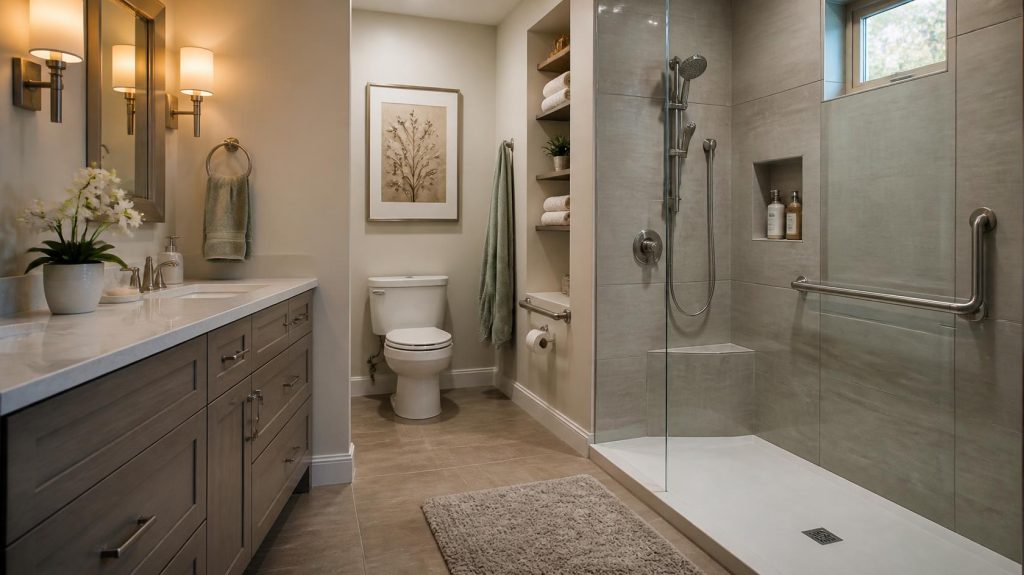
Standing on wet tile while trying to step over a high bathtub wall is a moment that makes many adult children hold their breath. You watch your parent grip the slippery edge of the sink, shift their weight, and you realize just how vulnerable they are in their own home. It is a terrifying realization that hits most caregivers unexpectedly.
The bathroom is consistently the site of the most severe household injuries for older adults. Slick surfaces, hard porcelain fixtures, and tight spaces create a hazardous environment for anyone experiencing changes in balance, vision, or muscle strength.
If you are lying awake wondering how to keep your aging parent safe without stripping away their privacy and independence, you are in the right place. This guide walks through why the bathroom poses such high risks, breaks down 15 practical bathroom safety for seniors and fall prevention strategies by effort level, and answers the burning questions keeping you up at night.
Why the Bathroom Is the Most Dangerous Room
When we talk about home safety, stairs usually get the most attention. Yet statistical data from public health agencies shows that more dangerous falls happen in the bathroom than anywhere else in the house.
Several physical and environmental factors collide behind that closed bathroom door:
- Slick, Water-Repellent Surfaces: Water, soap, steam, and smooth tile or fiberglass create an environment where traction disappears instantly.
- Hard Surfaces Everywhere: Porcelain toilets, cast-iron tubs, glass shower doors, and tiled walls leave zero room for error if balance fails. A slip does not just mean a fall; it often means a direct impact against rigid, unyielding materials.
- Confined Spaces: Bathrooms are often the smallest rooms in a house. When a senior loses their balance, there is rarely enough room to catch themselves safely or for a caregiver to step in and break the fall.
- Compromised Footwear: Seniors are frequently barefoot, wearing slippery socks, or stepping out of the shower with wet feet, drastically reducing natural grip.
- Frequent Urgent Visits: Needing to use the toilet urgently in the middle of the dark night increases rushing, grogginess, and poor coordination.
Recognizing these hazards is the first step toward building a safer routine. Next, let us look at the specific physical triggers that cause falls in this space.
Common Causes of Falls in the Bathroom
Understanding why falls happen helps you pinpoint the exact changes your parent needs. It is rarely just “clumsiness.” Instead, falls usually stem from a combination of environmental obstacles and changing physical abilities.
Transitioning Surfaces
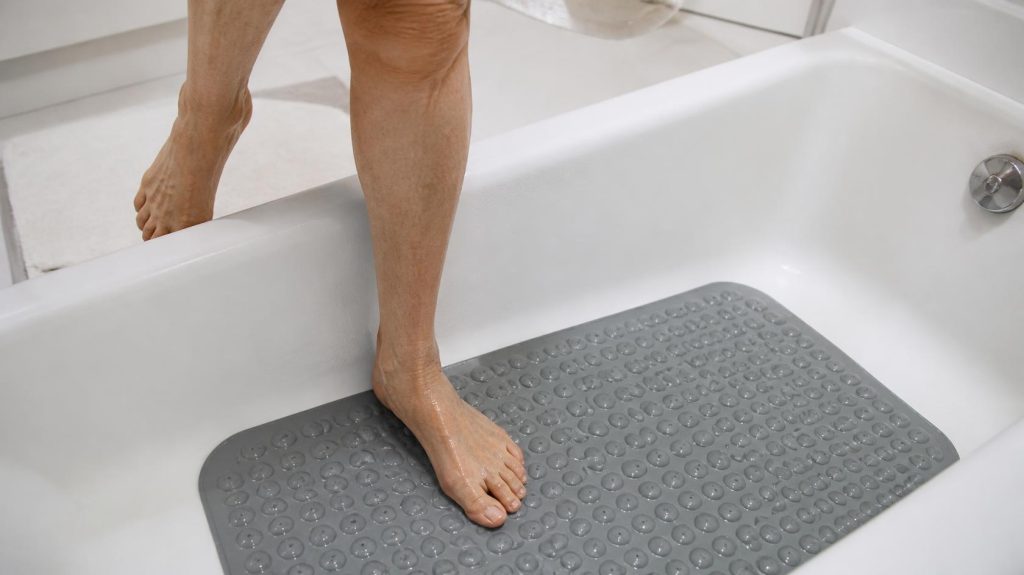
Stepping over a 15-inch bathtub wall requires dynamic balance, single-leg strength, and hip flexibility. When a wet foot lifts from a slippery tub floor to clear that threshold, the margin for error shrinks to zero. Similarly, moving from a dry tiled floor onto a damp bath mat can catch a walker tip or a shuffling foot off guard.
Poor Lighting and Nighttime Grogginess
As we age, our eyes need significantly more light to perceive depth and contrast. A dim bulb in a hallway or bathroom makes it difficult to spot a rolled-up bath mat edge or a wet patch on the floor. Nighttime trips are especially risky because the brain is half-asleep and spatial awareness is obscured. Furthermore, standing up suddenly can trigger a brief drop in blood pressure (orthostatic hypotension)—remind your parent to sit on the edge of the bed for 30 seconds before standing to let their blood pressure stabilize.
⚠️ Safety Warning: Towel bars, glass shower doors, and toilet paper holders are engineered only for light fabric or lightweight fixtures. They will tear right out of dry wall if an adult leans their full body weight on them. Never rely on decorative fixtures as steadying points.
15 Ways to Prevent Falls in the Bathroom
Making a bathroom safe does not require an immediate, full-scale remodel. To help you prioritize without feeling overwhelmed, these 15 steps are divided by effort level—starting with zero-cost fixes you can make today, followed by simple equipment upgrades, and concluding with permanent hardware installations.
Tier 1: Quick, Zero-Cost & DIY Fixes (Do These Today)
1. Clear Clutter and Loose Throw Rugs
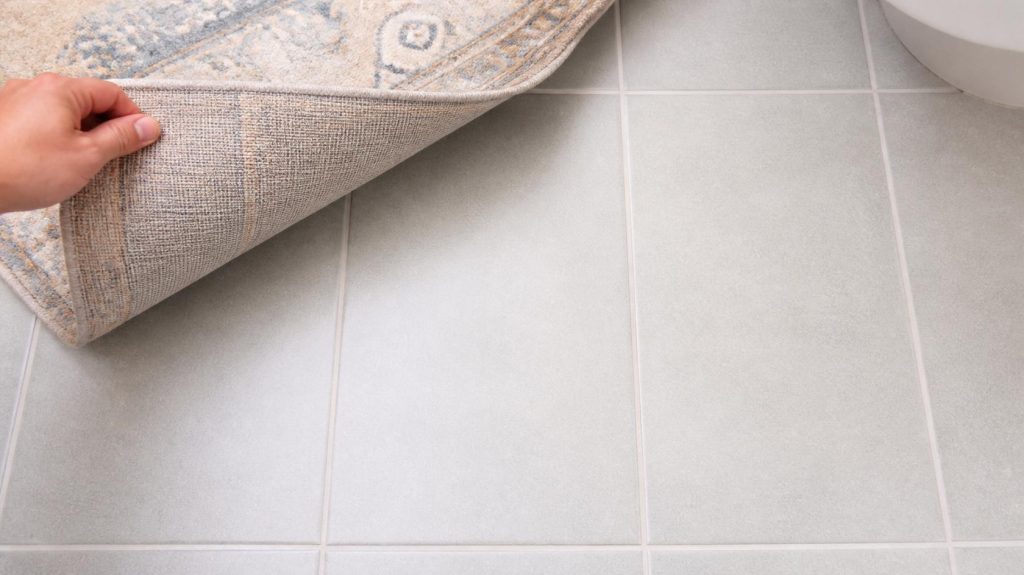
Loose accent rugs are notorious tripping hazards for walkers, canes, and shuffling feet. Clear the floor entirely, move cleaning supplies into cabinets, and remove decorative mats unless they have a heavy, non-slip rubber backing.
2. Clear the Pathway from Bed to Bathroom
Bathroom safety starts outside the room. Ensure the entire corridor from the bed to the bathroom door is completely clear of extension cords, pet toys, laundry baskets, and low furniture.
3. Adjust Water Heater Temperature
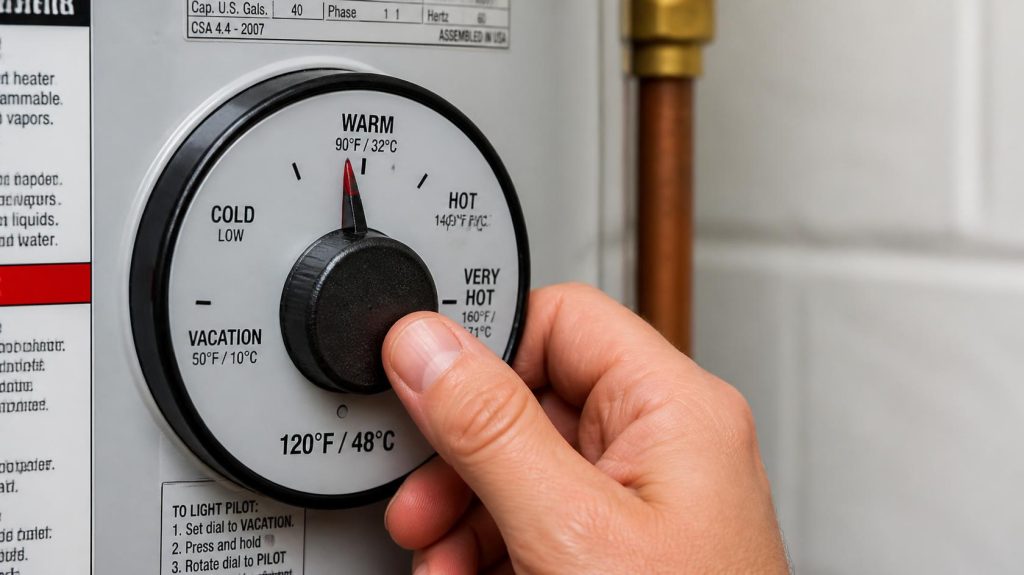
Seniors often experience reduced heat sensitivity in their hands and feet, putting them at risk of severe scalding before they realize the water is too hot. Lower your home water heater thermostat to a maximum of 48°C (120°F) to protect against accidental burns.
4. Keep Everyday Items Within Easy Reach
Bending down to grab shampoo off the tub floor or stretching up to reach a high shelf invites dizziness and loss of balance. Store shampoo, soap, and washcloths at waist height so your parent can reach them without straining.
5. Ensure High Visual Contrast
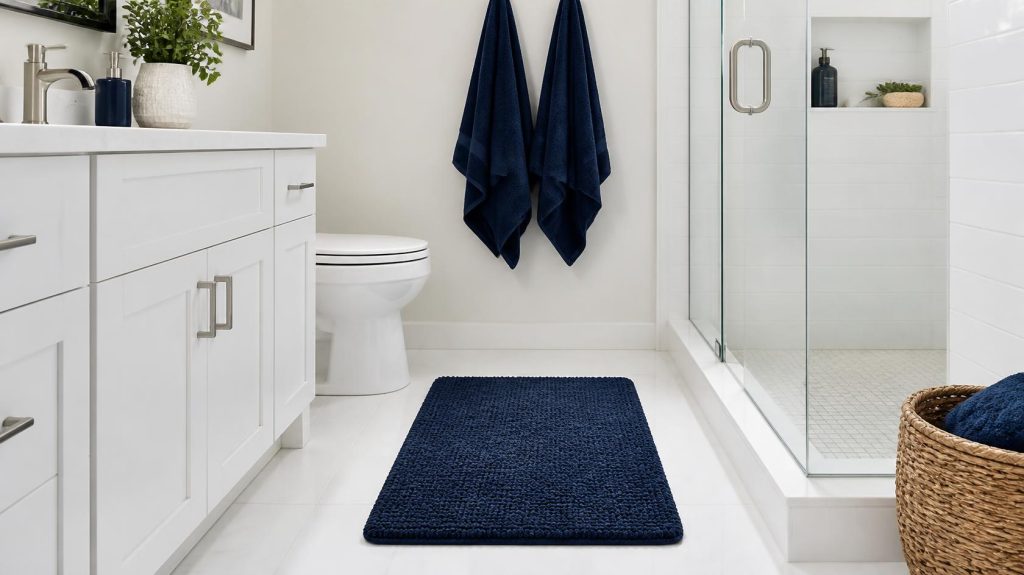
Monochromatic white bathrooms can disorient seniors with declining vision or cognitive changes, making it difficult to distinguish where the floor ends and the tub begins. Use brightly colored towels, a contrasting bath mat, or colored grab bars to help define spatial boundaries clearly.
6. Assess Footwear Habits
Encourage your parent to wear proper water shoes with non-skid rubber soles inside the shower if they prefer to stand, or make sure they wear supportive slippers with deep tread when walking across tile floors. Never walk across bathroom tile in plain cotton socks.
Tier 2: Easy Equipment Upgrades (No Tools Required)
7. Improve Lighting with Motion-Sensor Night Lights
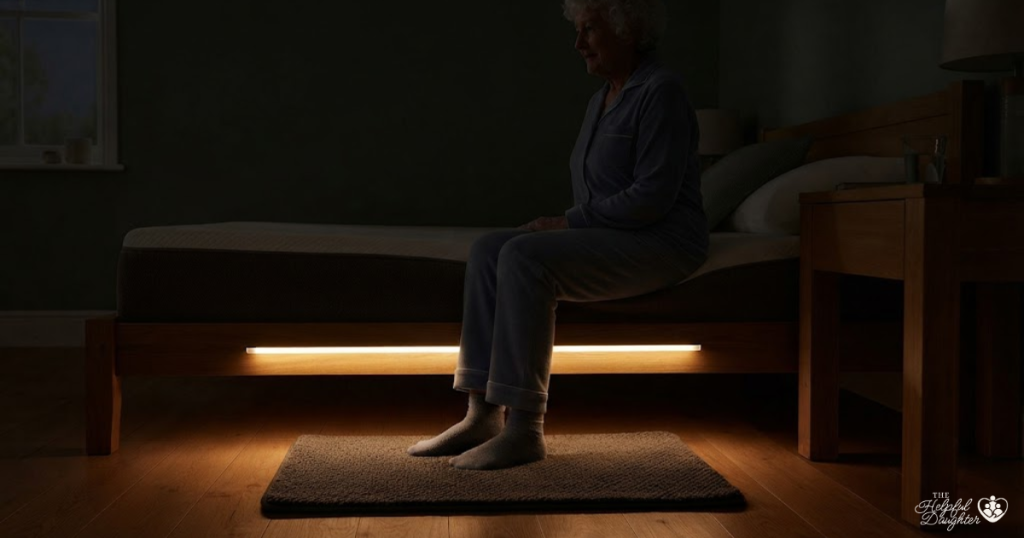
Eliminate the hazard of fumbling for wall switches in the dark. Plug-in LED motion-sensor night lights along the hallway and inside the bathroom illuminate the path the second your parent’s feet hit the floor.
8. Place Non-Slip Rubber Mats Inside and Outside the Tub
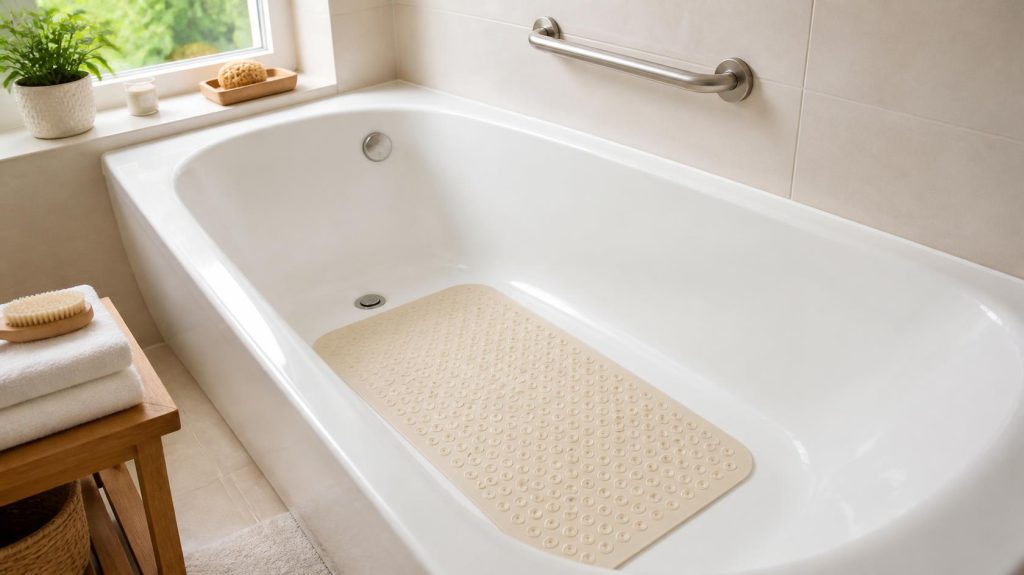
A bare tub floor becomes slick the moment soap touches water. Place a rubber suction-cup mat inside the shower stall. Outside the tub, lay down a heavy bath mat with non-skid backing. For durable, high-traction options, browse our reviews of the best bathtub mats.
9. Upgrade to a Raised Toilet Seat
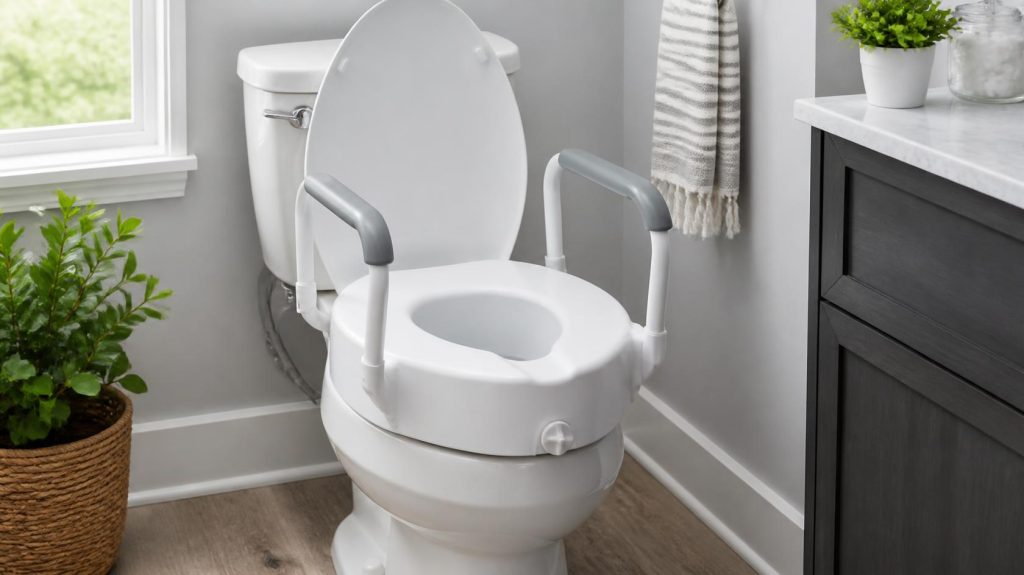
Standard toilets sit around 15 inches high, forcing older adults with arthritis or hip pain to drop down heavily and strain to stand up. A riser adds 3 to 5 inches of height.
💡 Buying Tip: Check the weight capacity on all equipment. Standard toilet risers and shower seating typically support 250–300 lbs, so bariatric options may be needed for higher weight requirements.
If your parent needs arm support to push off, check out our guide on raised toilet seats with handles
10. Introduce a Shower Chair or Tub Transfer Bench
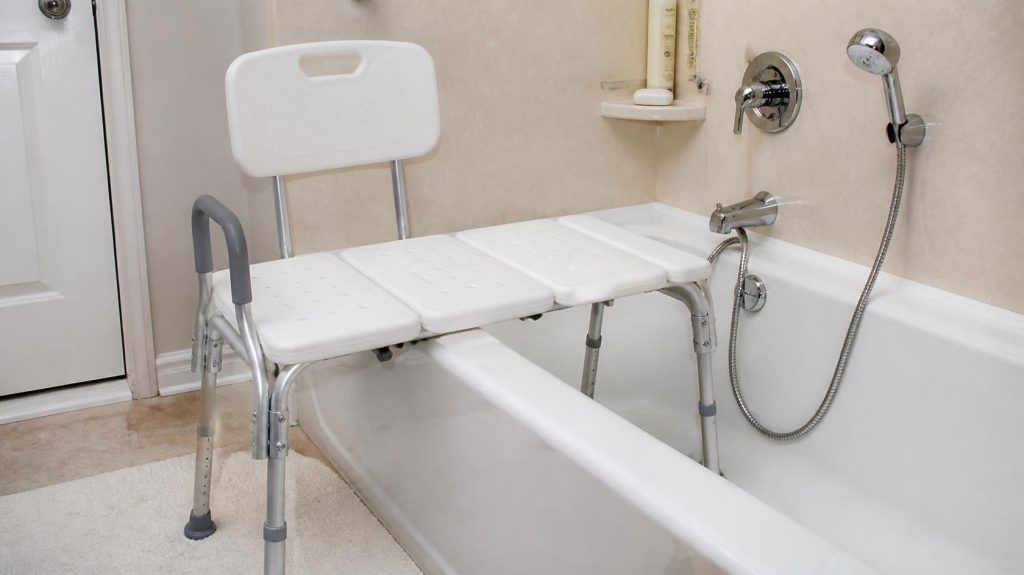
Standing for a 10-minute shower requires sustained balance and leg strength that can fatigue quickly—especially under warm water, which dilates blood vessels and can cause lightheadedness. A shower chair provides a safe resting spot.
If stepping over the bathtub wall is a struggle, a transfer bench sits partially outside the tub so your parent can sit down first, then swing their legs over safely. Compare options in our reviews of shower chairs with arms, and tub transfer benches.
11. Switch to a Handheld Shower Head
Tilting the head back under a fixed shower head can trigger dizziness. A handheld shower head on a flexible hose allows your parent to sit comfortably on their shower chair while directing water safely.
12. Keep Emergency Contact or Medical Alerts Within Reach

If a fall does happen, quick access to help is critical. Keep a waterproof medical alert pendant, a wall-mounted pull cord, or a charged cordless phone positioned low enough to be reached from the floor.
Tier 3: Hardware & Professional Modifications (Requires Installation)
13. Install Professionally Anchored Grab Bars
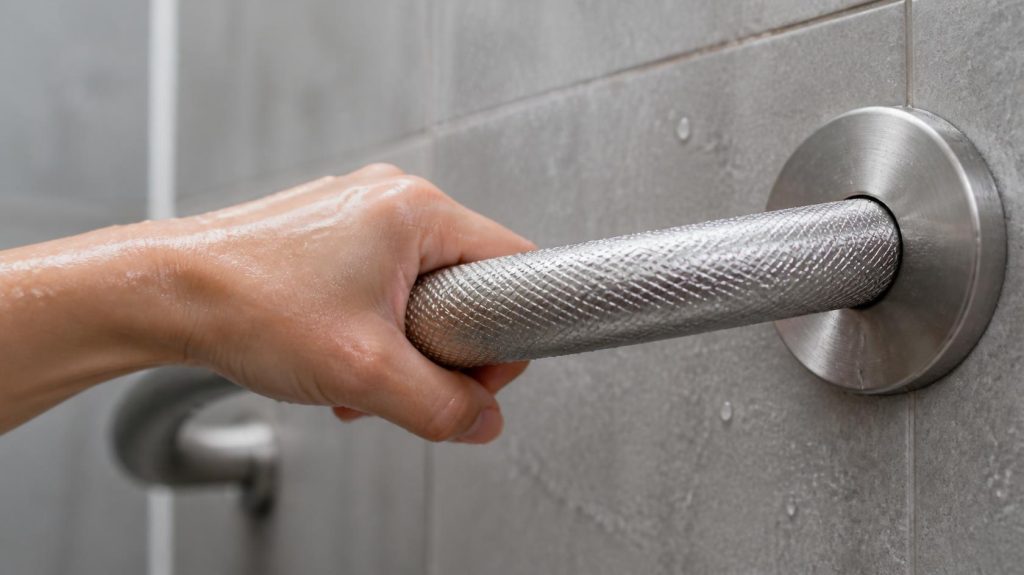
Avoid temporary suction-cup grab bars for full weight-bearing support, as they can lose suction without warning. Secure heavy-duty steel grab bars directly into wall studs near the toilet and inside the shower enclosure. Read our full guide on choosing and placing the best grab bars.
14. Install Lever-Style Door Handles and Faucets
Arthritic hands struggle to twist round doorknobs or tight circular faucet handles. Modern lever handles allow water and doors to be operated easily with a light push of the hand or wrist.
15. Secure Electric Grooming Tools & Outlets
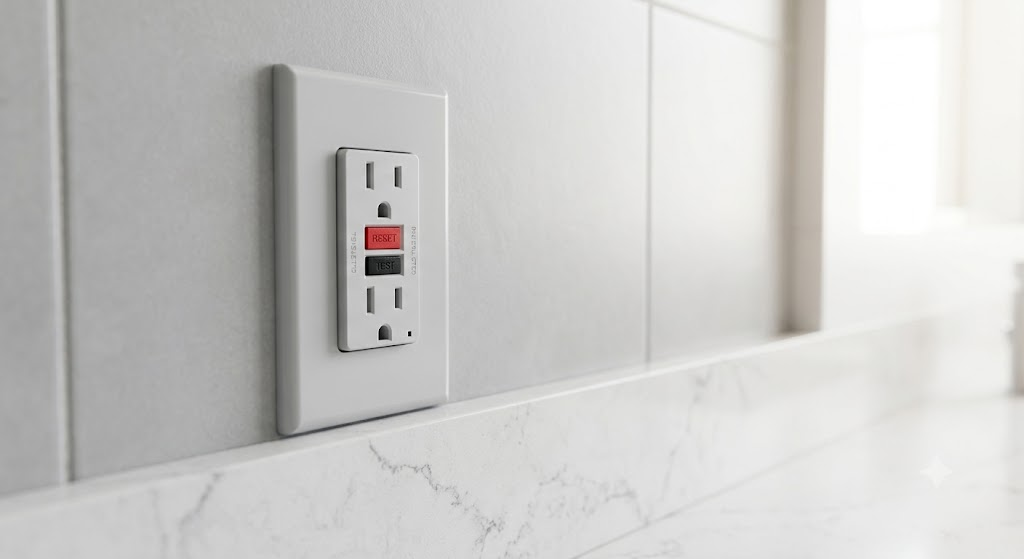
Hair dryers, shavers, and curling irons left plugged in near sinks create trip hazards and electrical risks. Designate storage drawers for these devices and ensure all bathroom outlets have GFCI (Ground Fault Circuit Interrupter) safety protection.
Final Thoughts
Making a bathroom safer is an act of deep care. It is about preserving your parent’s dignity, protecting their independence, and giving yourself peace of mind when you cannot be there every minute.
You do not need to tackle all 15 changes at once. Start with Tier 1 fixes today—like clearing loose rugs, adjusting water temperatures, and improving nighttime lighting. Take it one step at a time, involve your parent in the decision-making process, and tailor every adjustment to their daily routine.
Frequently Asked Questions
Are suction-cup grab bars safe to use in the shower?
Suction-cup grab bars are generally not recommended for full body weight support. While they can provide a light tactile guide for balance, they rely on vacuum seals that can fail unexpectedly due to moisture, tile grout lines, or loss of suction over time. For true safety and fall prevention, always install grab bars that are screwed securely into structural wall studs. If rental agreements prevent drilling, look for floor-to-ceiling tension safety poles designed specifically for bathrooms.
How high should a grab bar be installed next to a toilet?
For most adults, horizontal grab bars next to a toilet should be installed between 33 and 36 inches above the finished floor level. However, the exact height depends on your parent’s height and how they naturally transition from sitting to standing. Observe your parent’s movement patterns first, or consult an occupational therapist for a personalized home assessment before drilling into your tiles.
What is the difference between a shower chair and a tub transfer bench?
A shower chair sits entirely inside the tub or walk-in shower stall, meaning your parent still has to lift their legs over the bathtub wall to sit down. A tub transfer bench features an extended seat that bridges the rim of the bathtub—allowing your parent to sit down on the outside portion of the bench, swing their legs safely over the wall, and slide across into the shower without ever stepping over a high threshold.
How can I make a rented apartment bathroom safer without damaging walls?
If you are modifying a rental property, avoid permanent modifications by utilizing non-permanent safety aids. Look for tension-mounted floor-to-ceiling safety poles, clamp-on raised toilet seats with built-in armrests, heavy rubber-backed non-slip bath mats, and weighted freestanding shower chairs. Always check with your landlord if you wish to install permanent grab bars, as many property owners will approve them if installed professionally.
How do I convince my aging parent to accept safety equipment?
Resistance to safety gear usually stems from a fear of losing independence or feeling like their home is turning into a hospital. Instead of framing changes around aging or decline, focus on comfort, convenience, and privacy. For instance, suggest a shower chair as a way to relax and enjoy a comfortable shower without getting exhausted, or frame a raised toilet seat as a simple fix for aching knees. Involving them in choosing the style and color of the products also helps restore a sense of control.
At what time of day do most bathroom falls happen?
Statistics show that bathroom falls frequently occur during nighttime trips or early morning hours. During these times, seniors are often disoriented, adjusting to sudden darkness, experiencing low blood pressure from standing up quickly (orthostatic hypotension), or rushing because of sudden urinary urgency. Installing motion-sensor path lighting and keeping clear, obstacle-free walkways is essential to mitigating these specific moments of high risk.
Do I need a professional contractor to install bathroom safety products?
Simple items like non-slip mats, clamp-on toilet risers, and battery-operated night lights require no tools and can be set up by family caregivers in minutes. However, grab bars, wall-mounted shower seats, and replacement lever faucets require precise anchoring into wall studs or plumbing lines. Hiring a certified handyman or a contractor experienced in aging-in-place modifications ensures these items can withstand heavy pulling force without pulling loose from the wall.
What is the most cost-effective first step for bathroom safety?
Clearing environmental hazards is completely free and yields immediate safety improvements. Removing loose decorative rugs, clearing clutter off the floor, improving lighting with brighter bulbs or night lights, and rearranging toiletries so they are at waist level cost nothing and eliminate several major trip triggers right away. From there, investing in a high-traction rubber bath mat and a simple raised toilet seat offers the highest safety return for a minimal financial investment.