

When you are caring for an aging parent, standard home safety guidelines aren’t enough. Older adults often face mobility or hearing challenges that require earlier fire warnings. As a general rule, a senior’s home needs at least 5 to 7 interconnected smoke detectors to ensure safety. Here is exactly where they need to go
💡 The Golden Rule for Senior Safety:
Don’t just stick to minimum building codes. Aim for Photoelectric, Interconnected Alarms inside every bedroom, outside sleeping areas, and on every single floor level.
Why Smoke Detector Placement Matters Even More for Seniors
For younger adults, a few extra seconds may not seem important.
For seniors, those extra seconds can be lifesaving.
As we age, it’s common to experience:
- Slower reaction times
- Difficulty climbing stairs
- Reduced hearing
- Limited mobility
- Oxygen tubing or medical equipment that slows evacuation
- Memory issues that delay recognizing danger
Because evacuation often takes longer, caregivers should think beyond the minimum code requirements and focus on early detection.
The sooner an alarm sounds, the more time everyone has to get out safely.
How Many Smoke Detectors Do I Need?
The general recommendation is:
- One smoke detector inside every bedroom
- One smoke detector outside each sleeping area
- At least one smoke detector on every level of the home, including the basement
- Additional detectors in larger homes where the distance between alarms would otherwise be significant
For many average two-story homes, that means at least five to seven smoke detectors.
Where to Install Smoke Detectors
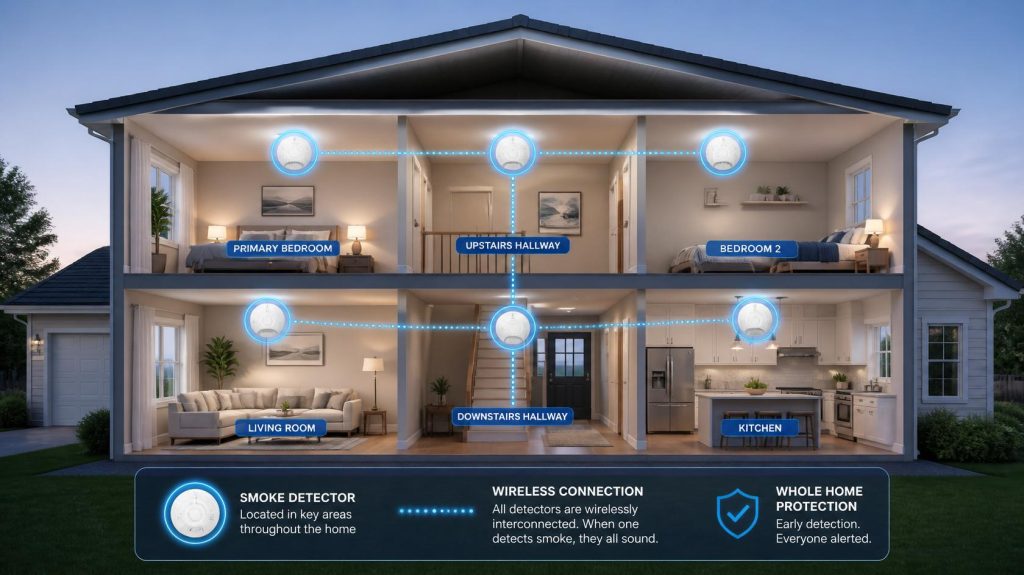
Correct placement matters just as much as the number of alarms.
Ideal Placement
- Centrally on ceilings
- High on walls (4-12 inches from ceiling)
- Inside every bedroom
- Main living areas and stairwells
Avoid These Spots
- Within 10 feet of cooking appliances
- Bathrooms or damp laundry spaces
- Near drafty windows, ceiling fans, or HVAC vents
Do Seniors Need More Smoke Detectors Than Other Homes?
In many cases, yes.
Minimum code requirements are designed for the average household—not someone who may need extra time to respond during a fire.
Additional smoke alarms can improve safety by providing earlier detection in areas where seniors spend much of their day.
Consider adding alarms near:
- Family rooms
- Home offices
- Laundry rooms
- Large hallways
- Sunrooms
- Attached workshops
The goal isn’t simply to meet regulations. It’s to maximize warning time.
Best Smoke Alarms for Elderly Adults
Standard building codes don’t always account for mobility or hearing challenges. When choosing fire protection for aging loved ones, look for features that maximize early detection, clarity, and ease of use.
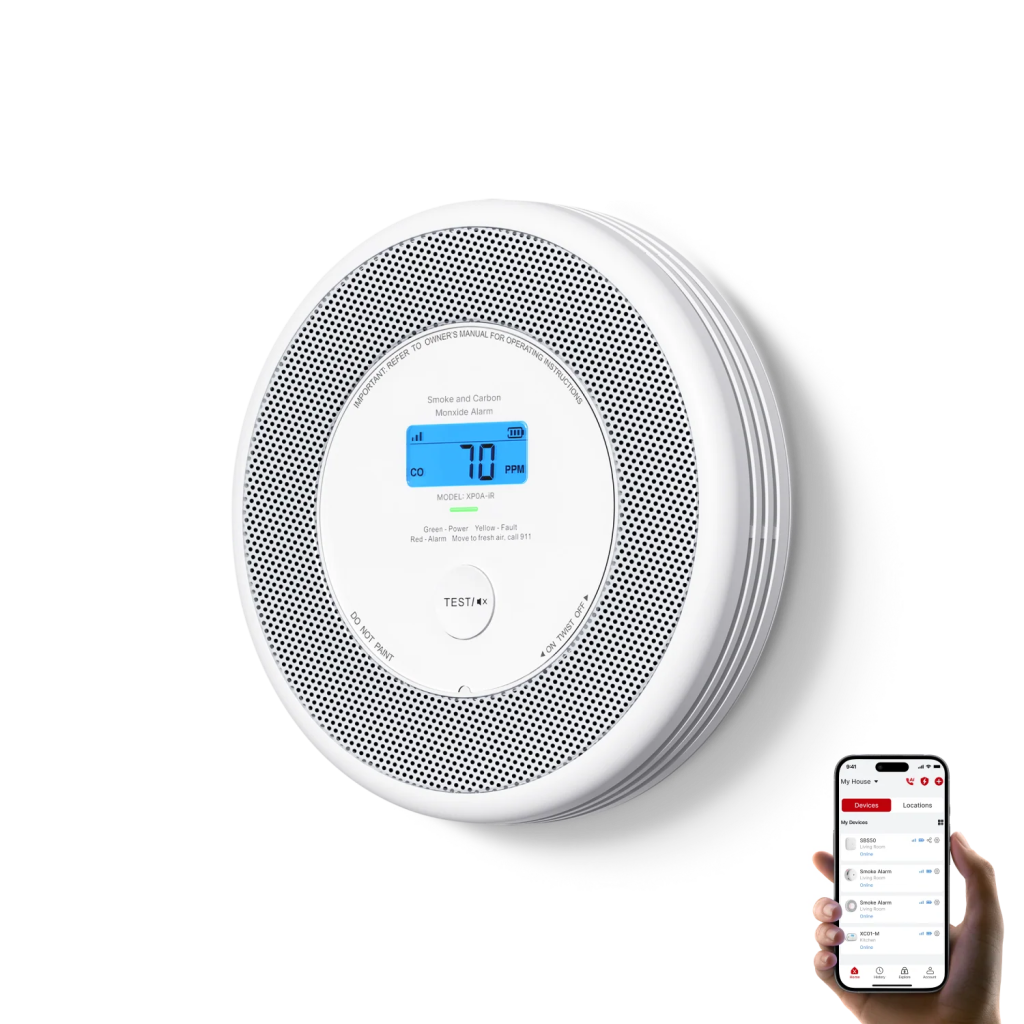
Combination Smoke & CO Alarms
These 2-in-1 devices monitor both smoke and odorless carbon monoxide gas simultaneously. By merging both safety requirements into a single unit, it cuts the amount of ceiling clutter and battery maintenance in half for seniors.
- Dual-protection sensors in one unit
- Saves money and reduces necessary ceiling installations
- Fewer devices to test and maintain over time
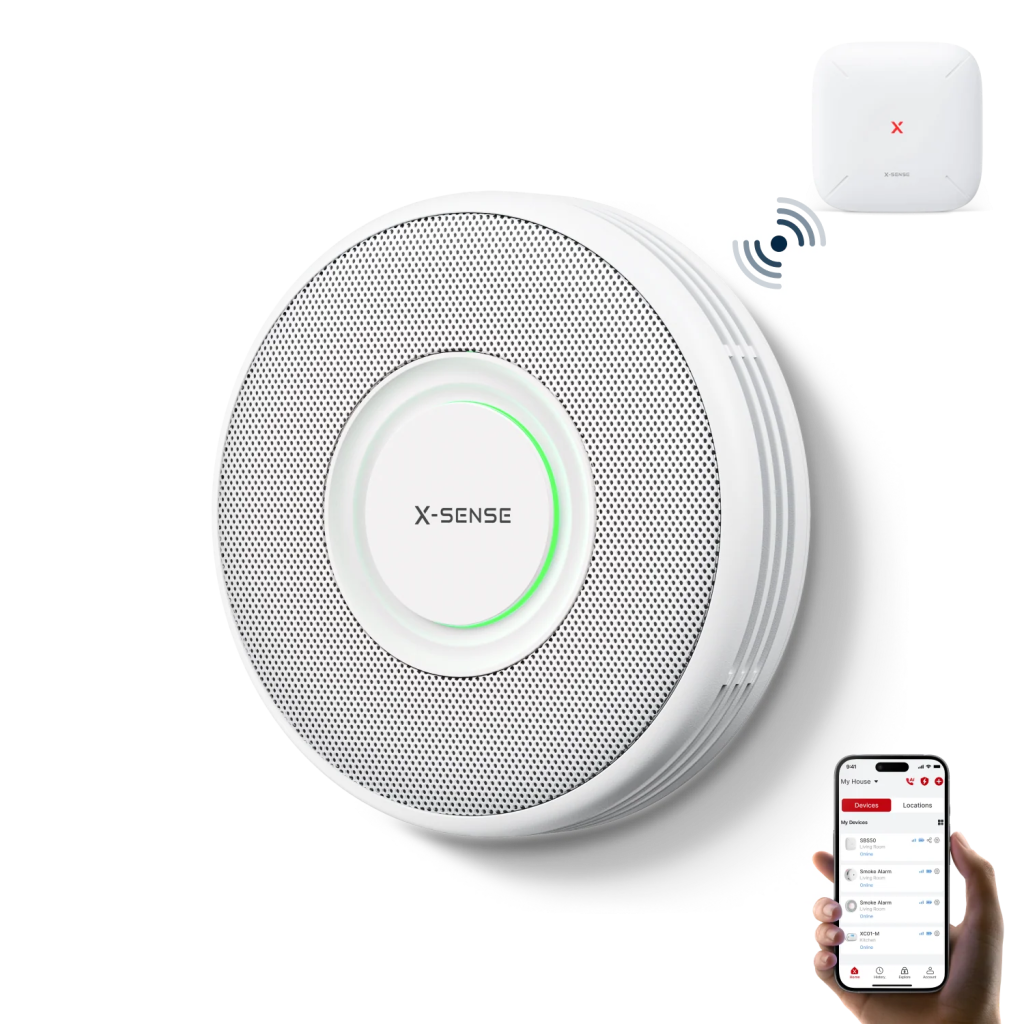
Voice Alert Smoke & CO Alarms
Instead of just a piercing beep, these alarms explicitly announce the danger and its location (e.g., “Fire! Smoke detected in the hallway”). This reduces panic and helps seniors immediately recognize the threat.
- Clear, spoken voice alerts
- Dual smoke and carbon monoxide detection
- Greatly reduces disorientation during nighttime emergencies
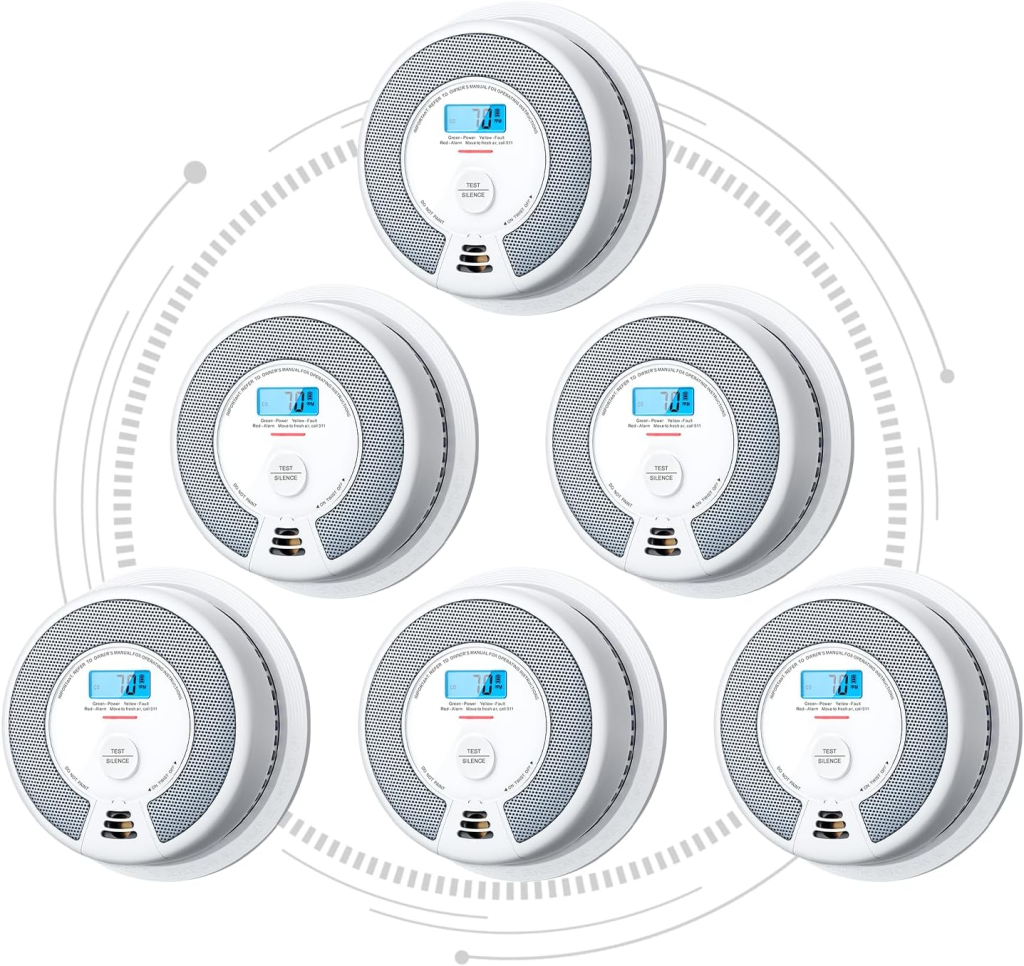
Wireless Interconnected Alarms
When one alarm triggers, every alarm in the house goes off simultaneously. This is a game-changer for larger or multi-story homes, ensuring a senior in the bedroom is instantly warned if a fire starts in the basement.
- Whole-home synchronized alerting
- Wireless setup (no difficult rewiring needed)
- Buys precious extra minutes for slower evacuation
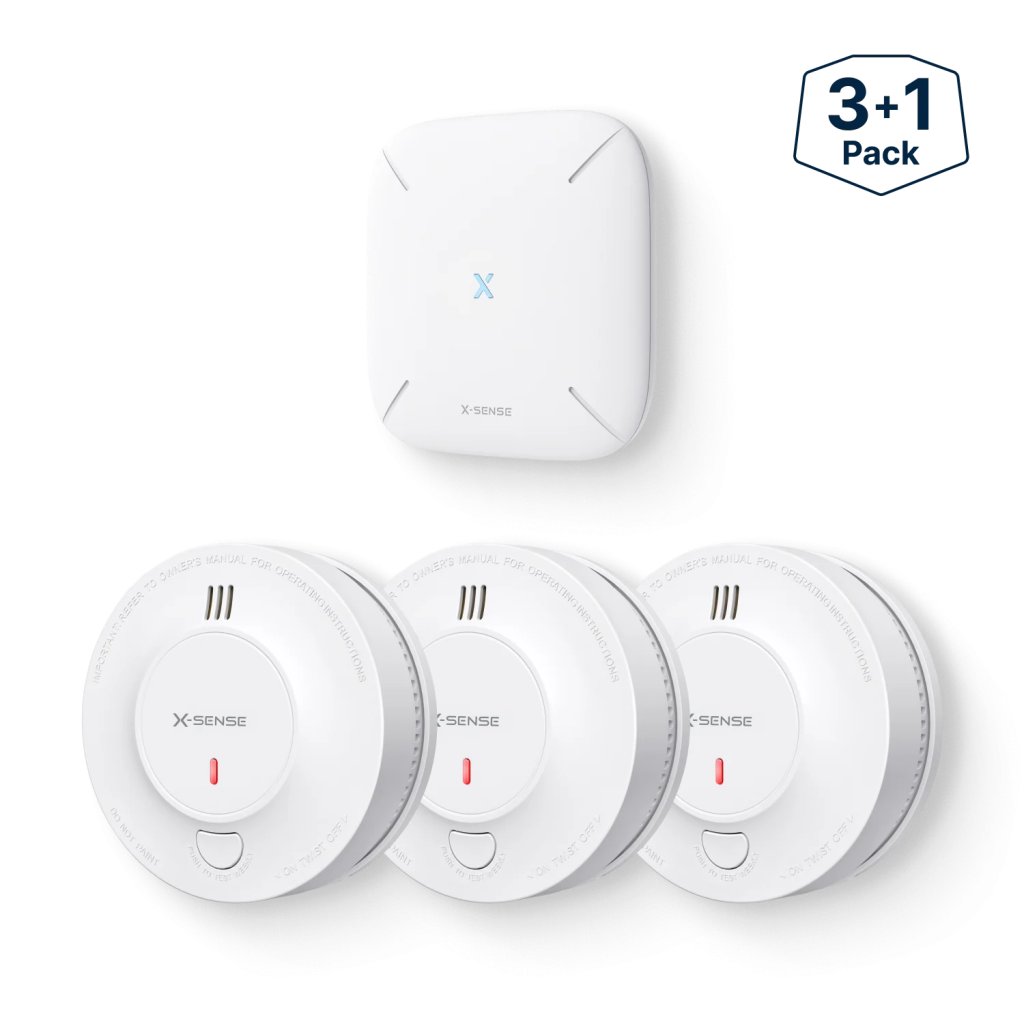
Smart Smoke Detectors
Perfect for independent seniors. These devices send real-time alerts directly to a caregiver’s smartphone app. Even if you live in another city, you will immediately know if an alarm is triggered or if the battery is low.
- Instant smartphone push notifications
- Remote battery and status monitoring
- Can be integrated with smart home lighting to illuminate exit paths
Monthly Smoke Detector Maintenance Checklist
Keep your home and loved ones safe with these routine checks
Press and hold the “Test” button on each unit for a few seconds. The siren should sound loud and clear. If it’s weak or silent, replace the batteries immediately.
Gently vacuum around the outside casing or use a dry microfiber cloth to clear away dust, debris, and spiderwebs that could block the sensors or trigger false alarms.
Visually inspect the unit to ensure the small LED standby light is blinking properly (usually once every 30 to 60 seconds), showing that power is flowing perfectly.
Take a quick look at the back or side label. Remember that all smoke detectors lose reliability and must be completely replaced every 10 years from their manufacture date.
Additional Fire Safety Tips for Senior Homes
Smoke detectors are only one part of a complete fire safety plan.
Caregivers should also:
- Create a home evacuation plan
- Practice escape routes regularly
- Keep exits free of clutter
- Install carbon monoxide detectors
- Place fire extinguishers in accessible locations
- Ensure house numbers are clearly visible for emergency responders
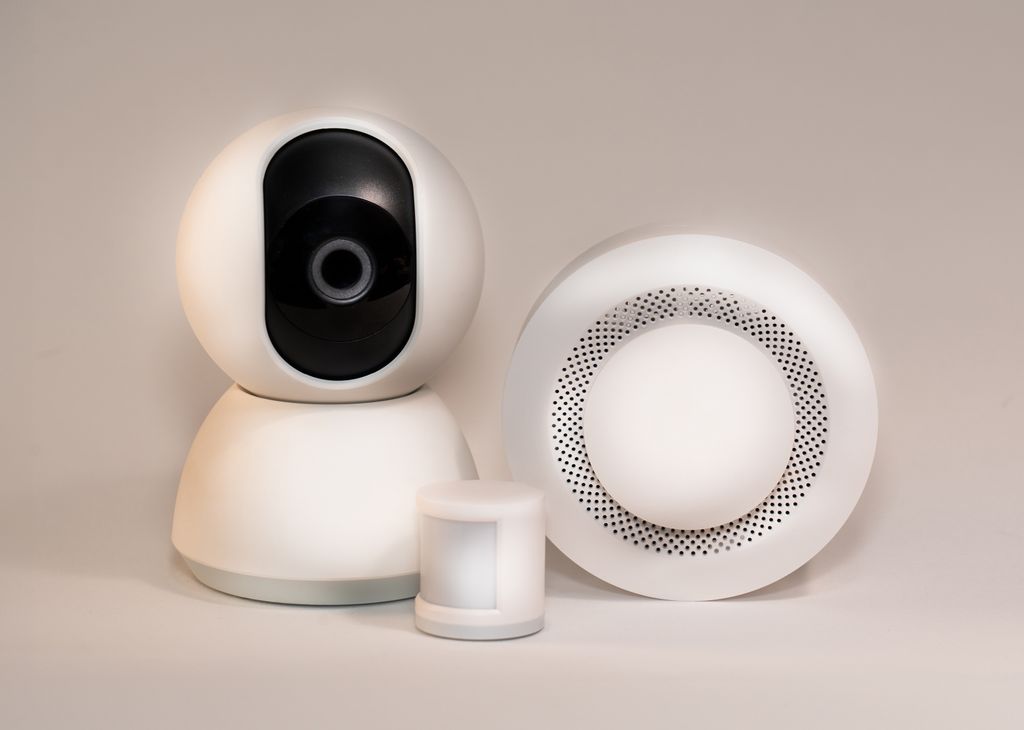
- Consider monitored home safety systems for seniors who live alone
Small improvements today can make a significant difference during an emergency.
Common Smoke Detector Mistakes

Many homes unknowingly have gaps in fire protection.
Avoid these common mistakes:
- Installing only one smoke detector for the entire house
- Forgetting the basement
- Ignoring expired alarms
- Removing batteries after nuisance alarms
- Installing alarms too close to kitchens
- Never testing interconnected systems
- Assuming hardwired alarms never need replacement
Final Thoughts
When caregivers ask, “How many smoke detectors do I need?”, the answer is usually more than the minimum required by code.
For older adults, every additional second of warning can make a difference. Installing smoke detectors inside bedrooms, outside sleeping areas, on every floor, and in other high-risk spaces creates a much safer environment.
Just as important, choose alarms that match your loved one’s needs. Features like interconnected alarms, voice alerts, smart notifications, and combination smoke and carbon monoxide detection can provide extra peace of mind for both seniors and caregivers.
A well-protected home isn’t just about checking a box—it’s about giving your loved one the best possible chance to respond safely if an emergency occurs.
Frequently Asked Questions
How many smoke detectors do I need in a three-bedroom house?
Most three-bedroom homes should have at least six smoke detectors: one inside each bedroom, one outside the sleeping area, one on each level of the home, and one in the basement if there is one.
Where should smoke detectors be installed?
Install smoke detectors inside every bedroom, outside each sleeping area, and on every level of the home. Place them on the ceiling or high on the wall, away from kitchens, bathrooms, windows, and air vents.
Do seniors need additional smoke alarms?
Many do. Because older adults may have slower mobility or hearing loss, adding smoke alarms in living areas, family rooms, and other frequently used spaces can provide earlier warning and more time to evacuate.
How often should smoke detectors be replaced?
Most smoke detectors should be replaced every 10 years, even if they appear to be working. Check the manufacturing date printed on the back of the unit.
Are interconnected smoke alarms worth it?
Yes. Interconnected smoke alarms improve home fire safety by ensuring every alarm sounds when one detects smoke. This provides earlier warning throughout the home, which is especially beneficial for seniors and caregivers.
Should smoke detectors be installed in the kitchen?
No. Smoke detectors should be installed near—but not inside—the kitchen. Placing them too close to cooking appliances can cause frequent false alarms. Follow the manufacturer’s recommended distance from cooking areas for the best performance.