
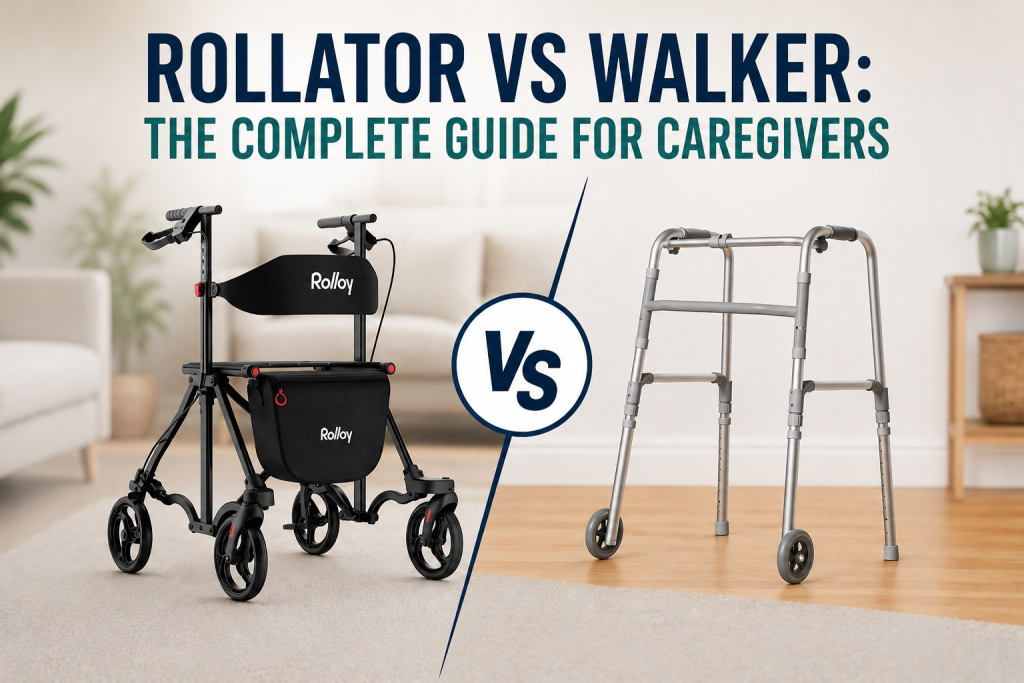
Getting a phone call from Mom or Dad telling you about a fall—or noticing them gripping furniture and walls just to cross the living room—is a moment every caregiver dreads. You want to help them stay independent, but watching their balance slip is terrifying. That is usually when the conversation turns to mobility aids. Walking into a medical supply store or browsing online can quickly overwhelm you with choices, leaving you staring at a lineup of metal frames asking yourself: Do they need a traditional walker, or is a rollator the safer bet?
Getting this choice wrong matters. If you buy a device that is too unstable, your parent risks a serious fall. If you choose something too cumbersome, they may refuse to use it altogether, choosing isolation over frustration.
This guide breaks down the real differences between rollator vs walker. We will look at how they function in everyday home life, examine their safety records, compare pros and cons honestly, and walk through specific scenarios to help you make the right choice for your family.
What is a Traditional Walker?
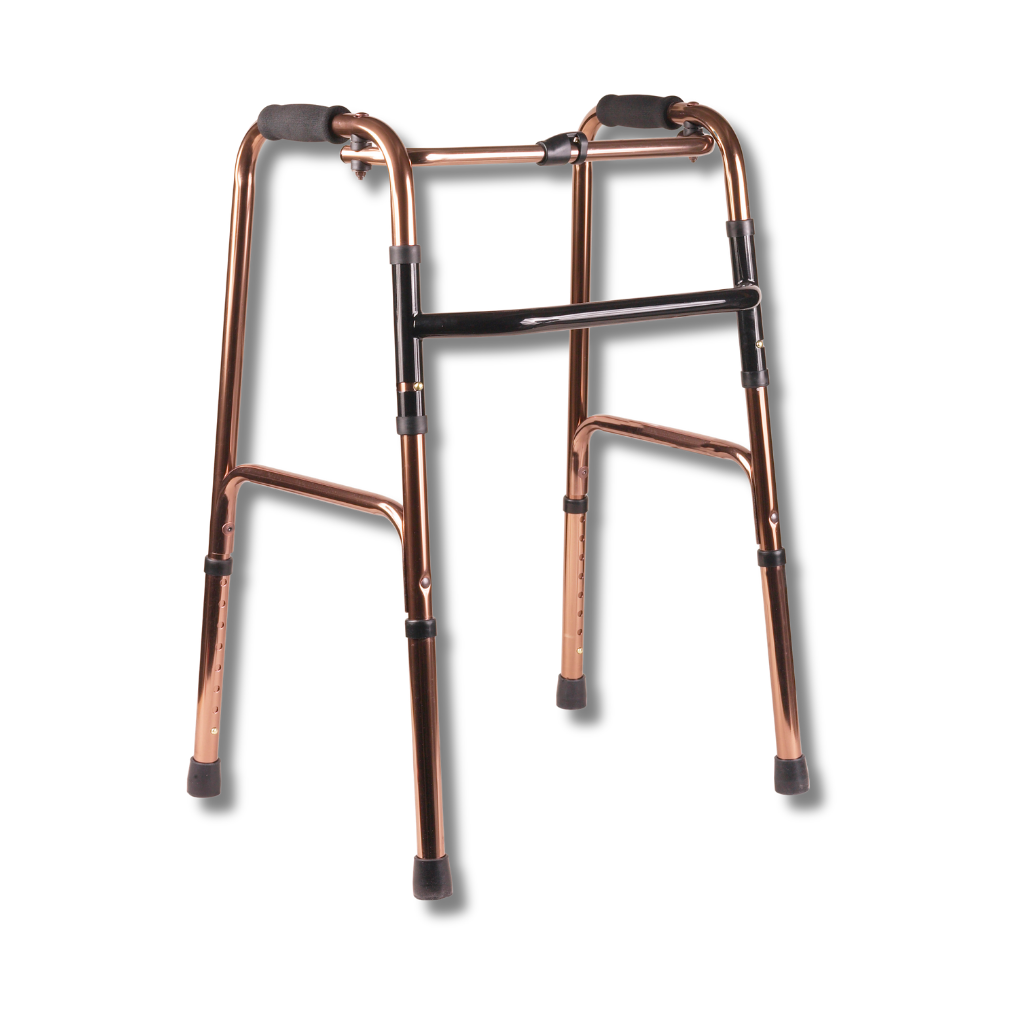
A traditional walker—often called a walking frame—is a rigid structure made of lightweight aluminum tubing. It stands on four legs, typically equipped with rubber tips at the bottom, though some models feature two small front wheels.
Built for maximum weight-bearing support and stability. Ideal for post-surgery recovery or individuals with significant balance impairment
- Supports up to 300-400 lbs depending on model
- Requires lifting to move forward
- No built-in seat (encourages short, intentional walks)
Who is a Traditional Walker Best For?
- Post-surgery recovery: Individuals recovering from hip or knee replacements who need to keep weight off a specific leg temporarily.
- Significant balance issues: Seniors who experience severe dizziness, vertigo, or sudden lower-body weakness.
- Indoor-focused movement: People who primarily move around a single-level home or apartment.
Who Should Avoid a Traditional Walker?
- Low upper-body strength: Seniors with arthritis in their hands, wrists, or shoulders who struggle to lift and push a frame repeatedly.
- Endurance challenges: Anyone who gets tired quickly and needs to sit down frequently during a walk.
- Active outdoor lifestyles: Individuals who want to walk in parks, run errands, or navigate uneven sidewalks.
What is a Rollator?
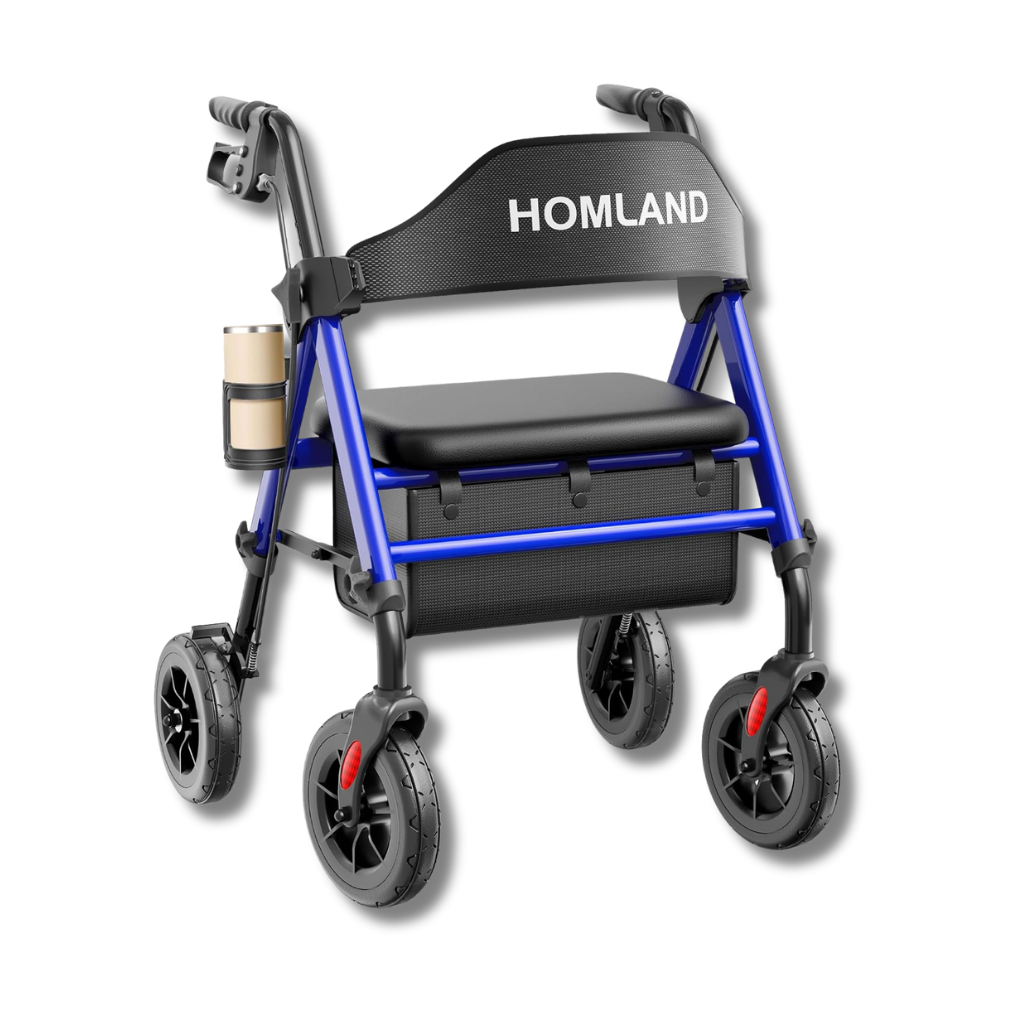
A rollator—frequently called a rolling walker—features a four-wheeled frame equipped with handbrakes, handlebars, and a built-in seat. Unlike a traditional walker, a rollator does not need to be lifted. The user simply pushes it forward, and the wheels glide smoothly across the floor.
- Continuous rolling motion without lifting
- Built-in seat and storage pouch or basket
- Requires hand strength to operate brakes
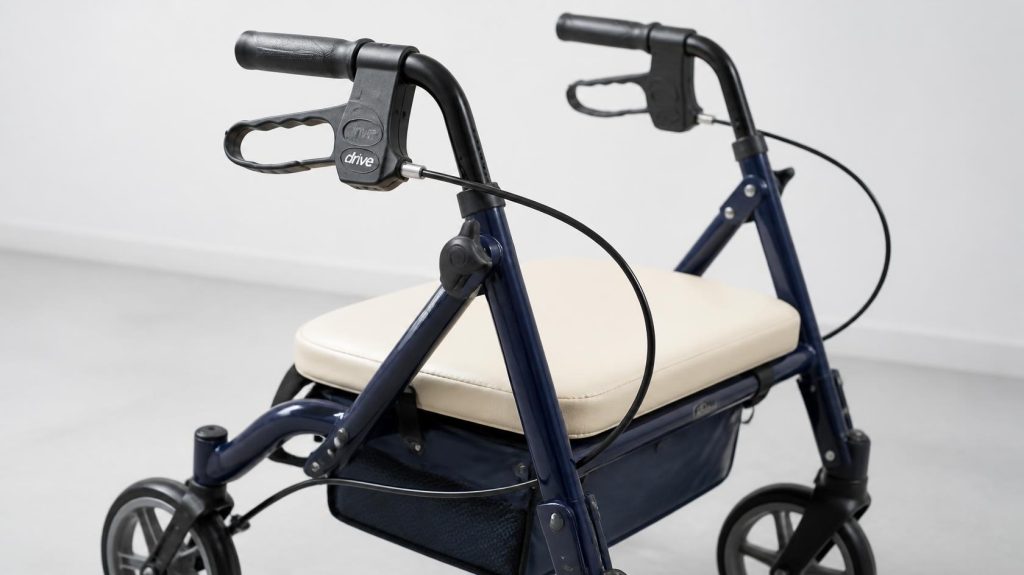
The addition of handbrakes is critical. Squeezing the levers slows the rollator down, while locking the brakes turns the seat into a stable, stationary chair when your parent wants to take a breather.
Who is a Rollator Best For?
- Good upper-body strength and coordination: Seniors who can steer and brake safely while walking.
- Low stamina: Individuals who enjoy walking outdoors or visiting shopping centers but need a place to sit every few minutes.
- Active seniors: Parents who want to maintain social activities, run errands, and travel.
Who Should Avoid a Rollator?
- Severe cognitive impairment or dementia: If a parent forgets how to engage the brakes or tries to use the rolling seat while the device is moving, it can slip away and cause a fall.
- Poor hand strength or severe arthritis: Users who cannot squeeze handbrakes reliably will struggle to control speed on slopes.
- High fall risk from sliding: Seniors who lean heavily forward onto the device for body weight support; rollators can roll out from under a leaning user if not weighted properly.
Direct Comparison: Rollator vs. Walker
Choosing between these two devices comes down to matching your parent’s physical capabilities with the right level of support.
| Feature | Traditional Walker | Rollator |
|---|---|---|
| Mobility Mechanism | Must be lifted and placed forward | Glides smoothly on four wheels |
| Weight Support | High (designed to bear full body weight) | Moderate (designed for balance support, not heavy weight-bearing) |
| Built-in Seat | Rare (most models do not have seats) | Standard (includes a seat for resting) |
| Braking System | None (relies on stationary rubber tips) | Handbrakes with locking mechanisms |
| Portability | Folds flat, lightweight, fits in small car trunks | Folds flat, slightly heavier due to wheels and seat |
| Best Environment | Indoors, tight hallways, home care settings | Outdoors, shopping malls, open indoor spaces |
Safety Considerations Everyone Should Know
Safety is the primary reason to introduce a mobility aid, yet improper use creates new hazards. When evaluating safety, consider your parent’s specific environment and cognitive state.
The Weight-Bearing Illusion
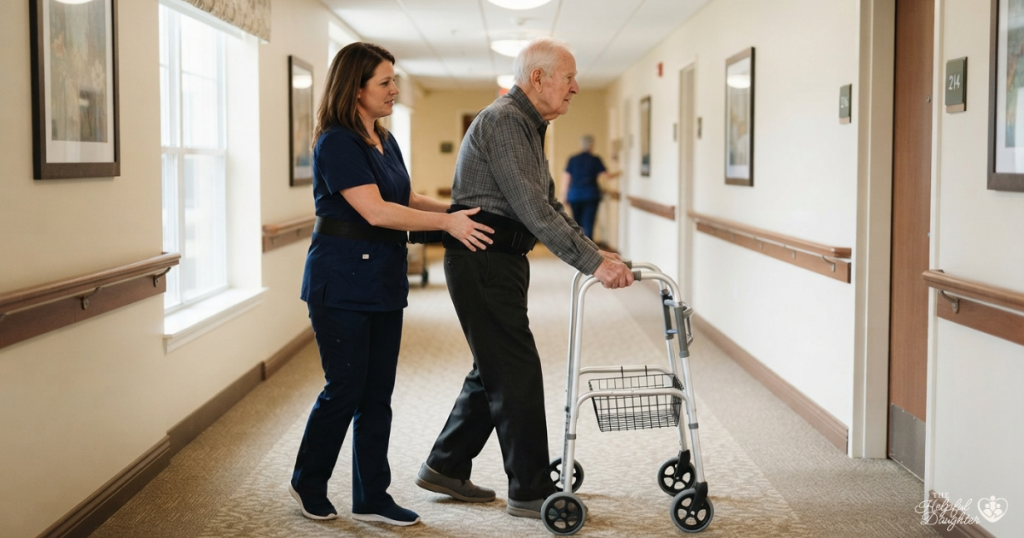
Many caregivers assume that because a rollator looks sturdy, it can support a parent who is falling forward. This is a dangerous misconception. Traditional walkers are engineered to handle significant downward and forward body weight. Rollators are primarily balance aids. If a senior loses their balance and pitches forward onto a rollator, the wheels can roll away, turning the device into a sliding hazard.
Managing Doorways and Carpeting
Traditional walker legs can catch on thick carpet edges or narrow bathroom thresholds because the user must lift them cleanly over obstacles. Rollators glide over minor bumps more easily, but large wheels are necessary if your parent navigates outdoor gravel or uneven sidewalks. Smaller indoor wheels can get stuck in cracks or door tracks, causing sudden stops.
My Top Picks: Rollator Vs Walker
To help you narrow down the best options on the market, here are my top picks for both rollators and traditional walkers—selected specifically for safety, ease of use, and everyday reliability.
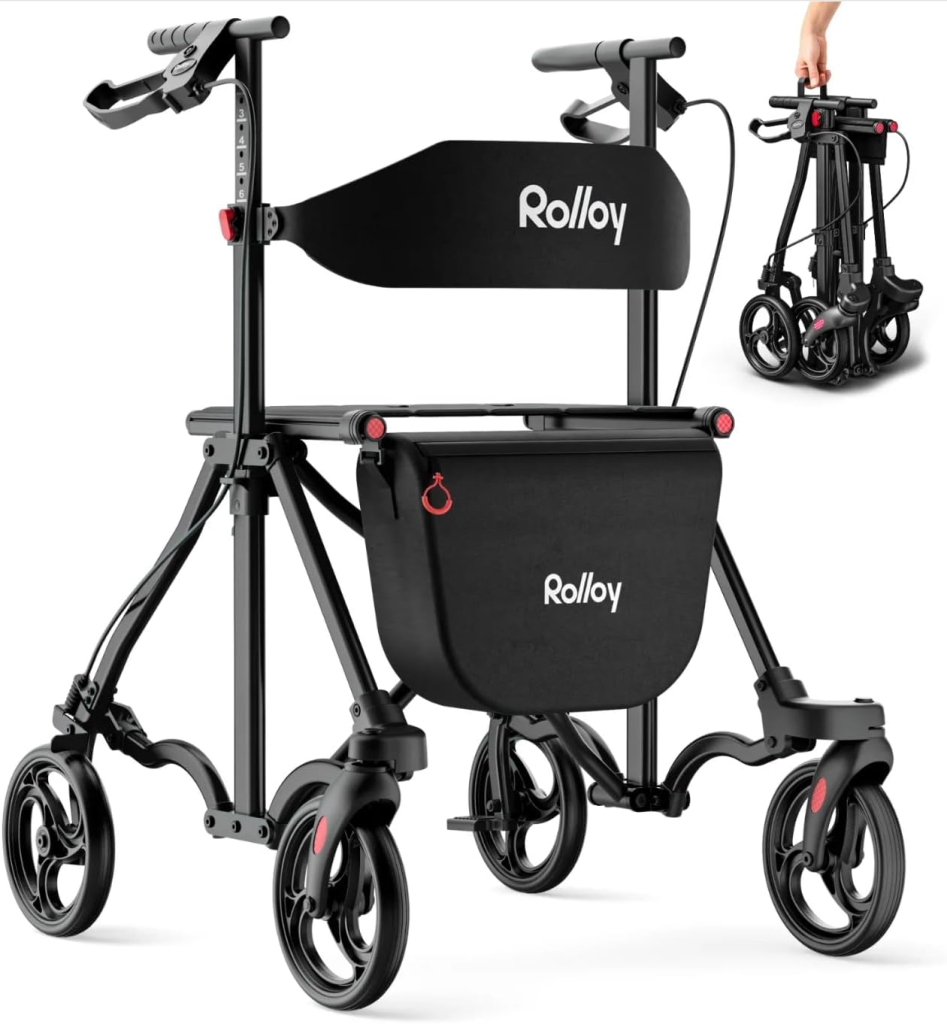
Rolloy Rollator Walkers for Seniors with Seat
Key Features
- Ultra-Lightweight: Weighs only 16 lbs for easy lifting into car trunks.
- Comfortable Seating: Includes a spacious 18″ wide seat for rests on the go.
- All-Terrain Ready: 8″ wheels navigate smooth sidewalks and uneven paths effortlessly.
- High Capacity: Supports up to 300 lbs and accommodates tall users (6ft+).
- Extremely lightweight and portable
- Smooth glides on all surfaces
- Wide, comfortable seat
- Requires good hand strength for braking
- Slightly larger frame for narrow indoor hallways
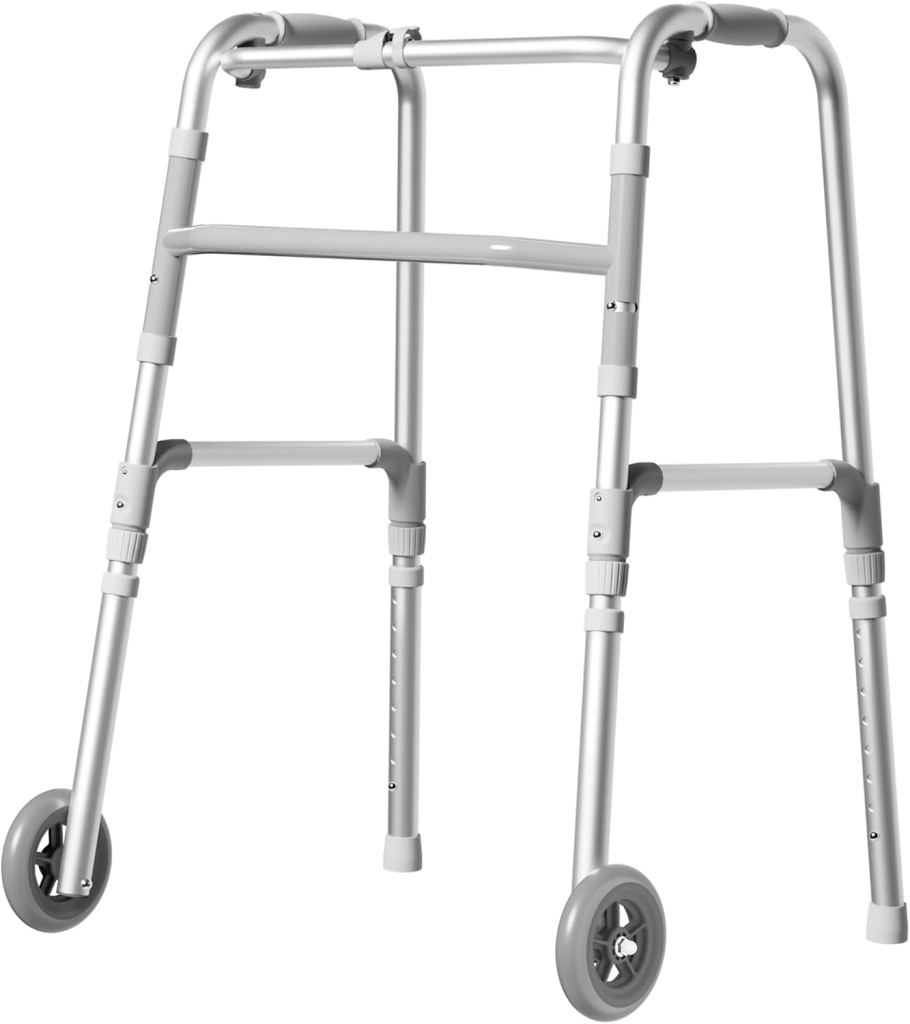
DeepTireh Folding Walker with 5″ Wheels & Glides
Key Features
- Custom Fit: Features 8 height adjustment settings to suit various body types.
- High Weight Capacity: Sturdy aluminum frame supports up to 350 lbs.
- Glide Skis Included: Comes equipped with 5″ front wheels and rear glide skis for smooth maneuvering over carpets.
- Comfort Grips: Ergonomic hand grips designed to reduce palm pressure and fatigue.
- Maximum weight-bearing support
- Easy to fold and store
- Rear glide skis navigate carpets cleanly
- No built-in seat for rest breaks
- Not designed for rugged outdoor terrain
Final Thoughts: Rollator vs Walker
Deciding between a rollator and a traditional walker is about more than just equipment—it is about finding the right balance between safety, freedom, and dignity for your parent. Every senior’s physical strength, living environment, and daily routine are different, and what works for a neighbor or a friend might not be the right fit for your family.
Take time to evaluate your parent’s actual needs, consult with their physical therapist or doctor if you are unsure, and remember to approach the transition with patience and empathy. With the right mobility aid in hand, you can help them navigate their home and community safely, keeping their independence intact for as long as possible.
Frequently Asked Questions
Can a rollator be used indoors?
Yes, rollators can be used indoors, provided your home has wide enough hallways and doorways to accommodate four wheels. However, in smaller homes, tight apartments, or cluttered rooms, a traditional walker is often easier to maneuver because it has a narrower footprint and does not roll unexpectedly.
Will Medicare or health insurance pay for a walker or rollator?
In many cases, Medicare Part B or private insurance covers standard walkers and rollators when prescribed by a physician as medically necessary. You will typically need a face-to-face evaluation with a doctor who documents that your parent has a mobility limitation that significantly impairs their ability to move safely inside the home.
How do I know if my parent is leaning too heavily on a rollator?
If your parent slouches over the handlebars, places their entire upper-body weight onto the device, or struggles to keep their feet moving rhythmically beneath them, the rollator is providing inadequate support. This is a clear sign that they may need to transition to a traditional walker or consult physical therapy for re-evaluation.
Are three-wheel rollators better than four-wheel rollators?
Three-wheel rollators offer a tighter turning radius, making them popular for navigating narrow indoor spaces. However, they lack a built-in seat and are generally less stable than four-wheel models. If your parent values having a place to rest during walks, a four-wheel rollator is the safer, more comfortable choice.
What maintenance do mobility aids require?
Mobility aids require occasional safety checks. Inspect the rubber tips on traditional walkers every few months; once they wear down to the metal base, replace them immediately. For rollators, test the handbrakes regularly to ensure they lock securely and check that the wheel bolts remain tight and free of tangled hair or carpet fibers.
How do I measure my parent correctly for a walker?
Have your parent stand upright wearing their normal walking shoes with their arms relaxed at their sides. Measure the distance from the floor up to the crease in their wrist. The handgrips of the walker or rollator should be adjusted precisely to this height so their elbows maintain a comfortable 15 to 20-degree bend.
Can a rollator double as a wheelchair?
No, standard rollators are not designed to be pushed by another person while an individual sits in the seat. They lack footrests and proper back support for transit. Attempting to use a rollator as a wheelchair risks tipping the device backward, resulting in a fall. If your parent needs both a walking aid and a transport chair, look for hybrid models specifically engineered for dual use.
What should I do if my parent refuses to use their mobility aid?
Resistance is common and usually stems from frustration, pride, or fear of looking frail. Acknowledge their feelings without judgment. Frame the device not as a restriction, but as a tool that gives them freedom, protects their independence, and keeps them out of assisted living. Sometimes, choosing a sleek model in a favorite color or practicing together on short, rewarding trips to a local garden center helps break down resistance.