

A smoke alarm is one of the smallest devices in a home, yet it can have the biggest impact during an emergency. As caregivers, our days are consumed by managing medications, coordinating appointments, meal planning, and preventing falls. With so much on our plates, it is easy to forget about smoke alarms quietly sitting on the ceiling—until they are desperately needed.
The truth is, these lifesaving devices are not “set it and forget it” equipment. They require consistent attention to ensure they will perform flawlessly when seconds matter most. Think of a smoke alarm like a seatbelt: you hope you will never need it, but if the moment comes, its reliability must be absolute.
If you are caring for an aging parent, spouse, or senior client, this comprehensive guide will help you stay ahead of potential hazards. We will cover monthly testing routines, replacement schedules, common pitfalls, and simple technology upgrades that offer invaluable peace of mind.
⏱️ Caregiver Fast Facts
- Test Monthly: Push the button on every alarm once a month.
- 10-Year Rule: Replace entire units every 10 years, no matter what.
- Senior Upgrades: Consider voice alerts or strobe lights for seniors with hearing/cognitive decline.
Why Smoke Alarm Maintenance Matters
Smoke alarms save thousands of lives every year, but their effectiveness depends entirely on proper functionality. Over time, batteries lose their charge, internal sensors accumulate dust, and older components degrade. An alarm that chirps occasionally or has been neglected for years may fail to respond quickly—or at all—during a fire.
For caregivers, staying on top of device upkeep isn’t just another household chore; it is a vital pillar of defense for someone who may have limited mobility or slower reaction times. Making safety checks a recurring part of your routine dramatically improves your loved one’s overall home security.
Why Seniors Face Greater Fire Risks
Older adults frequently require extra time to recognize emergencies and evacuate safely. Several overlapping factors increase their vulnerability, including:
- Reduced mobility or physical frailty
- Hearing loss (making standard high-pitched beeps hard to detect)
- Diminished eyesight
- Memory problems or cognitive decline
- The use of home oxygen equipment
- Difficulty navigating stairs or tight spaces
Furthermore, deep sleep patterns change with age; many seniors, particularly those experiencing dementia, may completely sleep through a standard alarm or experience a diminished sense of smell that prevents them from detecting early smoke. This reality highlights why perfectly operational devices are so critical.
Understanding Different Types of Smoke Alarms
Before maintaining smoke alarms, it’s helpful to know what type is installed.
Battery-Powered Smoke Alarms
These rely entirely on battery cells. They require manual replacements at least once a year unless they are modern models equipped with sealed 10-year lithium batteries.
Hardwired Smoke Alarms
These systems are wired directly into your home’s electrical grid. However, they still contain a backup battery that handles power outages, which must be inspected regularly.
Interconnected Smoke Alarms
When a single unit detects smoke, every alarm throughout the entire house triggers simultaneously. This is the gold standard for senior care, providing maximum warning time no matter where the fire starts.
Smart Smoke Alarms
These advanced models send instant notifications directly to a caregiver’s smartphone. They are incredibly useful if you monitor your loved one remotely or do not live in the same household.
Monthly Smoke Alarm Maintenance Checklist
A quick monthly check only takes a few minutes but can make a huge difference.
Test Every Alarm
Press and hold the designated test button until the siren sounds. For interconnected systems, walk the home to confirm that every secondary unit has activated as well.
Listen Carefully
The alarm sound should be piercing, loud, and immediate. Weak, static-filled, or distorted tones often point to aging internal electronics or low voltage.
Check for Warning Lights
Most modern units feature LED indicator lights. A steady green light usually means everything is fine, while blinking red or yellow patterns signal a fault. Check the back of the device or the manufacturer’s manual if you notice irregular flashing.
Inspect for Physical Damage
Take a brief look at the physical casing. Look for visible cracks, severe yellowing of the plastic, loose mounting brackets, or missing covers. Physical deterioration means it is time for a new unit.
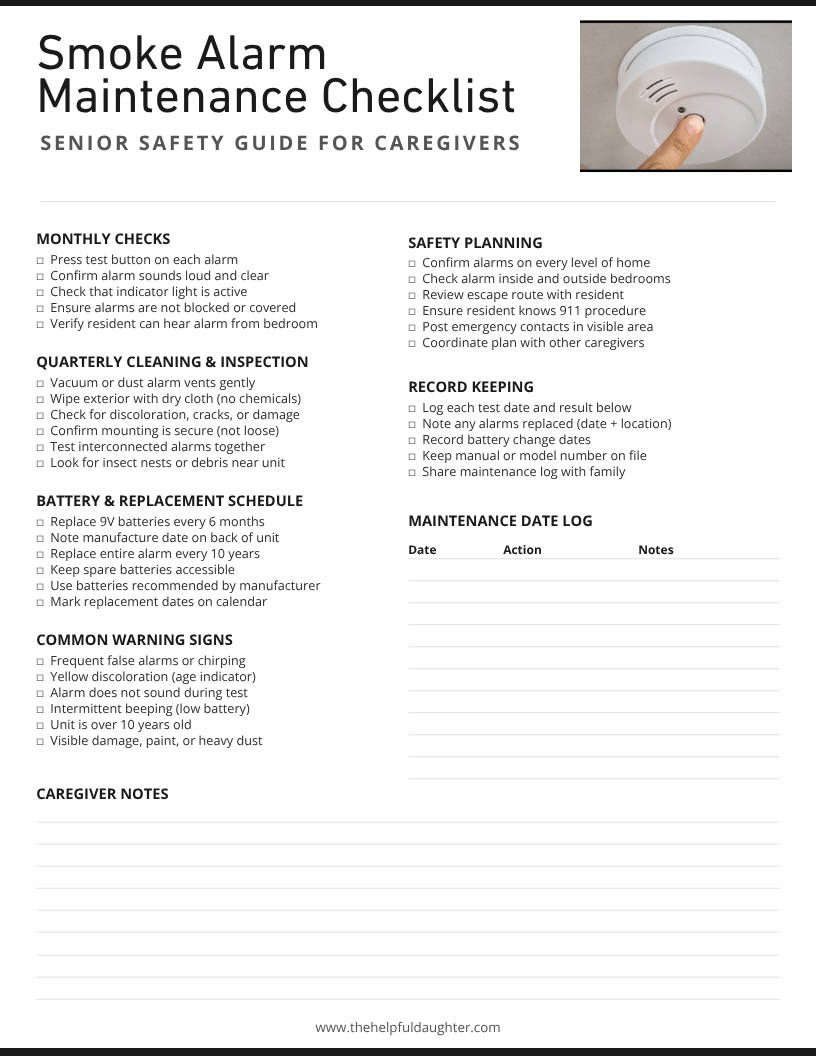
Free Smoke Alarm Maintenance Checklist
Keep your aging parents safe without the guesswork. Track monthly tests, battery replacements, and critical replacement dates in one simple printout.
Instant PDF download • No sign-up required
Seasonal Maintenance Tasks
Every 3 to 6 months, dedicate a few extra minutes to deep-cleaning the physical hardware.
Remove Dust and Debris
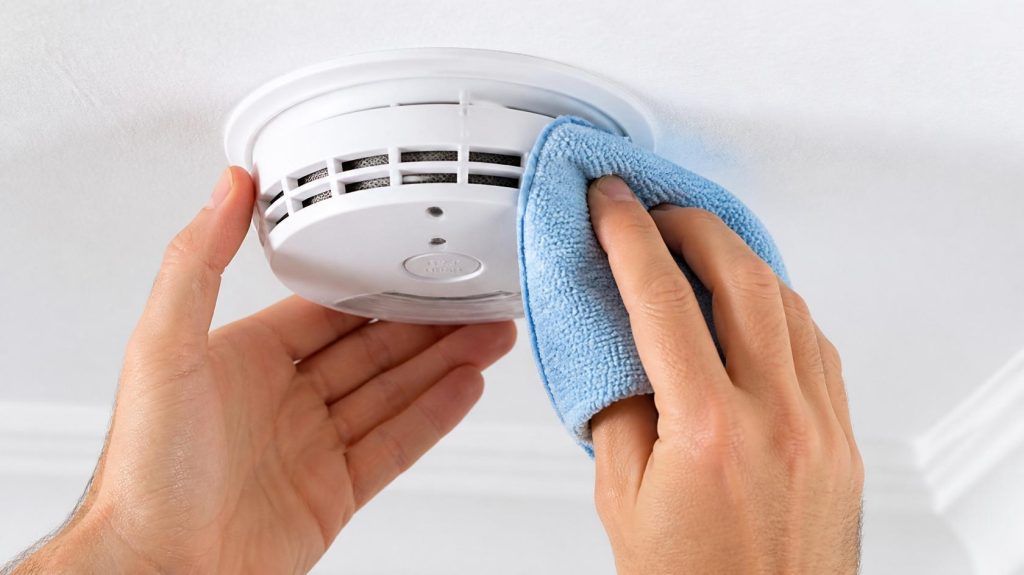
Dust particles, floating pet hair, and cobwebs easily drift into the sensing chamber, causing false alarms or desensitizing the unit.
- Do use: A vacuum cleaner with a soft brush attachment, a dry microfiber cloth, or a quick blast of compressed air.
- Never use: Liquid spray cleaners, water, or chemical wipes, which can ruin the internal circuitry.
Check Nearby Clearances
Ensure the path around the ceiling unit is entirely unobstructed. Clear away decorations, tall furniture, storage boxes, or heavy curtains that might block rising smoke from reaching the sensor. Additionally, avoid placing units too close to ceiling fans or HVAC vents, as the moving air can push smoke away from the device.
Annual Smoke Alarm Inspection
Once a year, conduct a top-to-bottom safety audit. To make this habit stick, choose a highly memorable annual date, such as the start or end of Daylight Saving Time.
Your annual checklist should explicitly include:
Reviewing proper placement across every level of the residence.
Testing the acoustic siren of every single alarm.
Replacing all removable batteries with fresh, high-quality cells (ignore this step for sealed 10-year models).
Thoroughly vacuuming out the interior vents of the casing.
Verifying the manufacture date on the back of the device.
When to Replace Smoke Alarms
One of the most widespread safety oversights is keeping aging hardware on the ceiling too long. Almost all manufacturers state that smoke alarms must be replaced entirely every 10 years. Even if an ancient device passes the manual button test, its internal chemical sensors degrade over time, making it blind to real smoke.
How to Find the Age of Your Unit
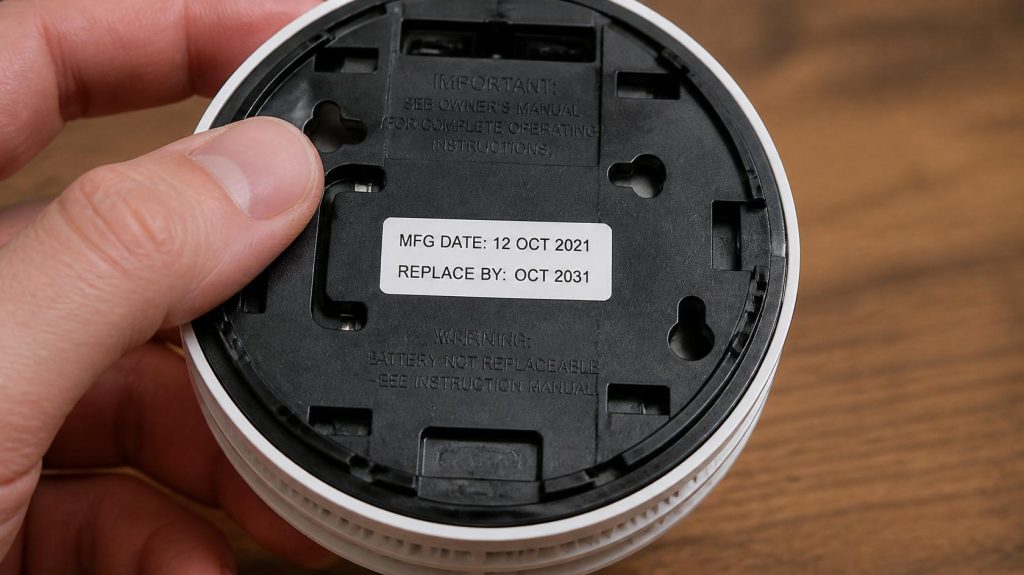
Twist the alarm off its mounting bracket and inspect the sticker on the back. You will find a clearly stamped manufacture or expiration date. If it was made more than a decade ago—or if the label is entirely missing—replace it immediately.
Where Smoke Alarms Should Be Installed
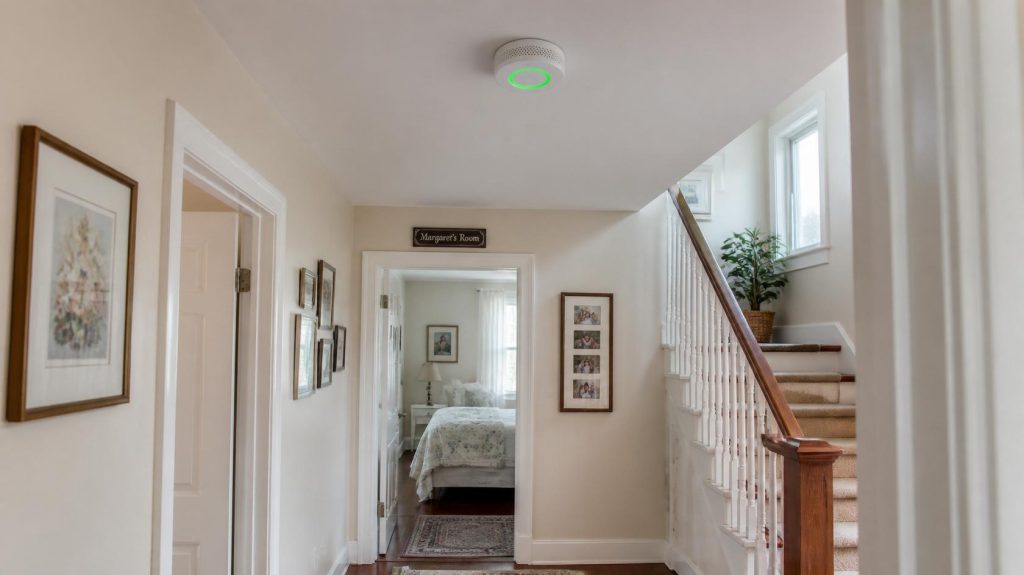
A perfectly maintained device won’t help if it is placed in an ineffective location. For optimal senior safety, ensure alarms are installed:
- Inside every single bedroom.
- Directly outside all sleeping areas (like a common hallway).
- On every structural level of the home, including finished basements.
Locations to avoid: Keep units at least 10 feet away from cooking appliances and bathrooms to eliminate nuisance trips from cooking smoke or steam. Avoid placement near drafty windows, ceiling fans, or forced-air registers which disrupt normal smoke patterns.
Common Smoke Alarm Maintenance Mistakes
Avoiding these common pitfalls keeps your safety system fully operational:
Forgetting Hardwired Backups: Remember, hardwired systems still rely on backup batteries. If the grid goes down during a storm, a dead backup battery leaves the home completely unprotected.
Ignoring Chirping Sounds: That intermittent, irritating beep is a direct warning that either the battery is dying or the unit has reached its end-of-life cycle. Never ignore it.
Disabling Units During Cooking: Removing a battery to stop a kitchen nuisance trip is a massive hazard—it is incredibly easy to forget to reinstall it.
Painting Over Casings: Never paint a smoke alarm during home renovations. Paint seals the air vents shut, rendering the internal sensor useless.
Helpful Upgrades for Senior Homes
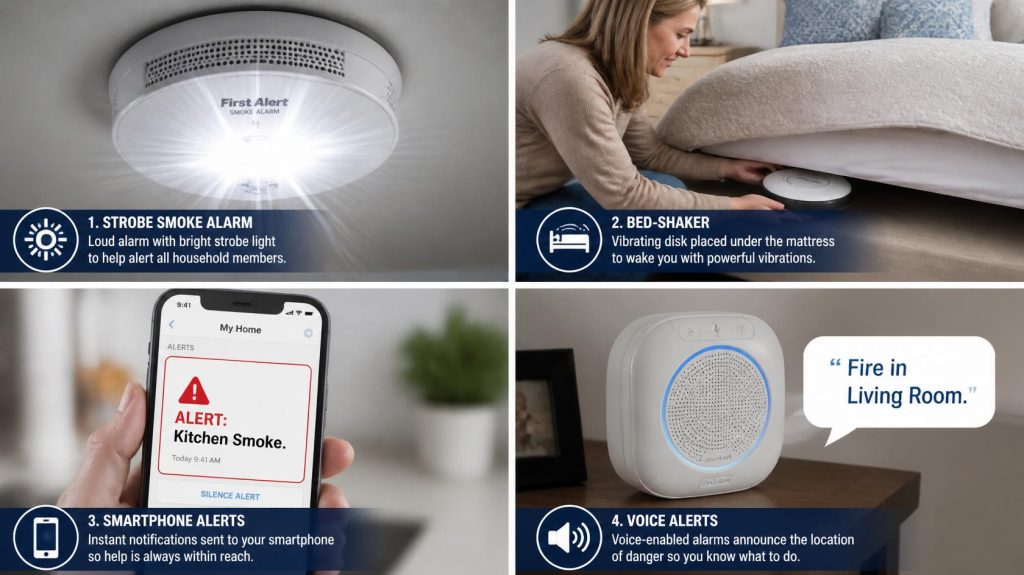
Modern technology offers tailored features that make home monitoring far easier for family caregivers:
Smart Automation: Units can sync directly to your mobile phone, instantly messaging you if a low-battery alert occurs or if an emergency arises while you are away running errands.
Voice Alerts: Instead of a terrifying, anonymous screech, these units announce in a clear, loud human voice exactly where the danger is located (e.g., “Warning: Smoke detected in the basement”). This drastically reduces disorientation for seniors with cognitive decline or dementia.
Strobe Lights: High-intensity flashing visual alarms are invaluable for individuals living with profound hearing loss.
Bed Shaker Accessories: These extensions plug into the alarm system and vigorously vibrate the senior’s pillow or mattress to wake them instantly during a nighttime emergency.
Creating a Home Fire Safety Routine
Upkeep works best when integrated into a broader, holistic emergency preparation routine. Try compiling a unified monthly safety walk-through that covers:
- Testing all smoke and carbon monoxide detectors.
- Checking the pressure gauges on household fire extinguishers.
- Clearing clutter out of primary hallways, doors, and window exits.
- Briefly reviewing an emergency escape plan with your loved one.
- Ensuring emergency phone numbers are printed in large font near the main telephone.
Caregiver Maintenance Schedule
Keep this simple checklist inside your caregiving binder or post it directly on the refrigerator door to keep your tasks organized.
Final Thoughts
Smoke alarms quietly protect our homes every day, but they need a little attention in return. For caregivers, regular smoke alarm maintenance is one of the simplest and most effective ways to improve home safety for an older adult.
By testing alarms each month, keeping them clean, replacing aging units, and choosing features that suit your loved one’s needs, you’re creating a safer environment without adding much time to your routine.
The best part? Most maintenance tasks take only a few minutes. Those few minutes can provide years of reliable protection—and priceless peace of mind for both you and the person you care for.
Frequently Asked Questions
1. How often should smoke alarm maintenance be performed?
Units must be audibly tested once every month, vacuumed clean of debris every three to six months, thoroughly inspected on an annual basis, and entirely replaced every 10 years.
2. Should caregivers change smoke alarm batteries every year?
Yes. If your devices use traditional removable alkaline batteries, change them out once a year at a minimum. However, if your device features a sealed 10-year lithium power cell, no annual battery swaps are necessary.
3. Can simple household dust ruin a smoke alarm?
Absolutely. Heavy accumulation of dust, dirt, pet dander, and household spiderwebs can cover internal optics, leading to frustrating false alarms or preventing real smoke from entering the chamber.
4. What are the safest smoke alarms for aging adults?
Caregivers generally see the best results using interconnected smart systems equipped with voice location alerts, visual strobe lights, or auxiliary bed-shaking modules.
5. How can I verify if a home smoke alarm is expired?
Unlatch the device from its ceiling base. There will be a manufacturer label affixed to the back plate listing either the direct date of production or an explicit expiration date. If that date is over 10 years old, it belongs in the trash.