
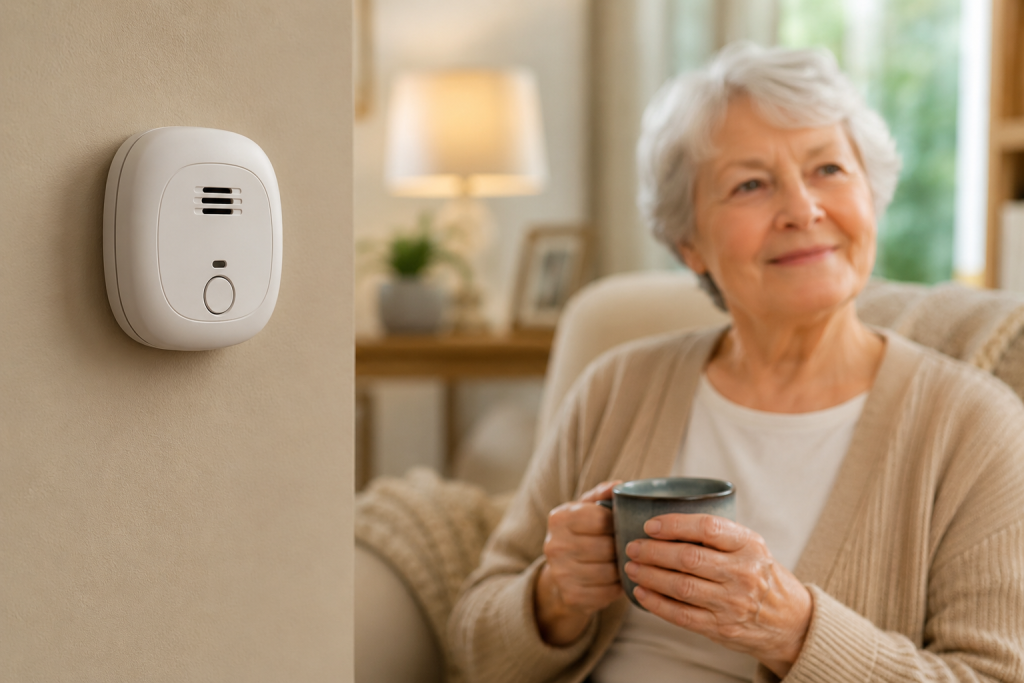
Choosing the best carbon monoxide detectors for seniors is about more than meeting a basic safety requirement. Caregivers need carbon monoxide alarms that are easy to install, simple to understand in an emergency, and reliable enough to protect an older adult around the clock.
This guide reviews practical options for home safety for seniors, with a focus on clear alerts, voice announcements, digital displays, battery backup, smart carbon monoxide detector features, and combination smoke and carbon monoxide detector designs where they make sense.
Whether you are comparing a basic CO detector for seniors or a connected model with app alerts, the goal is the same: fast warning, low confusion, and confidence that the home is covered.
How Does a Carbon Monoxide Detector Work?
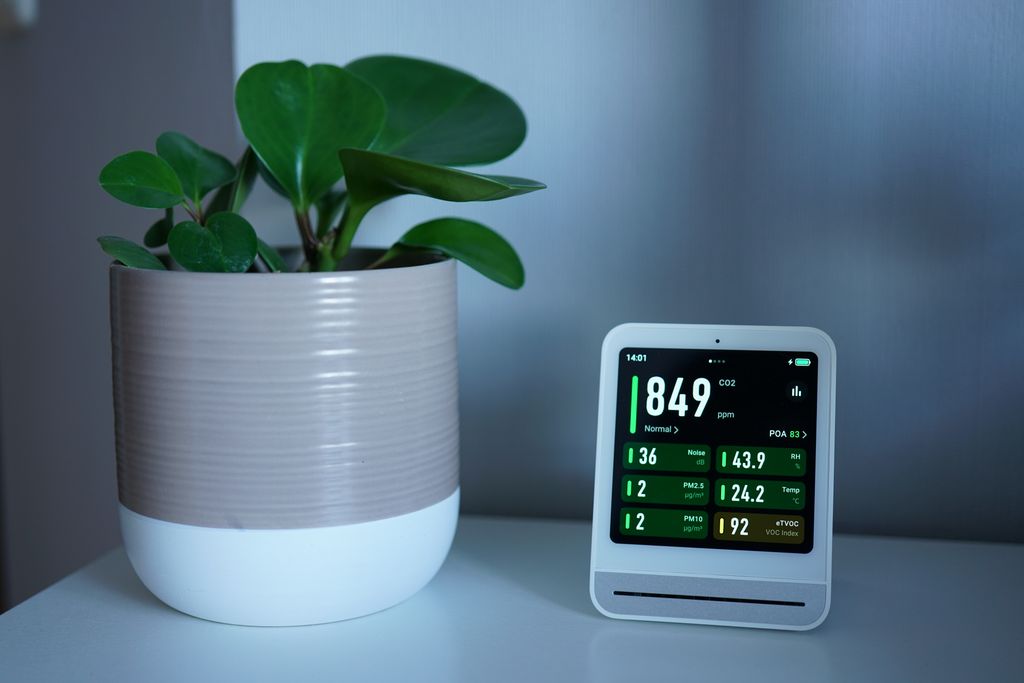
Unlike smoke, which you can easily see and smell, carbon monoxide (CO) is a silent, invisible threat. Because our human senses can’t detect it, we rely on technology to act as our nose.
Inside every carbon monoxide detector is a highly sensitive sensor designed to constantly sample the air in your home. Most modern detectors use one of three main technologies to keep you safe:
- Electrochemical Sensors (The Gold Standard): This is the most common technology used today. Inside the detector, there is a chemical solution that reacts when it comes into contact with carbon monoxide molecules. This reaction creates an electrical current. The more CO in the air, the stronger the current. Once that current hits a specific threshold, the alarm triggers.
- Biomimetic Sensors: These sensors mimic the human body’s response to the gas. They contain a special gel that changes color as it absorbs carbon monoxide. An internal light sensor detects this color change and sounds the alarm before the levels become dangerous to you.
- Metal Oxide Semiconductor Sensors: These use a small silica chip that heats up. When carbon monoxide passes over it, it lowers the chip’s electrical resistance. The detector senses this drop and sounds the alarm.
Why Carbon Monoxide Alarms Don’t Just “Beep” Instantly
One important thing to know is that CO alarms are smart—they calculate exposure over time. If there is a tiny, non-threatening trace of CO (like from starting a car in an attached garage for a few seconds), the alarm won’t instantly scream.
Instead, they are programmed to trigger based on concentration (measured in parts per million, or PPM) and time:
- High concentrations of CO will trigger the alarm in a matter of minutes.
- Low concentrations will trigger the alarm after a few hours of continuous exposure to protect you from slow, sneaky leaks.
What Makes a CO Detector Senior-Friendly
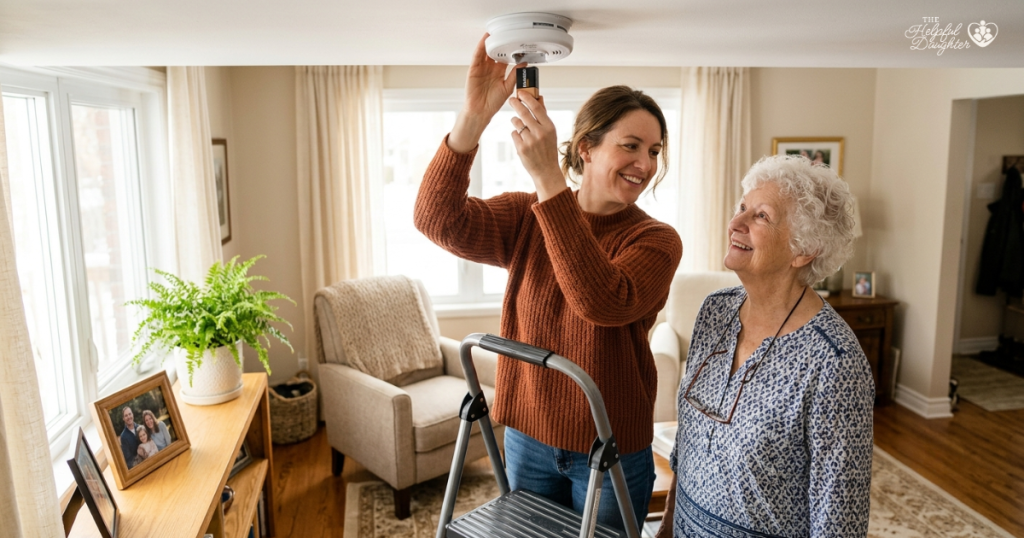
The best carbon monoxide detectors for seniors are designed to lower stress in an emergency and reduce the chance of missed warnings. Look for features that make the device easier to notice, easier to trust, and easier to manage over time.
- Voice announcements: Spoken alerts can be easier to understand than a single siren, especially for older adults who may have hearing loss.
- Clear digital displays: A visible readout helps caregivers and seniors quickly check whether a detector is functioning and whether the unit has detected carbon monoxide.
- Battery backup or sealed battery: Power protection matters during outages, and sealed batteries reduce routine upkeep.
- Smart carbon monoxide detector alerts: App notifications can alert family members when they are not in the home.
- Combination smoke and carbon monoxide detector units: These can simplify setup in bedrooms and common areas when one device can cover two important hazards.
- Large test or silence buttons: Caregivers should be able to test or hush the alarm without struggling with tiny controls.
If the senior in your life lives alone, choose carbon monoxide alarms with voice prompts and backup power first. Smart features are helpful, but a loud, readable, reliable CO detector always comes before any app.
Carbon Monoxide Poisoning Symptoms in Older Adults

Carbon monoxide poisoning can be hard to spot because the signs often feel vague at first. In older adults, symptoms may look like the flu, fatigue, dizziness, a headache, confusion, nausea, shortness of breath, or trouble walking steadily.
Some seniors may seem unusually sleepy, weak, irritable, or forgetful. Because these signs can be mistaken for dehydration, infection, medication side effects, or another illness, caregivers should treat a possible CO exposure seriously.
If multiple people in the home feel ill at the same time, or symptoms improve when they leave the house, think about carbon monoxide exposure and act quickly.
Top 3 Carbon Monoxide Detectors for Seniors
Here are my top 3 favourite carbon monoxide detectors for seniors
1. X-Sense Interconnected Smoke & CO Detector (SC06-W)
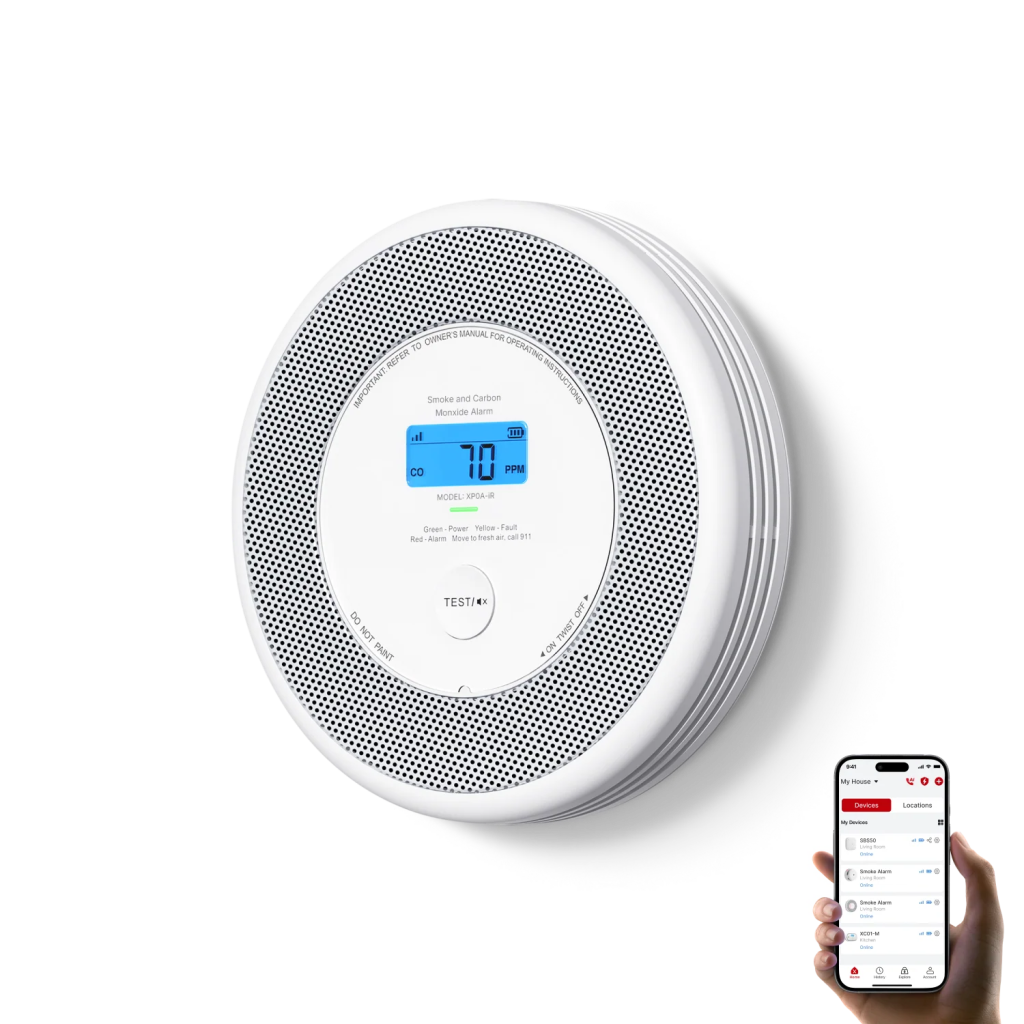
The X-Sense SC06-W offers a robust 2-in-1 protection system combining smoke and carbon monoxide detection. Its standout feature is its wireless interconnection capability: when one alarm is triggered, all connected alarms across the home sound simultaneously. Powered by a sealed 10-year lithium battery, it eliminates the stress of annoying low-battery chirps and annual battery replacements.
Who It’s Ideal For
Seniors living in larger or multi-level homes where a single isolated alarm might be too quiet to hear from the bedroom, as well as those looking for a zero-maintenance battery solution.
Pros
- 10-year sealed lithium battery prevents routine battery-swap struggles
- Wireless interconnection sounds all alarms if one detects danger
- 2-in-1 design monitors both smoke and CO hazards
- Certified to meet strict UL 217 and UL 2034 safety standards
Cons
- Slightly higher initial investment for a multi-pack setup
- Does not include voice alerts (uses standard loud siren tones)
- Requires complete replacement of the units after 10 years
2. First Alert CO606 Plug-In Carbon Monoxide Detector (3-Pack)
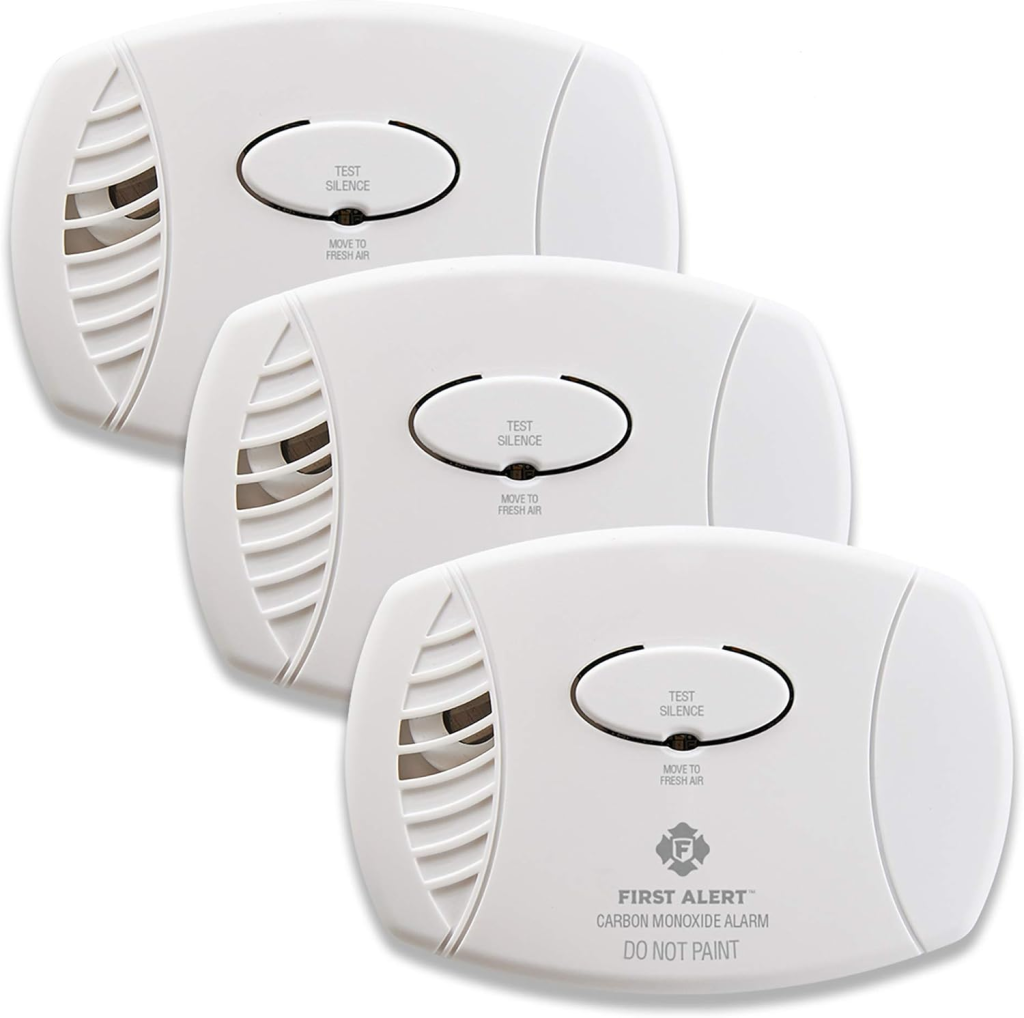
The First Alert CO606 is a simple, plug-and-play carbon monoxide detector that plugs directly into any standard 120V wall outlet. For reliable protection during blackouts, it includes a 9V battery backup. With a loud, standard 85-decibel siren and a hassle-free setup, this multi-pack makes it affordable and straightforward to establish multi-room protection.
Who It’s Ideal For
Seniors who want a "set-and-forget" system without mounting hardware or ladders, and caregivers looking for an affordable, trusted way to cover multiple rooms instantly.
Pros
- Extremely easy installation—just insert the backup battery and plug it in
- Continuous AC wall power with a 9V battery backup for outages
- Affordable 3-pack makes multi-room coverage highly budget-friendly
- Large, easy-to-press central button for testing and silencing
Cons
- No digital screen or voice prompts to explain CO parts-per-million levels
- Must be plugged into low wall outlets, restricting placement options
- The backup 9V battery requires manual annual replacements
3. First Alert SMCO110LED-AC Hardwired Combo Alarm with LED Strobe
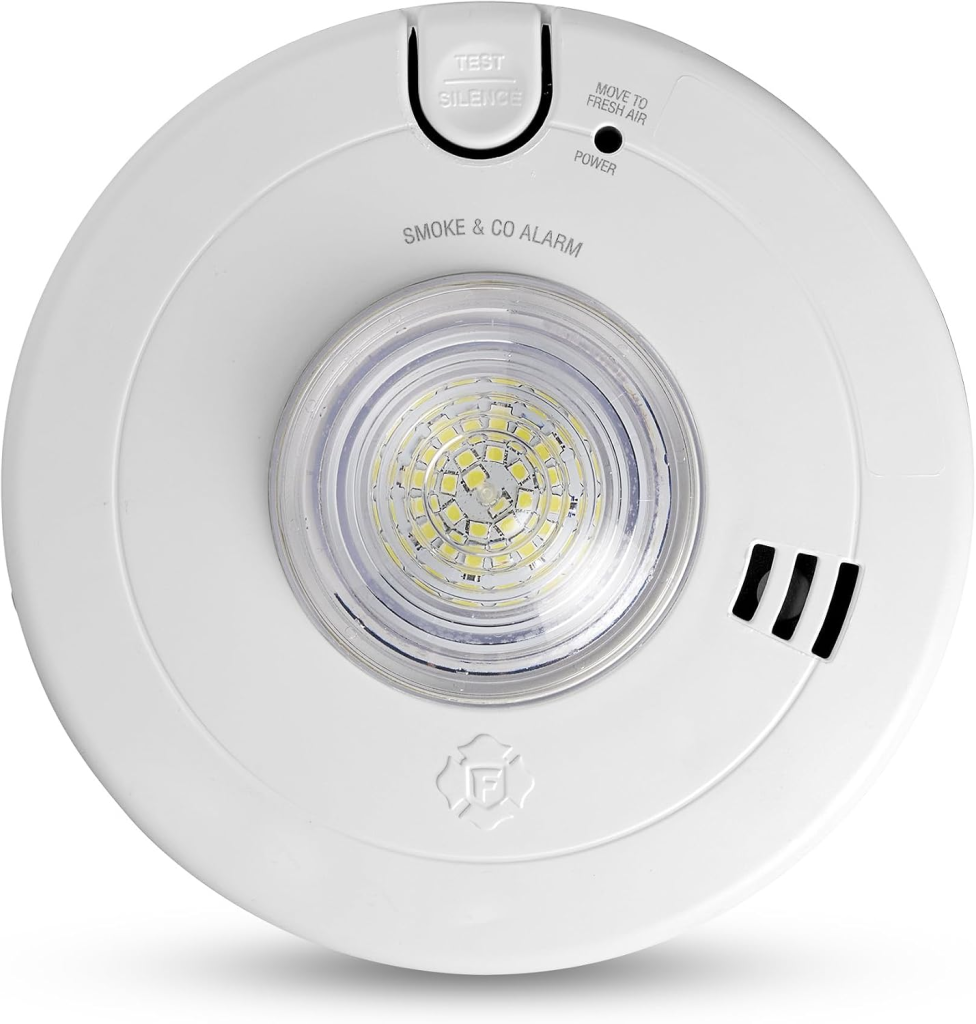
The First Alert SMCO110LED-AC is a heavy-duty, hardwired combination smoke and carbon monoxide detector featuring an integrated, high-intensity LED strobe light. In an emergency, it pairs its standard 85-decibel auditory siren with powerful, synchronized visual flashes. It wires directly into your home's 120V electrical system and features a sealed 10-year backup battery for continuous protection during blackouts.
Who It’s Ideal For
Seniors with severe hearing loss or deafness who cannot rely on audio alarms alone, as well as homes with existing hardwired detector setups.
Pros
- Ultra-bright LED strobe provides strong visual warnings for the hearing impaired
- Smart strobe patterns flash differently for smoke versus carbon monoxide
- 10-year sealed backup battery protects through extended power outages
- Connects to existing home wiring networks to trigger all alarms at once
Cons
- Requires a hardwired electrical connection (professional installation recommended)
- Noticeably more expensive than standard non-strobe alarms
- Significantly bulkier profile on ceilings or walls due to the strobe casing
Proper Detector Placement
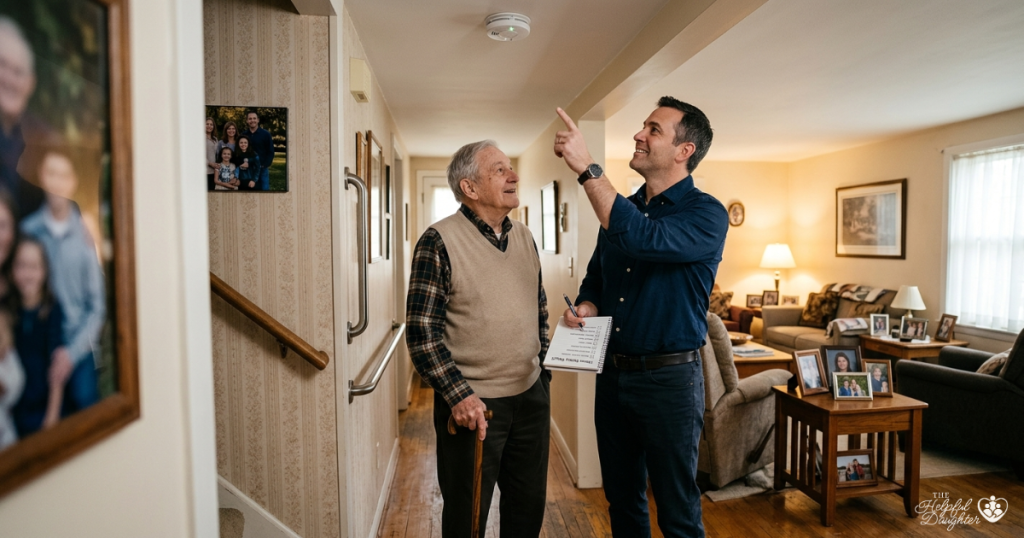
Place carbon monoxide detectors on every level of the home, including the basement if there is one. In homes with seniors, bedrooms and nearby hallways are especially important because the alarm must be heard while sleeping.
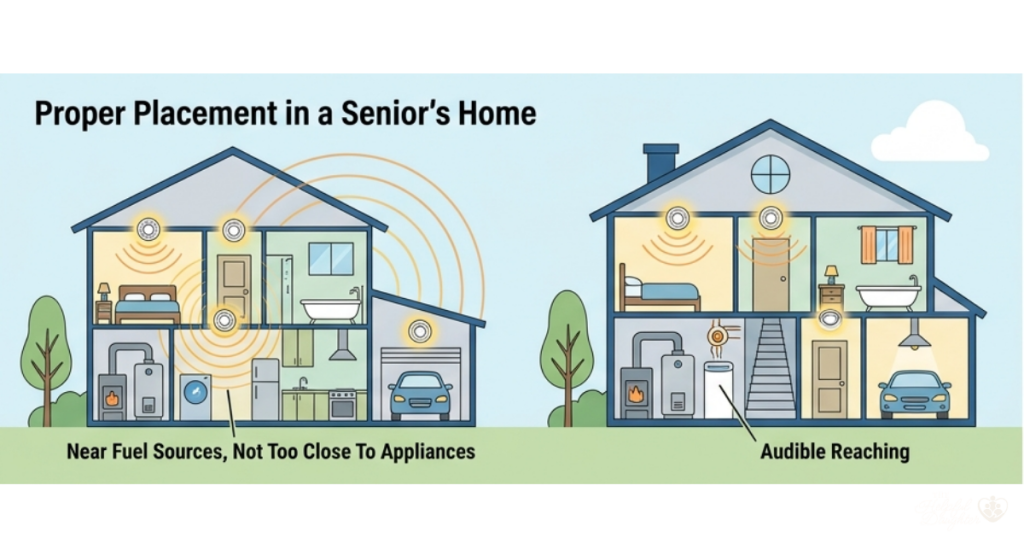
Install a CO detector for seniors outside sleeping areas and near rooms with fuel-burning appliances, such as furnaces, fireplaces, water heaters, or attached garages. If you use a combination smoke and carbon monoxide detector, make sure it still meets placement needs for both hazards.
Avoid placing detectors directly next to windows, doors, vents, or ducts where drafts can interfere with readings. Do not install them in bathrooms or too close to cooking appliances, where humidity or normal cooking activity may trigger nuisance alarms.
Maintenance Checklist for Carbon Monoxide Detectors
Taking care of your carbon monoxide detectors doesn't have to be a chore. Think of it as a quick, routine safety check to keep your home’s "silent nose" in tip-top shape.
Here is a simple checklist you can run through to ensure your family stays protected
Final Thoughts on The Best Carbon Monoxide Detectors for Seniors
When it comes to protecting the older adults in your life, the absolute best carbon monoxide detector is the one that removes all the guesswork. A dangerous gas leak is not the time to be squinting at tiny lights or trying to figure out what a mysterious beep means.
For the ultimate peace of mind, prioritize detectors with clear voice warnings, visual strobe lights if hearing is a concern, and maintenance-free 10-year sealed batteries so nobody has to climb a ladder to silence a low-battery chirp at 2 AM.
Investing a few minutes today to choose and properly place the right detectors is one of the simplest, most loving steps you can take to keep your loved one's home a safe haven.
Frequently Asked Questions
What is the best carbon monoxide detector for seniors overall?
The best carbon monoxide detectors for seniors are the ones that are easiest to hear, easiest to understand, and most dependable in an emergency. In many homes, that means a model with voice alerts, a clear display, battery backup, and simple maintenance.
Should every bedroom have a carbon monoxide alarm nearby?
At minimum, alarms should be installed outside sleeping areas so they can be heard overnight. In homes with seniors, bedrooms and adjacent hallways are a smart priority because nighttime warning is critical.
Is a smart carbon monoxide detector worth it for caregivers?
Yes, especially if family members help monitor an older adult from a distance. App alerts and self-check features can add peace of mind, but they should supplement not replace clear local alarms.
Are combination smoke and carbon monoxide detector units a good choice?
They can be a strong choice when you want fewer devices and simpler setup. Just make sure the combination smoke and carbon monoxide detector is installed in the right locations for both hazards.
How loud should a CO detector be for a senior living alone?
It should be loud enough to wake a sleeping person and ideally include voice prompts or spoken instructions. If hearing loss is a concern, consider pairing local alarms with smart notifications for caregivers.
How often should carbon monoxide alarms be replaced?
Follow the manufacturer’s timeline, but many units need replacement after about 5 to 10 years. The end-of-life date is usually printed on the back of the device.
Where should I not install a carbon monoxide detector?
Do not place it right beside windows, vents, ceiling fans, bathrooms, or cooking appliances. These spots can cause missed detection or nuisance alarms.
Do battery-powered detectors work as well as hardwired ones?
Yes, if they are properly installed and maintained. Battery-powered models are often easier to place, while hardwired models may offer better integration in some homes.
What should I do if a CO alarm goes off?
Get everyone out into fresh air immediately and call emergency services or the local fire department. Do not ignore symptoms, even if they seem mild.
Which features matter most for home safety for seniors?
The most important features are clear alerts, reliable backup power, easy installation, and simple testing. Smart features and combination units are helpful extras, but they should not come at the expense of clarity and reliability.