
Managing medications shouldn’t feel like a full-time job. Yet, as a family caregiver, you likely know the gut-drop that comes with a missed dose or the midnight worry of wondering, “Did Dad take his blood pressure pill today, or did he take it twice?”
When older adults take multiple prescriptions—some needing food, others timing precision, and all with tiny warning labels—keeping track of everything quickly becomes overwhelming. A reliable pill dispenser for elderly adults can transform this chaotic daily chore into a seamless, automated routine, giving your loved one back their independence while lifting the mental load off your shoulders.
In this comprehensive guide, we’ll break down the types of organizers available, critical safety features, and our top product picks to help you choose the right device.
What Is a Pill Dispenser for Elderly Adults?
A pill dispenser is a medication-management tool designed to organize and deliver pills according to a strict schedule.
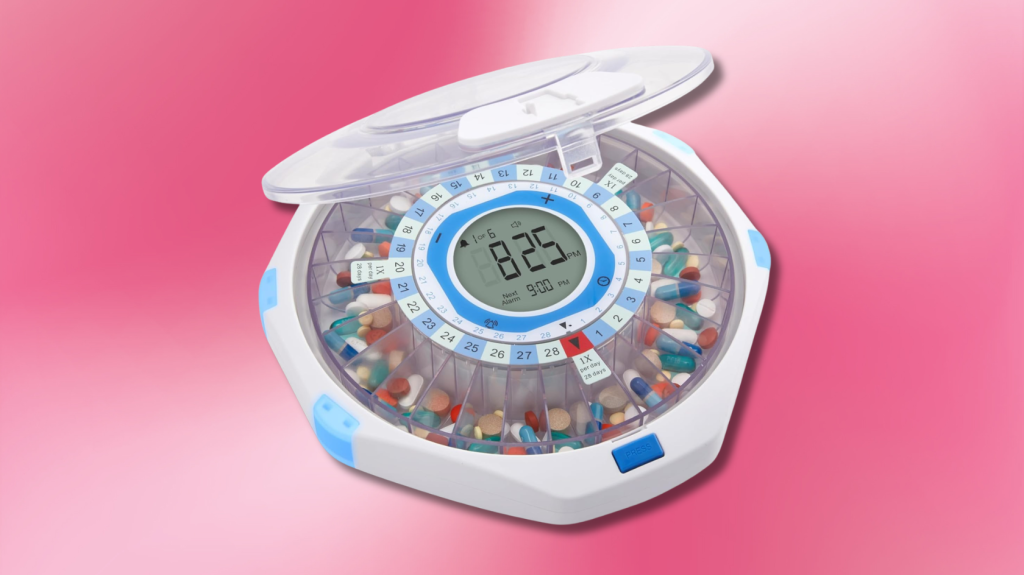
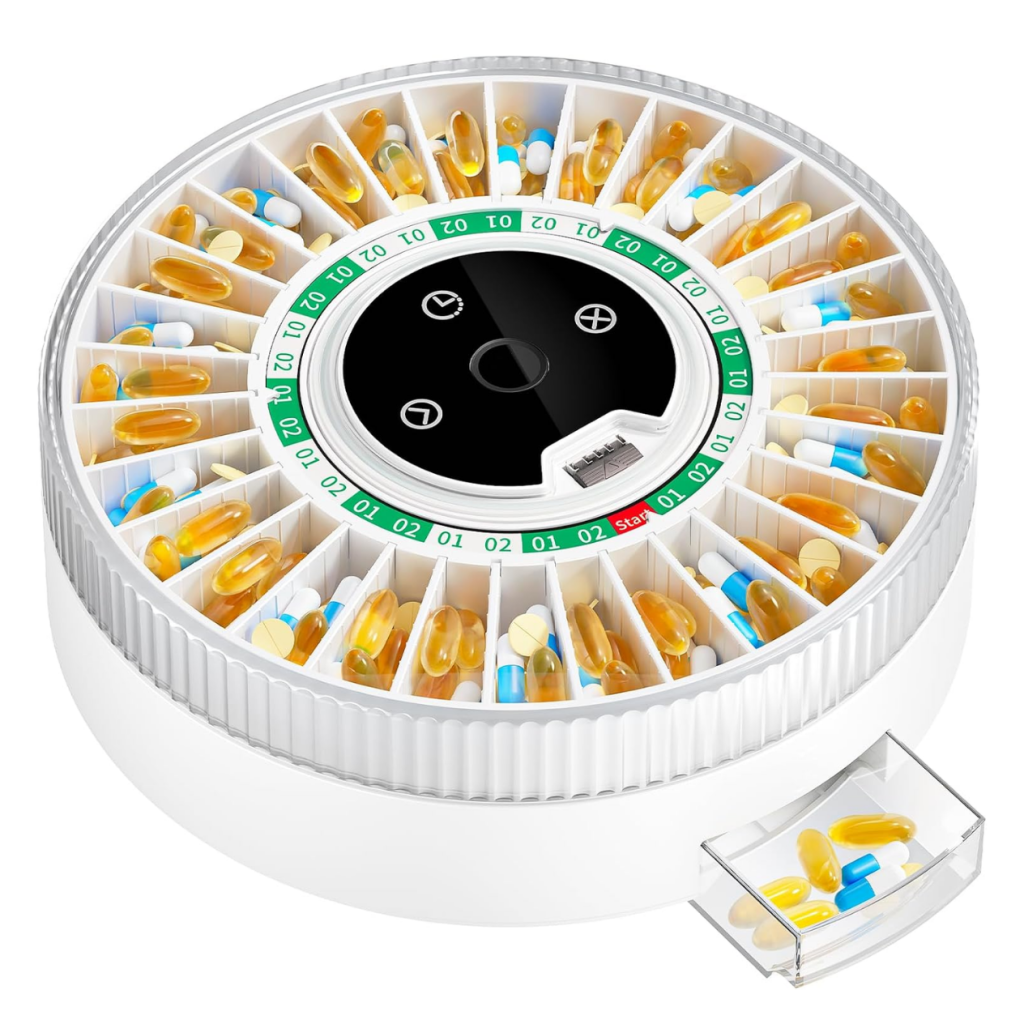
While basic models mirror traditional weekly pill boxes with simple day/time compartments, advanced automatic pill dispensers for seniors utilize internal timers and automated carousels. At the prescribed hour, the device sounds an alert and makes only that specific dose available. High-end connected models even link to smartphone applications to notify remote caregivers if a dose is missed.
Types of Pill Dispensers for Seniors
There are several types of medication organizers to consider.
1. Weekly Pill Organizers
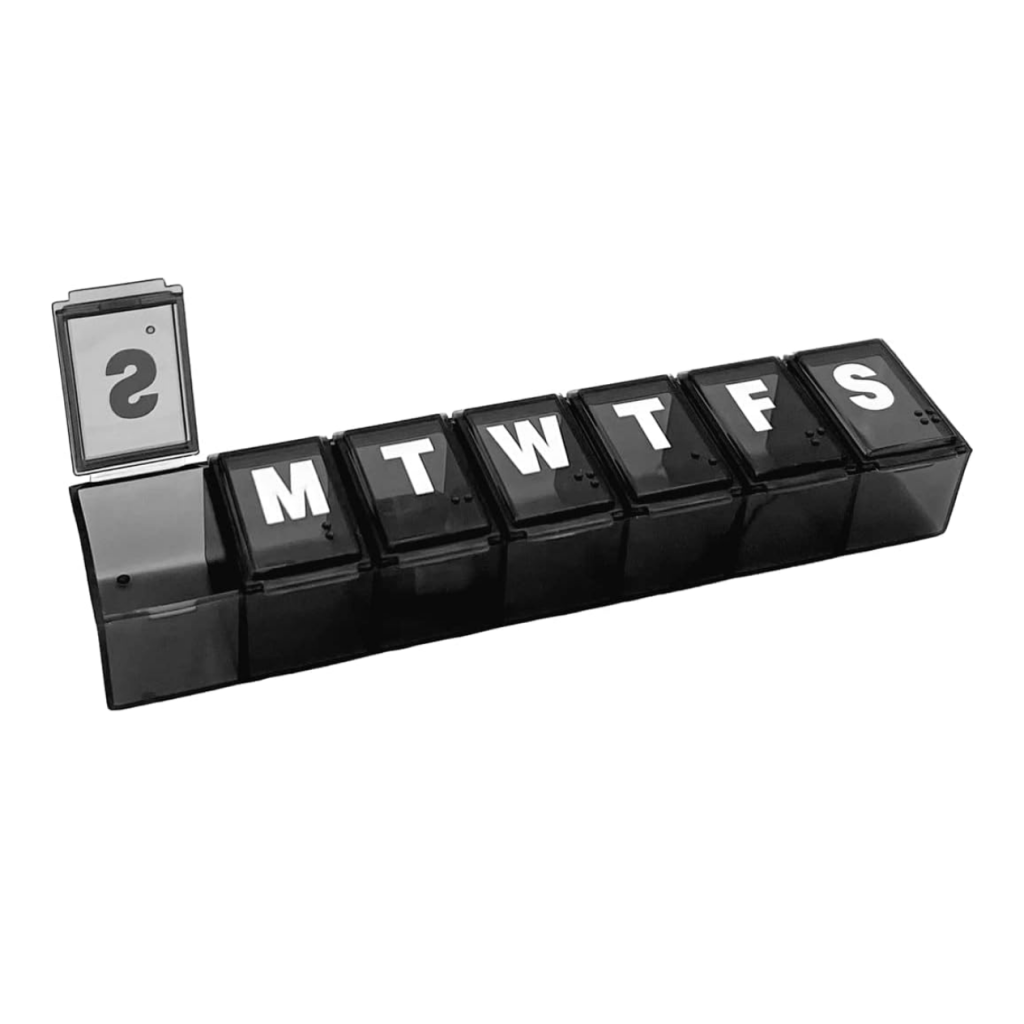
Inexpensive manual boxes divided by days and times. Best for independent seniors who only need help sorting physical pills.
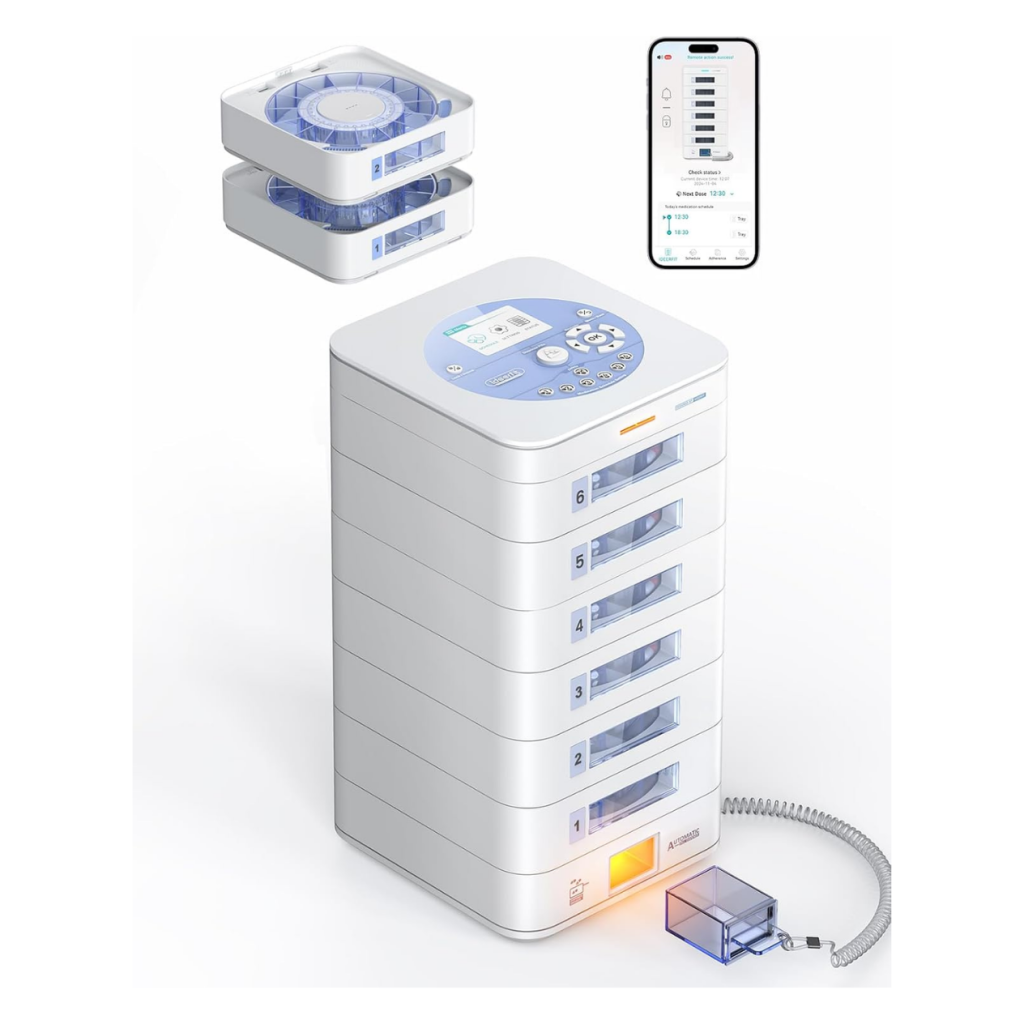
2. Automatic Pill Dispensers
Programmed devices that lock future doses away and sound alarms when a scheduled medication becomes accessible.
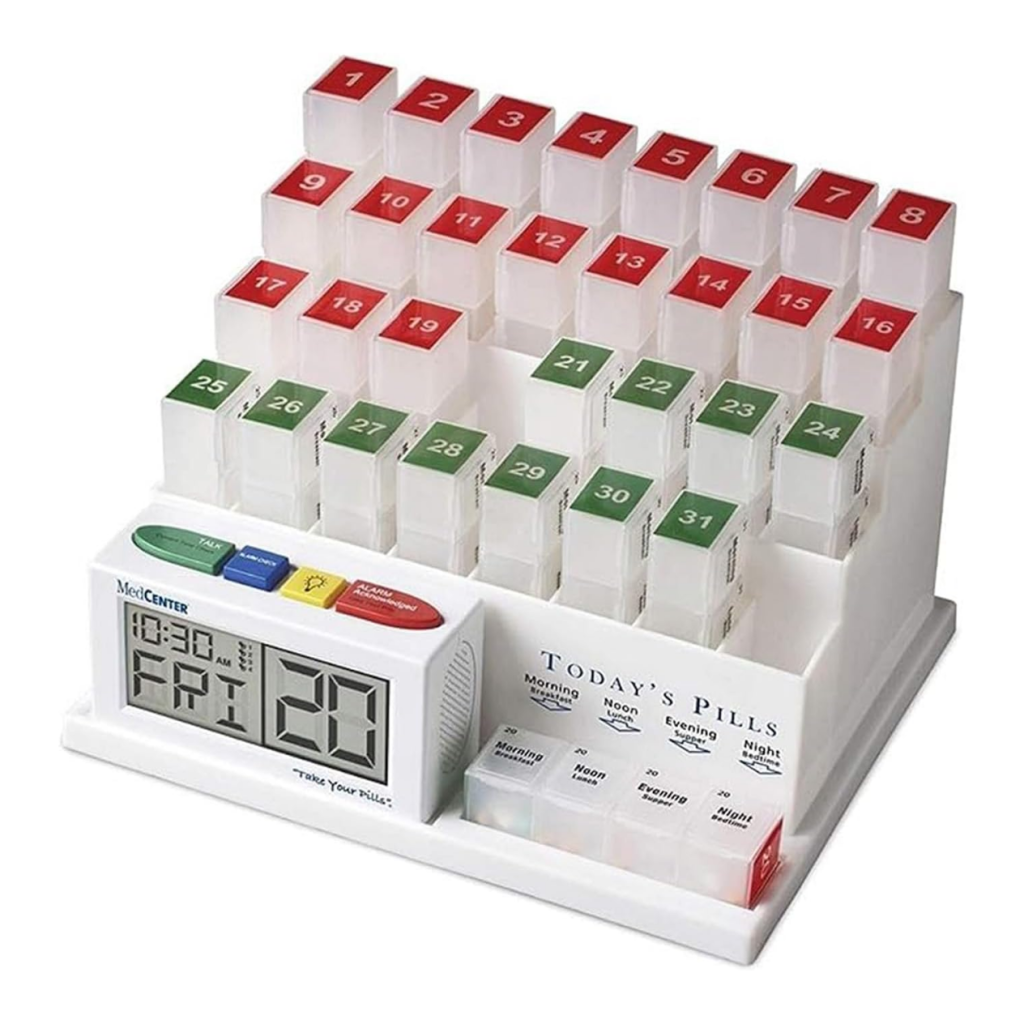
3. Locking Pill Dispensers
Excellent for preventing accidental double-dosing or memory-driven confusion.
4. Electronic Medication Reminder Systems
Focus primarily on audio/visual alarms or smartphone reminders for seniors who can handle their own bottles physically.
Key Features to Look for in a Pill Dispenser
The best pill dispenser for elderly adults isn’t necessarily the model with the longest feature list. The best choice is the one that solves the senior’s specific problems.
Large, Easy-to-Read Labels
Small print can make medication organizers unnecessarily difficult to use. Look for large lettering, clear day labels, and simple controls. A senior shouldn’t have to squint to figure out whether a compartment belongs to Tuesday morning or Wednesday evening.
Easy-to-Open Compartments
Hand strength and dexterity can change with age. Small lids, stiff buttons, and complicated locking mechanisms may create unnecessary frustration. Look for a design that can be operated comfortably.
Audible Alerts
An alarm can provide a useful reminder when it’s time for medication. The volume should be noticeable without being startling.
For someone with hearing difficulties, a louder alarm or another type of alert may be necessary.
Visual Reminders
Flashing lights can provide another cue. They’re particularly useful when a senior doesn’t always hear an alarm. Some dispensers combine visual and audible reminders.
Locking Capability
A locking feature can help control access to future doses. This is particularly useful when accidental double dosing is a concern.
Battery Backup
Automatic dispensers may depend on electricity or batteries. A battery backup can help keep the device functional during a power interruption. Before purchasing, we should check exactly how the dispenser operates during an outage.
Caregiver Alerts
Wi-Fi or cellular-enabled alerts for remote oversight and long-distance caregiving.
Pill Dispenser vs. Traditional Pill Organizer
The terms are sometimes used interchangeably, but there is an important difference.
A traditional pill organizer primarily stores and organizes medication. An automatic pill dispenser can organize, remind, and sometimes control access to medication.
| Feature | Traditional Organizer | Automatic Dispenser |
|---|---|---|
| Weekly organization | Yes | Usually |
| Medication reminders | Limited | Usually |
| Automatic dispensing | No | Yes |
| Locking mechanism | Sometimes | Often |
| Caregiver alerts | Rare | Some models |
| Cost | Lower | Higher |
| Best for | Simple routines | Complex needs |
Top 3 Pill Dispensers for Elderly
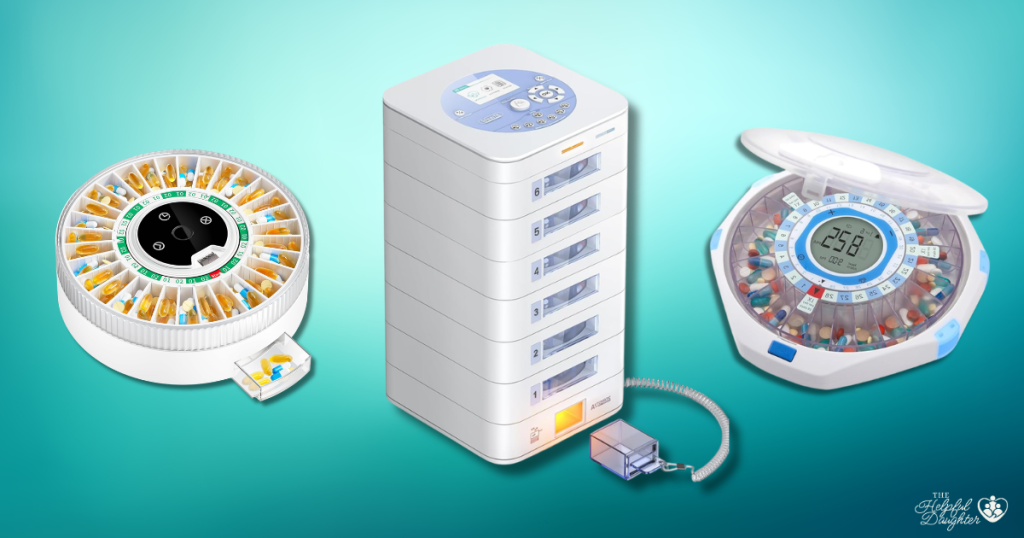
Below are our Top 3 Pill Dispensers for Elderly Adults, chosen specifically for their security, caregiver connectivity, and ease of use.
1. LiveFine Automatic Pill Dispenser
Best for Caregivers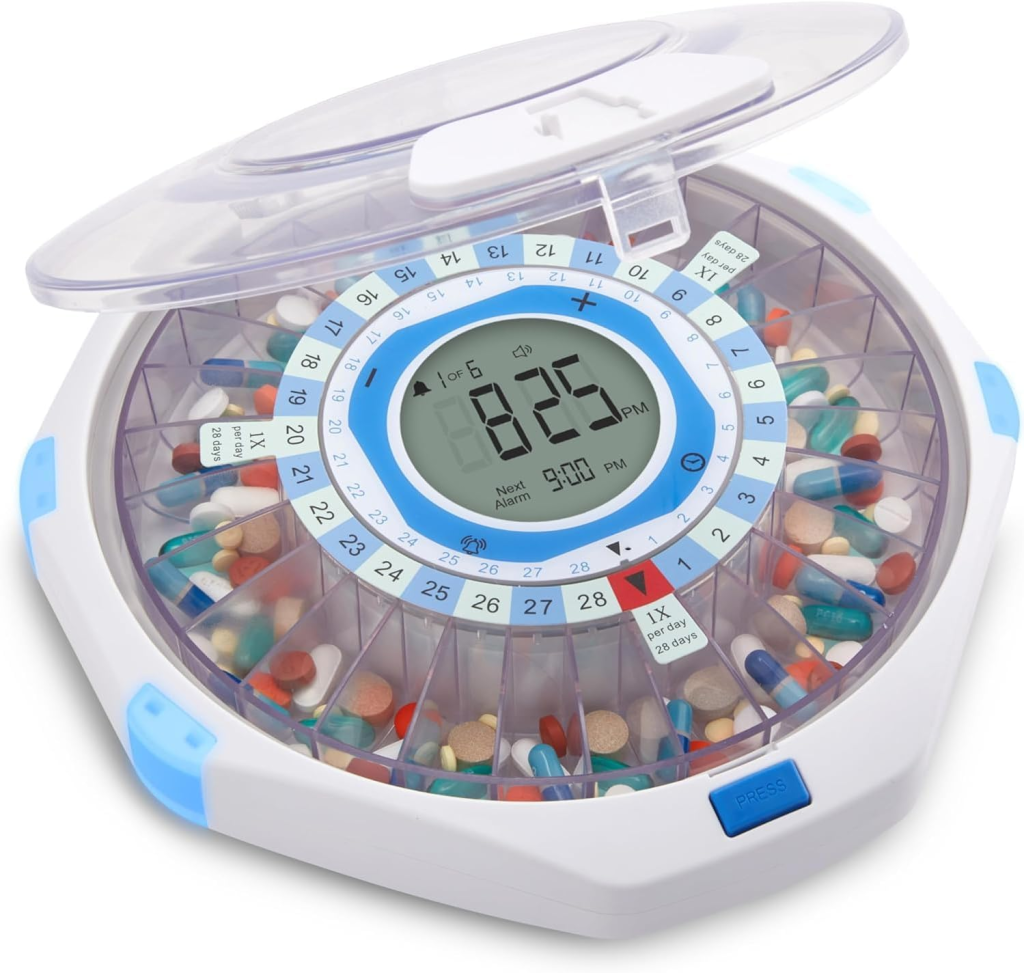
Best For: Caregivers managing strict schedules who want real-time app tracking and remote peace of mind.
Not Ideal For: Seniors with severe arthritis who lack wrist mobility, or tech-averse caregivers who don’t want to mess with Wi-Fi pairing.
Price: Check Amazon for Current Pricing
Product Overview
The LiveFine Automatic Pill Dispenser bridges independence and modern digital tracking. Featuring Wi-Fi app integration, a 28-day capacity with 9 interchangeable dosage rings, and an upgraded one-click lid button, it helps keep complex medication regimens on track.
Key Features & Ease of Use
- Wi-Fi app integration for remote caregiver monitoring and compliance logs
- 28-day capacity with 9 interchangeable dosage rings (up to 9 daily doses)
- Upgraded one-click lid-opening button and smooth sliding retrieval window
- Customizable audio alarms and flashing LED border lights
- Ease of Use: High (with push-button lid mechanism). Easier for seniors with mild hand stiffness than heavy-tilt models.
Things We Loved
- Real-time peace of mind for out-of-town caregivers via mobile app
- Secure physical key lock to prevent unauthorized access
- Reliable backup power source (USB-C/plug backed by 4-hour battery)
Things to Know Before Buying
- Relies on stable home Wi-Fi connection for remote app alerts
- Initial app pairing and setup requires some technological patience
- Carousel slots can get crowded with large horse pills or oversized vitamins
My Thoughts
"When I tested the LiveFine Automatic Pill Dispenser with a family friend, smartphone synchronization completely changed the daily dynamic. While initial setup takes a few minutes, loud audio alerts and the sliding door solve the biggest roadblocks we faced with older models."
2. Ideerfit 84-Day (1X) Automatic Pill Dispenser
Best Extended Capacity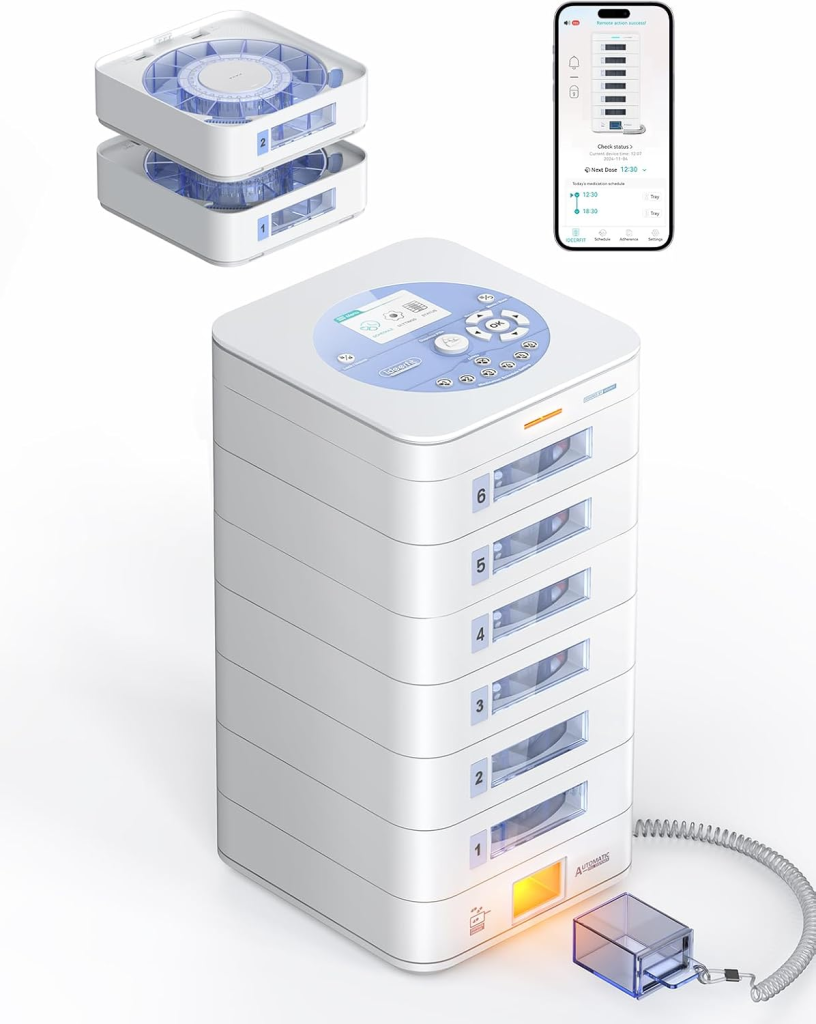
Best For: Caregivers and seniors looking to minimize weekly or monthly refilling chores and manage extended-duration routines.
Not Ideal For: Minimalist kitchens with limited counter space or seniors who get easily overwhelmed by multi-tiered digital programming.
Price: Check Amazon for Current Pricing
Product Overview
The Ideerfit 84-Day Automatic Pill Dispenser tackles the exhaustion of frequent refilling by utilizing an extended 6-tray modular system. It dramatically cuts down refilling chores while keeping schedules organized over long stretches.
Key Features & Ease of Use
- Extended 84-day capacity utilizing a 6-tray modular system
- Digital lock security management
- Sound and light alerts to notify seniors when a dose is ready
- App connectivity alongside on-device setup options and clear LCD display
- Ease of Use: Moderate to High. Reduces frequent refilling tasks, though initial multi-tray programming requires patience.
Things We Loved
- Dramatically cuts down frequency of refills (once every three months for daily meds)
- Multi-tray setup accommodates longer-range planning seamlessly
- Digital lock configuration minimizes risk of physical key loss
Things to Know Before Buying
- Bulkier physical footprint on kitchen counters due to multi-tray design
- Steeper learning curve for multi-tray setup compared to single-ring units
My Thoughts
"If your biggest pain point as a caregiver is the sheer exhaustion of refilling a tiny carousel every single week, the Ideerfit 84-Day Automatic Pill Dispenser is a game changer. Extending capacity up to 84 days takes a massive weight off your shoulders."
3. Colorwing Smart Pill Dispenser for Seniors
Best Security & Voice Reminders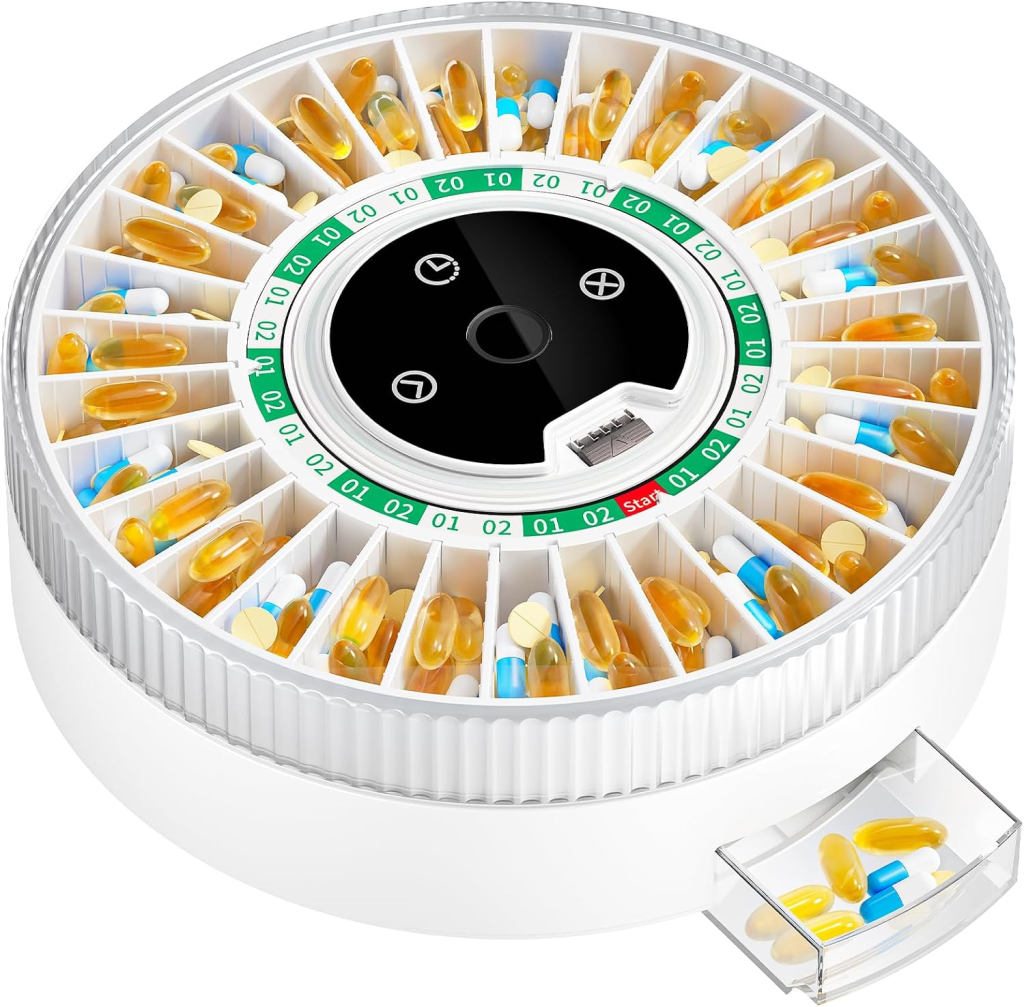
Best For: Households needing maximum physical security where a senior might attempt to force open compartments or needs comforting voice cues.
Not Ideal For: Seniors who struggle with fingerprint scanner placement or homes lacking a smartphone nearby for initial Bluetooth syncing.
Price: Check Amazon for Current Pricing
Product Overview
The Colorwing Smart Pill Dispenser tackles emotional and physical security hurdles head-on. With dual mechanical and fingerprint locks, a 31-slot monthly schedule, and family-voice recording capabilities, it transforms medication safety into a personal experience.
Key Features & Ease of Use
- 31-slot monthly scheduling architecture
- Dual mechanical and fingerprint lock security
- Bluetooth alarms with family-voice reminder capabilities
- Arthritis-friendly physical layout with rechargeable battery design
- Ease of Use: High (with fingerprint authentication). Protects against tampering while providing friendly audio reminders.
Things We Loved
- Fingerprint lock adds advanced security against memory-driven tampering
- Family-voice reminders provide comforting, familiar voice prompts
- Rechargeable design minimizes frequent battery-change hassles
Things to Know Before Buying
- Fingerprint scanners can occasionally misread dry or aged skin if not positioned cleanly
- Bluetooth range limits remote tracking compared to full Wi-Fi cloud systems
My Thoughts
"The Colorwing Smart Pill Dispenser stands out because it tackles emotional and security hurdles head-on. The fingerprint lock stops loved ones from breaking in early, and hearing a family member's voice instead of a jarring alarm transforms a clinical device into something deeply personal."
How to Set Up a Medication Dispenser
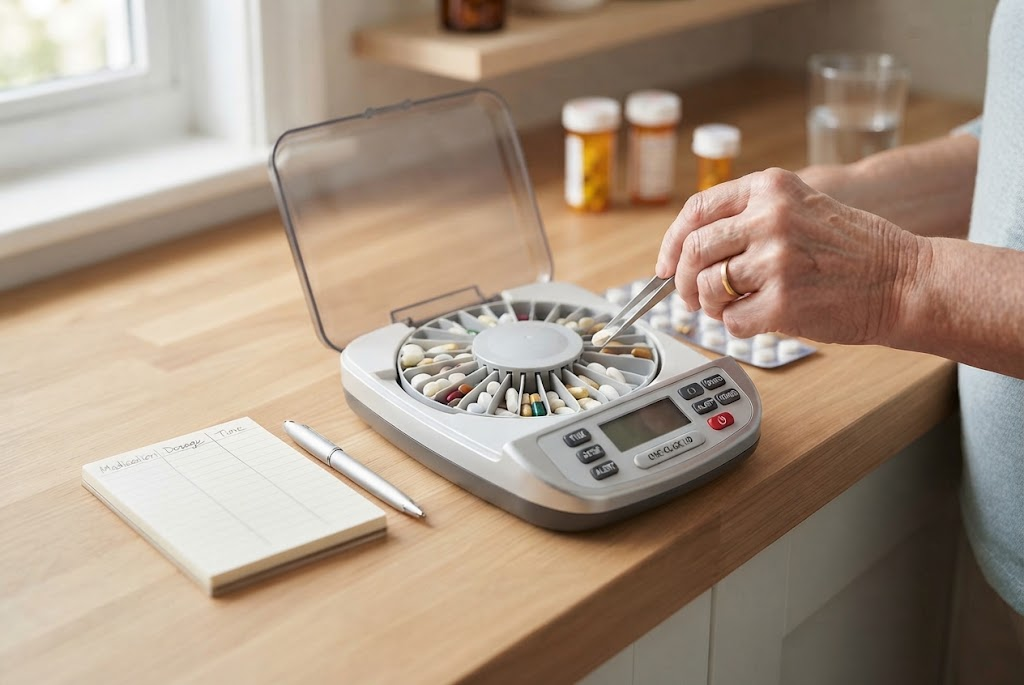
Setting up a dispenser deserves careful attention. Start by reviewing the current medication list. Don't rely on an old list sitting in a kitchen drawer. Prescriptions can change. Dosages can change. Medications can be stopped or added.
Next, confirm the timing of every medication. Follow the instructions provided by the prescribing healthcare professional and pharmacist. Then organize the medications according to those instructions. Before closing the dispenser, double-check everything.
For complicated medication schedules, having a second responsible person review the setup can be helpful. Once the dispenser is ready, walk the senior through the process. Show them how the reminder works.
Show them where the medication appears. Explain what they should do if they miss an alert.
Should All Medications Go Into a Pill Dispenser?
No. Certain medications are sensitive to light, moisture, or room temperature, and others must remain in their original amber bottles. Always consult a local pharmacist before removing pills from original packaging.
- Always consult a pharmacist, and reference official FDA medication safety and disposal guidelines when deciding how to handle expired or sensitive prescriptions.
4 Medication Safety Tips for Older Adults
A pill dispenser can improve organization, but medication safety requires more than organization. When managing complex prescription schedules, it helps to follow evidence-based protocols like those outlined in the National Institute on Aging guide to taking medicines safely.
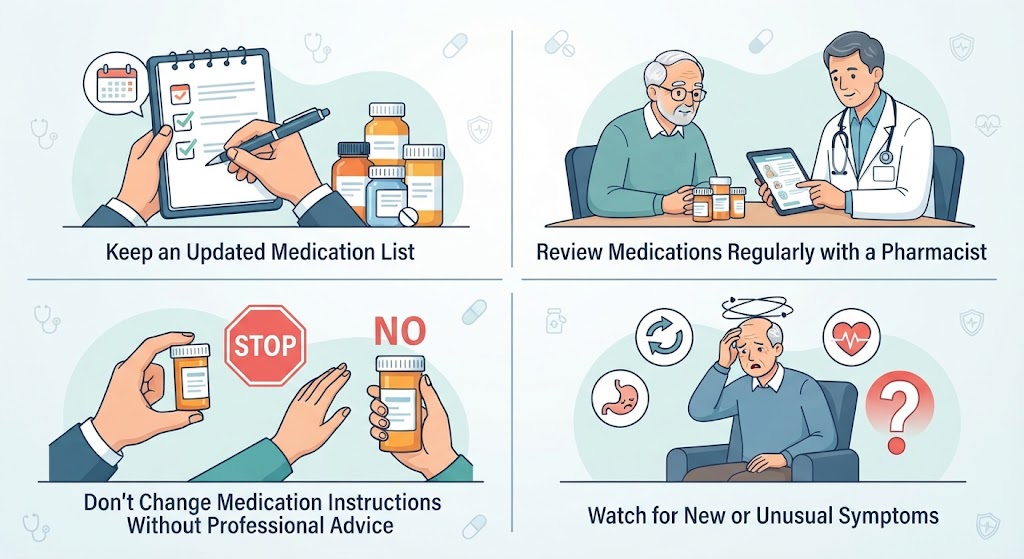
1. Keep an Updated Medication List
Keep a printed copy handy for doctors' visits and emergency responders.
2. Review Medications Regularly
Schedule medication reviews with a pharmacist annually or after major health changes.
3. Don't Change Medication Instructions Without Professional Advice
Don't double up on missed doses without professional advice.
4. Watch for New or Unusual Symptoms
Sudden dizziness or fatigue shouldn't be written off as "normal aging"—they may indicate drug interactions.
When an Automatic Pill Dispenser May Not Be Enough
If a senior is experiencing advanced cognitive decline, ignores alarms entirely, or cannot physically operate the device, technology alone won't suffice. In these cases, layer in home care aides, professional visiting nurses, or specialized pharmacy blister-packaging services.
Cost, Insurance & FSA/HSA Coverage Guidance
Many caregivers wonder if automatic pill dispensers are covered by insurance or Medicare. While standard weekly organizers are paid out-of-pocket, advanced automated medical devices or smart dispensers can often be purchased using funds from a Flexible Spending Account (FSA) or Health Savings Account (HSA) with a letter of medical necessity from a physician. Check with your insurance provider or plan administrator regarding durable medical equipment (DME) coverage.
Final Thoughts
Finding the right pill dispenser is about matching the device to your loved one’s true day-to-day reality. Whether that means a simple weekly box or an advanced smart dispenser, bringing predictability to medication management builds peace of mind for the entire family.
Frequently Asked Questions About Pill Dispensers for Seniors
Do automatic pill dispensers prevent medication errors?
They significantly reduce missed doses and accidental double-dosing, but they require accurate initial setup and refilling by a responsible party.
Are locking pill dispensers useful for seniors living alone?
Yes, they prevent unauthorized access or accidental extra doses, provided the senior can still interact with the open slot safely.
Can a pill dispenser remind caregivers about missed medication?
Smart connected models push notifications directly to caregiver smartphones, though subscription fees or Wi-Fi requirements may apply.
How often should a pill dispenser be refilled?
Depending on carousel capacity, most automatic systems hold anywhere from 7 to 28 days of medication. Always check manufacturer specifications.
Can seniors with arthritis use pill dispensers?
Yes, provided you select models featuring low-resistance lids, large textured grips, and easy-press buttons.
Can caregivers fill the dispenser for their parents?
Absolutely. Caregivers frequently manage the sorting process, provided the regimen instructions are verified by a licensed pharmacist or physician.