

Your phone buzzes on the nightstand at 10:15 PM. Your heart does that familiar, unpleasant flip-flop before you even look at the screen. Is it Mom? Did she have an accident? Did she leave something running in the kitchen?
When you live hundreds of miles away, every unexpected notification carries a tiny jolt of adrenaline. You can’t just drive over to see if the driveway is cleared, or check if the food in the fridge is still fresh. Instead, you are managing care through the fragile lens of phone conversations, where your parent insists, “Oh, I’m doing just fine, dear,” even when their voice sounds a little more tired than usual.
This is the silent anxiety of handling everything from afar. Fortunately, implementing a few practical long distance caregiver tips can help you transition from constant worry to quiet confidence. You don’t have to take over your parent’s entire life or manage complicated logistical hurdles to keep them safe. By setting up a simple, stress-free routine and automating everyday tasks, you can secure their independence, protect their daily routine, and finally get your peace of mind back.
Here is how to build an easy, supportive safety net from a distance—without the overwhelm.
1. Build a Local Check-In Network
You cannot be your parent’s sole observer when you live hours away. Trying to handle everything yourself from a distance is a fast track to caregiver burnout. Instead, you need to establish a local network of trusted individuals who can serve as your eyes and ears on the ground.
The Informal Network: Neighbors and Community

The people who see your parent daily are your best early warning system. This includes next-door neighbors, local friends, or even the mail carrier.
Many adult daughters feel guilty asking neighbors for help, worrying they are imposing. But most people genuinely want to help; they simply do not know what you need.
Here is a simple, no-pressure script you can use to approach a neighbor:
Copy & Paste Script
“Hi Sarah, I hope you’re doing well. As you know, I live three hours away and worry about Dad being here on his own. Would you mind keeping a quick eye out for anything unusual? For example, if his newspapers pile up for more than two days, or if his garage door is left open overnight, could you give me a quick text? Here is my number. Please let me know if there’s ever anything I can do to return the favor.”
The Formal Network: Aging Life Care Professionals
If your parent has complex medical needs or you do not have reliable local contacts, it is time to look into hiring an Aging Life Care Professional (historically called a Geriatric Care Manager).
These are licensed social workers or nurses who specialize in senior care. Think of them as a professional surrogate family member. They can:
- Conduct home safety assessments.
- Accompany your parent to doctor appointments and translate complex medical jargon into plain English.
- Coordinate local physical therapists or home health aides.
- Step in immediately during a local emergency.
While hiring a care manager is an out-of-pocket expense, even a few hours of their time per month can save you thousands in emergency travel and endless hours of stress.
2. Automate Health and Medication Tracking
One of the most common sources of friction between adult children and aging parents is the daily interrogation: “Did you take your pills today?” It makes your parent feel micromanaged, and it leaves you feeling like a nag.
Traditional plastic pillboxes are notoriously unreliable for seniors experiencing mild cognitive changes or vision loss. It is incredibly easy to double-dose or skip a day entirely, which can lead to preventable hospitalizations.
Upgrading to Smart Medication Systems
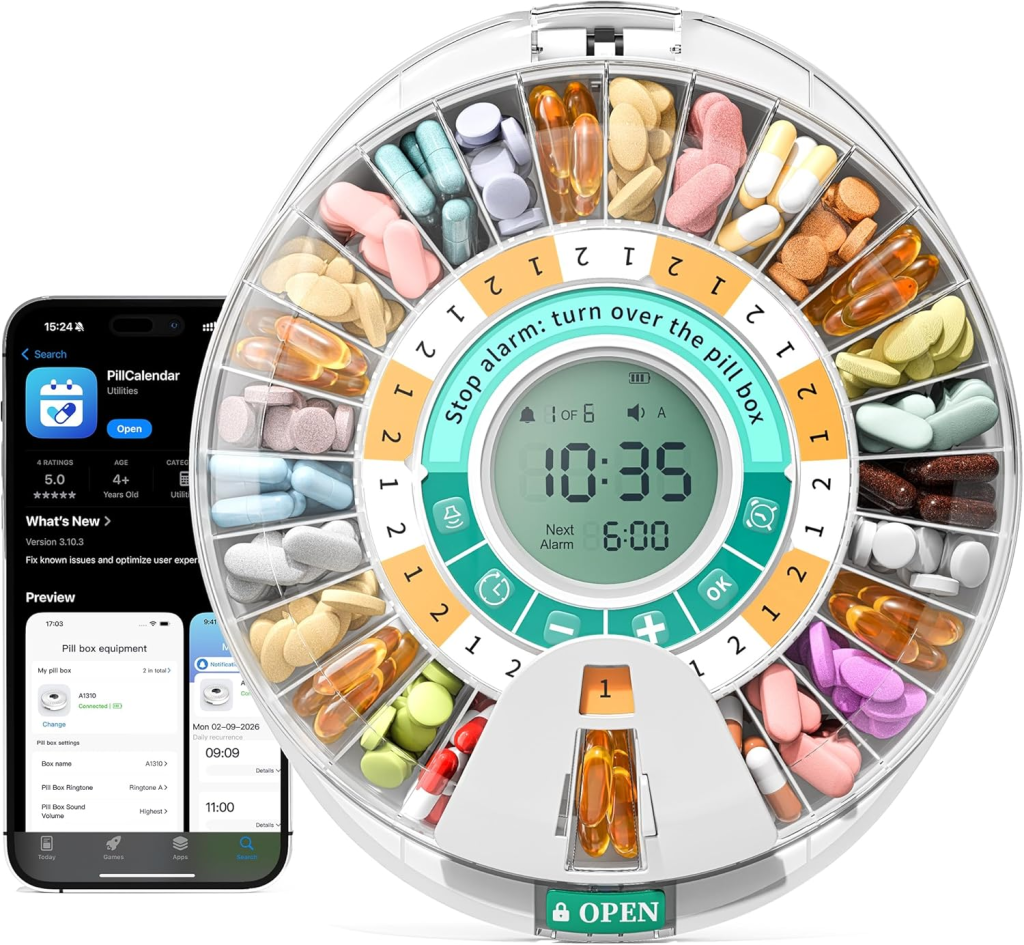
To remove the guesswork, transition your parent to an automatic, smart pill dispenser. These devices lock the medication away and only rotate to dispense the correct dose at scheduled times.
When it is time for a dose, the machine sounds an alarm and flashes. If your parent does not take the medication within a specific window (usually 30 to 60 minutes), the device sends a direct alert to your smartphone.
This allows you to call and say, “Hey Mom, just checking in to see how your morning is going!” rather than “Why haven’t you taken your blood pressure medicine yet?”
Medical Alert Systems with Fall Detection
If your parent lives alone, a medical alert system is non-negotiable. However, do not rely on a basic button that they have to remember to press. If a senior falls and loses consciousness, they cannot press a button.
Look for a system that features automatic fall detection. These wearables use sensors called accelerometers to measure sudden changes in height and velocity. If a fall is detected, the device automatically dials the monitoring center.
For parents who still go out for walks or run errands, choose a mobile system with built-in GPS tracking so emergency services can locate them anywhere, not just inside their house.
| System Type | Best For | Key Benefit | Potential Drawback |
|---|---|---|---|
| Smart Pill Dispenser | Seniors with complex, multi-dose medication schedules. | Sends phone alerts to caregivers if a dose is missed. | Requires manual refilling every 7 to 28 days. |
| GPS Medical Alert Pendant | Active seniors who leave the house independently. | Can track location and call for help anywhere with cellular signal. | Must be recharged every few days. |
| In-Home Camera Systems | Seniors with high fall risks or advancing dementia. | Allows visual check-ins to confirm safety. | Can feel like an invasion of privacy if not agreed upon. |
3. Outsource the Most Time-Consuming Task: Nutrition

When physical strength or cognitive health begins to slip, cooking is often the very first thing to go. It requires standing for long periods, lifting heavy pans, and keeping track of expiration dates.
Often, long-distance caregivers will look in their parent’s fridge during a visit and find nothing but processed singles, condiments, and freezer-burned meals. This “nutrition gap” leads to rapid muscle loss, fatigue, and weakened immune systems.
Trying to manage your parent’s groceries from afar is incredibly stressful. Ordering grocery deliveries online is a start, but it still relies on your parent having the physical energy to prep, cook, and clean up the kitchen safely.
The Meal Shipping Solution
The most efficient way to solve the nutrition puzzle from a distance is to bypass the grocery store entirely and use a specialized, senior-focused meal shipping service.
These services deliver fully prepared, nutritionally balanced meals straight to your parent’s doorstep. All your parent has to do is place the meal in the microwave for three minutes. There is zero chopping, zero hot stoves, and zero cleanup.
Caregiver Tip:
When looking for a service, make sure it offers medically tailored options. If your dad has congestive heart failure, he needs a low-sodium plan. If your mom is diabetic, she needs carb-conscious options.
If you are looking for a highly reliable, budget-friendly option that specializes in senior nutrition, you should read our comprehensive, hands-on review: Best Meal Delivery for Seniors: Is Mom’s Meals Worth It? to see if it is the right fit for your parent’s specific health needs.
4. Simplify and Secure Their Monthly Bills
Managing paper bills from hundreds of miles away is a recipe for stress. It’s incredibly easy for physical mail to get lost, misplace a statement, or accidentally pay the same utility bill twice. An unpaid bill isn’t just an inconvenience; if the power or heat gets disconnected, it becomes an immediate safety risk.
Instead of taking over your parent’s entire financial life, you can set up a simple, stress-free routine that protects their accounts and keeps their home running smoothly.
The Step-by-Step Bill Clean Up
- Gather the Basics: The next time you visit, sit down over a cup of coffee and make a simple checklist of their essential monthly expenses—like electricity, gas, water, internet, and insurance.
- Switch to Automatic Payments: Set up automatic bank drafts for those core bills. This ensures the lights and heat stay on automatically, removing the burden of remembering due dates from your parent’s shoulders entirely.
- Redirect the Mail: Change the billing email address on these accounts to your own. That way, monthly statements and any important notices come directly to your inbox where you can keep an eye on them, rather than piling up on their kitchen counter.
- Keep an Eye Out for Scams: If your parent still wants to handle their daily spending, ask their bank to set up simple text notifications for any large purchases over a certain amount (like $100). This lets you gently spot potential financial fraud or unusual activity without hovering over their daily independence.
5. Schedule Planned “Respite Blocks”

As a long-distance caregiver, you are never truly “off.” Even when you are sitting at your own dinner table, a part of your brain is always waiting for that emergency call.
This chronic vigilance is incredibly draining. To survive long-distance caregiving over the long haul, you must build intentional “respite blocks” into your calendar.
A respite block is a set period—whether it is a weekend or an entire week—where you step away from the daily coordinating tasks. During this time, you hand over checking-in duties to a local sibling, a trusted neighbor, or your hired care manager.
How to Run a Weekend Trial Run:
- ✓ Notify the network: Let your local check-in contacts know you will be offline from Friday night to Monday morning.
- ✓ Test the tech: Ensure the smart pill dispenser and medical alerts are fully charged and operating correctly.
- ✓ Mute the notifications: Unless the emergency monitoring service calls you directly, let the routine status updates go to your designated backup person.
Taking care of yourself is not selfish. It is an operational necessity. If you burn out, you will not be able to help your parent when they need you most.
Final Thoughts on Long Distance Caregiver Tips
Managing your parent’s care from a different zip code will always come with its share of emotional hurdles, but it shouldn’t mean living your life in a constant state of panic. You don’t have to completely transform their routine or solve every single logistical challenge by this afternoon.
Start small. Pick just one single task to automate or outsource this week—whether that is setting up their electric bill on automatic payment or ordering a trial week of pre-made meals. Each small, steady piece of the safety net you build not only protects their hard-earned independence, but it also restores yours. By shifting from an overwhelmed manager to a supported coordinator, you can finally trade your long-distance anxiety for genuine peace of mind, and get back to just being a daughter again.
Frequently Asked Questions
How often should I travel to visit my parent in person?
There is no single correct number, but a good rule of thumb for long-distance caregivers is to aim for a visit every 3 to 6 months—or whenever you notice a shift in their voice or energy during phone calls. The focus of these visits shouldn’t be on packing the schedule with grueling chores. Instead, use this time to casually observe their physical mobility, check the comfort of the home, inspect the pantry, and spend quality, stress-free time together.
My parent refuses to let me set up smart safety devices. What should I do?
Start small and frame the technology around your peace of mind, rather than their limitations. Instead of saying, “I need to monitor you because I’m worried you’ll fall,” try saying, “I worry about you constantly because I live so far away, and it’s starting to affect my sleep. Having this simple tracker would be a huge favor to me so I can worry less.” Focus on non-intrusive devices first, like an automated pillbox or a simple video doorbell, before discussing anything else.
How can I make sure my parent is eating healthy if I can’t cook for them?
The most reliable solution is to look into a senior-focused meal shipping program. These services deliver fully prepared, dietitian-designed meals that only require a quick reheat in the microwave. It eliminates the danger of using a hot stove or handling heavy pots, and ensures they get the exact daily nutrients they need without the physical strain of grocery shopping and cooking.
What are the early warning signs that my parent needs more daily support?
Keep a close eye out for uncharacteristic changes during your visits or video calls. Look for unexplained weight loss, changes in personal hygiene, stacks of unopened mail piling up on the counter, frequent minor scratches or dings on their car, or an unusually cluttered house. If you notice these issues, it is a clear indicator that their current routine is becoming too difficult to manage alone.
How do I balance checking in on them without overstepping my bounds?
The key is to focus on collaboration rather than a total takeover. Keep them involved in every decision and establish routine check-in times so they know when to expect your calls. By automating the stressful parts—like bills and meal prep—you shift your role from a task-manager back to a supportive daughter, allowing your daily conversations to be about catching up rather than auditing their day.