
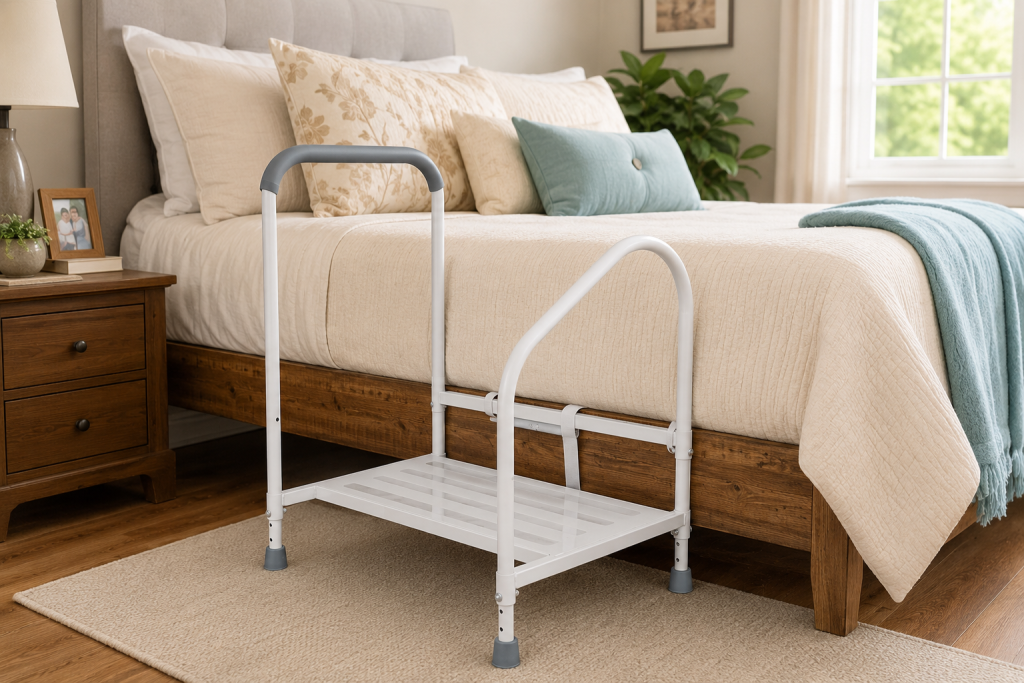
It happened last Tuesday. My mom called me, her voice trembling just a little. She wasn’t hurt, thank goodness, but she was shaken. She had misjudged the height of her new, thicker mattress while trying to get into bed and had stumbled. She caught herself on the nightstand, but it was a wake-up call for both of us.
For many seniors, a comfortable, supportive bed is essential for good rest. But modern mattresses are often higher than the beds they grew up with. Getting in and out safely can become a daily anxiety. You might notice your parent having to “hop” to get up, or worse, sliding off the edge in the morning.
This is where a quality bed step stool for seniors becomes an absolute game-changer. It’s not just a piece of equipment; it’s a bridge to independence and safety in their own bedroom.
I’ve spent years researching and testing safety products for my family and for readers like you. I know that choosing the right one can feel overwhelming. Should it have a handle? How wide should the step be? Is metal or wood better?
In this comprehensive guide, I’m going to share everything I’ve learned. We’ll walk through why these stools are so vital, how to choose the perfect one for your loved one, and the top-rated options on the market right now. My goal is to help you make an informed, confident decision that brings you both peace of mind.
Understanding the Need: Why Seniors Struggle with High Beds

It’s a common scenario: Your loved one invests in a new, plush mattress or a modern adjustable bed frame. They love how comfortable it is. But that evening, when they sit on the edge to go to sleep, their feet barely touch the floor. To get in, they have to hoist themselves up. To get out, they have to slide forward and essentially drop down.
This transition is risky for several reasons:
- Loss of Balance: As we age, our sense of balance can diminish. The act of lifting a leg high to step onto a mattress, or pushing off to slide down, compromises stability.
- Depth Perception Challenges: Changes in vision can make it difficult to accurately judge distance. Miscalculating the height of the bed by just an inch or two can lead to a misstep and a fall.
- Reduced Leg Strength: Arthritis, neuropathy, or general muscle weakness can make the controlled movement required for getting into a high bed very difficult.
- Fear of Falling: The anxiety of potentially falling can cause a senior to rush, which actually increases the risk of an accident.
A sturdy bed step stool addresses all of these issues by breaking the climb into manageable, stable increments. It turns a precarious maneuver into a safe, routine action.
Key Features of a Safe Bed Step Stool for Seniors
You might be tempted to grab a standard plastic step stool from the garage or a decorative wooden one from the living room. Please don’t. Those are not designed for this specific challenge. A senior-specific bed step stool has critical safety features that make all the difference.
Here is what I look for when I evaluate a stool:
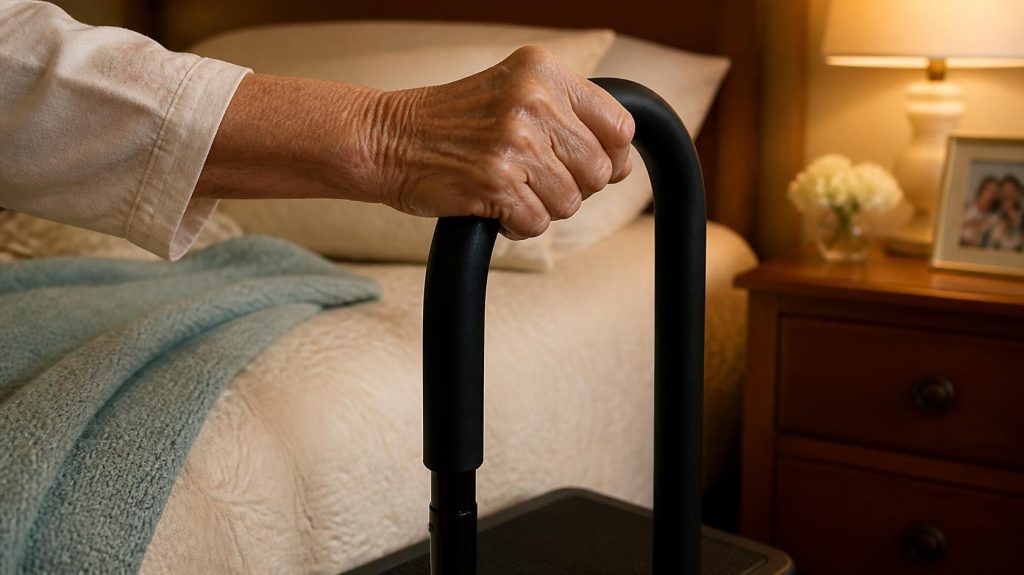
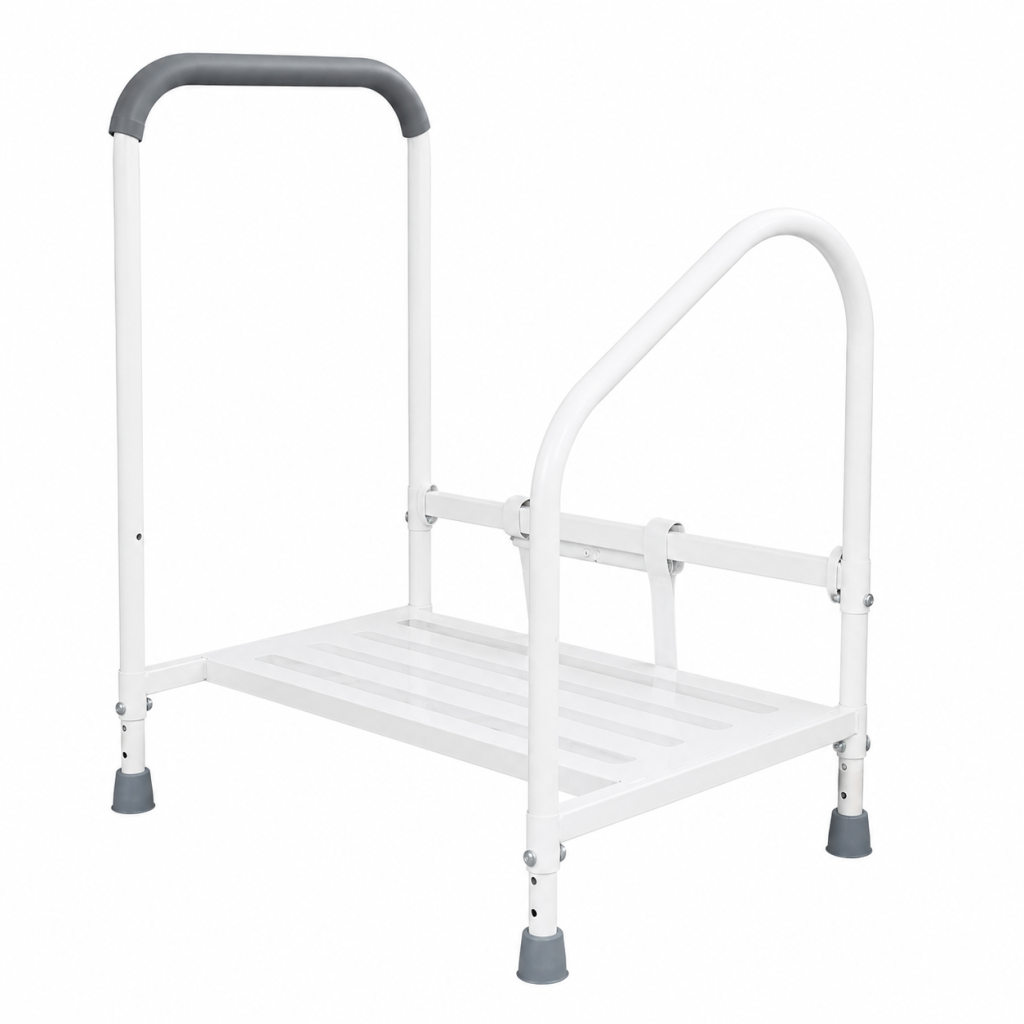
1. A Sturdy, Tall Safety Handle (The “Must-Have”)
This is the most important feature. A step stool without a handle is only half a solution. A senior needs something to hold onto before they lift their foot and while they are stepping. The handle provides crucial three-point contact (two feet and one hand, or one foot, one cane, and one hand) at all times.
The handle should be tall enough to grip comfortably from a standing position beside the bed and while using the step. Look for a padded, non-slip grip. Foam or textured rubber is ideal, especially if your loved one has arthritis.
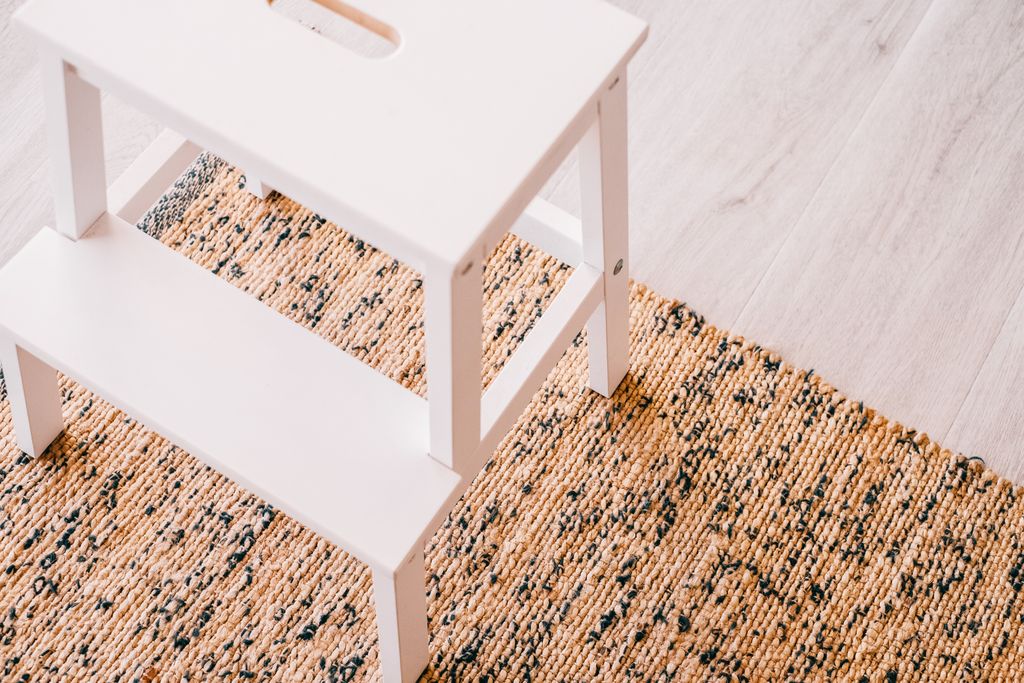
2. Wide, Deep, and Stable Steps
A tiny, round step won’t work here. The step itself needs to be large enough for a whole foot, preferably both feet briefly if they need to pause and turn. A deep step (front to back) is safer than a narrow one.
The first step should be relatively low to the ground, making it easy to initiate the climb. The stool should have a wide base. The feet should be spaced to prevent tipping, even if weight is shifted to one side.

3. Uncompromising Traction
This is non-negotiable. The last thing you want is for the stool to slide away or for a sock-clad foot to slip off the step.
The step itself must have a high-traction surface. This can be a textured rubber mat, industrial-grade grip tape (like skateboard tape), or a carpeted tread. The legs of the stool must have non-slip, non-marking rubber tips or pads that grip the floor (carpet, wood, or tile) firmly.

4. Weight Capacity
Check the manufacturer’s specifications carefully. A sturdy bed step stool should have a high weight capacity, typically 300 to 400 pounds or more. This rating indicates overall structural integrity and durability, even if your loved one weighs significantly less.
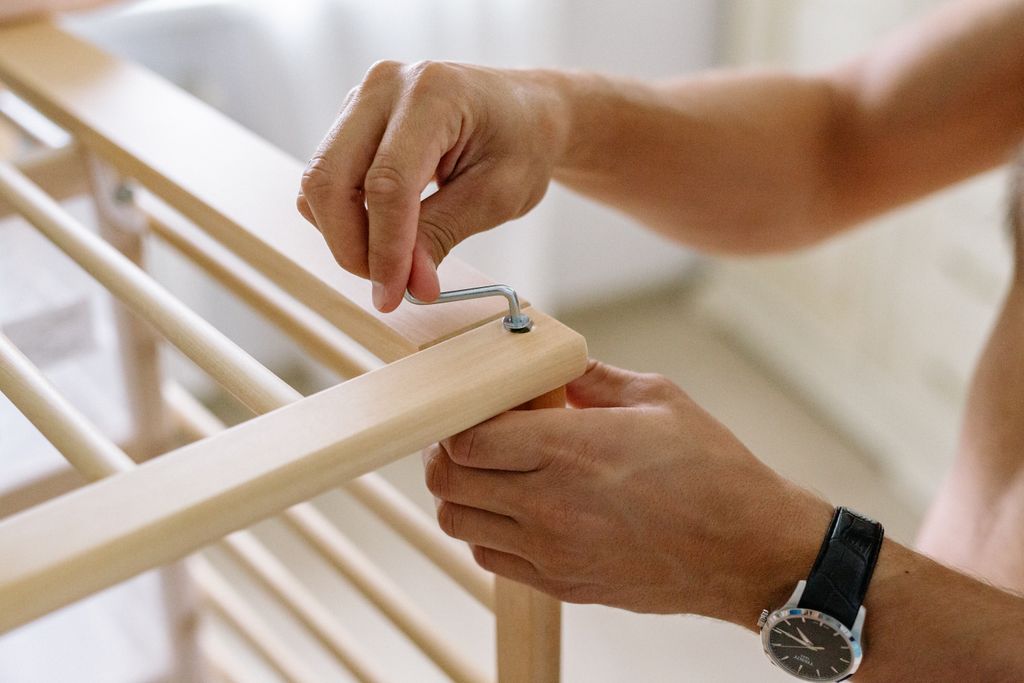
5. Tool-Free Assembly and Easy Maintenance
As a caregiver, I appreciate products that are easy to set up and keep clean. Look for stools that require minimal or no tools for assembly. The surfaces should be easy to wipe down or vacuum.
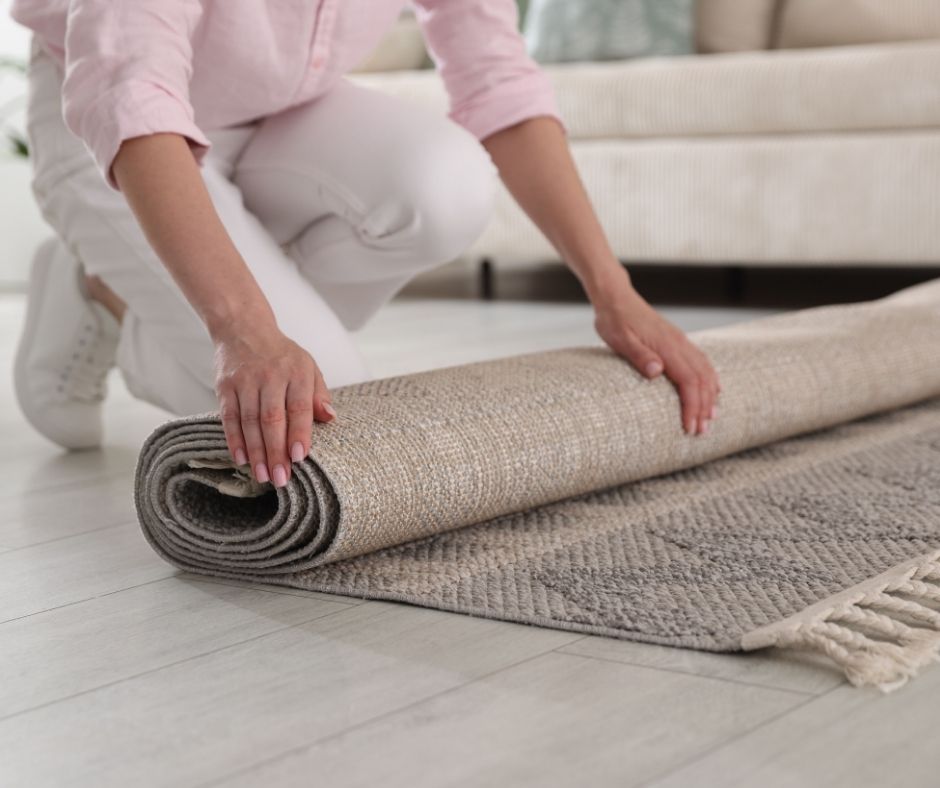
Caregiver Tip: Think about where the stool will be used. Is there enough clearance between the bed and the nightstand? Do you have a bedside rug that the stool will sit on? It’s often best to measure the space first. You might also consider placing a small, non-slip rug under the stool for an extra layer of security, especially on hardwood floors.
Types of Bed Step Stools: Finding the Right Fit
There isn’t one “best” stool for everyone. The right choice depends on your loved one’s specific mobility challenges and the layout of their bedroom.
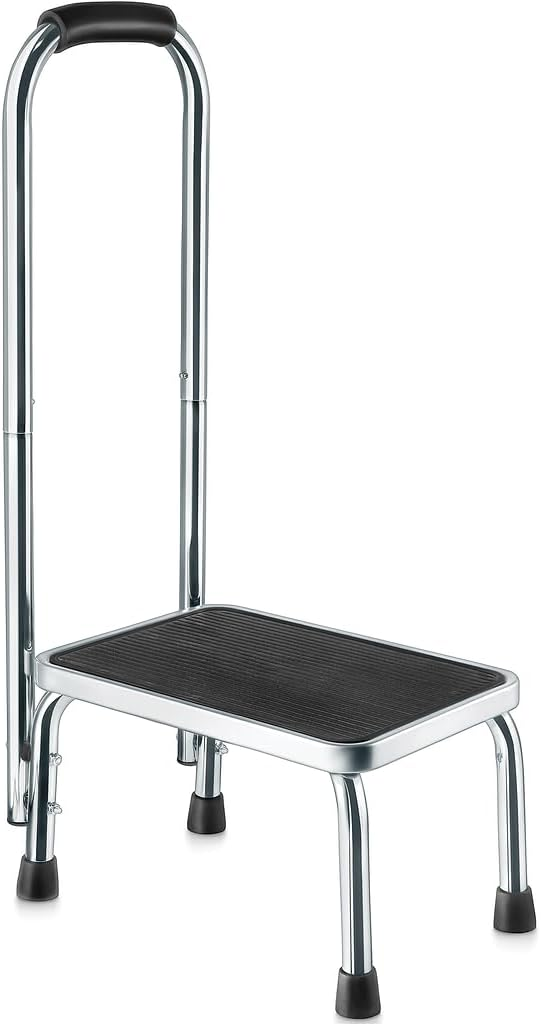
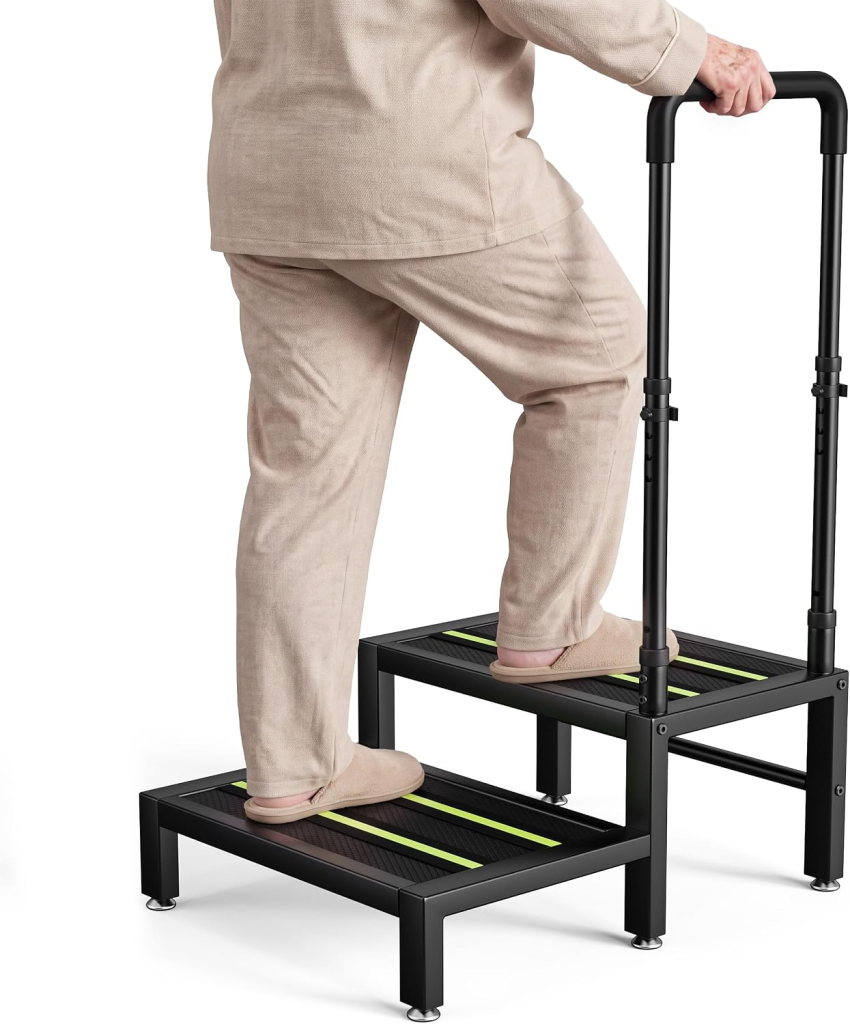
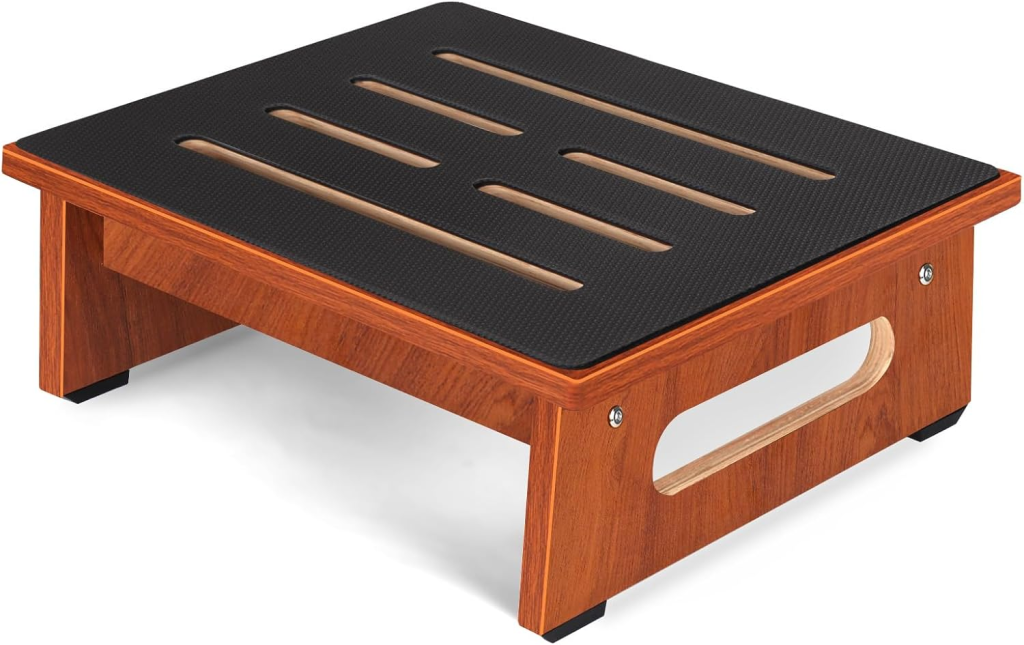
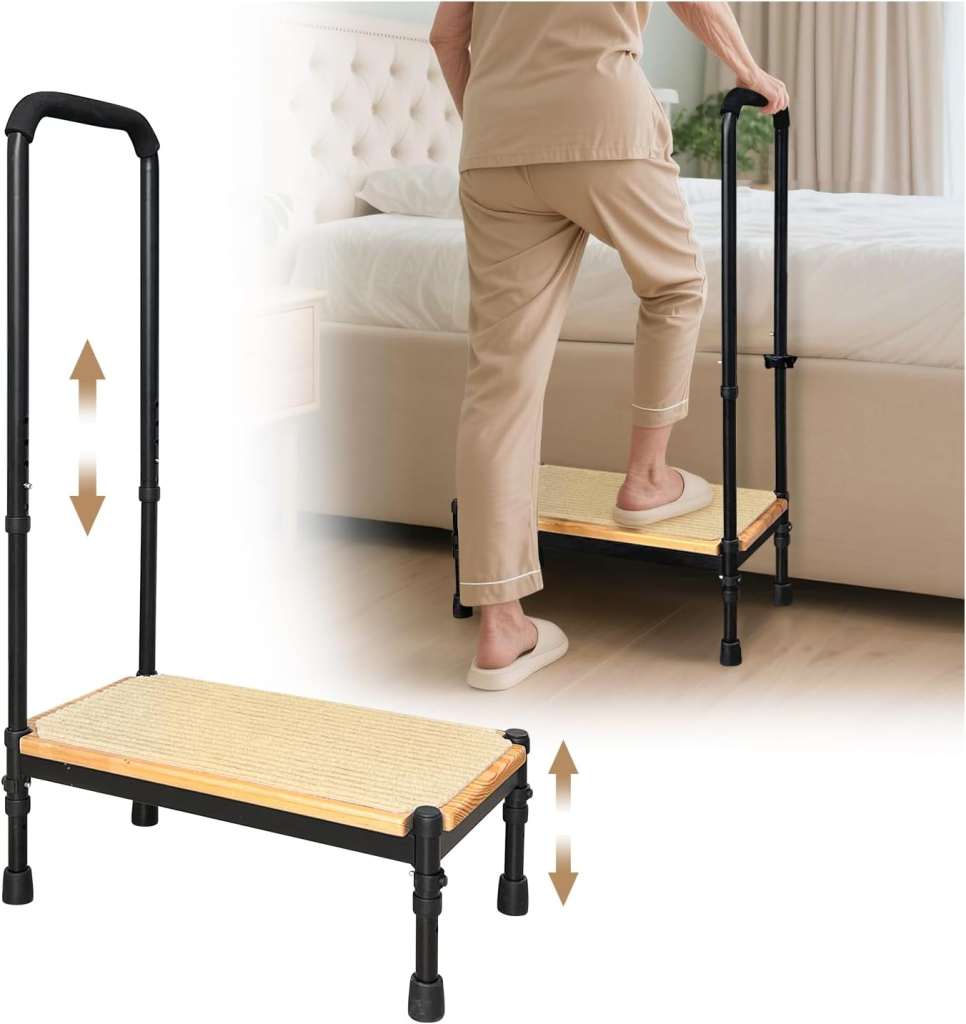
Spotlight on Safety: The “Step2Bed” Stool
Based on my research and experience, the Step2Bed stool is the most effective and safest option for the widest range of seniors. It solves the biggest problem: the lack of support during the transition.
Crucial Caregiver Consideration: Cognitive Health If your loved one has dementia or significant cognitive impairment, introducing a new object like a bed step stool can be confusing or even frightening. It’s vital to introduce it slowly, perhaps during the day, and practice using it together. You might need to place a bright, colorful sticker on the top step as a visual cue. For some with advanced dementia, a step stool may not be a safe option, and other solutions (like a lower bed or hospital bed) should be explored with their doctor.
Installation and Use: A Step-by-Step Guide
Setting up the bed step stool correctly is just as important as choosing the right one. Take the time to do this right.
Step 1: The Ideal Placement
Position the stool beside the bed where your loved one normally gets in and out. It should be close enough to the mattress that they can easily reach the handle before they commit their weight to the first step.

Step 2: Ensure a Perfect, Rock-Solid Connection
If you’ve chosen a model with a bed-clamp system, follow the instructions precisely to secure the bracket to your specific bed frame (metal rail or wooden box spring).
- Tighten all knobs securely.
- Test the connection by pushing and pulling on the handle. It should not move independently of the bed.
If you are using a freestanding stool without a clamp:
- Place it firmly on the floor. If you have a thick carpet, the stool may settle and become unstable. It’s often safer to place it on a thin, firm rug or directly on the floor with a non-slip mat underneath.
- Check for any wobble. Many metal stools have adjustable feet on each corner. Screw them in or out until all four feet are making firm contact with the floor.
Step 3: Practice, Practice, Practice
Do not let the first time they use it be at 11:00 PM when they are tired.
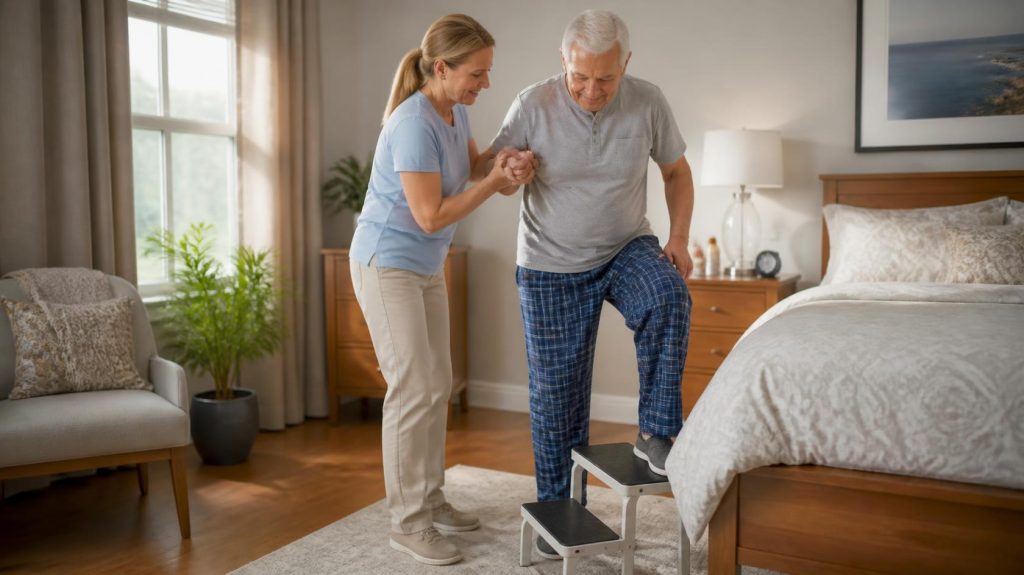
- Daytime Trial: Practice with the stool in the middle of the day. Have your parent approach the bed, use the handle to step up, sit on the bed, and then reverse the process.
- Clear Instructions: Use simple, clear language. “Hand on the handle first, then step up onto the middle of the step. Now sit.”
- Observe Their Movement: Watch for any hesitation or awkwardness. If the step feels too high, adjust it if possible. Ensure they are using the handle effectively and not just “palming” it for balance.

Step 4: Create a Nighttime Routine
The environment changes at night. Ensure the path to the bed is clear. I highly recommend adding a motion-activated nightlight near the floor. If they need glasses, hearing aids, or a walker, ensure those are always within easy reach.
Final Thoughts on Bed Step Stool For Seniors
Helping your parent age in place safely is one of the most loving things you can do. It’s also one of the most challenging. When a high bed becomes a daily hazard, it’s not a sign that they need to move to assisted living; it’s a sign that their environment needs a simple, practical adaptation.
A quality bed step stool for seniors is more than just a convenience. It’s a vital tool that restores their confidence, protects their physical safety, and preserves their precious independence. By choosing a stool with a sturdy handle, a wide non-slip platform, and excellent stability, you are giving them the gift of sleeping soundly and getting up safely each and every day.
Take the time to measure their room, talk to them about their needs, and choose the best option from the reliable models available. Your care and attention to detail will make all the difference in their quality of life.
Frequently Asked Questions (FAQ)
Can a bed step stool be used on thick carpet?
Yes, a bed step stool can be used on thick carpet, but you must take extra precautions to ensure stability. Thick carpeting can cause the legs of the stool to sink unevenly or shift when weight is applied. To prevent this, look for models with wide feet or adjustable leveling pads. Many caregivers place a thin, firm piece of plywood or a rigid non-slip mat underneath the stool to create a flat, stable foundation on plush carpet.
How do I know if my parent needs a stool with a handle or just a plain step?
If your loved one has any form of balance impairment, dizziness, weakness in the legs, or vision challenges, a stool with a sturdy handle is mandatory. Plain platform steps should only be used by seniors who possess excellent, reliable balance and simply need to bridge a small height gap. If you are ever unsure, it is always safer to choose the model with a handle to prevent accidental slips during the transition.
What is the ideal height for a senior bed step stool?
The ideal height depends entirely on the height of your parent’s mattress and their physical flexibility, but most senior-specific stools range between 4 and 9 inches for the first step. You want a height that allows your loved one to step up naturally without forcing their knee higher than their hip. If the step is too tall, it can strain weak joints and increase the risk of a fall rather than preventing one.
How can I stop a metal bed step stool from scratching hardwood floors?
Most quality metal bed step stools come equipped with rubber feet or protective pads designed to prevent scratching. If your stool’s feet are hard plastic or worn down, you can easily slip rubber furniture caps over them or apply heavy-duty felt adhesive pads to the bottom. Checking these pads regularly also ensures they maintain their grip and do not slide across smooth wood or tile surfaces.
Are folding bed step stools safe for daily use?
Folding bed step stools can be safe and are wonderful if space is limited or if the stool needs to be stored during the day. However, you must ensure the model features a robust, positive-locking mechanism that clicks securely into place and cannot accidentally fold while weight is applied. For seniors who leave the stool permanently by the bed, a fixed, rigid steel or wooden frame is generally more durable and secure.
What weight capacity should I look for when buying a bed step stool?
You should look for a bed step stool with a weight capacity of at least 300 to 400 pounds, even if your loved one weighs significantly less. A higher weight rating indicates a sturdier structural build, stronger welds, and greater overall stability. Never use a standard household or decorative step stool that has not been rated for heavy, repetitive medical or safety support.
How can I help my parent get used to using a new bed step stool?
Introduce the bed step stool during daylight hours when your parent is fully alert, rather than trying to introduce it right before sleep. Practice stepping up and sitting down together several times so they can build muscle memory and feel confident with the motion. You can also place a bright, contrasting piece of non-slip tape on the edge of the step to make it clearly visible, which is especially helpful for seniors experiencing mild vision changes.