

Standing in the kitchen with a stack of facility brochures scattered on the table, you might feel a knot tightening in your stomach. Maybe Mom forgot to turn off the stove again, or Dad’s recent fall made it clear he can no longer manage his medications on his own. You know things cannot go on the way they are, but looking at senior care options brings up a wave of overwhelming choices.
One of the heaviest decisions families face is figuring out the difference between assisted living vs nursing home care. The terms are often thrown around interchangeably by friends and well-meaning neighbors, but they represent two entirely different worlds of care, daily life, and cost.
Choosing the wrong environment can lead to a rushed, stressful move back and forth—something nobody wants to put an aging parent through. This guide will walk you through the core differences, help you evaluate your parent’s true needs, and give you practical tools to make this monumental choice with confidence and peace of mind.
What Is Assisted Living?
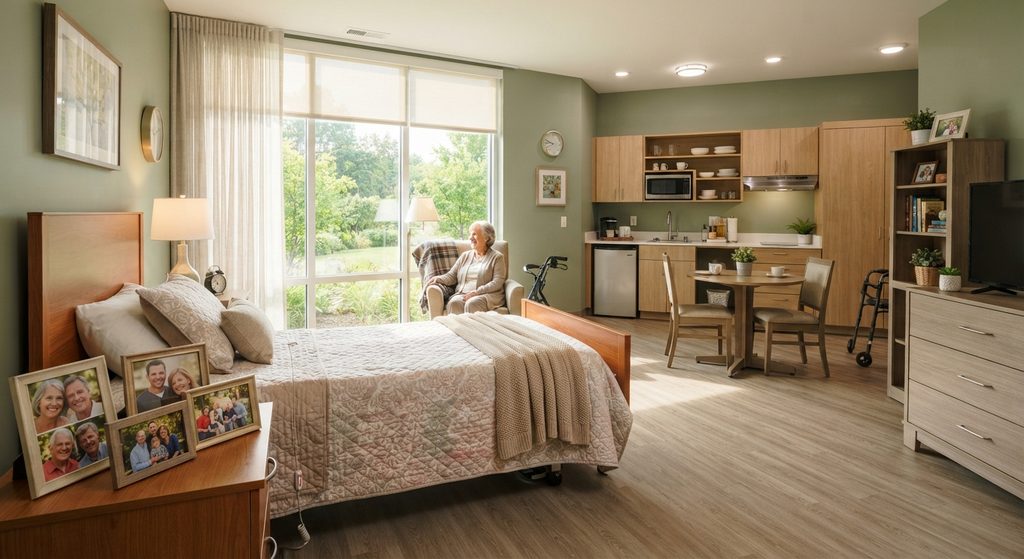
Assisted living communities are designed for older adults who want to maintain as much independence as possible but need a helping hand with daily routines. Think of it as apartment-style living with a safety net built right in.
Residents typically live in private or semi-private apartments—often featuring a small kitchenette, a private bathroom, and a bedroom—while sharing community spaces like dining rooms, courtyards, and activity lounges.
The focus here is on support with Activities of Daily Living (ADLs). These are the routine tasks of everyday life, including:
- Bathing and showering
- Dressing and grooming
- Medication management (reminders or physical administration)
- Mobility support around the community
- Toileting and incontinence care
While staff members are on-site 24 hours a day to respond to emergency pendants or pull-cords, assisted living does not provide continuous, round-the-clock medical supervision. If your parent enjoys a social calendar, likes having meals prepared for them, but struggles with housekeeping or remembering morning pills, assisted living strikes a wonderful balance.
What Is a Nursing Home?

Nursing homes—frequently called skilled nursing facilities or long-term care facilities—provide a much higher level of clinical care. They are built for individuals who have complex, chronic medical conditions or mobility limitations that require constant oversight.
Unlike the apartment style of assisted living, nursing homes have a more clinical, hospital-like atmosphere. Rooms are frequently shared (semi-private), though private rooms are sometimes available for an extra fee.
The defining feature of a nursing home is the presence of licensed medical professionals around the clock. Registered nurses (RNs), licensed practical nurses (LPNs), and certified nursing assistants (CNAs) are on duty 24/7 to handle tasks such as:
- Complex wound care and surgical recovery
- Intravenous (IV) medications or therapies
- Ventilator care or specialized respiratory management
- Total assistance with feeding and heavy physical transfers
- Management of severe cognitive decline with behavioural complications
A nursing home is generally necessary when a senior’s medical needs exceed what can safely be managed in a residential setting.
Key Differences at a Glance
To make sense of how these two options compare side by side, review the breakdown below.
| Feature | Assisted Living | Nursing Home |
| Primary Focus | Independence, social engagement, and personal care assistance. | Intensive medical treatment, rehabilitation, and 24/7 nursing oversight. |
| Living Quarters | Private or companion apartments with kitchenettes and private baths. | Hospital-style rooms, often shared (semi-private) or private. |
| Medical Staff | Visiting physicians and on-site wellness nurses for basic oversight. | Licensed nurses (RNs/LPNs) and aides on-site 24 hours a day. |
| Admission Rule | Generally requires an assessment showing a need for help with daily tasks. | Usually requires a physician’s order and formal clinical justification. |
| National Cost (Median) | Roughly $5,190 per month. | Roughly $10,646 per month for a private room. |
Cost and Financial Realities

Financial concerns are usually front and center when families look at senior care. The monthly difference between these two settings is substantial, driven primarily by the intensity of the medical staffing required.
Assisted Living Costs
The national median cost for assisted living hovers around $5,190 per month. However, this base price often follows a “tiered” pricing model. Your parent pays a base rate for rent, meals, and utilities, and then adds package fees depending on how much hands-on help they need with bathing or medications.
Most assisted living care is paid for out-of-pocket using personal savings, pensions, home sale proceeds, or long-term care insurance policies. Standard Medicare does not pay for long-term assisted living rent.
Nursing Home Costs
Nursing home care is significantly more expensive, with a national median cost of $10,646 per month for a private room.
While this price tag can cause sticker shock, nursing homes have different funding pathways:
- Medicaid: Unlike assisted living—where Medicaid waivers can be limited or have long waiting lists—Medicaid frequently covers long-term nursing home care once an individual qualifies financially and medically.
- Medicare: Medicare will cover short-term stays in a nursing home for rehabilitation following a qualifying hospital stay (up to 100 days, with specific rules), but it does not cover permanent, long-term custodial nursing care.
- Veterans’ Benefits: Eligible wartime veterans and surviving spouses should explore the Aid and Attendance benefit through the VA, which can provide crucial monthly financial assistance to offset the high costs of assisted living or nursing home care.
Caregiver Financial Tip
Before making a final choice, ask facility directors for a complete, written breakdown of “hidden” fees. In assisted living, find out if medication management costs extra. In a nursing home, ask which medical supplies and personal care items are included in the base room rate versus billed separately.
How to Decide Which Option Fits Your Parent: Assisted Living vs Nursing Home
Deciding between these options requires looking at your parent’s current health, safety risks, and future trajectory. Ask yourself these practical questions:
1. What is the state of their medical needs?
If your parent is managing stable chronic conditions—like high blood pressure or mild arthritis—and just needs a reminder to take pills, assisted living is likely appropriate. If they require daily injections, frequent professional wound care, or constant monitoring by a nurse, a nursing home is legally and practically required.
2. Can they move safely?
Frequent, unexplained falls are a major tipping point. If a parent uses a walker or wheelchair and can transfer from a bed to a chair independently (or with minor standby help), assisted living staff can assist them. If they are completely bedbound or require two-person physical lifts for all transfers, most standard assisted living facilities cannot accommodate them due to liability and staffing limits.
3. How is their cognitive health?
Many assisted living communities feature specialized “memory care” wings for individuals with Alzheimer’s or dementia. If your parent wanders or experiences safety risks from confusion, a secure memory care unit within an assisted living facility keeps them safe while offering a warm environment. However, if advanced dementia brings severe medical complications, a nursing home setting may become necessary.
Evaluating clinical needs and safety risks can be daunting. If you want objective, professional guidance tailored to your specific situation, you can speak with a senior living advisor to review local facilities that match your family’s budget and care requirements.
Step-by-Step Guide: Evaluating Facilities In Person

When you tour facilities, it is easy to get distracted by shiny chandeliers and fresh cookies in the lobby. Use this step-by-step checklist to cut through the marketing and see what daily life is really like:
- Observe the residents’ engagement: Look around common areas. Are residents interacting with staff and each other, or are they slumped in wheelchairs staring blankly at a television?
- Watch a staff interaction: Notice how employees speak to residents. Do they pause, make eye contact, and treat them with dignity, or do they rush past like they are on an assembly line?
- Check the staff-to-resident ratio: Ask what the ratio is during peak morning hours versus overnight shifts. A low staffing ratio often leads to delayed response times for call lights.
- Smell the environment: While occasional accidents happen, persistent odors indicate poor housekeeping and understaffing.
- Sample the food: Ask to share a meal with your parent in the dining room. Food quality is often the number-one complaint of residents, and a good meal goes a long way toward emotional well-being.

27 Questions to Ask Assisted Living Facilities: The Ultimate Guide
Conclusion
Navigating senior living choices for a parent forces us to confront the realities of aging, and it is completely normal to feel emotional weight throughout the process.
Whether your parent thrives in the social, independent setting of an assisted living community, transitions into a campus-style Continuing Care Retirement Community (CCRC), or requires the clinical safety net of a nursing home, your dedication to finding them a secure, dignified home matters deeply.
Take the process one step at a time, trust your observations during tours, and remember that you do not have to figure it all out in a single afternoon.
Frequently Asked Questions
Can someone transition from assisted living to a nursing home later?
Yes, this is a very common progression. Many seniors begin their senior living journey in independent or assisted living when they are more active. As chronic illnesses progress or mobility declines, they often transition to a nursing home or a continuing care retirement community (CCRC) that houses multiple levels of care on a single campus. Moving within the same network can make future transitions smoother, though a formal clinical assessment will still be required to authorize the move.
Does Medicare pay for assisted living?
No, standard Medicare does not pay for the room, board, or personal care services provided in assisted living communities. Medicare only covers short-term medical care, doctor visits, and specific rehabilitation services. Families typically cover assisted living out of private funds, long-term care insurance, or specific state-level Medicaid waiver programs if available and qualified.
How do I know if my parent is safe to stay in assisted living?
Your parent is generally safe in assisted living if their medical needs are stable and they only require help with scheduled or intermittent daily tasks like bathing, dressing, and medication reminders. Warning signs that they have outgrown assisted living include frequent wandering, unmanaged aggressive behaviors, the need for round-the-clock skilled nursing oversight, or physical immobility that requires multi-person mechanical lifts.
What is the difference between memory care and assisted living?
Memory care is often a specialized, secure wing or floor located within a traditional assisted living community. While standard assisted living serves seniors with varying physical or mild cognitive needs, memory care is specifically engineered for individuals with Alzheimer’s disease or other forms of dementia. It features alarmed doors to prevent wandering, specialized structured programming to reduce agitation, and a higher staff-to-resident ratio to manage confusion safely.
Will my parent lose their independence in a nursing home?
While nursing homes operate in a more clinical and structured environment than assisted living, staff members strive to preserve resident dignity and autonomy wherever possible. Residents can still make choices regarding their daily schedules, clothing, and participation in activities. However, because nursing homes prioritize medical safety and clinical monitoring, daily life is inherently more rigid and less autonomous than living in a private assisted living apartment.
Can couples with different health needs live together in these facilities?
Yes, many senior living organizations accommodate couples with differing health needs through campus models. For example, in a Continuing Care Retirement Community (CCRC), one spouse who is more active can live in an independent living apartment, while their partner receives higher-level care in the adjoining nursing facility or memory care unit. Some assisted living communities also allow partners to share an apartment even if only one person requires hands-on care assistance.
How are medications managed in assisted living versus nursing homes?
In assisted living, medication management usually means staff members store medications securely, bring them to the resident at the correct times, and provide reminders or pop pills out of blister packs. In a nursing home, licensed nurses take full responsibility for ordering, preparing, and administering all medications, including managing complex intravenous treatments, specialized liquid formulas, and strict schedule-controlled substances.
What should I look for in a facility’s state inspection report?
Every licensed assisted living facility and nursing home undergoes periodic state health inspections. When reviewing these reports online or asking the facility director for copies, look closely at the “deficiencies” cited. Pay attention to whether citations are minor paperwork errors or serious violations involving patient safety, medication errors, abuse, or neglect. Multiple repeat citations or unresolved safety complaints are major red flags.