

I still remember the quiet afternoon when I realized my mother’s forgetfulness had crossed the line from normal aging into something much more fragile. She had called me three times in one hour to ask what day it was, her voice trembling with a quiet panic that she tried so hard to hide. Standing in her kitchen, looking at a stove burner left flickering on under an empty pot, my heart dropped into my stomach.
If you are reading this, you might be standing at that exact same crossroads.
Perhaps your dad got lost driving home from a familiar grocery store, or your mom no longer recognizes the grandchildren she used to spoil with cookies. Watching someone you love slip away piece by piece is a grief unlike any other. And when the day-to-day realities of caregiving—sleepless nights, wandering worries, and constant vigilance—push you to your absolute limit, the question of memory care inevitably arises.
Deciding to explore assisted living with memory care is rarely easy. It is usually wrapped in heavy layers of guilt, fear, and a mountain of unanswered questions. Is it too early? Will they hate me? How on earth do we pay for it?
This guide is written for you, by someone who has walked this path. We will walk through what memory care actually is, how it differs from standard assisted living, what it costs, and how to find a safe, compassionate environment where your parent can live with dignity.
What Is Assisted Living With Memory Care?

When families first start looking into senior living, the terminology can feel like alphabet soup. You hear terms like residential care, assisted living, memory care units, and skilled nursing.
To put it simply: assisted living with memory care refers to specialized, secure residential neighborhoods located within an assisted living community (or operating as a standalone facility) designed specifically for individuals living with Alzheimer’s disease, dementia, or other forms of cognitive impairment.
While a standard assisted living facility helps seniors with activities of daily living (ADLs)—like medication management, bathing, dressing, and meals—memory care provides that exact same physical assistance inside a secure, highly structured environment tailored to cognitive decline.
Why Standard Assisted Living Often Isn’t Enough for Dementia
Many families initially hope that standard assisted living will be enough for a parent in the early stages of cognitive decline. After all, mom or dad still looks great physically, right?
Unfortunately, standard assisted living environments can quickly become overwhelming—and unsafe—for someone with progressive memory loss.
1. The Wandering Risk
Dementia changes how the brain processes spatial awareness and memory. Seniors frequently experience “exit-seeking behavior,” where they feel compelled to go home, go to work, or find a loved one who passed away years ago. In a standard assisted living building, doors often lead directly to the outside parking lot or public streets. Memory care units use alarmed, code-locked doors and secure, fenced courtyards that allow residents to walk freely outside without the risk of wandering into traffic.
2. Complex Behavioral Needs
As dementia advances, seniors may experience sundowning (increased confusion and agitation as evening approaches), hallucinations, or anxiety. Standard caregivers are wonderful, but they may not have the specialized training required to de-escalate these moments safely. Memory care staff are specifically trained in validation therapy—meeting the resident in their emotional reality rather than arguing with them about facts.
3. Nutritional and Routine Drift

In an open assisted living dining room, residents are often expected to look at a menu, order at a specific time, and manage utensils independently. For someone struggling with executive dysfunction, this leads to missed meals and weight loss. Memory care dining rooms are smaller, quieter, and offer consistent visual cues, simplified menus, and gentle physical prompts from staff who sit alongside residents to encourage eating.
What Daily Life Looks Like Inside a Quality Memory Care Unit
When you tour a memory care facility, you might expect a clinical, sterile hospital environment. Thankfully, modern memory care design has evolved dramatically.
Today’s best communities focus on person-centered care and normalization. Here is what you can typically expect:
Designed to Prevent Confusion
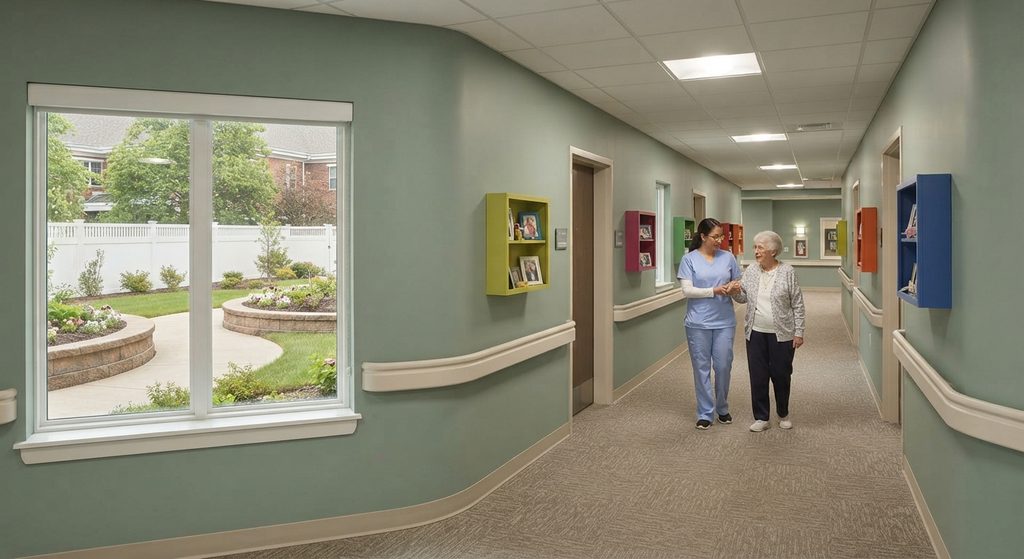
Hallways in memory care are often deliberately designed with loops rather than long, dead-end corridors that cause frustration and feelings of being trapped. Memory boxes—shadow boxes filled with family photos, favorite keepsakes, and meaningful items—are mounted right outside each resident’s apartment door so they can easily recognize their own room.
Purposeful Engagement and Routine

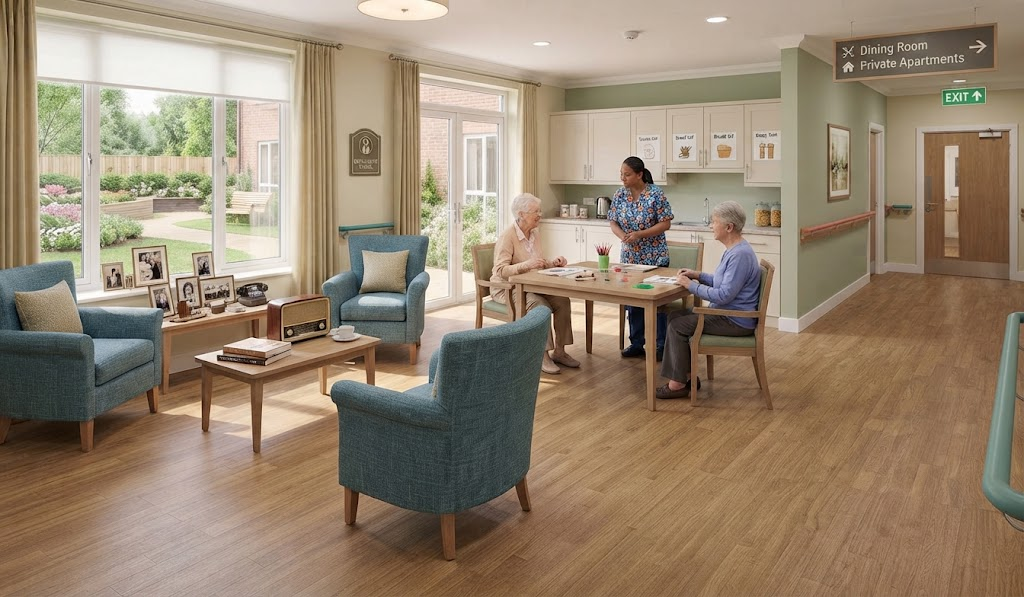
Boredom and unstructured downtime are breeding grounds for anxiety in dementia patients. A good memory care day is carefully choreographed. Residents participate in sensory-based activities such as folding warm towels, listening to music from their youth, tactile art classes, gentle chair stretching, and baking groups. The goal isn’t to teach new skills, but to spark moments of connection, joy, and self-worth.
Caregiver Tip: Look Beyond the Marketing Brochure
When touring memory care facilities, don’t just look at the shiny grand lobby. Drop in unannounced on a Tuesday afternoon. Walk down the memory care hallway and observe:
- Are residents actively engaged in an activity, or are they slumped in wheelchairs staring blankly at a television?
- Do staff members know residents by name and speak to them with warmth and eye contact?
- Does the hallway smell clean, or is there an unmanaged odor of incontinence?
Understanding the True Cost of Assisted Living With Memory Care
Let’s address the elephant in the room: senior care is expensive. Families are routinely shocked when they first look at price tags.
On average, memory care costs 20% to 30% more than standard assisted living because of the specialized security features and much higher staff-to-resident ratios required. Nationally, average monthly costs for memory care range between $5,500 and $8,000 per month, depending heavily on geographic location, the luxury level of the facility, and the specific tier of care your parent requires.
What Does the Price Usually Include?
- Rent and utilities: Private or semi-private apartment space.
- Three daily meals plus snacks: Often tailored for specialized dietary needs or finger foods for advanced stages.
- Housekeeping and laundry services.
- 24-hour supervision and security.
- Medication administration and management.
- All social programming and life-enrichment activities.
When Is the Right Time to Make the Move?
One of the heaviest burdens caregivers carry is the agonizing question: Is it time yet?
We tend to wait until a crisis forces our hand—a bad fall, a wandering incident that involves the police, or a complete caregiver physical collapse. Ideally, we want to transition our loved ones before a catastrophic event occurs.
Signs That Indicate It’s Time for Memory Care:

How to Choose the Right Facility: A Step-by-Step Guide
Touring memory care communities can feel emotionally draining. Having a structured framework helps keep you grounded.

Step 1: Make a Shortlist of Licensed Communities
Check with your state’s department of social services or health department to review inspection reports and verify that the facilities are properly licensed and free of severe regulatory violations.

Step 2: Schedule In-Person Tours
Visit at least two or three facilities. Take notes, ask pointed questions, and trust your gut instinct.

Step 3: Ask the Right Questions During the Tour
- What is your staff turnover rate among direct-care aides? (High turnover is a massive red flag; consistent faces matter deeply for dementia patients who rely on familiarity).
- What specific dementia training do all staff members (including dining and housekeeping staff) receive?
- How do you handle escalating behaviors, and at what point would a resident be asked to leave if their needs increase?
- What is the ratio of residents to staff during the day versus the overnight shift?
Need Help Finding the Right Memory Care Community?

Finding a safe, compassionate memory care facility doesn’t have to be a journey you walk alone. If you need personalized guidance navigating options in your local area, expert support is available.
Through a trusted partnership with A Place for Mom, families can connect with dedicated Senior Living Advisors at absolutely no cost.
These senior living experts take the guesswork out of the search by helping you:
- Find options within your budget tailored to your family’s financial situation.
- Get answers to complex questions about memory care tiers, staffing, and clinical capabilities.
- Compare local communities side-by-side to find the right fit.
- Schedule and coordinate tours of memory care communities near you.
- Navigate the logistics of a move with less stress and more confidence.
How to Talk to Your Parent About Moving
This is often the most dreaded conversation a child can face. How do you convince a parent with dementia to leave their home?
The honest truth? You may not get their enthusiastic agreement. And that is okay.
When cognitive decline impairs judgment, asking a parent for permission to move can lead to endless circular arguments. Instead, experts recommend shifting how you frame the conversation:
- Use Therapeutic White Lies: If telling the truth (“Mom, you have dementia and can’t live alone”) causes terror, anger, or deep sadness, reframe the narrative. Blame an outside authority or circumstance. “Mom, your doctor wants you to stay in this wellness community for a little while to help you regain your strength.” or “We found a wonderful apartment where all your meals are cooked for you and you don’t have to worry about home repairs anymore.”
- Focus on Comfort, Not Loss: Emphasize what they are gaining—companionship, beautiful gardens, no more chores—rather than what they are leaving behind.
- Involve Them Selectively: If your parent is in the very early stages, let them pick out their bedspread or pictures for the wall. If they are in moderate-to-advanced stages, too many choices cause anxiety; it is often kinder to set up their new apartment for them so it mirrors their familiar bedroom before they arrive.
Final Thoughts
Making the decision to move an aging parent into an assisted living community with memory care is one of the heaviest choices you will ever face. It is completely normal to feel torn, exhausted, and weighed down by guilt.
Please remember to breathe.
Choosing memory care is not an abandonment; it is an act of profound protection and love. It hands the heavy burden of 24/7 vigilance over to trained professionals, allowing you to step out of the role of sole caregiver and step back into the role of a loving child. Your parent deserves safety, dignity, and specialized care—and you deserve to have your relationship back.
Frequently Asked Questions
1. What is the difference between assisted living and memory care?
Standard assisted living provides help with daily activities like bathing, dressing, and medication management in an open environment. Memory care provides those exact services inside a secure, specialized, and enclosed unit specifically designed for individuals with Alzheimer’s or dementia. Memory care features alarmed doors, higher staff-to-resident ratios, secured outdoor walking areas, and staff trained specifically in dementia behavior management and redirection techniques.
2. Does Medicare pay for memory care?
No, standard Medicare does not cover the monthly room, board, and personal care costs associated with assisted living or memory care. Medicare may cover short-term skilled nursing care or specific medical treatments prescribed by a doctor, but long-term residential memory care is an out-of-pocket expense. Families typically fund it through personal savings, home equity, long-term care insurance, or qualifying VA benefits like Aid and Attendance.
3. How much does memory care cost on average?
On average, memory care costs between $5,500 and $8,000 per month nationwide. Pricing varies significantly depending on your geographic location, the luxury level of the community, and whether your parent requires a private or semi-private apartment. Specialized tiers of care within the facility can also increase the monthly rate as cognitive and physical needs progress.
4. When is the right time to move a parent to memory care?
The right time usually arrives when home care is no longer safe or sustainable. Key indicators include frequent wandering, severe nighttime confusion (sundowning), caregiver burnout or declining health, aggressive behaviors during personal care, or unsafe home conditions such as leaving stoves on. Moving before a dangerous crisis occurs helps ensure a smoother transition for everyone involved.
5. Will my parent ever adjust to living in a memory care facility?
Yes, though the transition period typically takes anywhere from two to six weeks. During the first couple of weeks, it is very common for residents to ask to go home or feel confused. Consistent visits from family, familiar personal items (like a favorite quilt or framed family photos), and allowing staff time to establish a calming daily routine usually help residents settle in and find comfort in their new environment.
6. Can my parents live together in memory care if only one has dementia?
Many continuing care retirement communities (CCRCs) and advanced assisted living facilities offer shared apartments or “aging in place” models where couples can stay together. In these setups, the spouse without dementia lives in standard assisted living or independent living while helping look out for their partner, or both can move into a community that bridges both care levels, though options depend heavily on the specific facility’s licensing.
7. What should I look for when touring a memory care facility?
When touring, pay close attention to the atmosphere and cleanliness of the unit. Look for engaged residents participating in structured activities rather than sitting isolated. Ask about the staff-to-resident ratio (ideally 1:5 or 1:7 in memory care), inquire about staff turnover rates, and check that the secured outdoor areas are safe and accessible. Trust your instincts—if the staff seem warm, patient, and genuinely connected to the residents, it is a very positive sign.
8. How can I handle my own guilt about moving my parent into memory care?
Caregiver guilt is an almost universal emotion, but it stems from love, not failure. Recognize that keeping an unsafe parent at home is often driven by our own guilt rather than their best interests. Moving your parent into memory care allows you to step back from the exhausting role of 24/7 prison guard and medication manager, returning you to the role of a loving son or daughter who can finally enjoy quality, stress-free visits together.