
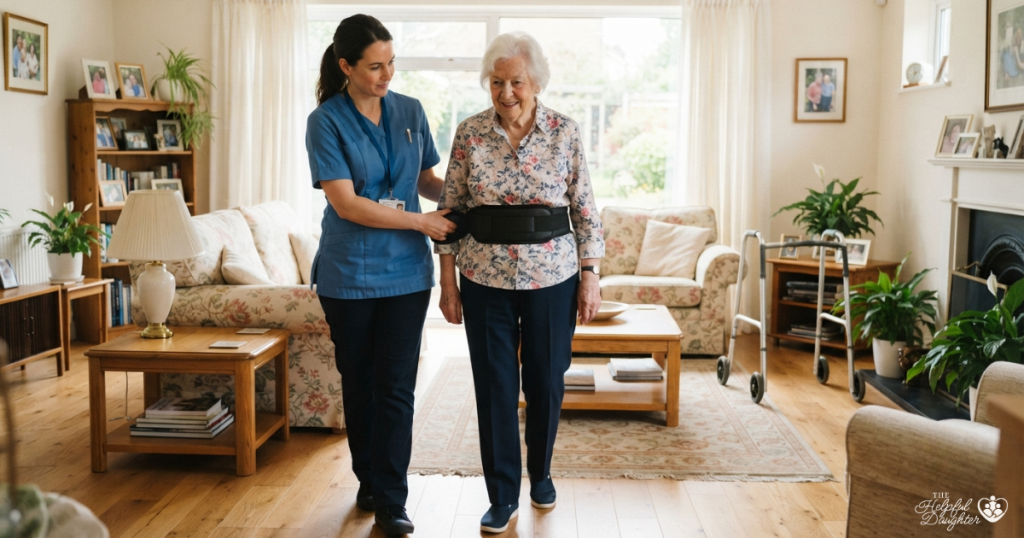
One of the hardest parts of caregiving is watching a parent struggle to stand. Your instinct is to hold onto their arms or shoulders, but that can actually increase the risk of a painful fall for both of you.
A gait belt gives you a safe, secure grip to help your loved one stand, walk, or transfer between chairs, beds, and wheelchairs—without straining your back.
In this guide, I’ll cover when to use a gait belt (and when to avoid one), how to pick the right style, and my top expert-recommended gait belt for elderly reviews
Quick Comparison: Best Gait Belts for Seniors
If you are pressed for time and need a quick overview of our top-rated transfer belts, use this handy
comparison table to compare key features at a glance:
What Is a Gait Belt and How Does it Work?
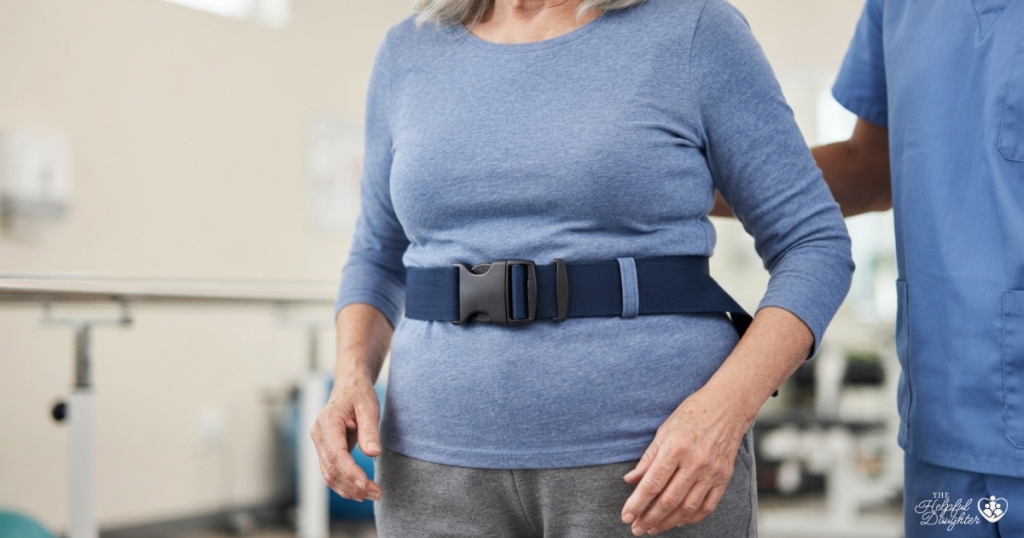
At its core, a gait belt (often called a transfer belt) is a sturdy strap made of heavy-duty cotton, nylon, or
polyester webbing designed to be fastened securely around a person’s waist. Originally developed for physical
therapists and hospital nurses, these safety devices give caregivers a secure, ergonomic grip point to steady,
guide, or assist individuals who have difficulty walking or standing on their own.
When you attempt to steady a falling parent by grabbing their clothing, their belt loops, or under their bare
arms, you risk tearing their clothes, pinching their skin, or causing severe shoulder and rib injuries. A gait belt
shifts that physical contact to a secure, reinforced band around their center of gravity. By holding onto the
belt’s handles or webbing, you can control their momentum, prevent falls, and guide them safely from a bed to
a chair, or down a hallway.
Do You Actually Need a Gait Belt?
It’s completely natural to hesitate before buying mobility aids. Many family caregivers feel emotional resistance, worrying that introducing a gait belt signals a loss of independence for their parent.
However, shifting how you view a gait belt—from a restriction to a safety tool—changes everything. It isn’t about taking away independence; it’s about making everyday movement safe, stable, and stress-free for both of you.
A gait belt is likely a smart addition if:
- Balance is uncertain: Your loved one experiences frequent dizziness, weakness, or unsteadiness when standing.
- Caregiving is taking a physical toll: You feel back strain or lose your balance while helping them move.
- Transfers are stressful: Moving between the bed, wheelchair, recliner, or toilet has become nerve-wracking.
- Therapy calls for it: A physical or occupational therapist recommended guided walking practice at home.
- Recovery is underway: They are regaining strength after a stroke, surgery, or prolonged hospital stay.
When Should You NOT Use a Gait Belt?
Although gait belts are extremely useful, they aren’t appropriate in every situation. Using one when it’s not recommended could actually increase the risk of injury.
Avoid using a gait belt if the person has:
- Recent abdominal surgery
- Open abdominal wounds
- Feeding tubes (unless approved by a healthcare professional)
- Rib fractures
- Severe osteoporosis that makes pressure unsafe
- Significant pain around the waist
- Pregnancy
- Certain spinal injuries
In these situations, ask a physical therapist, occupational therapist, or healthcare provider about safer transfer methods.
Some individuals may require a mechanical lift or specialized transfer equipment instead.
⚠️ Important Safety Reminder
A gait belt is not a lifting device.
If your loved one cannot bear any weight on their legs or requires full lifting assistance, a gait belt alone isn’t enough. Trying to lift someone this way could injure both of you.
Types of Gait Belts
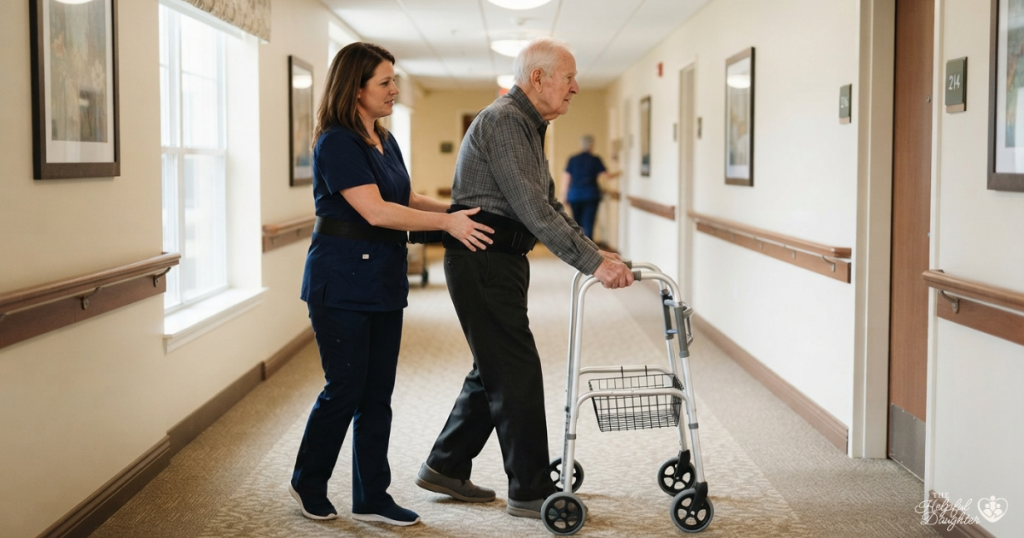
Not all transfer belts are created equal. Understanding the primary variations helps you select the right tool for
your specific caregiving environment:
1. Traditional Webbing Belts
Usually made of heavy-duty cotton canvas with a metal teeth buckle. They are inexpensive and durable, but lack handles and can slip if not threaded correctly.
2. Belts with Horizontal and Vertical Handles
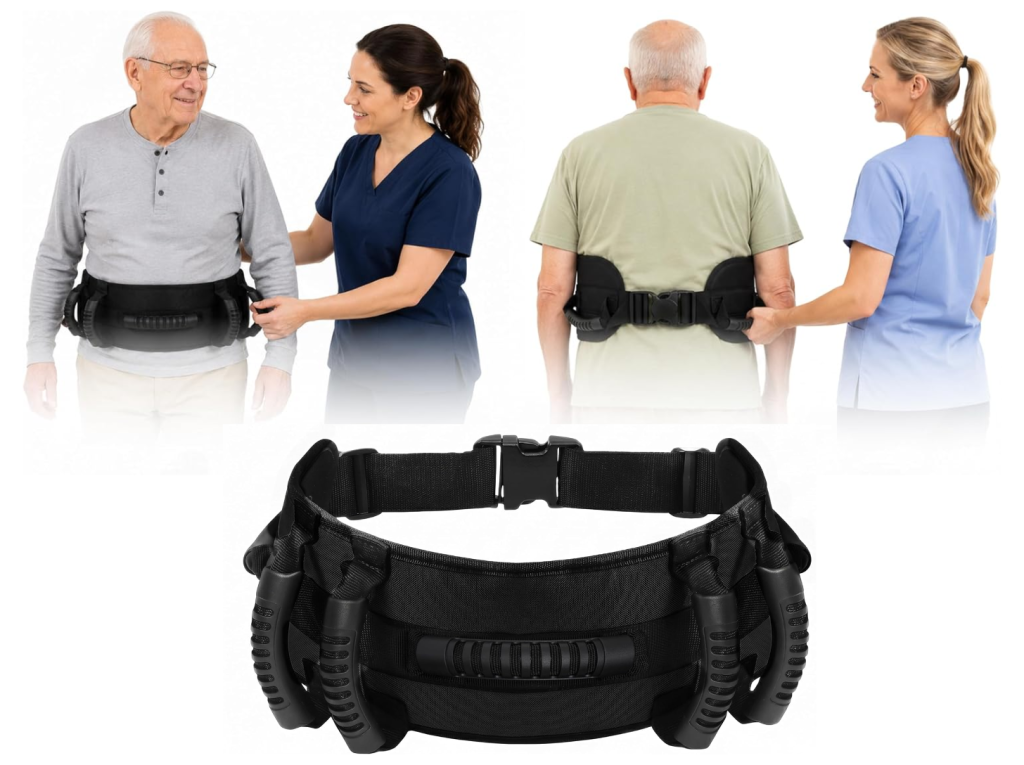
These modern innovations feature multiple reinforced grab loops stitched along the perimeter. They give caregivers secure handholds from any angle, making them vastly superior for home care.
3. Quick-Release Plastic Buckle Belts
Replacing old-school metal teeth, these use heavy-duty side-release plastic buckles similar to hiking backpacks. They snap securely into place and can be unclipped instantly in an emergency.
4. Bariatric Extra-Wide Belts
Designed with wider profiles (often 4 to 6 inches) and high-tensile nylon webbing to distribute pressure comfortably across larger body frames.
How to Choose the Right Gait Belt
Walking through the dozens of options online can quickly become overwhelming. Most belts look similar at first glance, but a few details can make a big difference in comfort, safety, and ease of use.
Before you buy, consider these key features.
1. Choose the Right Width
A wider belt spreads pressure more evenly around the waist, making it more comfortable during transfers. Narrow belts can dig into clothing or the skin, especially if your loved one needs frequent assistance. For most caregivers, a width of 2 to 4 inches provides a good balance between comfort and control.
2. Look for Multiple Handles
If you’ll be helping someone stand, pivot, or transfer from bed to wheelchair, several padded handles make the job much easier. They allow you to change your grip without twisting your wrist or pulling awkwardly.
Seven-handle designs are especially useful because they give you support from almost any angle.
3. Pick a Reliable Buckle
The buckle is one of the most important safety features.
Look for:
- Quick-release buckles that are easy for caregivers to operate
- Strong locking mechanisms that won’t accidentally come undone
- Durable plastic or metal hardware designed for repeated use
Avoid belts with flimsy buckles that could loosen during a transfer.
4. Consider Adjustability
A gait belt should fit snugly without feeling restrictive. Most adjustable models fit a wide range of waist sizes, making them easier to use if more than one person will be wearing the belt.
5. Think About Daily Use
Ask yourself:
- Will this be used several times a day?
- Does my loved one have fragile skin?
- Will more than one caregiver be using it?
- Are transfers becoming more difficult?
Choosing a slightly higher-quality belt now often makes caregiving safer and more comfortable in the long run.
My Top 5 Picks: Gait Belt For Elderly
Here are my Top 5 tested and review picks for gait belts for elderly:
1. Secure STWB-52 Transfer & Walking Belt with EZ Release Plastic Buckle
Best Overall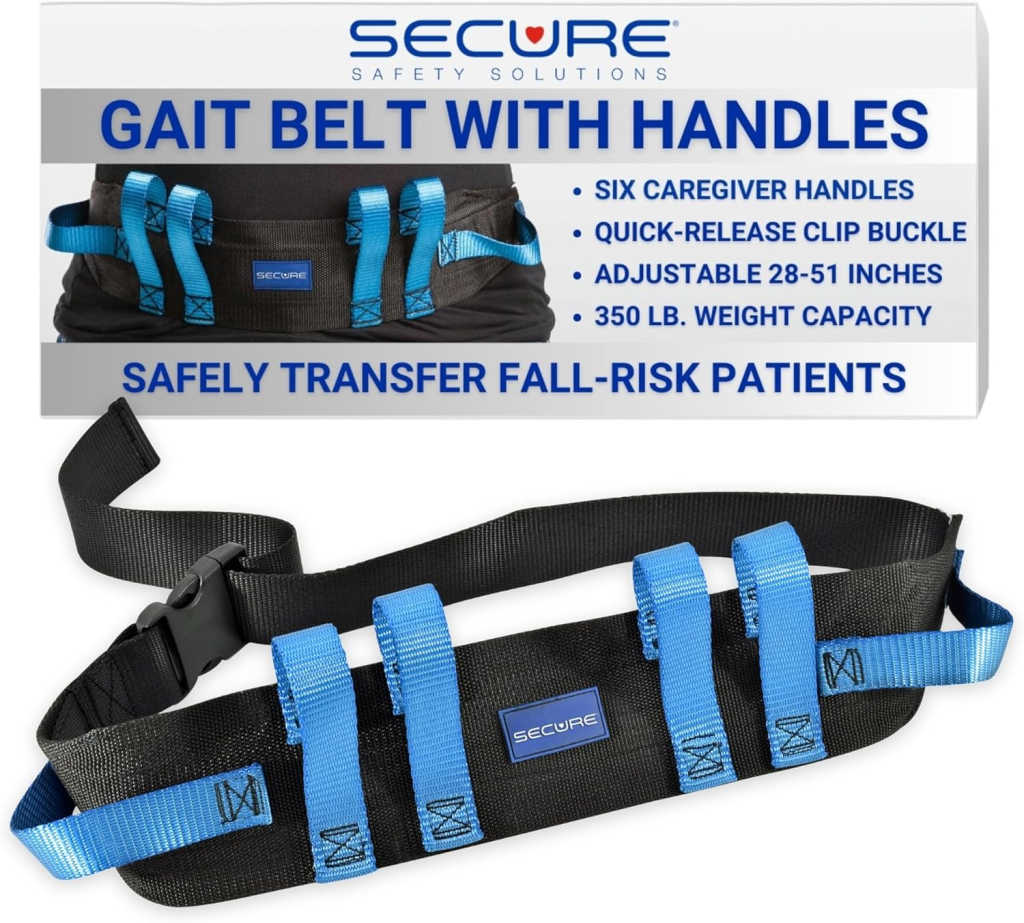
Best For: Everyday transfers, home walking assistance, and seniors recovering from surgery with mild balance problems.
Not Ideal For: Bariatric transfers or caregivers needing multiple grab handles for complex lifting positions.
Price: Around $20–30 USD
Product Overview
If someone asked me to recommend just one gait belt for most families, this would be it. The Secure STWB-52 has been used in hospitals, rehabilitation centres, and home care settings for years. Instead of adding extra features that many caregivers never use, it focuses on getting the basics exactly right: strong webbing, a dependable buckle, and a comfortable fit.
Key Features & Ease of Use
- Hospital-quality heavy-duty webbing construction (2″ width x 52″ length)
- Smooth EZ-release plastic buckle for quick and secure fastening
- Lightweight, durable, and easy to wipe clean
- Simple, non-bulky design suitable for repeated daily use
- Ease of Use: Excellent. The simple design makes it very intuitive for first-time caregivers to learn and operate quickly.
Things We Loved
- Extremely durable and trusted medical brand
- EZ-release buckle feels very secure yet operates easily
- Lightweight enough for walking assistance without feeling bulky
- Exceptional overall value for everyday caregiving
Things to Know Before Buying
- No dedicated grab handles included on the belt
- Less ideal for complex or heavy wheelchair and bed transfers
2. Supregear Anti-Slip Gait Belt with 7 Handles
Best for Bariatric Care & Difficult Transfers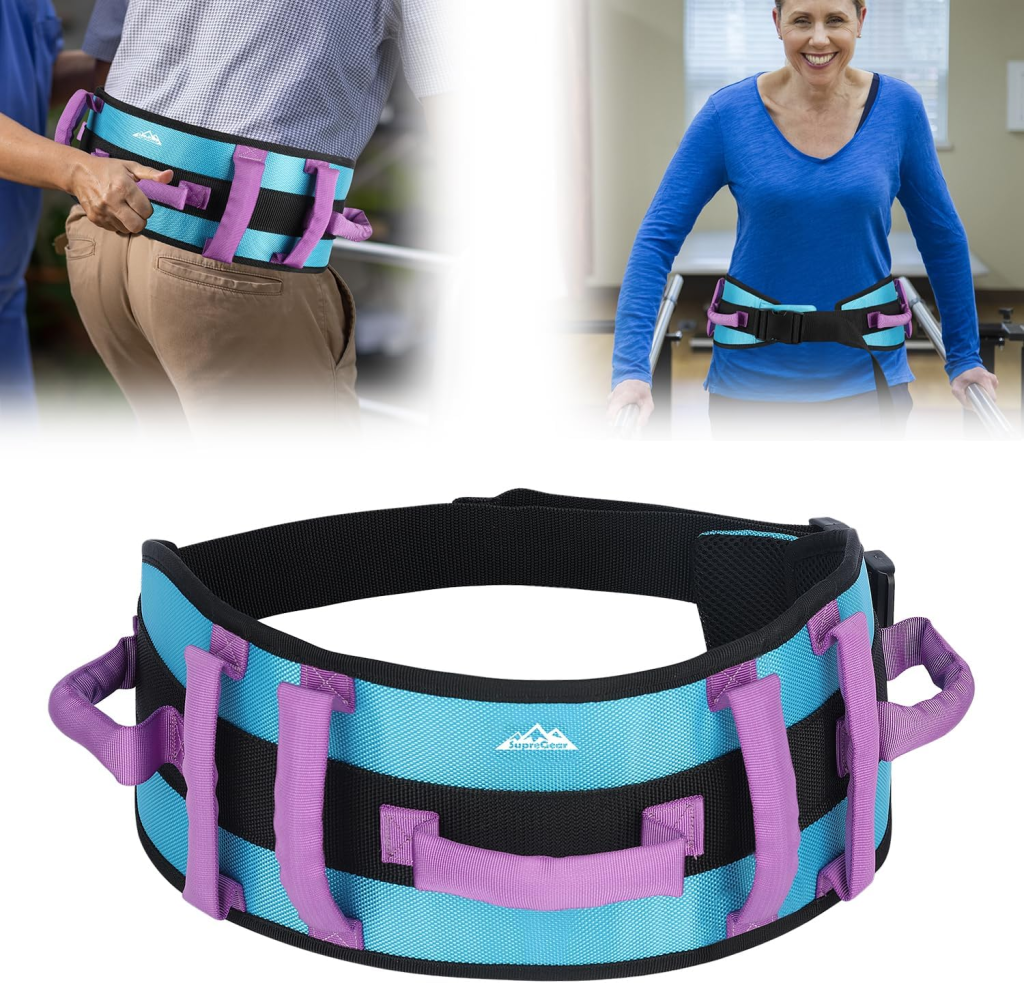
Best For: Bariatric users, wheelchair and bed transfers, and caregivers needing maximum control during difficult movements.
Not Ideal For: Seniors needing simple walking assistance or caregivers wanting the lightest possible belt.
Price: Around $25–35 USD
Product Overview
Some transfers are simply more challenging than others. If your loved one needs considerable physical assistance—or if you’re often helping them move between a wheelchair, bed, recliner, or toilet—the Supregear’s seven-handle design gives you much more flexibility. Instead of grabbing wherever you can, you always have a secure handle within reach.
Key Features & Ease of Use
- Seven reinforced handles for multiple grip angles
- Anti-slip inner lining prevents belt shifting during transfers
- Extra-wide support surface with strong reinforced stitching
- Quick-release buckle for easy fastening and removal
- Comfortable padded grip handles
- Ease of Use: Excellent. Multiple handles make it vastly easier to maintain proper body mechanics during physically demanding transfers.
Things We Loved
- Outstanding control during wheelchair and bed transfers
- Anti-slip lining stops the belt from sliding up or twisting
- Comfortable handles reduce hand and wrist strain for caregivers
- Great stability for heavier individuals
Things to Know Before Buying
- Bulkier than standard single-strap gait belts
- May be unnecessary for seniors who only need light balance support
3. Jacobable Gait Belt with 7 Padded Nylon Handles
Best Value for Money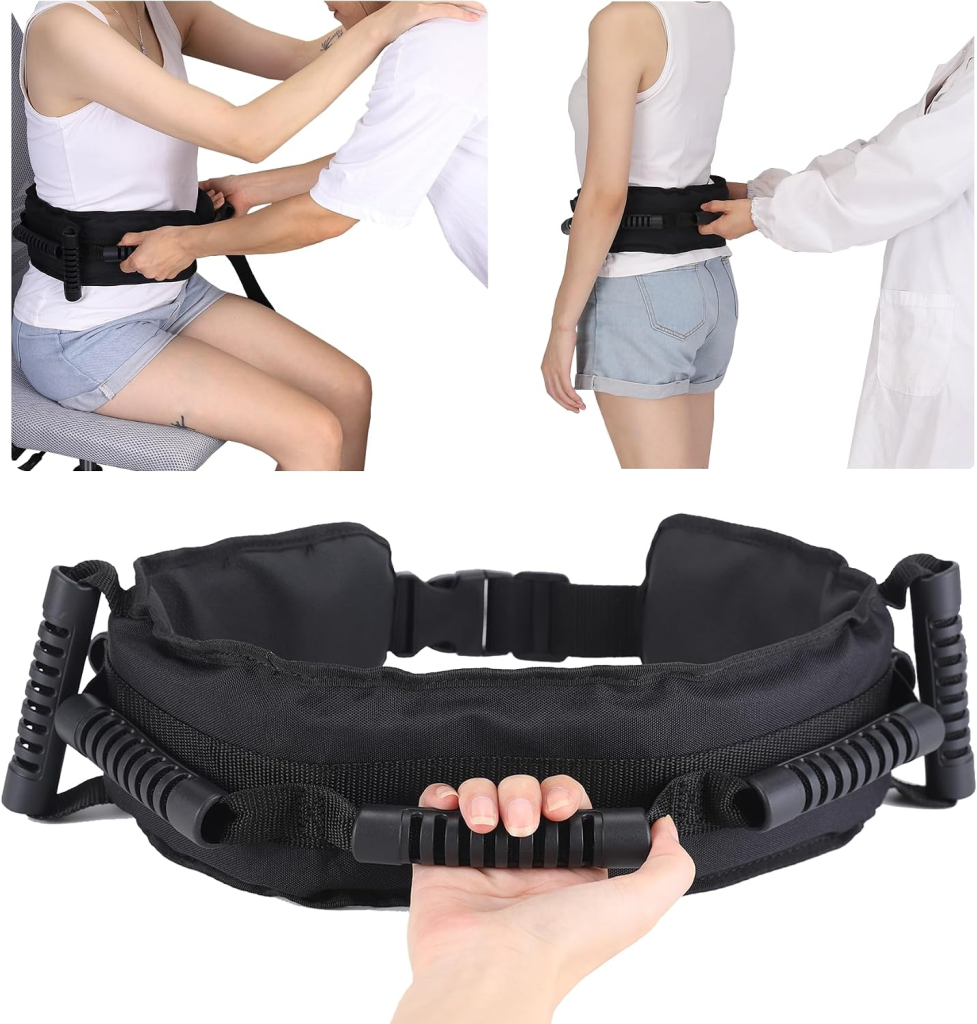
Best For: Everyday home caregiving, families seeking a multi-handle belt without spending a lot, and versatile transfer assistance.
Not Ideal For: Seniors who only need basic walking support without extra grab handles.
Price: Around $20–30 USD
Product Overview
The Jacobable gait belt offers many of the same features found on more expensive transfer belts but at a price that’s easier on most family caregivers. Its seven padded handles are positioned well around the belt, making it easier to assist from the side, back, or front without constantly adjusting your grip. The padding also makes a noticeable difference during longer transfer sessions, reducing pressure on both the caregiver’s hands and the senior’s waist.
Key Features & Ease of Use
- Seven padded nylon grab handles strategically positioned for easy gripping
- Comfortable waist padding (~4-inch width) to reduce pressure
- Durable, reinforced nylon construction for daily reliability
- Quick-release buckle for effortless securing and removal
- Fully adjustable length to fit a variety of waist sizes
- Ease of Use: Excellent. Multiple padded handles offer great versatility and comfort for caregivers assisting from different angles.
Things We Loved
- Outstanding value for a multi-handle padded transfer belt
- Padded handles protect caregiver hands from strain
- Wide design distributes leverage safely across the waist
- Versatile grip angles make daily transfers much easier
Things to Know Before Buying
- Bulkier than a simple standard single-strap belt
- Takes slightly more time to adjust on smaller frames
4. N1NZDYY Gait Belt for Seniors with Padded Handle
Best for Comfortable Everyday Use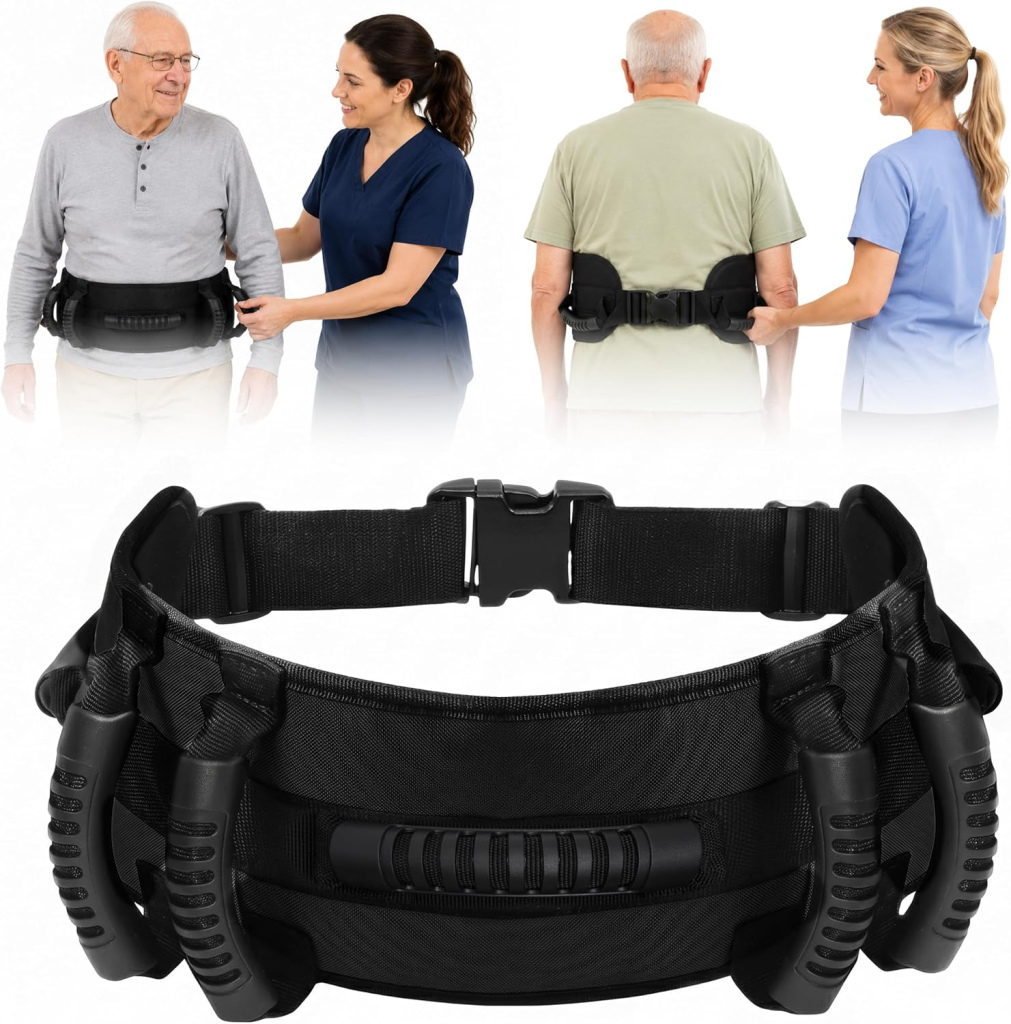
Best For: Daily home caregiving, seniors with sensitive skin or thin clothing, and comfortable walking assistance.
Not Ideal For: Heavy bariatric transfers requiring extreme weight capacity.
Price: Around $20–30 USD
Product Overview
The N1NZDYY gait belt is designed specifically with daily comfort in mind. Featuring soft padding along the waist area and ergonomically placed padded handles, it minimizes friction and digging during transfers. It is an ideal option for family caregivers helping loved ones stand, sit, or walk routinely throughout the day without sacrificing support or safety.
Key Features & Ease of Use
- Ergonomic padded handles for enhanced caregiver grip and wrist comfort
- Soft waist padding to prevent skin irritation and pressure marks
- Secure quick-release buckle for easy application and removal
- Durable, heavy-duty webbing for reliable daily support
- Ease of Use: Excellent. Straightforward design that offers enhanced comfort for both caregiver and senior during routine assistance.
Things We Loved
- Padded construction protects delicate skin
- Comfortable handles make guiding movement much easier on hands
- Quick-release buckle operates smoothly and securely
- Great balance of softness and stability
Things to Know Before Buying
- Padding adds a bit of bulk compared to plain nylon belts
- Fewer grip angles than specialized 7-handle bariatric belts
5. Silimore Gait Belt for Seniors with 7 Handles
Best for Physical Therapy & Walking Assistance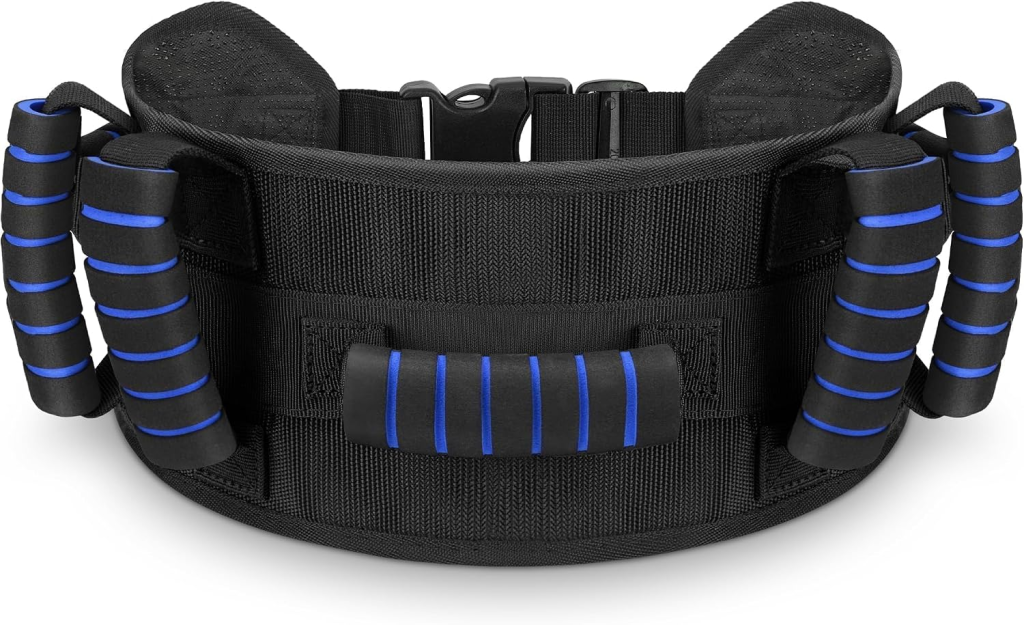
Best For: Physical therapy sessions, post-surgery rehab, and seniors needing active, guided walking support.
Not Ideal For: Individuals needing a basic minimalist belt without extra handles.
Price: Around $20–30 USD
Product Overview
Designed with rehab and gait training in mind, the Silimore Gait Belt provides exceptional stability for seniors working on regaining their mobility. With seven strategically placed handles, caregivers and physical therapists can comfortably support walking exercises, stair navigation, and balance correction from any position.
Key Features & Ease of Use
- 7 multi-directional handles for flexible support during walking and transfers
- Durable, heavy-duty nylon construction built for active therapy use
- Secure quick-release buckle for rapid, hassle-free fastening
- Wide waist band design to distribute leverage and protect skin
- Ease of Use: Excellent. Multi-grip handles allow quick adjustments in hand placement as the senior moves or shifts weight.
Things We Loved
- Ideal for physical therapy exercises and ambulation training
- Multiple handles give exceptional control from side, back, or front
- Durable materials stand up well to repeated daily practice
- Strong buckle ensures safe, worry-free support
Things to Know Before Buying
- Has more handles than necessary if you only need occasional standing help
- Requires proper size adjustment to ensure handles stay properly aligned
Essential Gait Belt Safety Tips for Caregivers
Caregiver Pro Tip: Always fasten the belt snugly over your parent’s clothing—never against bare skin.
This prevents painful pinching and keeps the belt from sliding against clothing layers.
Check the Fit: You should be able to comfortably slip flat fingers (about two fingers’ width) between the
belt and your parent’s clothing. If it is too loose, it will ride up; if too tight, it will restrict breathing.
Inspect Before Every Use: Check the nylon webbing for fraying and ensure the plastic buckle clicks
securely into place without slipping.
Position Correctly: Place the belt around your parent’s waist or hips, aligning it over their center of gravity
—never around their chest or ribcage.
Stand Close: Keep your body close to your parent during transfers, bending at your knees and keeping
your back straight.
Communicate Clearly: Count out loud (“One, two, three, stand”) so both you and your parent move in
synchronized harmony.
Final Thoughts
Caregiving is an act of profound love, but it is also physically demanding work that requires the right tools to
protect both you and your aging parent.
Introducing a reliable gait belt into your daily routine transforms stressful, nerve-wracking transitions into secure, calm movements that preserve your parent’s dignity and safeguard your lower back.
Take your time selecting a model with comfortable handles and a secure buckle that fits your family’s needs, and remember that asking for help—and using assistive equipment—is a sign of smart, compassionate care.
Frequently Asked Questions
Can you leave a gait belt on all day?
No. A gait belt is designed to be worn only during transfers or walking assistance. Leaving it on all day may become uncomfortable, create pressure points, and increase the risk of skin irritation, especially for seniors with delicate skin. Remove the belt once the transfer is complete.
Can someone sit while wearing a gait belt?
Yes. Someone can briefly sit while wearing a gait belt during a transfer, but it shouldn’t remain on for long periods. Once they’re safely seated, it’s generally best to remove the belt for comfort.
Should a gait belt go over clothing?
Yes. A gait belt should almost always be placed over clothing rather than directly against bare skin. Clothing helps reduce friction and makes the belt more comfortable while also protecting fragile skin.
Can a gait belt be used in bed?
Usually, no. Standard gait belts are intended for standing and walking assistance—not repositioning someone in bed. If your loved one needs help moving in bed, a slide sheet or repositioning device is typically a safer choice. Ask a healthcare professional which equipment is appropriate for their situation.
How tight should a gait belt be?
The belt should fit snugly without restricting breathing or movement. A common guideline is that you should be able to slide two fingers comfortably between the belt and the person’s waist.
Can one caregiver use a gait belt alone?
Sometimes. If the person can bear some weight and follow directions, one trained caregiver may be able to use a gait belt safely. If they cannot support themselves, are unpredictable, or have a high risk of falling, additional help or specialized equipment may be needed.
How do you wash a gait belt?
Most fabric gait belts can be hand-washed or machine-washed according to the manufacturer’s instructions. Allow the belt to air dry completely before using it again, and inspect it for signs of wear after cleaning.
How long does a gait belt last?
There’s no fixed lifespan. Replace a gait belt if you notice frayed stitching, torn fabric, damaged handles, or a buckle that no longer locks securely. A belt in good condition can last for years with proper care, but regular inspection is essential.
Is a transfer belt the same as a gait belt?
In many cases, yes. The terms are often used interchangeably because both are designed to help caregivers safely assist someone during transfers and walking. Some transfer belts include extra handles or padding for added support, while basic gait belts have a simpler design.
Do physical therapists recommend gait belts?
Yes, many physical therapists use gait belts when appropriate because they provide a safer way to assist with standing, walking, and balance training. However, they are not suitable for everyone. If your loved one has had recent abdominal surgery, certain spinal injuries, or cannot bear weight, ask a healthcare professional whether another transfer aid would be safer.