
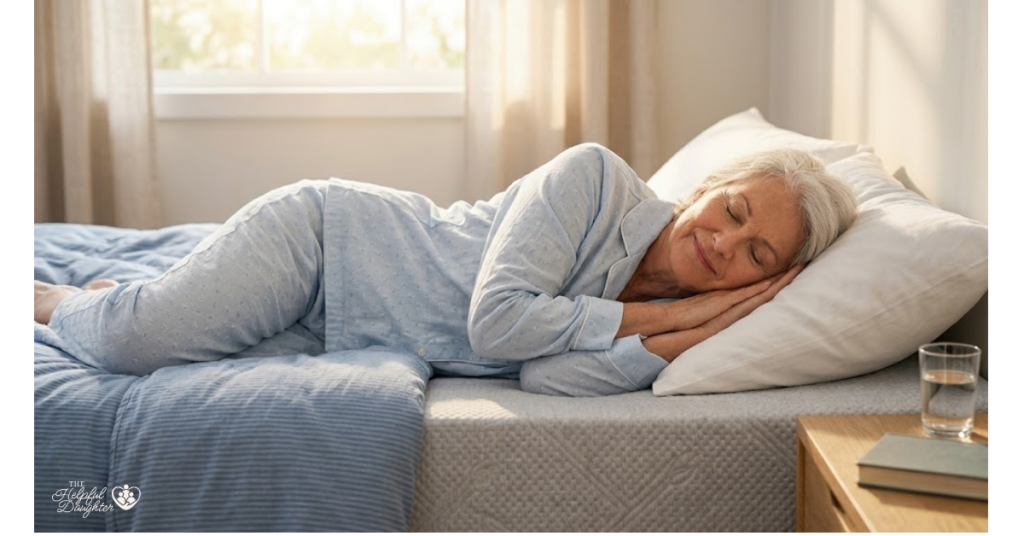
I remember the morning my mother, who has both severe osteoarthritis in her hips and diagnosed osteoporosis, simply couldn’t get out of bed. It wasn’t that she didn’t want to; her joints were so stiff and painful after lying all night on her sagging, too-firm mattress that movement was agonizing. Seeing her trapped in pain, feeling helpless in her own home, is a memory that drives my work today.
That experience taught me a hard truth: for seniors managing chronic conditions like arthritis and osteoporosis, a mattress isn’t just a piece of furniture. It is a critical tool for managing daily pain, maintaining mobility, and protecting fragile bones.
If you are caring for an aging parent, you know that mornings are often the litmus test for how the previous night went. Are they waking up refreshed, or are they stiffer and in more pain than when they went to sleep? If it’s the latter, it is time to evaluate their sleep surface.
This guide is written from my years of experience researching products, speaking with geriatric specialists, and, most importantly, navigating the practical challenges of caregiving. I understand you aren’t looking for technical jargon; you need practical, trustworthy advice to help your loved one sleep better and live more safely and independently. We will explore the best mattress for arthritis and osteoporosis, what features truly matter, which options to avoid, and how to make the right choice together.
Quick Overview – Best Mattress For Arthritis and Osteoporosis
If your short on time, here is a quick overview of our top mattresses on the market:
Why Mattresses Matter for Seniors with Arthritis and Osteoporosis

When we think about arthritis, we immediately consider joint pain—the stiffness, aching, and inflammation that comes with osteoarthritis (wear-and-tear) or rheumatoid arthritis (autoimmune). A poor mattress exacerbates this by creating pressure points. Imagine having a deeply inflamed hip joint and resting it on an unyielding surface for eight hours. The result is predictable: increased pain and inflammation.
Osteoporosis adds a layer of complexity and danger. With this condition, bones become brittle and fragile. A fall can be catastrophic. For seniors, getting in and out of bed is a high-risk activity. A mattress that is too soft, lacks edge support, or makes moving difficult increases the risk of a fall before their day even begins.
Furthermore, chronic pain significantly impacts sleep quality. Poor sleep affects mood, cognitive function, and the body’s ability to heal. It becomes a vicious cycle: pain causes poor sleep, which makes the body less able to cope with pain.
The best mattress for arthritis and osteoporosis must achieve a difficult balance:
- Pressure Relief: It must cushion sensitive joints (hips, shoulders, knees) to reduce pain and inflammation.
- Support: It must keep the spine properly aligned, preventing aches caused by sagging.
- Ease of Movement: It must allow the senior to change positions and get in/out of bed without feeling “stuck” or unstable.
Key Features to Look for When Shopping for Your Loved One
Navigating the mattress market can feel overwhelming. There are endless choices and marketing terms. When shopping for a senior with these specific conditions, you can ignore most of the noise and focus on these five essential features.
1. Pressure Relief (The #1 Priority for Arthritis)
This is non-negotiable. The mattress must conform slightly to the body to cradle sore joints. If the surface is too hard, it will push back against inflamed joints (like hips and shoulders), causing sharp pain and forcing the senior to constantly shift positions, interrupting sleep.
Look for materials known for excellent contouring, such as memory foam, high-quality polyfoam, or a plush pillow-top layer.
2. Support and Spinal Alignment
While the mattress needs to be soft on top, it must provide deep support underneath. If the mattress sags in the middle, the spine falls out of alignment, leading to lower back pain that compounds existing joint issues. Support ensures the hips and shoulders are properly aligned with the rest of the body, regardless of sleeping position.
3. Ease of Movement and Responsiveness
This is crucial for seniors with mobility issues or osteoporosis. Many traditional memory foam mattresses are slow to respond; when you move, the indentation remains for a few seconds. This makes changing positions feel like climbing out of a hole.
For someone with arthritis, this added effort is painful. For someone with osteoporosis, it increases the risk of losing balance and falling off the bed. We want a mattress that is “responsive,” meaning it springs back quickly when weight is shifted, making movement effortless. Latex, hybrid (coils + foam), and newer, advanced memory foams are generally good choices here.
4. Strong Edge Support (Safety First)
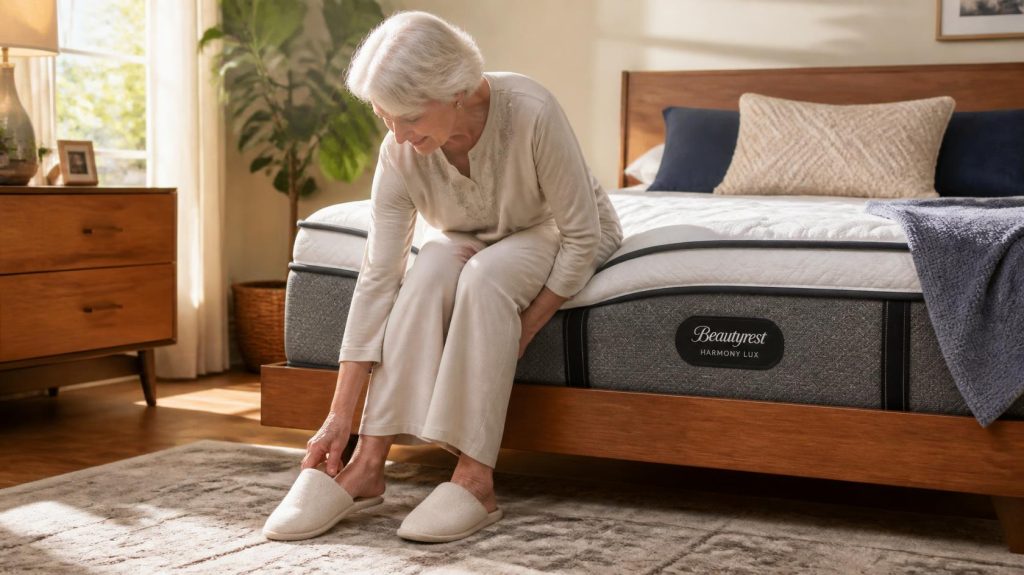
Edge support is often overlooked, but it is critical for seniors who sit on the edge of the bed to put on socks, use the restroom, or stand up. A mattress with weak edges will compress significantly when weight is applied, creating a slope that increases the risk of sliding off or losing balance upon standing.
A reinforced perimeter provides a stable surface, allowing the senior to sit safely and use the full width of the bed.
5. Firmness Level: The “Medium-Firm” Sweet Spot
While personal preference always plays a role, geriatric specialists and mattress experts generally agree that a Medium to Medium-Firm feel is the best starting point for seniors with arthritis and osteoporosis.
- Too Soft: Leads to poor spinal alignment (hammocking) and makes moving difficult.
- Too Firm: Creates painful pressure points on joints and does not cushion fragile bodies.
A Medium-Firm mattress (often around a 6-6.5 on a 1-10 firmness scale) offers the ideal compromise: enough “give” to cushion hips and shoulders (arthritis relief) with enough foundational support to keep the spine straight and facilitate movement (osteoporosis safety).
My Top Picks for Seniors (Caregiver Tested & Researched)
I have analyzed dozens of brands based on strict criteria: pressure relief, ease of movement, durability, edge support, and suitability for chronic pain. These models consistently rise to the top for seniors with arthritis and osteoporosis.
(Note: Prices are approximate for a Queen size and subject to change.)
1. Sleepmax Extra Firm Queen Mattress 12 Inch
Best Extra Firm Support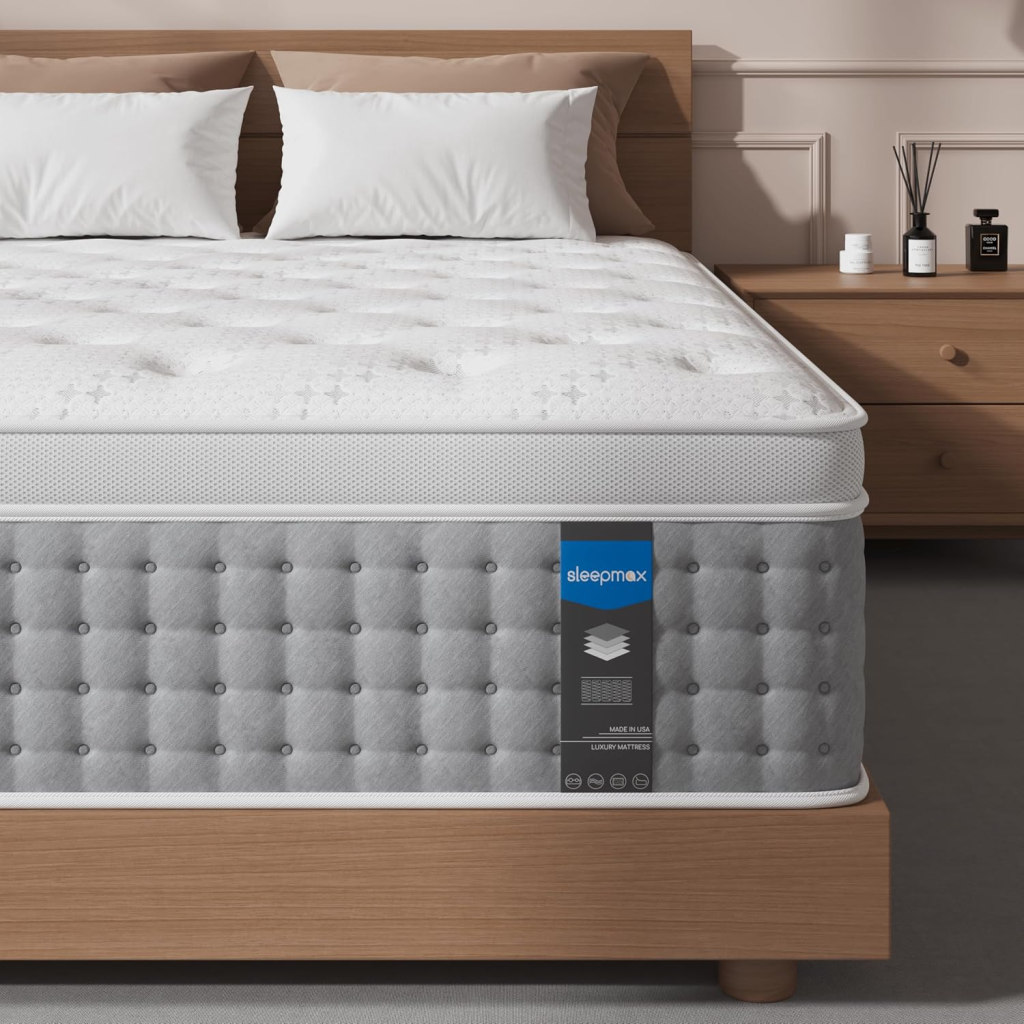
Best For: Seniors with severe osteoporosis or lower back conditions needing extra lumbar support and maximum stability.
Not Ideal For: Lightweight side sleepers who need deep cushioning for shoulder pressure points.
Type / Firmness: Hybrid / Extra Firm (8–9 / 10)
Product Overview
An ideal option if severe lower back issues or bone density loss require maximum flat surface support and high responsiveness. The targeted lumbar and hip support keeps the spine completely level, preventing lower back strain and sagging, while the extra firm hybrid design makes changing positions easier while delivering deep stability.
Key Features & Ease of Movement
- Targeted lumbar & hip support zones for proper spinal alignment
- Hotel-collection pillow-top design with fiberglass-free construction
- Cooling gel memory foam layer for temperature regulation
- 365-Night Risk-Free Trial & Forever (Lifetime) Warranty
- Ease of Movement: High. The responsive pocket coil core allows seniors to change positions and sit up without feeling “stuck.”
Things We Loved
- Exceptional spinal alignment for back sleepers
- Solid edge support makes getting in and out of bed safer
- Generous 365-night trial and lifetime warranty protection
Things to Know Before Buying
- May be too rigid for lightweight side sleepers
2. Nectar 12″ Memory Foam Mattress
Best for Arthritis & Joint Pain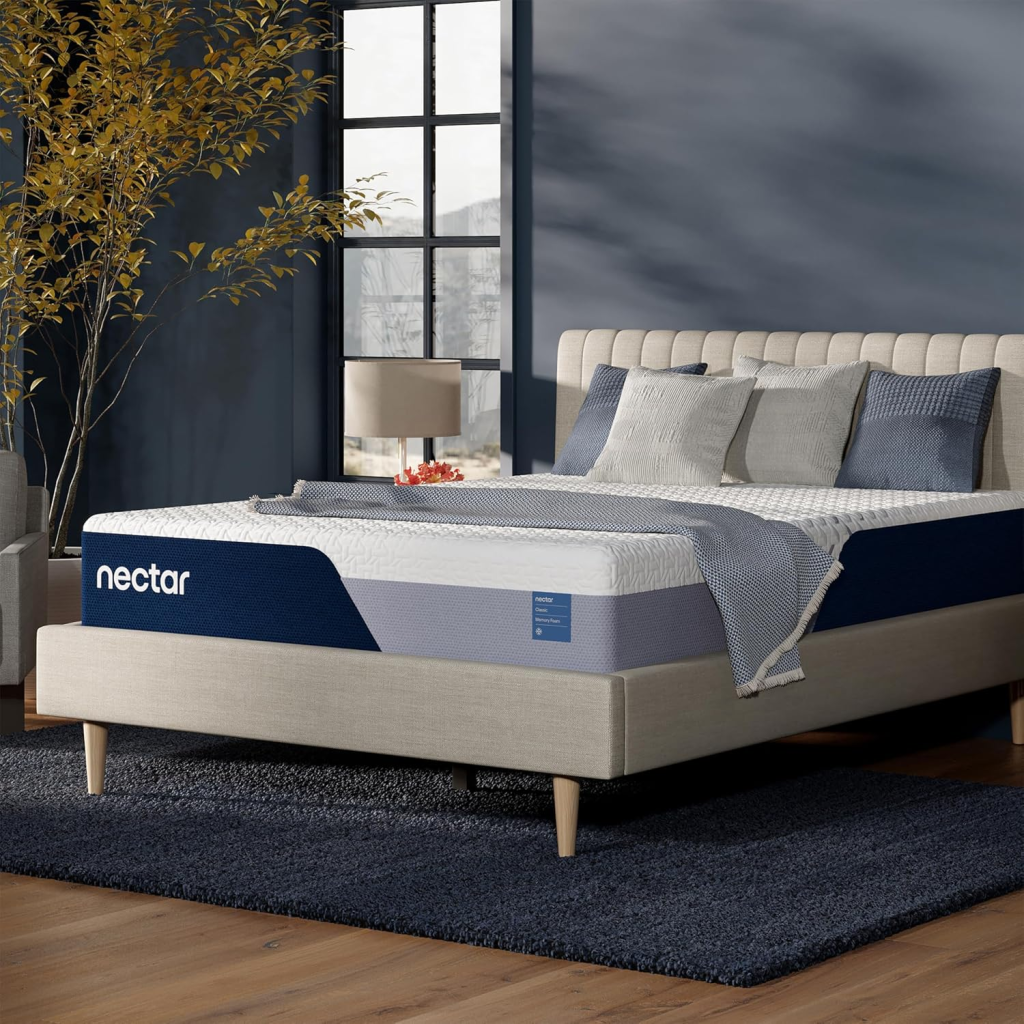
Best For: Seniors suffering from severe rheumatoid arthritis or osteoarthritis who prioritize maximum pressure relief and motion isolation.
Not Ideal For: Seniors who need reinforced edge support or struggle significantly with rolling over in all-foam beds.
Type / Firmness: All-Foam (Memory Foam) / Medium-Firm (6.5 / 10)
Product Overview
The benchmark for joint relief—it cradles tender hips and shoulders to help relieve morning stiffness. The adaptive gel-infused memory foam contours deeply to sensitive joints, drastically reducing pressure build-up so your loved one can sleep comfortably throughout the night without jarring joint pain.
Key Features & Ease of Movement
- Adaptive gel-infused memory foam with breathable cooling cover
- Pressure-relieving transitional foam layers for optimal support
- Industry-leading motion isolation to prevent sleep disruptions
- 365-Night Sleep Trial & Forever (Lifetime) Warranty
- Ease of Movement: Moderate. Offers deep body hugging; requires a bit more effort to roll over than hybrid models.
Things We Loved
- Outstanding pressure relief for sore hips, shoulders, and back joints
- Industry-leading motion isolation keeps sleep undisturbed
- Generous full-year risk-free trial and lifetime warranty
Things to Know Before Buying
- All-foam edges compress more under weight when sitting on the edge of the bed
3. MCIHPY Queen Mattress (12 Inch)
Best Balanced Hybrid Support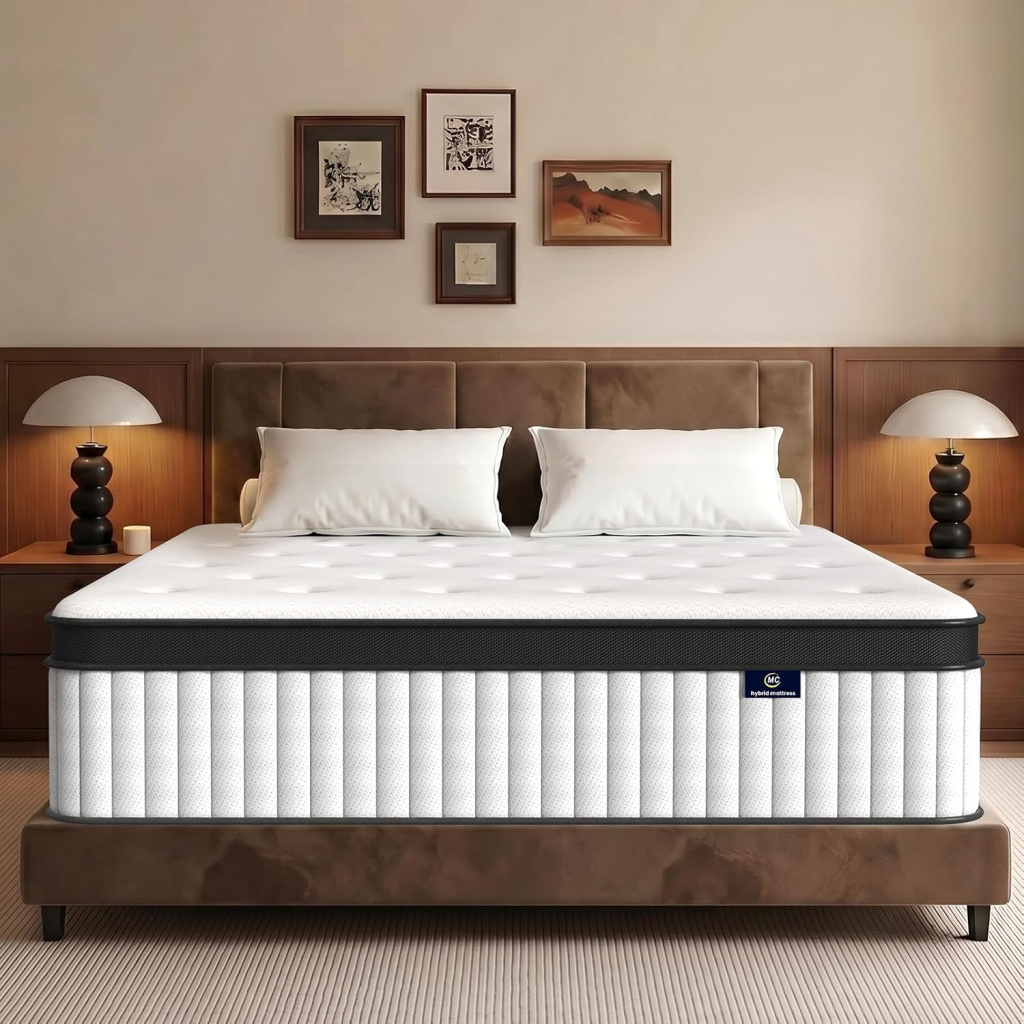
Best For: Seniors looking for a balanced combination of joint contouring and ease of movement when getting in and out of bed.
Not Ideal For: Caregivers seeking direct-to-consumer extended 365-night trial periods without third-party guarantees.
Type / Firmness: Hybrid (Gel Memory Foam & Pocket Springs) / Medium-Firm (6.5–7 / 10)
Product Overview
A well-rounded choice that gives caregivers the pressure-relieving benefits of gel foam along with spring-loaded mobility. It provides an excellent balance of surface softness and underlying core support while actively keeping the body cool throughout the night.
Key Features & Ease of Movement
- Fiberglass-free construction with CertiPUR-US certified foam
- Cooling gel memory foam layer for temperature regulation
- Independent motion isolation pocket spring coil core
- Standard 30-Day Return Window & Manufacturer Warranty
- Ease of Movement: High. Individually wrapped pocket coils provide active push-back for effortless turning.
Things We Loved
- Excellent balance of surface softness and underlying core support
- Keeps the body cool throughout the night
- Responsive pocket coils make changing positions easier
Things to Know Before Buying
- Shorter trial period than direct-to-consumer mattress brands
4. Quabefy Queen Mattress (10 Inch)
Best Budget Low-Profile Hybrid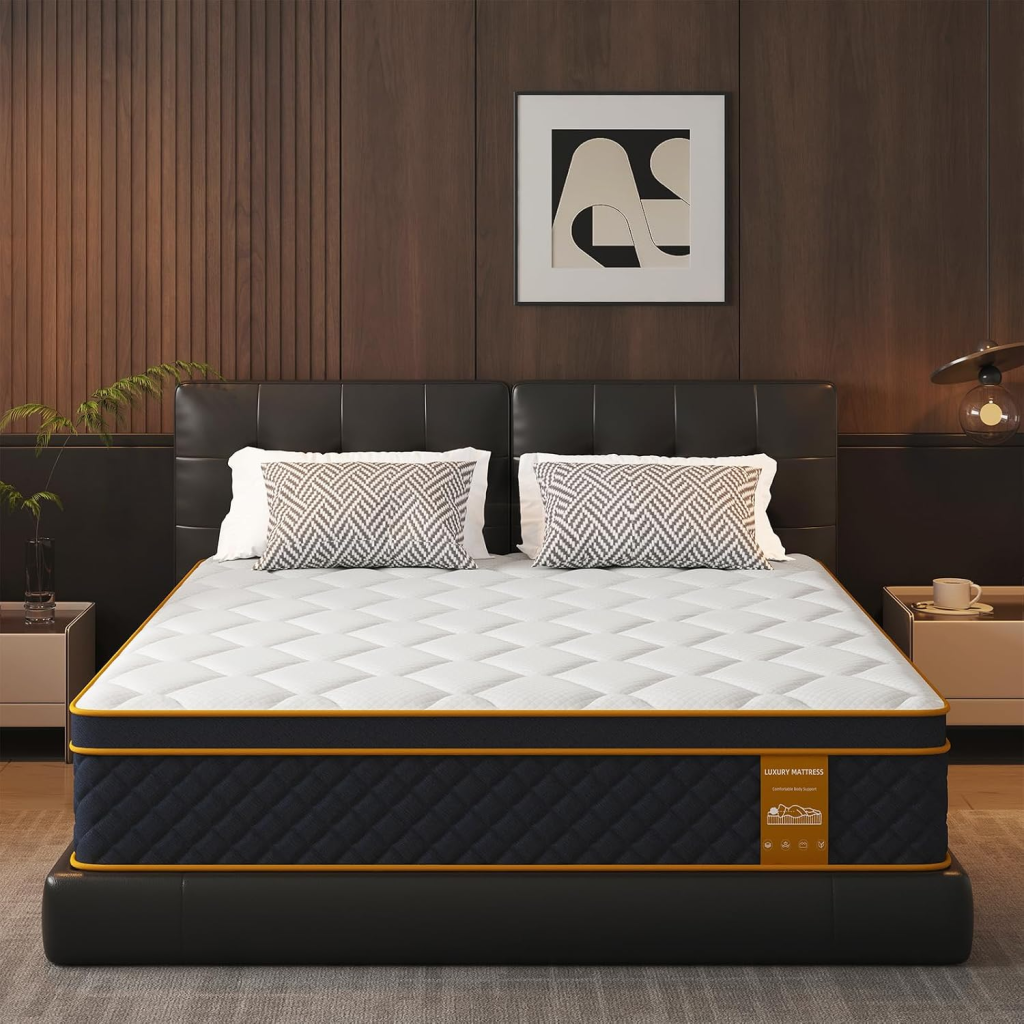
Best For: Budget-conscious caregivers seeking a reliable medium-firm hybrid mattress with a manageable bed height for fall prevention.
Not Ideal For: Heavy sleepers who need thick comfort layers to avoid pressing through to the support coils.
Type / Firmness: Hybrid (Gel Memory Foam & Pocket Springs) / Medium-Firm (6 / 10)
Product Overview
Great entry-level hybrid option—the 10-inch height helps lower bed profile risks for fall prevention. It offers solid pocket spring mobility and gel foam cooling at an affordable price point, making it easier for shorter seniors to comfortably touch the floor when sitting on the edge.
Key Features & Ease of Movement
- 10-inch low profile height ideal for shorter bed frames and fall prevention
- CertiPUR-US certified materials with pressure-relieving gel memory foam
- Independent pocket spring coil system for targeted body support
- 100-Night Sleep Trial & 10-Year Limited Warranty
- Ease of Movement: Moderate-to-High. Pocket spring base prevents sinkage while maintaining a low-profile build.
Things We Loved
- Highly affordable price point for budget-conscious families
- Lower profile height makes it easier for shorter seniors to reach the floor
- Independent pocket coils provide steady movement support
Things to Know Before Buying
- Thinner comfort padding compared to thicker 12-inch models
5. Layla Memory Foam Mattress
Best Flippable Dual-Firmness
Best For: Seniors unsure of their exact firmness preference or whose joint and back pain symptoms fluctuate over time.
Not Ideal For: Solo caregivers or seniors living alone who cannot easily flip a mattress without assistance.
Type / Firmness: Flippable Foam / Soft (4 / 10) & Firm (7 / 10)
Product Overview
Ideal for changing pain levels—you can switch sides depending on whether your loved one needs deeper cushioning or extra firmness. The copper-gel infused memory foam provides exceptional pressure relief while actively dissipating body heat throughout the night.
Key Features & Ease of Movement
- Dual-firmness flippable design offering two feel options in one mattress
- Copper-gel infused memory foam for cooling and antimicrobial benefits
- Targeted pressure relief zone technology for hip and shoulder cushioning
- 120-Night Sleep Trial & Forever (Lifetime) Warranty
- Ease of Movement: Moderate (Firm Side) to Low-Moderate (Soft Side). Soft side offers deep contouring; firm side provides quicker rebound.
Things We Loved
- Eliminates the risk of choosing the wrong firmness level
- Copper infusion helps dissipate trapped body heat effectively
- Great pressure relief for sensitive joints on soft side
Things to Know Before Buying
- Flipping a mattress requires assistance for older adults or solo caregivers
Special Considerations for Seniors
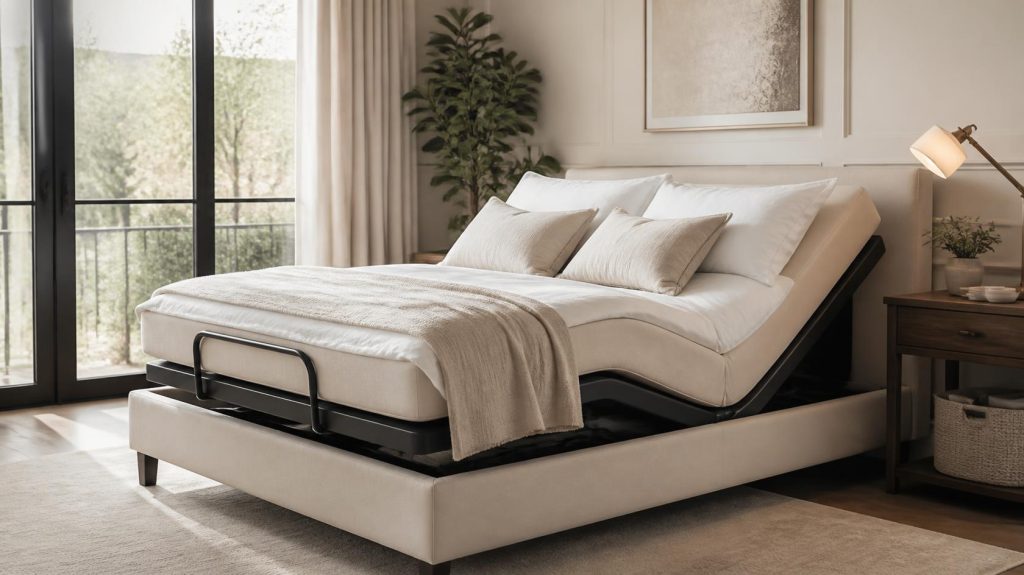
The Case for Adjustable Beds
For seniors with severe arthritis, an adjustable bed base can be more transformative than the mattress itself. Being able to elevate the head and feet allows your loved one to find a “zero-gravity” position, which evenly distributes body weight and takes pressure off the spine and hips.
Raising the head can also help with breathing issues (common with conditions like COPD) and acid reflux (common with certain medications). Raising the feet can reduce swelling in the legs and improve circulation.
If a full adjustable base is outside the budget, a simple foam bed wedge pillow can provide significant relief for the upper body.
Don’t Forget the Foundation

A new mattress requires a proper foundation to perform correctly and maintain its warranty. Placing a new mattress on a sagging box spring or a slatted frame with wide gaps will ruin the mattress and compromise support. Always check the manufacturer’s requirements. A solid platform bed or a box spring with close-set slats is generally required for foam and hybrid mattresses.
Practical Caregiver Steps: How to Make the Change

Replacing a mattress is a significant project. Here is a step-by-step guide to doing it smoothly.
Step 1: Evaluate the Current Situation
Observe your loved one. Do they mention hip or shoulder pain upon waking? Do they seem stiff and struggle to get out of a chair? Ask them directly if they feel comfortable in bed. Sometimes seniors are reluctant to complain, viewing the pain as an unavoidable consequence of aging.
Step 2: Research and Select (Together)
Use the criteria above to narrow down choices. Involve your parent as much as possible in the selection process. If possible, visit a showroom to test different materials (foam vs. hybrid vs. latex). If online ordering is necessary (often the best value), leverage the generous in-home sleep trials. A few minutes in a showroom is not enough time; you need 30-60 nights to truly know if a mattress helps chronic conditions.
Step 3: Plan the Logistics
This is where caregivers earn their stripes.
- Delivery: Opt for “White Glove Delivery.” The few extra dollars are worth every penny to avoid heavy lifting and assembly.
- Old Mattress Removal: This is essential. You cannot leave an old, heavy mattress for your loved one to deal with. White Glove Delivery services typically include removal. If not, check with 1-800-GOT-JUNK or your local municipality for bulk pickup options.
- Setup: Ensure the frame or foundation is ready before the new mattress arrives.
Step 4: The Adjustment Period
Be patient. Breaking in a new mattress—and letting the body adjust to it—can take 3 to 4 weeks. Reassure your loved one that this is normal. If, after 60 nights, they are still in pain, utilize the sleep trial and exchange the mattress for a different firmness or model.
Frequently Asked Questions
These are the questions I am most frequently asked by fellow caregivers regarding sleep and bone/joint health.
Should a senior with osteoporosis choose a very firm mattress?
No. While firm support is vital for spinal alignment, a mattress that is too firm creates painful pressure points on fragile bones and joints. For someone with osteoporosis, a very firm surface will not offer the necessary “give” to cushion their body, increasing pain and potentially the risk of injury. A Medium-Firm mattress is the safest and most comfortable choice, balancing support with essential cushioning.
Are memory foam mattresses safe for seniors with mobility issues?
Standard, slow-responding memory foam can be dangerous because it creates an indentation that is difficult to climb out of, increasing the risk of falling. However, many modern memory foam mattresses incorporate faster-responding foams or latex/coil layers (hybrids) that solve this issue. When shopping for memory foam, specifically look for models described as “responsive” or choose a hybrid to ensure ease of movement.
How do I know when it’s time to replace my parent’s mattress?
The lifespan of a mattress depends on its quality, but a good rule of thumb is 7-10 years. However, you should look for these signs regardless of age: visible sagging in the middle or body impressions that don’t bounce back; the senior complaining of waking up with new or increased pain; or the senior sleeping better in other beds (like at a hotel).
Is a pillow-top mattress good for arthritis?
Yes, a pillow-top layer adds crucial softness and cushioning right where it’s needed most: on top of the support system. This layer directly addresses arthritis pain by relieving pressure on joints. However, ensure the mattress under the pillow-top is firm and supportive enough to keep the spine aligned; otherwise, the senior will sink into the mattress, making movement difficult.
Do seniors need special pillows?
Absolutely. The mattress supports the body, but the pillow supports the neck and aligns the spine. A poor pillow will undo the benefits of a good mattress. Seniors with neck arthritis (cervical spondylosis) often benefit from contoured memory foam pillows that maintain the neck’s natural curve. Side sleepers need a thicker pillow to fill the gap between the ear and the shoulder, while back sleepers need a thinner pillow to prevent the head from being pushed too far forward.
Will insurance cover a new mattress?
In rare cases, if a doctor prescribes a specific type of mattress (like a specialized hospital bed or pressure-redistribution mattress for someone with severe bedsores) and deems it medically necessary, a portion might be covered. However, a standard mattress purchase for comfort and chronic pain management is almost never covered by Medicare or private insurance. It is considered an out-of-pocket expense.
What is the best sleeping position for seniors with arthritis and osteoporosis?
Generally, back sleeping is considered the best position for spinal alignment and weight distribution, which helps both conditions. However, it can be difficult for breathing. Side sleeping is more common but requires a mattress with excellent pressure relief for the hips and shoulders. If your loved one sleeps on their side, ensure they have a supportive pillow that keeps their neck aligned with their spine. Stomach sleeping should generally be avoided as it strains the neck and lower back.
How can I protect a new mattress from accidents?
For any senior, but especially those managing chronic conditions, a high-quality, waterproof mattress protector is essential. It protects the warranty from stains and shields the mattress from spills, incontinence, or sweat. Look for a protector that is breathable and quiet (not crinkly) to avoid disrupting sleep.
Disclaimer: I am a senior lifestyle writer, not a medical professional. If you experience chronic, worsening joint or bone pain, always consult your physician or physical therapist for personalized medical advice.