

Finding a stack of unopened bills, noticing a fresh bruise from an unreported fall, or watching untouched meals sit rotting in the back of the fridge can send a chill straight down your spine. In that exact moment, the reality crashes in: things are slipping. So you rush in with well-meaning solutions—only to hit a brick wall and a defensive, “I’m fine, leave me alone.”
If you are nodding along, take a deep breath. You aren’t alone, and you aren’t failing. When an aging parent digs their heels in, it triggers a painful storm of worry, guilt, and exhaustion. You desperately want to keep them safe, but every offer of help feels like a battlefield. Most of the time, this resistance isn’t stubbornness for the sake of being difficult. It’s a fierce, white-knuckled attempt to hold onto dignity, identity, and control. When we push harder, we usually just end up shutting doors and hurting feelings.
Let’s look at why your elderly parent refuses help and how we can change our approach to bridge the gap without losing our own peace of mind.
Why Aging Parents Resist Support
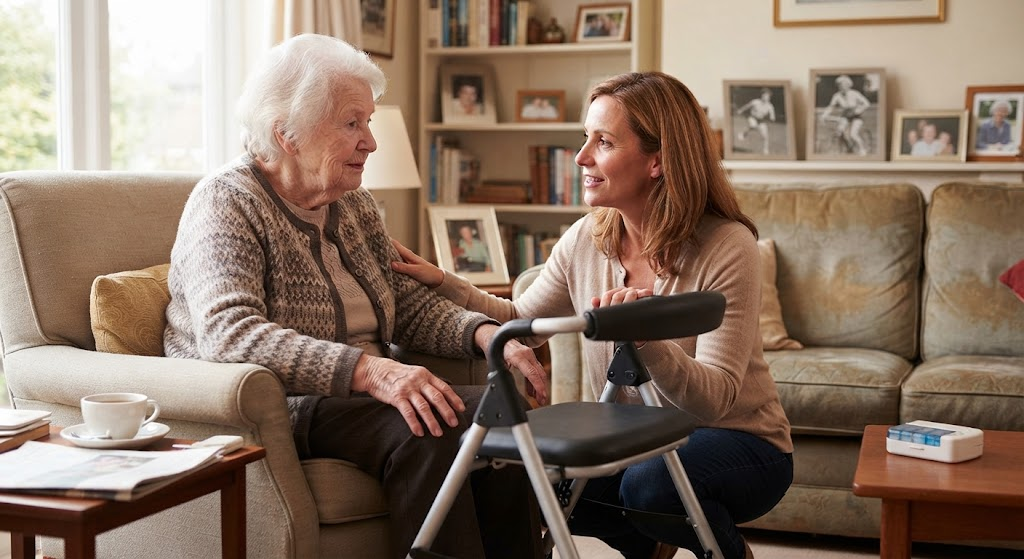
Before we can fix a standoff, we have to understand the emotional landscape behind it. When a parent says a hard “no” to a walker, a home health aide, or moving to a safer apartment, they rarely mean what the literal words are saying. Underneath that pushback, you’ll usually find three heavy fears.
1. The Terrifying Loss of Independence
Independence is tied directly to self-worth. For decades, your mom or dad managed bills, drove across town, cooked for a crowd, and took care of everyone else. Accepting help feels like admitting defeat. It signals to them that a chapter of self-reliance is slamming shut, and that grief is heavy.
2. Pride and the Pain of Role Reversal
Our parents hate the thought of being a burden. They remember changing our diapers and carrying us on their shoulders; this sudden role reversal is deeply awkward and painful. Sometimes, they refuse help simply because they are trying to protect us from stress, even if their stubborn shield ends up putting them in more danger.
3. Brain-Based Changes (When It’s Not Just Attitude)
Sometimes, resistance stems from a medical reality called anosognosia—a neurological condition where a person genuinely cannot perceive their own physical or cognitive limits. If your dad forgets he left a burner on, he isn’t lying when he says he didn’t do it; his brain is simply failing to register the event. Treating real cognitive decline like it’s just bad behavior only leads to mutual heartbreak.
Changing the Script: From Demands to Teamwork
Confrontation is a dead end when dealing with resistance. If you walk in and declare, “You can’t live like this anymore, we are getting a cleaner,” the walls go up before you even finish the sentence. We have to trade confrontation for curiosity.
Before you argue about the logistics of home care, validate the emotional weight of what they are feeling. Shift your concern away from your anxiety and anchor it entirely in their comfort.
Instead of walking in and saying, “You keep falling, you need a cane,” try sitting down beside them and saying, “I noticed you were wincing getting out of your chair yesterday. That looked painful, and I hate seeing you uncomfortable. Can we talk about ways to make moving around the house easier on your joints?”
Similarly, when people feel cornered, they push back. Give them a sense of control by offering structured, binary choices instead of demands. Instead of announcing, “The nurse is coming tomorrow at 10 AM,” ask, “Would you prefer the physical therapist to come on Tuesday morning or Thursday afternoon?”
The Golden Rule
Never frame help as a loss of control. Frame every tool, service, or safety adjustment as a way to expand their freedom and energy so they can keep doing what they love.
Sorting Out Safety Risks vs. Personal Autonomy
One of the hardest parts of caregiving is figuring out where to draw the line. Every older adult has the right to make choices you disagree with up to a point. Your job is to balance their dignity with their physical safety by sorting risks into three buckets:
Low Risk (Annoying, but safe)
- Eating expired cereal, wearing mismatched clothes, or keeping a house that isn’t quite as spotless as you’d prefer
Action: Let it go. Pick your battles.
Moderate Risk (Manageable with tweaks)
- Fading eyesight making nighttime bathroom trips tricky, or medication management getting messy.
Action: Introduce subtle upgrades like motion-activated floor lights or an automatic pill dispenser.
High Risk (Immediate danger)
- Leaving the stove on, wandering outside in freezing weather, or repeated unexplained falls.
Action: Immediate intervention involving medical professionals or a family meeting.
Practical Ways Around Everyday Resistance
Different types of help invite different pushbacks. Here is how to navigate the most common friction points:
- The “Trojan Horse” Strategy: Seniors are far more receptive to upgrades that save them time or make life luxurious rather than those labeled as “aging support.” Swap a sterile “fall prevention mat” for plush, high-traction area rugs secured with heavy-duty carpet tape. Trade a “senior shower chair” for a sleek, spa-like teak fold-down bench.
- Navigating Hygiene Battles: Smells or untidy appearances can deeply embarrass a proud adult. Instead of making it about personal care, blame an external factor: “The doctor mentioned that warm hydrotherapy is wonderful for soothing arthritis stiffness in the mornings. Let’s get a shower chair so you can enjoy that without getting tired.”
- Overcoming Mobility Resistance: If your parent refuses a walker because it makes them “look old,” pivot entirely toward energy conservation. Say, “If you use this rolling walker with the built-in seat, you can walk through the whole botanical garden with us without getting worn out halfway through.”
Bringing in Outside Voices

Parents often resist help from their children because, in their minds, you are still the kid and they are still the parent. Sometimes, breaking the deadlock just means changing the messenger.
Ask your parent’s primary care physician ahead of time to drop a casual safety recommendation into a routine checkup. Seniors will often listen instantly to a doctor when they would tune out their own adult children. Alternatively, a professional Geriatric Care Manager—a licensed social worker or nurse specializing in these exact standoffs—can step in to assess the situation objectively and present options without family emotional baggage attached.
Frequently Asked Questions
What should I do if my elderly parent refuses help and is in immediate danger?
If your parent is facing immediate danger—like wandering in freezing weather, severe self-neglect, or dangerous kitchen accidents—you have to prioritize physical safety over their immediate consent. Contact their primary care physician to report a sudden decline, or consult a local elder care social worker. In true crises, adult protective services or emergency medical evaluations may be necessary to establish a safe baseline.
How can I get my parent to accept a cleaner or home health aide?
Framing is everything. Drop words like “caregiver” or “aide,” which sound like an admission of frailty. Instead, introduce the person as a “household assistant,” “cook,” or “friend who comes by to help with heavy chores.” Letting your parent interview candidates or choose the days of the week they visit gives them back a sense of control over their own home.
Is it legal for an aging parent to refuse medical care or assistance?
In most cases, competent adults have the legal right to make their own decisions, even if those choices seem unwise or unsafe to their family. This legal autonomy only changes if a doctor or court determines that cognitive impairment renders them incapable of safe decision-making. If capacity is intact, persuasion, empathy, and creative compromise are your only tools.
How do I handle my own guilt when my parent refuses help?
Caregiver guilt is an almost universal burden. Remind yourself that you cannot force an adult to accept choices they are determined to resist. Your responsibility is to offer loving, reasonable support while making sure you don’t sacrifice your own physical and mental health. Setting realistic boundaries is an act of preservation, not abandonment.
When is it time to consider assisted living despite their objections?
Assisted living becomes a necessary consideration when home modifications and part-time help are no longer enough to prevent severe accidents, malnutrition, or major medical neglect. If safety risks outweigh the benefits of independent living and you can no longer safely manage their care at home, it is time to involve medical professionals to help orchestrate a transition.