
I remember the exact moment I started questioning if my parents were okay living by themselves. It wasn’t a sudden disaster; it was a series of small, quiet moments—a forgotten stove burner, a pile of unopened mail, and that slight hesitation in their voice when I asked how they were doing.
If you are reading this, you are likely feeling that same tug of anxiety in your chest. You want them to stay in the home they love, but you are starting to realize that their safety might be compromised. Deciding when can an elderly person no longer live alone safely is one of the hardest parts of being an adult child, but it is also one of the most important steps in ensuring their well-being.
When Does Independent Living Become Unsafe?

Independent living is wonderful as long as it remains safe. However, there is a fine line between maintaining independence and facing real danger. For most of us, “unsafe” isn’t a single event; it’s a shift in the status quo. It becomes unsafe when the effort required to manage daily life outweighs a person’s physical and cognitive abilities.
To better understand this shift, senior care professionals look at two critical categories:
- ADLs (Activities of Daily Living): Fundamental self-care tasks like bathing, dressing, eating, transferring, and toileting.
- IADLs (Instrumental Activities of Daily Living): More complex skills needed to live independently, such as managing medications, preparing meals, handling finances, shopping, and housekeeping.
When these daily tasks become overwhelming, the house itself can quickly turn from a sanctuary into a minefield.
3 Signs an elderly parent may no longer be safe alone
Watching for these signs doesn’t mean you are trying to take away their freedom. You are simply keeping a watchful eye on their quality of life..
1. Changes in Mobility and Household Safety
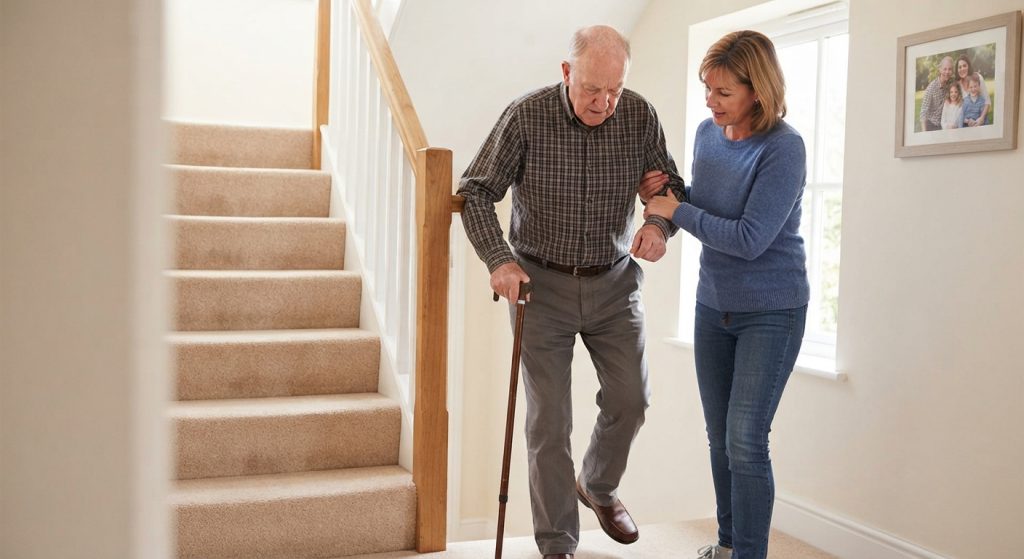
Pay attention to how your loved one moves around. If you notice they are shuffling, holding onto furniture for support, or if they have suddenly stopped going into certain rooms because of the effort involved, their mobility is changing.
Falls are the biggest red flag. Even a “near-fall” where they catch themselves on a doorframe is a sign that the environment is no longer working for them. Furthermore, look at the state of their home. Are there stacks of laundry, tripping hazards, or rooms that haven’t been cleaned in months? If the house is falling into disrepair, it’s often a sign that physical chores have become too difficult.
2. Medication and Nutritional Concerns
Medication management is often the first thing to slip. If you notice pills in the wrong bottles, expired medication, or skipped doses, this is a serious safety concern.
Similarly, look at the kitchen. A fridge full of expired food or a diet consisting entirely of toast and tea is a signal that meal preparation has become too exhausting. When a senior stops eating properly, their physical and cognitive health declines much faster.
3. Personal Care and Cognitive Confusion
Hygiene is a sensitive topic, but it’s a crucial indicator. Notice if your parent is wearing the same clothes for days, has unkempt hair, or seems to have stopped bathing regularly.
Confusion is even more concerning. Are they getting lost on familiar routes? Do they seem overwhelmed by simple tasks they used to do with ease? If they are losing track of time or place, living alone—even in a familiar house—can quickly become a source of profound fear and risk.
How to Handle It When Your Parent Insists They Are Fine

This is the conversation we all dread. Your parent will likely tell you they are perfectly fine because they are proud, and they are terrified of losing their autonomy.
Don’t argue with them. Instead, shift the focus to “how” they are managing rather than “if” they should move. Use “I” statements. Shifting the burden from their capabilities to your feelings removes their defensive trigger.
Instead of saying, “You can’t live alone anymore,” try:
“I’ve noticed that you seem really tired when you handle the grocery shopping, and I’m worried about you getting hurt. How can we make this easier?”
How to Assess the Situation
If you aren’t sure, start by observing. Visit during different times of the day. If you live far away, ask a trusted neighbor or a friend to pop in.
If you determine that they need more support, you have options. In-home care can bridge the gap for a long time by providing someone to help with meals, cleaning, and personal care. However, if the home itself is the danger, or if the isolation is contributing to cognitive decline, assisted living might offer a safer, more social environment.
A Practical Framework: How to Assess Senior Safety at Home

f you aren’t sure, start by observing. Visit during different times of the day. If you live far away, ask a trusted neighbor or a friend to pop in.
If you determine that they need more support, you have options. In-home care can bridge the gap for a long time by providing someone to help with meals, cleaning, and personal care.
However, if the home itself remains a danger, or if isolation is accelerating cognitive decline, assisted living might ultimately offer a safer, more social environment.
What to Do If There Is an Immediate Safety Concern
If you find your parent in an unsafe situation—like a gas leak, a serious fall, or wandering—act immediately. This isn’t the time to worry about “independence”; it’s time for medical intervention. Reach out to their primary care doctor and discuss your findings. Having a medical professional explain the risks often carries more weight than a daughter’s or son’s concern.
If you’re facing this, you may also find our guide on When Elderly Parents Refuse Assisted Living helpful.
Final Thoughts
I know how heavy this feels. You want to be the helpful daughter or son who keeps everything perfect, but you are human, and you cannot do it alone. Recognizing that your parent may need more help is not a failure—it is an act of love. It’s about ensuring they have the support they need to live their days with dignity and safety. Trust your gut.
You know your parent better than anyone, and that intuition is your best tool.
Frequently Asked Questions
1. Is it normal for my parent to get angry when I suggest they need more help? Yes, it is very normal. Anger is often a defense mechanism against the fear of losing independence. Try to remain calm and validate their feelings before re-stating your concerns.
2. What is the difference between independent living and assisted living? Independent living is for seniors who can handle most daily activities themselves. Assisted living provides help with ADLs, such as bathing, dressing, medication management, and meals.
3. My parent is lonely but safe. Does this mean they need assisted living? Not necessarily. Social isolation is a major health risk, but it can sometimes be addressed with senior day programs, volunteer opportunities, or home-visit companion services before deciding to move.
4. How do I pay for home care or assisted living? This is a complex question. Options include personal savings, long-termed care insurance, government programs, and sometimes the sale of the family home. It’s worth consulting a financial advisor or an elder care coordinator.
5. How can I tell if my parent is just forgetful or showing signs of dementia? Everyone gets forgetful occasionally. However, if forgetfulness interferes with daily life—like failing to turn off the stove, getting lost in their own neighborhood, or struggling with basic finances—it warrants a professional medical evaluation.
6. Are there gadgets that can help my parent live alone longer? Yes! Medical alert systems, smart home monitoring for falls or stove usage, and automated medication dispensers can significantly extend the time a senior can safely live at home.
7. Should I involve my parent’s doctor in this conversation? Absolutely. Doctors can provide a neutral, authoritative voice. If your parent won’t listen to your concerns, they are much more likely to listen to their physician.
8. Is there a “right” time to make a decision? There is no perfect time, but it is always better to plan before a crisis happens. Having the conversation early allows you to explore options together rather than making rushed decisions after an accident.