
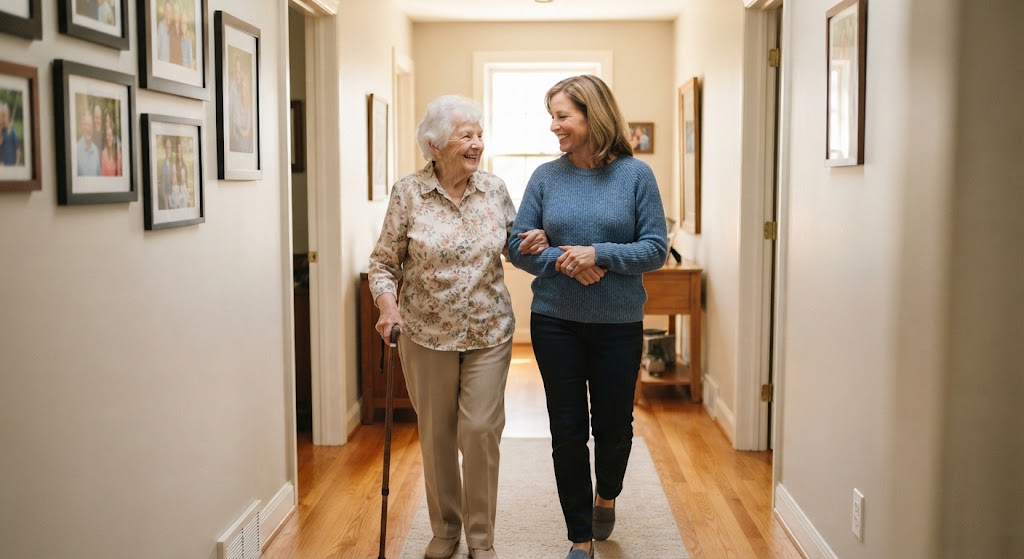
If you are anything like me, the thought of a fall probably crosses your mind more often than you would like to admit. I still remember the exact afternoon I started looking around my parents’ house with a completely different set of eyes. It wasn’t until Mom nearly tripped over the edge of an old patterned rug in the hallway that the reality truly hit me: our homes are built for us when we are agile, not necessarily for the seasons of life when our balance starts to change.
Walking through your parents’ house with safety in mind can feel a little overwhelming at first. You might worry about making the place look clinical, or worse, making your loved ones feel like their independence is being questioned.
But learning how to fall proof a home isn’t about stripping away comfort. It is about removing hidden hazards so everyone can breathe a little easier, ensuring home remains a safe haven.
What Does It Mean to Fall Proof a Home?
When people talk about fall prevention for older adults, it is easy to picture a total home renovation with grab bars installed on every single wall. In reality, it is much simpler and far more personal than that. Fall-proofing simply means taking a proactive look at your living environment and making thoughtful adjustments to accommodate changing mobility, vision, and balance.
By making small, strategic changes—like improving lighting, clearing pathways, and securing loose rugs—we dramatically reduce the risk of accidents without disrupting daily routines. It is about creating an environment that supports confidence, allowing your loved ones to move freely and securely through the spaces they love.
Room-by-Room Assessment & Entryways
The best way to tackle fall prevention is to take it one space at a time. Grab a cup of coffee, take a notebook, and walk through the house slowly, looking at things from a slightly lower eye level or imagining navigating the space with a walker or cane.
Entryway Safety
The front door is where daily clutter loves to pile up. Shoes, umbrellas, and shopping bags tend to congregate right by the threshold, creating an instant obstacle course.
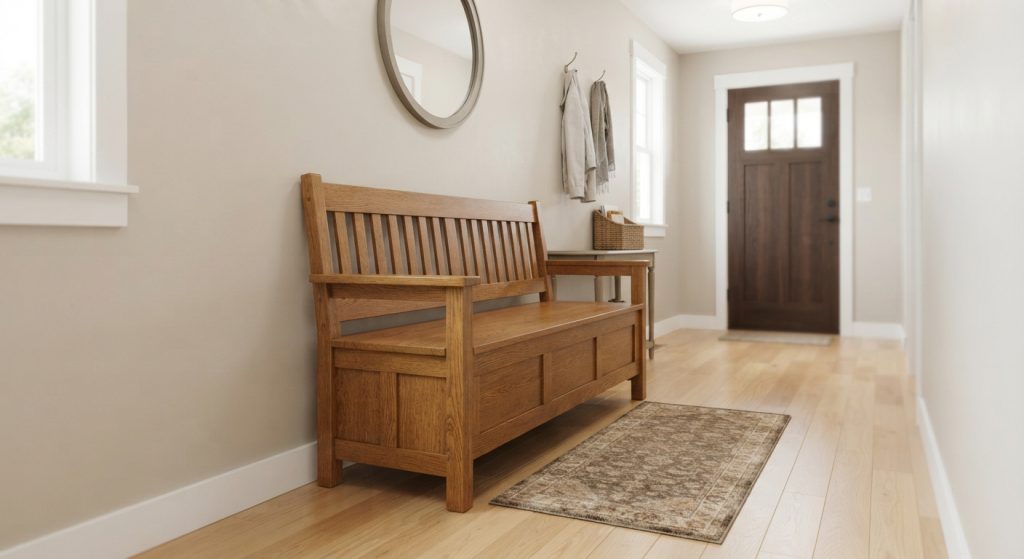
Keep the floor completely clear, add a sturdy bench with a backrest for putting on shoes safely, and ensure a bright overhead light welcomes you from the very first step.
Living Room & Bedroom Safety
Living Room Safety
Take a close look at walking paths between the sofa, chairs, and doorways. Can someone walk through without having to sidestep furniture? Securing extension cords along baseboards rather than letting them snake across the floor makes a massive difference.
Caregiver’s Tip: If rocking chairs or deep couches are difficult to stand up from, consider adding firm cushion risers or sturdy armrests to make getting up much easier on the knees and hips.
Bedroom Safety
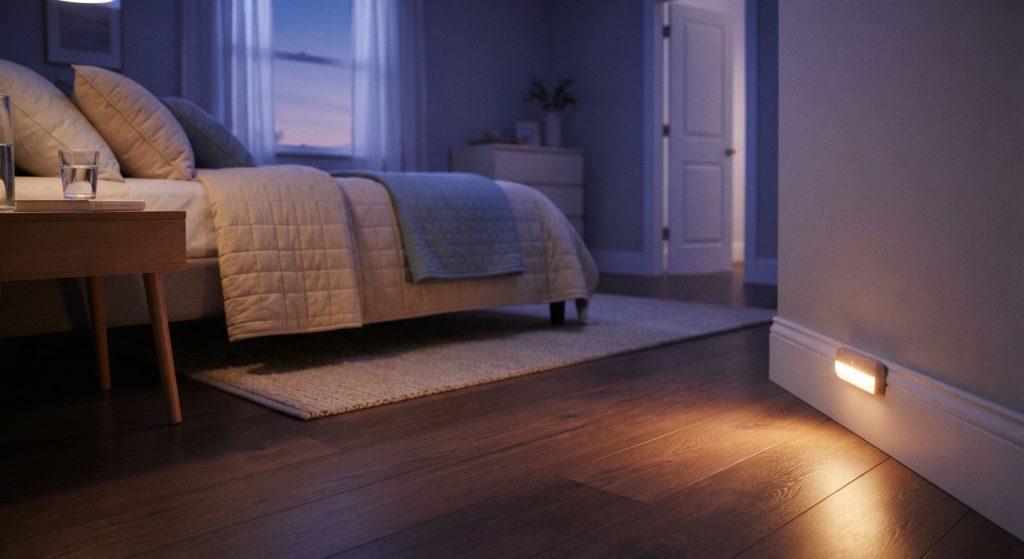
Nighttime trips to the bathroom are one of the most common scenarios for household falls. To make the bedroom safer, ensure the path from the bed to the door is completely unobstructed.
Recommended Product: Motion-Activated Baseboard LED Nightlights provide a gentle, guiding glow along hallways and bedrooms without requiring anyone to fumble for a switch in the dark.
Bathroom Safety: Mastering Grab Bars and Non-Slip Surfaces
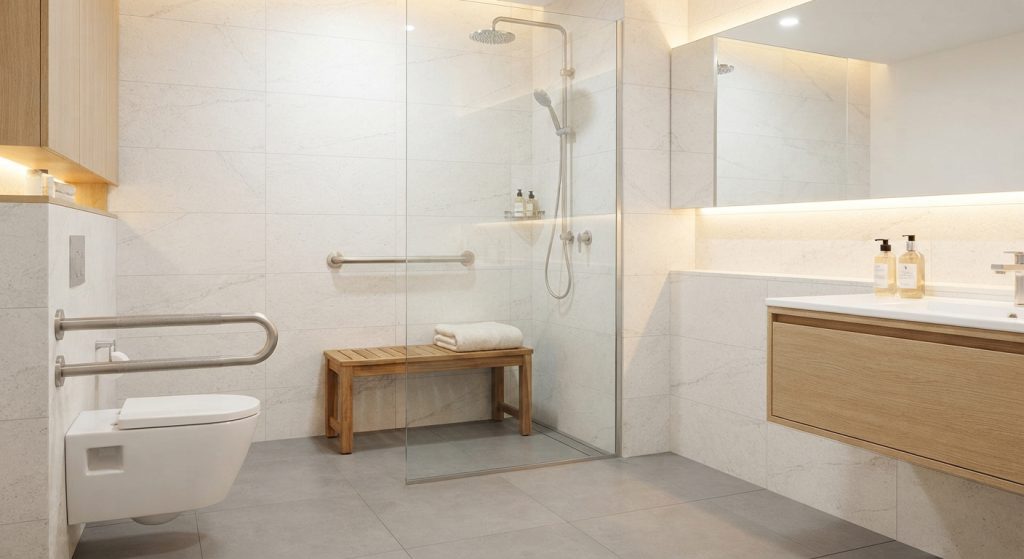
Bathrooms are notoriously high-risk areas because of hard porcelain surfaces, water, and tight spaces. Stepping in and out of a high bathtub or navigating a slippery shower floor can make even the most independent senior feel uneasy.
Fortunately, this is also where some of the most impactful changes can be made:
- Grab Bars: Install professional-grade grab bars securely into wall studs near the toilet and inside the shower for reliable support.
- Traction Control: Place a textured, non-slip mat inside the tub and on the bathroom floor.
- Seated Bathing: A sturdy shower bench allows for comfortable, seated bathing without the fatigue of standing on a wet surface.
Kitchen, Stairs, and Hallways
Kitchen Safety
If heavy pots, plates, or pantry staples are stored in ultra-low cabinets or high top shelves, it increases the temptation to stand on a step stool.
Move heavy, frequently used items to waist-height counters and cabinets. Wipe up spills immediately to keep the cooking space secure.
Stair & Hallway Safety
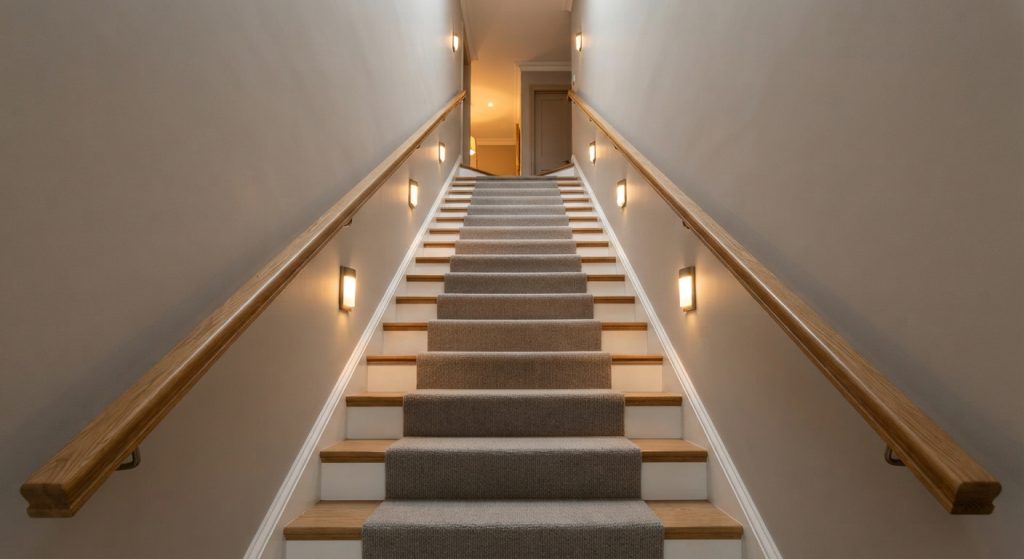
Every set of stairs should have firm, continuous handrails running down both sides if possible, extending past the top and bottom steps. Upgrading your hallway lighting with bright, warm-toned LED options and continuous nightlights creates a clear, comforting path through the home.
Floors, Outdoor Areas, and Mobility Aids
Floors and Rugs
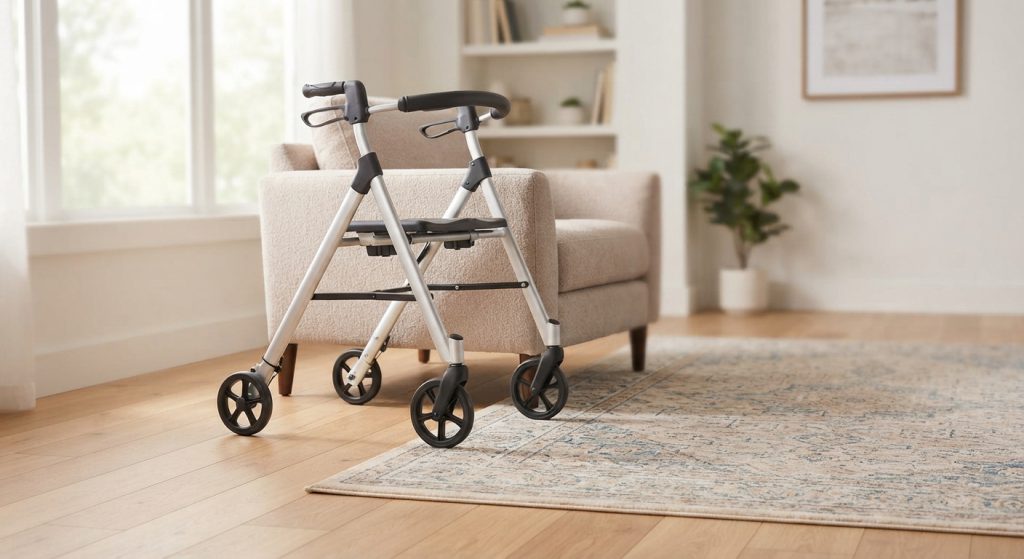
Slippery tile and loose decorative throw rugs are frequent culprits behind unexpected slips. Anchor every throw rug securely using heavy-duty double-sided carpet tape or non-slip rubber rug pads to prevent curled corners from catching on shoes.
Outdoor Areas & Mobility Aids
Keep outdoor steps clean, dry, and equipped with handrails, and ensure pathways have bright motion-sensor lighting. When it comes to mobility aids like canes and walkers, help shift your parent’s perspective: think of a mobility aid not as a symbol of decline, but as a trusty vehicle for freedom and safe exploration.
Emergency Preparedness
Even with the best fall-proofing measures in place, accidents can still happen unexpectedly. Knowing that your parent can call for help instantly provides incredible peace of mind.
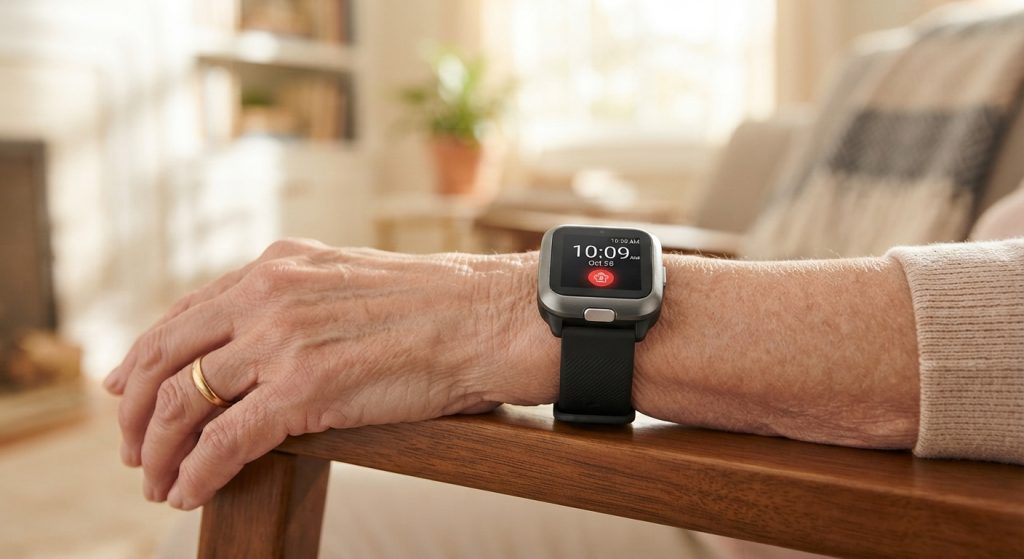
Recommended Product: Consider setting up a Medical Alert Smartwatch with Fall Detection or a wearable pendant so that help is always just a touch away, even if a fall occurs when you cannot be there in person.
Final Thoughts
Taking steps to fall proof a home for your parents is an act of deep love and devotion. It can feel tender and emotionally heavy at times, but remember that every small adjustment you make is a gift of safety, confidence, and continued independence.
Take it one room at a time, trust your instincts as a caregiver, and know that you are doing an incredible job keeping them safe.
Frequently Asked Questions
What are the most common areas of the house where seniors fall?
Most falls among seniors happen in the bathroom and the bedroom, largely due to nighttime trips in the dark, slippery tile surfaces, and getting in and out of the tub or bed when tired.
How can I talk to my aging parents about fall-proofing without making them defensive?
Frame the conversation around comfort, convenience, and keeping their independence intact for as long as possible. Focus on making small home upgrades so they can enjoy their space safely.
Do we need a professional contractor to install grab bars and handrails?
Yes. Grab bars must be anchored directly into wall studs to support full body weight safely. If you are unsure about the wall structure, hiring a professional handyman is always the safest route.
Are throw rugs completely unsafe for seniors?
Throw rugs aren’t necessarily forbidden, but unsecured rugs with curled corners are a major tripping hazard. Always anchor them firmly to the floor using heavy-duty non-slip rug pads or double-sided carpet tape.
What is the best lighting solution for nighttime bathroom trips?
Plug-in, motion-activated LED nightlights placed along baseboards in the bedroom, hallways, and bathroom provide a gentle, guiding light without blinding your eyes or requiring you to search for switches in the dark.
How often should we review our home safety setup?
It is a good idea to do a quick safety walkthrough at least once a year, or whenever your parents experience a change in mobility, medication, vision, or overall health.
What should I do if my parent refuses to use a walker or cane?
Resistance often stems from a fear of losing independence or feeling self-conscious. Encourage open conversation, acknowledge their feelings with empathy, and look into modern mobility options that feel less clinical.
Can smart home devices help with fall prevention?
Yes! Smart lights that turn on automatically via motion or voice command, smart speakers for easy emergency calling, and wearable fall-detection pendants are fantastic technological tools that add an extra layer of safety.