
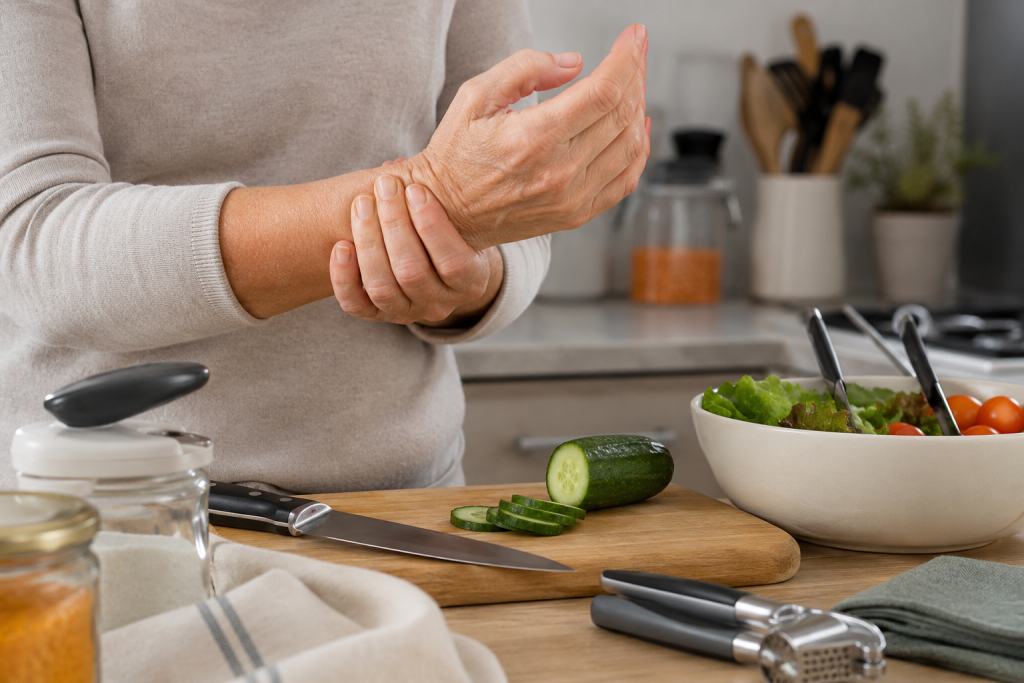
If you have ever spent an afternoon prepping a family dinner only to find your fingers stiff, your palms aching, and your wrists throbbing, you are not alone. Cooking is an act of love, but it shouldn’t come at the cost of physical pain.
Over the years spent helping my own aging parents in the kitchen and talking with occupational therapists, I have noticed a pattern. The tools we use every day—the ones sitting right in our kitchen drawers—are often poorly designed for our hands. Repetitive motions, awkward pinching grips, and heavy manual force place immense stress on delicate finger joints and tendons.
This guide breaks down the most common kitchen tasks that cause hand fatigue, explains why they hurt, and offers practical, realistic fixes—including ergonomic swaps and helpful gadgets—to keep you cooking safely and comfortably.
Why Kitchen Hand Fatigue Happens

Our hands are marvels of engineering, packed with small bones, delicate ligaments, and hardworking tendons. However, everyday cooking tasks often force our hands into unnatural positions.
When you squeeze a narrow handle too tightly or twist your wrist repeatedly against resistance, you concentrate high pressure on small joints—particularly the base of the thumb. Over time, this friction leads to joint inflammation, muscle exhaustion, and stiffness. For older adults or anyone managing arthritis, carpal tunnel syndrome, or general loss of grip strength, these small strains turn everyday meal preparation into a painful chore.
Task 1: Chopping and Slicing
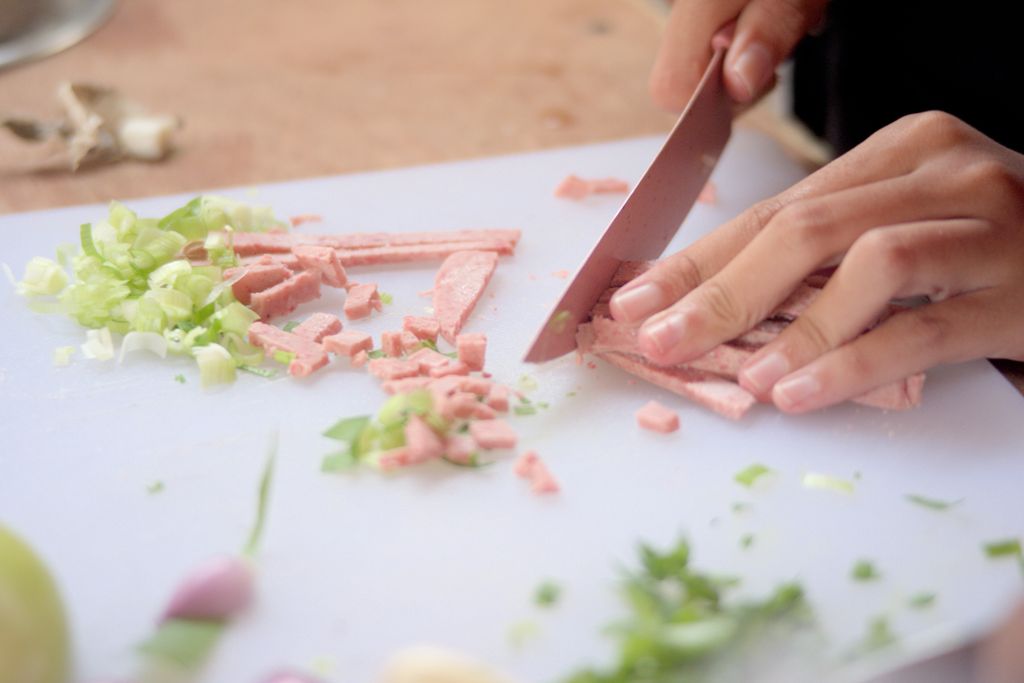
Preparing fresh vegetables, meats, and fruits requires a mountain of prep work. Yet, standard kitchen knives can become a primary source of discomfort.
The Problem
Traditional knives often feature thin, rigid handles made of slick metal or hard plastic. When chopping dense root vegetables like carrots or potatoes, your hand must squeeze tightly to keep the blade from slipping. This constant gripping action fatigues the flexor tendons in your forearm and strains your wrist.
The Ergonomic Fix
- Upgrade to Ergonomic Handles: Look for knives with wider, contoured handles made of soft-touch, textured silicone or rubber. These distribute pressure evenly across your palm rather than digging into your fingers.
- Let the Blade Do the Work: A sharp knife cuts smoothly through food with minimal downward pressure. A dull knife forces you to push and hack, multiplying the strain on your wrist.
- Use a Rocking Santoku Knife: Santoku knives or knives with curved rocker blades allow you to slice using a gentle rocking motion instead of a heavy downward chop.
Task 2: Peeling Vegetables
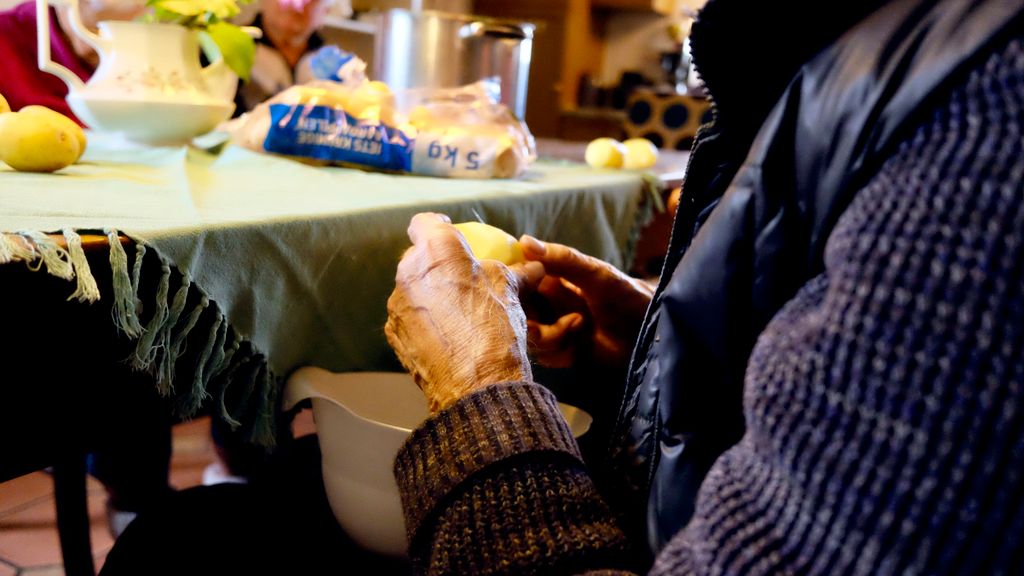
Peeling a bag of apples or a pile of potatoes feels harmless enough, but it relies on a specific hand movement that wears out joints quickly.
The Problem
Standard vegetable peelers usually feature a narrow, straight metal bar for a handle. To use them, you must pinch the tool tightly between your thumb and index finger while performing a repetitive scraping motion. This exact pinching action stresses the carpometacarpal (CMC) joint at the base of the thumb—a common site of osteoarthritis.
The Ergonomic Fix
- Switch to Palm-Grip Peelers: Ring-style or palm-style peelers slip over your fingers or sit flat against your palm. Your hand stays relaxed while your arm guides the motion.
- Look for Thick, Cushioned Handles: If you prefer a traditional swivel peeler, choose one with a wide, soft, non-slip rubber grip that fills your hand completely.
Task 3: Opening Cans, Jars, and Packaging
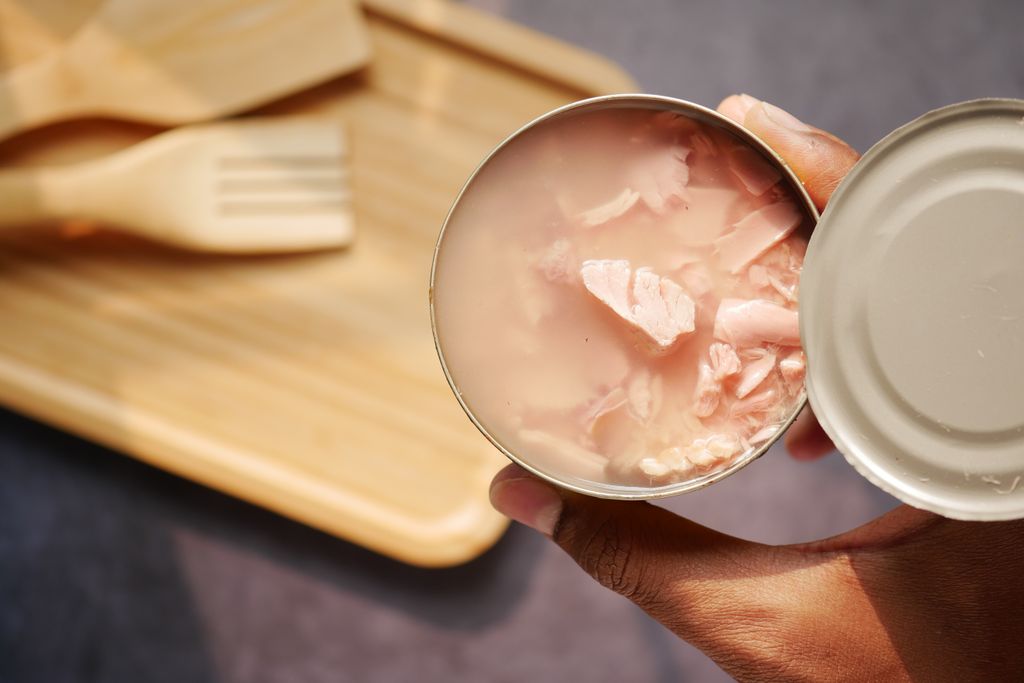
Ask almost any home cook or family caregiver what task causes the most hand frustration, and they will point straight to the pantry shelves.
The Problem
Manual can openers require a dual-action nightmare for sore hands: a tight, continuous squeeze to puncture the metal lid, paired with a repetitive wrist-twisting motion to turn the crank. Vacuum-sealed jars and stiff plastic pull-tabs demand similar high-torque twisting and pulling forces that can trigger sudden, sharp pain in the thumb joint.
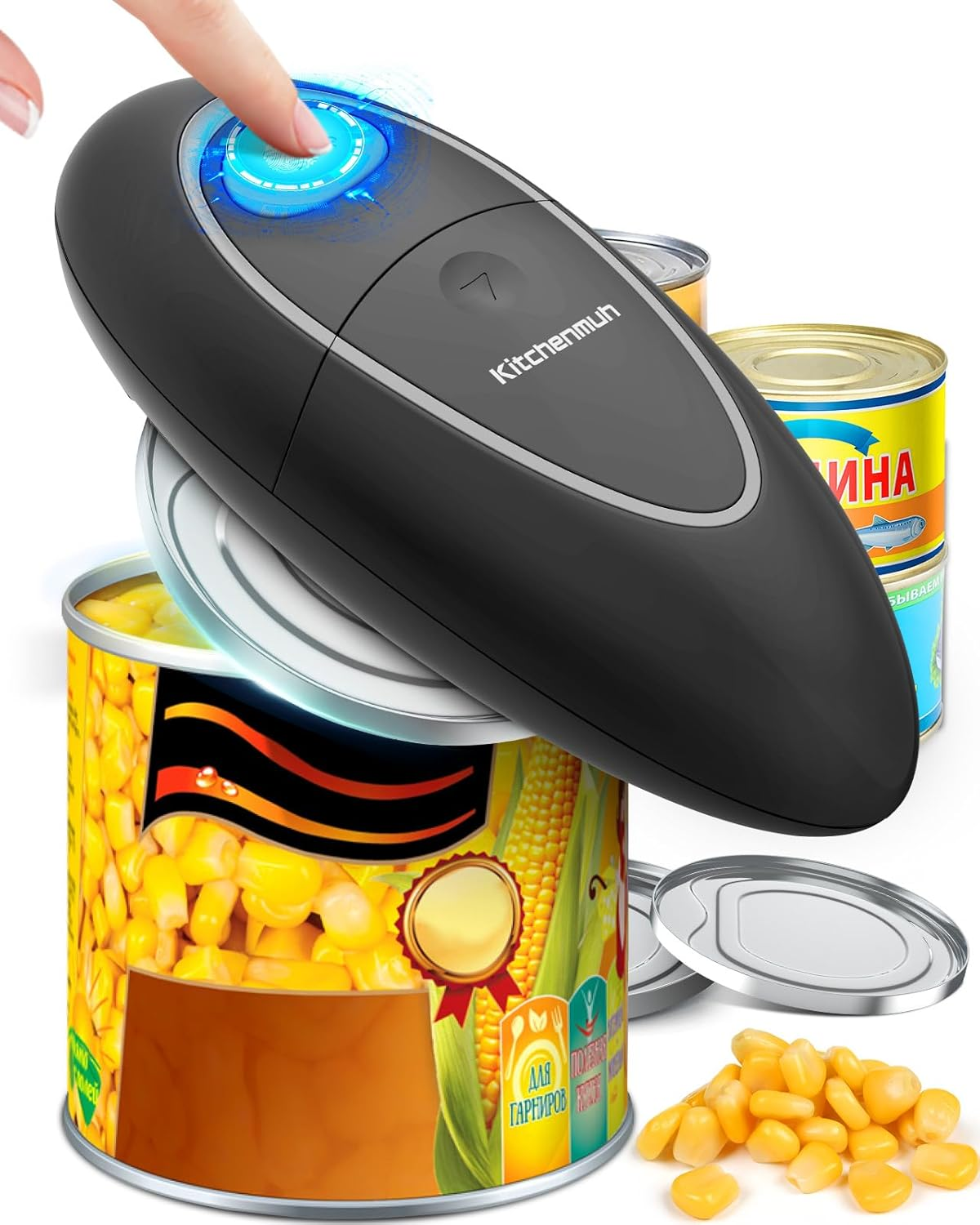
Recommended Product Spotlight: Automatic Can Openers
To completely eliminate twisting and gripping strain in the pantry, automatic hands-free appliances are a game-changer for independent living. Read our comprehensive guide on the top 5 automatic can openers for seniors to find a model tailored to low grip strength.
The Ergonomic Fix
- Automate the Process: Swap manual crank openers for a countertop electric model or a battery-operated one-touch portable opener that does the gripping and cutting for you.
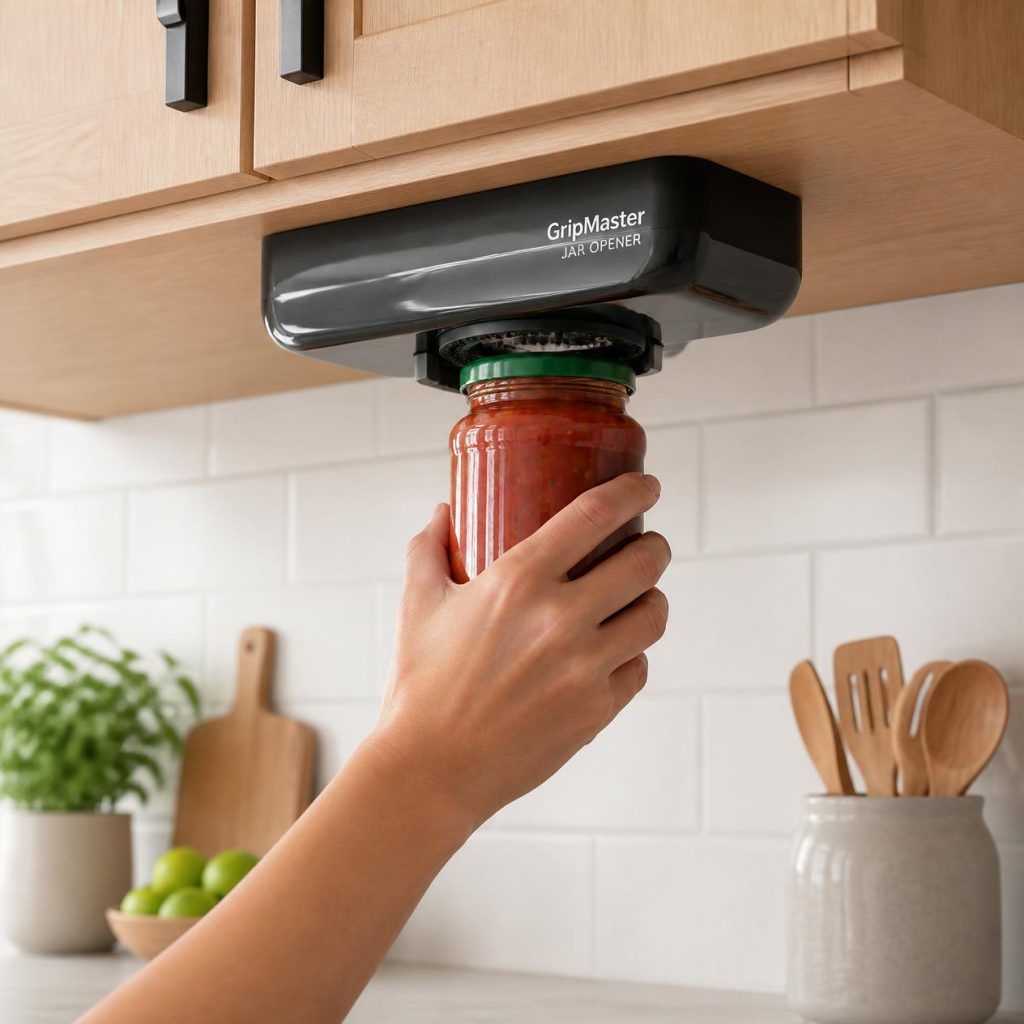
- Leverage Mechanical Advantage: If you use manual jar openers, choose V-shaped under-cabinet grippers or rubber strap wrenches that multiply your leverage, reducing the required muscle force by half.
Comparing Kitchen Tools: Manual vs. Ergonomic Swaps
To help you decide where to make adjustments in your kitchen, the table below compares traditional high-strain tools with joint-friendly alternatives.
| Kitchen Task | Traditional Tool | Ergonomic Alternative | Why It Helps |
|---|---|---|---|
| Chopping |
High Strain Narrow metal-handled chef knife |
Low Strain Rubber-gripped santoku or lightweight utility knife |
Distributes pressure evenly across the palm and reduces wrist weight. |
| Peeling |
High Strain Thin metal stick peeler |
Low Strain Palm-grip or wide-handle cushioned peeler |
Eliminates painful thumb-and-finger pinching motions. |
| Can Opening |
High Strain Manual crank can opener |
Low Strain One-touch automatic or electric side-cut opener |
Completely removes squeezing, puncturing, and wrist-cranking requirements. |
| Jar Opening |
High Strain Bare hands or rubber jar pad |
Low Strain Under-cabinet V-opener or leverage strap wrench |
Uses larger arm and shoulder muscles instead of fragile hand joints. |
Step-by-Step Guide to Setting Up a Low-Strain Prep Station
Creating a kitchen that protects your hands goes beyond buying new gadgets. How you arrange your workspace matters just as much.
- Bring Your Work to Eye Level: Standing and pushing downward on a high counter strains wrists and shoulders. Sit at a sturdy kitchen table with a cutting board in front of you when doing heavy prep work like chopping vegetables.
- Declutter Your Drawers: Store your most frequently used, ergonomic tools in an easily accessible caddy on the counter or the top drawer. Rummaging through a jammed drawer forces awkward finger contortions.
- Use Non-Slip Mats: Place a damp dish towel or a silicone mat beneath your mixing bowls and cutting boards. When surfaces stay firmly in place, your hands don’t have to work twice as hard to stabilize them.
- Prep in Stages: Instead of tackling a mountain of ingredients all at once, break meal prep into smaller blocks throughout the day. Give your hands time to rest and stretch between tasks.

Pro-Tip for Joint Protection: The 15-Minute Rule
When setting up your workstation, set a soft timer on your phone for 15 minutes. Taking just a 60-second break to rest your grip and shake out your wrists dramatically reduces inflammation before fatigue even starts.
Final Thoughts on Kitchen Tasks That Cause Hand Fatigue
Hand fatigue and joint soreness should not be treated as an inevitable part of cooking or caregiving. By identifying which tasks cause the most strain—whether it is wrestling with a stubborn tin can, gripping a narrow knife, or peeling a bowl of potatoes—you can make simple, targeted swaps that protect your hands.
Equipping your kitchen with lightweight knives, wide-handled peelers, and automatic appliances transforms cooking back into an enjoyable, creative experience. Small changes make a remarkable difference in preserving your independence and comfort at home.
Frequently Asked Questions
What causes sudden hand pain while cooking?
Sudden hand pain during meal prep is usually caused by repetitive gripping, pinching, or twisting motions that inflame the tendons and small joints in your fingers and thumbs. Activities like using a dull knife, squeezing a narrow peeler, or cranking a manual can opener concentrate heavy pressure on the base of the thumb, leading to soreness and stiffness.
Are electric can openers safe for seniors with arthritis?
Yes, electric and automatic hands-free can openers are exceptionally safe and practical for older adults. Because they operate at the push of a button and often feature automatic shut-off mechanisms, they remove the need for strong hand grips or painful wrist twisting. Many modern models also cut along the side rather than the top, eliminating sharp, jagged lid edges.
How can I make my existing kitchen knives easier to use?
If buying new knives isn’t in the cards right now, you can improve your current tools by keeping them professionally sharpened. A sharp blade glides through food with minimal pressure. Additionally, you can slide foam tubing—often available at medical supply stores or online—over thin knife handles to create a wider, more comfortable grip.
What is the best way to open vacuum-sealed jars without hurting my wrists?
Instead of twisting jar lids with your bare hands, use a rubber jar gripper pad to enhance traction, or install a V-shaped under-cabinet jar opener. These devices allow you to push the jar forward using your arm and upper body strength rather than relying strictly on hand-torque.
Is hand fatigue in the kitchen a sign of arthritis?
Hand fatigue can happen to anyone after repetitive tasks, but persistent stiffness, swelling, or sharp pain at the base of the thumb are common early signs of osteoarthritis. If your hand pain lingers long after you finish cooking, it is worth mentioning to your primary care doctor or consulting an occupational therapist for personalized joint-protection strategies.
How do I choose the right vegetable peeler for weak hands?
Look for peelers that feature non-slip, oversized handles or loop designs that fit securely across the palm. Avoid narrow, cylindrical metal peelers that require a tight two-finger pinch. Palm-grip peelers allow your hand to remain in a natural, relaxed posture while you work.
Can kitchen ergonomics really reduce daily pain?
Yes, proper kitchen ergonomics make a profound difference. By modifying your tools, adjusting your work height, and minimizing awkward gripping angles, you reduce daily micro-trauma to your hand joints, allowing you to cook comfortably for longer periods without exhaustion.
What are some good hand stretches to relieve cooking fatigue?
Gentle stretches can help relieve tension after meal prep. Try making a loose fist and then opening your fingers wide, stretching them apart as far as comfortable. You can also gently press your palms together in front of your chest while dropping your elbows to stretch your wrists and forearms. Stop immediately if any stretch causes sharp pain.