

If you assume Medicare will foot the bill if you or a parent need nursing home care, you could be facing a devastating surprise. Traditional Medicare covers almost zero long term custodial care, leaving many families scrambling when a health crisis hits.
Long term care insurance is designed to bridge that gap, helping families navigate the high costs of extended care without wiping out a lifetime of savings. You can explore long-term care insurance options to see how policies can safeguard your retirement plan, and this comprehensive guide breaks down what coverage includes, what it costs, and how to choose the right policy
What Is Long Term Care Insurance?
Long term care insurance is private insurance designed to help pay for services when someone needs ongoing assistance because of a chronic illness, disability, cognitive impairment, or another condition that prevents them from living completely independently.
Unlike traditional health insurance, long term care insurance focuses primarily on ongoing assistance with daily living and custodial care, rather than treating an acute illness or injury.
Covered services can include:
- Home health aide and personal care services
- Assisted living facility care
- Nursing home care (skilled and custodial)
- Adult day care programs
- Respite care for family caregivers
Real-World Cost of Care: Why You Need a Plan
When evaluating whether you need coverage, it helps to look at the numbers. According to industry data, average monthly costs for care nationwide are staggering:
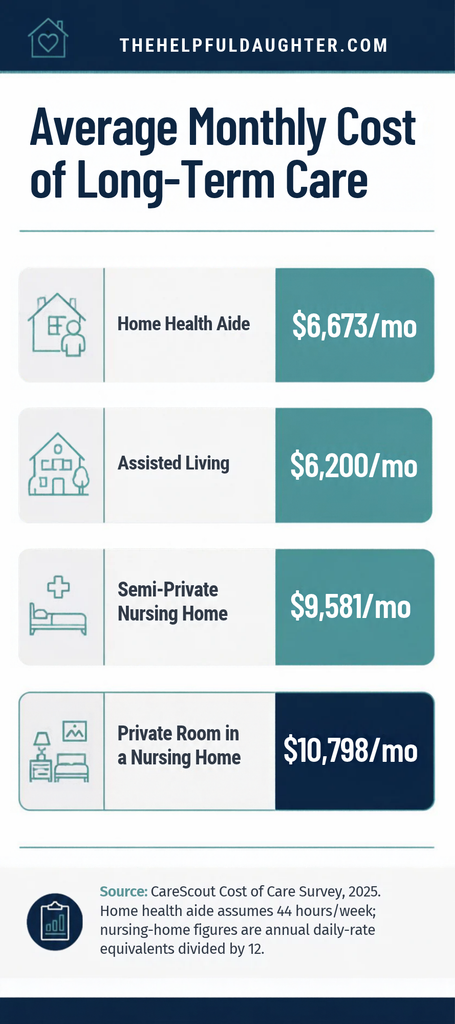
- Home Health Aide (44 hours/week): ~$6600 per month
- Assisted Living Facility: ~$4,800 to $6,200 per month
- Semi-Private Room in a Nursing Home: ~$8,000+ per month
- Private Room in a Nursing Home: ~$9,000+ per month
Without insurance or significant personal liquid assets, these costs can exhaust retirement funds in a matter of months.
Does Medicare Cover Long Term Care?
No. Medicare generally does not pay for long term custodial care.
While Medicare covers short term skilled nursing care or rehabilitation following a hospital stay (under strict conditions), it does not cover ongoing help with activities of daily living like bathing, dressing, or eating. Relying on the assumption that “Medicare will pay for my nursing home” is one of the most dangerous misconceptions in retirement planning.
Does Medicaid Cover Long Term Care?
Medicaid does pay for long term care, but eligibility is not automatic.
To qualify, applicants must meet strict state-specific income and asset limits, often requiring individuals to spend down almost all of their personal savings before benefits kick in.
Additionally, for married couples, Medicaid features Spousal Impoverishment Protections designed to ensure the healthy spouse (the community spouse) isn’t left completely destitute, allowing them to retain a portion of the couple’s combined assets and income. However, relying on Medicaid requires surrendering significant control over care facility choices.
Traditional Long Term Care Insurance vs. Hybrid Policies
| Feature | Traditional Long Term Care Insurance | Hybrid / Asset-Based Policies |
|---|---|---|
| Primary Focus | Pure insurance protection specifically for long term care. | Combines life insurance (or an annuity) with a long term care rider. |
| If You Never Need Care | Premiums paid are generally lost (use-it-or-lose-it). | A tax-free death benefit is paid to your beneficiaries. |
| Premium Stability | Rates can (and frequently do) increase over time. | Premiums are typically locked in and guaranteed not to rise. |
| Underwriting | Strict medical underwriting; can be denied for pre-existing conditions. | Often easier to qualify for because it builds on an underlying asset. |
Hybrid policies have surged dramatically in popularity due to consumer fear over “use-it-or-lose-it” rate hikes associated with traditional policies. Even if you never need a single day of long term care, your family still receives a financial payout.
What Are Activities of Daily Living (ADLs)?
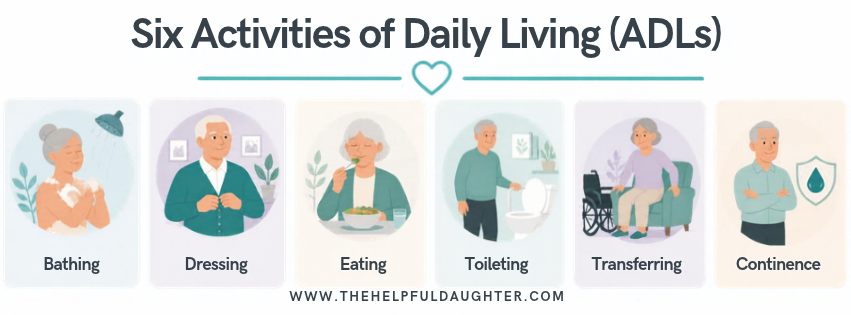
Insurance policies use Activities of Daily Living to determine when you officially qualify to receive benefit payouts. Most policies require you to be unable to perform at least 2 out of the 6 core ADLs without substantial assistance, or to suffer from a severe cognitive impairment like Alzheimer’s or dementia.
The 6 core ADLs are:
- Bathing
- Dressing
- Eating
- Toileting
- Transferring (moving in and out of a bed or chair)
- Continence
What Is the Elimination Period?

The elimination period is essentially an insurance deductible measured in days rather than dollars. It is the waiting period you must self-fund out-of-pocket after you begin needing care before your insurance company starts paying.
Common elimination periods range from 30 to 90 days. Choosing a longer elimination period lowers your monthly premium, but requires your family to cover care costs during those initial weeks or months.
Why Inflation Protection Matters
If you purchase a policy at age 55, you might not use it for 25 years. Because the cost of care rises over time due to inflation, a daily benefit of $150 today will buy far less in the future.
Adding an inflation protection rider (such as a 3% or 5% compound annual increase) ensures your benefit pool grows alongside healthcare costs, though it will increase your initial premium.
Tax Implications and Advantages
For many buyers, tax rules offer important financial cushions:
- Tax-Deductible Premiums: For tax-qualified long term care policies, premiums are often treated as deductible medical expenses under IRS guidelines, subject to your age and adjusted gross income (AGI) thresholds. Business owners may enjoy even broader deductions.
- Tax-Free Benefits: Payouts received from a tax-qualified policy to cover qualified long term care services are generally received completely tax-free.
How Much Does Long Term Care Insurance Cost?

According to the American Association for Long Term Care Insurance, a healthy couple in their mid-50s buying a traditional policy can expect to pay around $2,000 to $4,000 per year combined, whereas waiting until age 65 can nearly double those rates. To find custom rates for your specific age and health history, you can get personalized quotes and compare policies
When Should We Buy Long Term Care Insurance?
The “sweet spot” for purchasing traditional long term care insurance is generally between ages 50 and 60.
Buying earlier secures lower premium rates and makes it easier to pass medical underwriting. Wait too long, and a minor health diagnosis can make you uninsurable.
Alternatives If You Can’t Get Coverage
Not everyone qualifies for or can afford traditional or hybrid long term care insurance. If you fall into this category, explore these workarounds:
- Life Insurance with Accelerated Benefit Riders: Some permanent life insurance policies let you tap into your death benefit early to pay for chronic or long term care needs.
- Annuities with LTC Riders: Certain annuity products offer enhanced payout multipliers if you trigger care requirements.
- Family Care Agreement: Legally structuring payment terms using family assets can fairly compensate adult children or relatives who step into primary caregiving roles.
- Continuing Care Retirement Communities (CCRCs): Independent living, assisted living, and skilled nursing are all integrated into one campus community with predictable financial structures.
What Should We Look for in a Policy?
When shopping for coverage, compare policies using this essential checklist:
Maximum Benefit
Will it cover average local care costs daily or monthly?
Benefit Period
Does it pay out for 3 years, 5 years, or a lifetime?
Inflation Protection
Is compound annual inflation included to combat rising costs?
Elimination Period
Can you comfortably afford a 30, 60, or 90-day out-of-pocket wait?
Home Care Coverage
Does it pay for home health aides and adult day care, or only facilities?
Rate History
What is the insurer’s track record for raising premiums on policyholders?
Common Long Term Care Insurance Mistakes to Avoid
- Assuming Medicare will pay: As noted, custodial care is excluded.
- Choosing the cheapest premium: Stripping out inflation protection or shortening benefit periods to save money today can leave you severely underinsured later.
- Waiting until health declines: Procrastinating leads to higher rates or outright denial of coverage.
- Not reading the fine print: Understand exactly what triggers benefits and what exclusions apply to pre-existing conditions.
Questions to Ask an Insurance Agent
Before signing any policy contract, make sure you get these answers in writing:
- What exact medical conditions or functional limits trigger my benefits?
- Are my premiums guaranteed, or can the insurance company raise rates in the future? What is this specific company’s history with rate increases?
- Does this policy cover home care and assisted living, or only traditional nursing homes?
- Is there a nonforfeiture benefit if I ever have to stop paying premiums?
- Is this policy tax-qualified under IRS guidelines?
The Bottom Line on Long Term Care Insurance
Planning for long term care is never an easy conversation, but tackling it proactively can protect your hard-earned retirement savings and spare your family from exhausting caregiving burnout.
Whether you choose a traditional policy, a hybrid asset-based plan, or explore self-funding alternatives, taking the first step to compare long-term care plans ensures you stay in control of your future care.
Frequently Asked Questions (FAQ)
Can I buy long term care insurance if I already have a pre-existing condition?
It depends on the severity of the condition. Minor, well-managed conditions may only result in a higher premium, but chronic progressive illnesses (like early-stage Parkinson’s or active cancer diagnoses) will typically lead to a denial of coverage under traditional underwriting. This is why purchasing earlier while healthy is vital.
What happens if my insurance company goes bankrupt?
Long term care insurance companies are heavily regulated at the state level. Most states participate in a Guaranty Association that protects policyholders up to certain statutory limits if an insurance provider becomes insolvent.
Can married couples share a policy?
Yes. Many insurers offer “shared care” riders, which allow a couple to pull from a combined pool of benefits. If one spouse exhausts their individual pool, they can tap into the other spouse’s remaining coverage.
Disclaimer: The information provided in this article is for educational and informational purposes only and should not be construed as professional financial, legal, or insurance advice. Every individual’s financial situation and long-term care needs are unique. We recommend consulting with a licensed insurance broker, financial planner, or elder law attorney before purchasing any insurance policy or making major financial decisions regarding long-term care.