
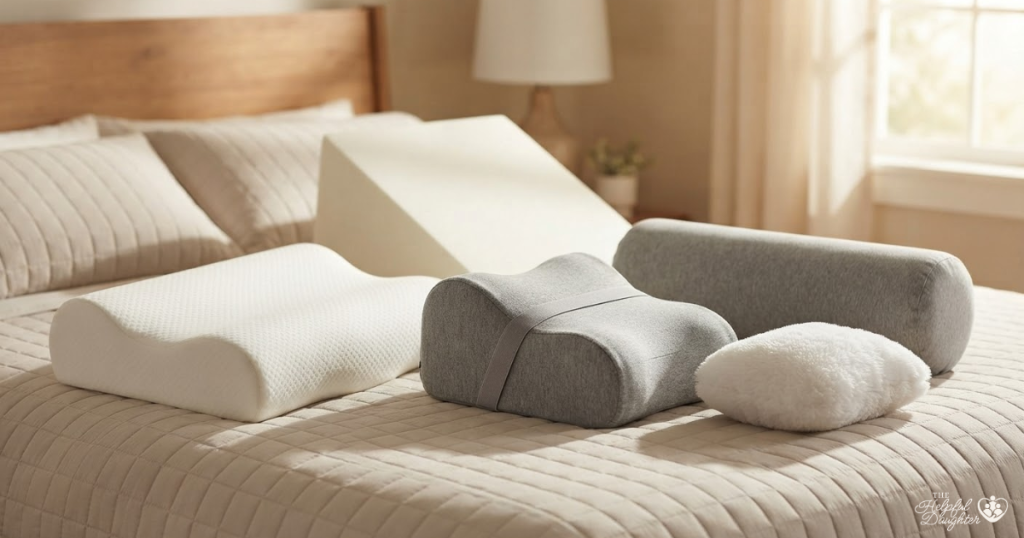
You tuck your parent into bed, adjust the blankets, and hope they finally get some rest. But you know the reality: severe arthritis pain doesn’t clock out just because it’s nighttime. For many older adults, the hours meant for restoration are often spent tossing and turning, trying desperately to find a comfortable position that doesn’t aggravate a painful hip, a stiff neck, or aching knees.
You’ve likely invested in a comfortable mattress, perhaps even an adjustable bed, yet the pain persists. Often, the missing piece of the puzzle isn’t what they are sleeping on, but how their body is supported while they rest.
Think of proper sleep posture as gentle, continuous physical therapy for joints. Throughout the day, gravity compresses joints; at night, we have the opportunity to decompress them. But if your loved one is sleeping with their spine twisted, their hips rotated, or their knees unsupported, they aren’t resting—they are reinforcing bad alignment and increasing pain.
Strategic pillow positioning for severe arthritis is one of the most effective, immediate, and inexpensive ways to manage severe joint pain at night. It’s not just about stuffing pillows wherever they feel soft; it’s about using them as therapeutic tools to maintain neutral joint alignment.
This guide will walk you through specific, practical techniques to support achy joints, reduce pressure points, and help your aging parent wake up with less stiffness and more mobility.
Joint-by-Joint Pillow Positioning for Severe Arthritis
Arthritis affects everyone differently. One night it might be the shoulders; the next, a chronic hip issue flares up. You need a flexible approach. Let’s look at how to support specific areas of the body.
1. Hips & Knees
For seniors with hip osteoarthritis or chronic knee pain, lying flat can pull the spine out of alignment and cause direct, grinding pressure on the affected joints.
The Side Sleeper: Protecting the Hips and Lower Back
Most people with significant hip pain find that sleeping on their unaffected side is the most comfortable. However, simply lying on one side allows the top leg to drop forward, pulling the spine into rotation and placing torque on the painful hip joint. This often causes the senior to wake up with lower back pain as well.
The Solution: The Between-the-Knees Spacer.
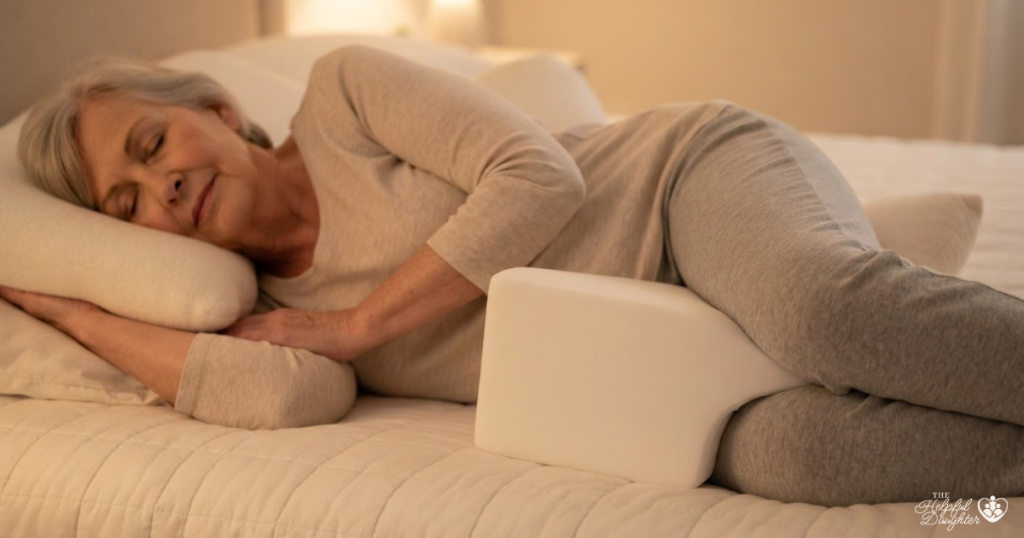
This is perhaps the most critical pillow adjustment for seniors.
- The Technique: Place a firm pillow between the knees and thighs.
- Why it works: The pillow keeps the knees and hips vertically aligned, preventing the top leg from sliding forward. This simple action instantly relieves pressure on the painful hip and keeps the pelvis square, protecting the lower spine.
- Caregiver Tip: Standard bed pillows are often too soft and compress quickly, or they are too bulky and force the legs too far apart, which can strain the hips in a different way. Look for a firmer, denser pillow specifically designed as a knee spacer, or a contoured memory foam option that stays in place.
The Back Sleeper: Decompressing the Lower Back
If your parent can tolerate sleeping on their back, it is generally the best position for even weight distribution. However, a lifetime of habits or breathing issues may make this difficult. If they do lie on their back, the natural curve of the spine (lumbar lordosis) can cause discomfort as the back arches slightly off the mattress.
The Solution: The Under-Knee Bolster.
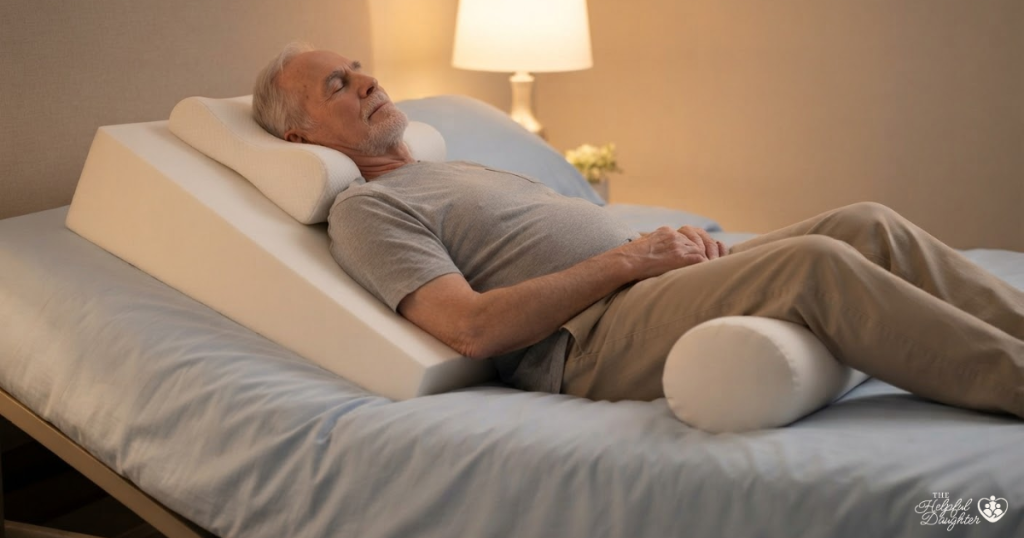
- The Technique: Place a medium-sized pillow or a firm bolster roll directly under the knees.
- Why it works: Raising the knees slightly flattens the lower back against the mattress, relaxing the hip flexors and decompressing the lumbar spine. This small change can make a profound difference for seniors suffering from both hip pain and lumbar arthritis
Caregiver Tip: Ensure the bolster isn’t too high. The knees should be only slightly elevated; if the legs are raised too much, it can strain the lower back or cut off circulation behind the knees. Test with a rolled-up towel first to find the right height before investing in a specialized bolster.
2. Spine & Neck
Neck arthritis (cervical spondylosis) or chronic upper back stiffness requires careful attention to the pillow under the head. The goal is to keep the neck in a “neutral” position—as straight as possible relative to the shoulders, just as if they were standing and looking forward.
Proper Pillow Loft (Thickness)
“Loft” refers to the height of the pillow. This is where most people get it wrong.

The Side Sleeper Needs High Loft
A side sleeper needs a pillow that fills the gap between the ear and the mattress. If the pillow is too low, the head will tilt down, straining the neck. If it’s too high, the head will be pushed upward, straining the other side.
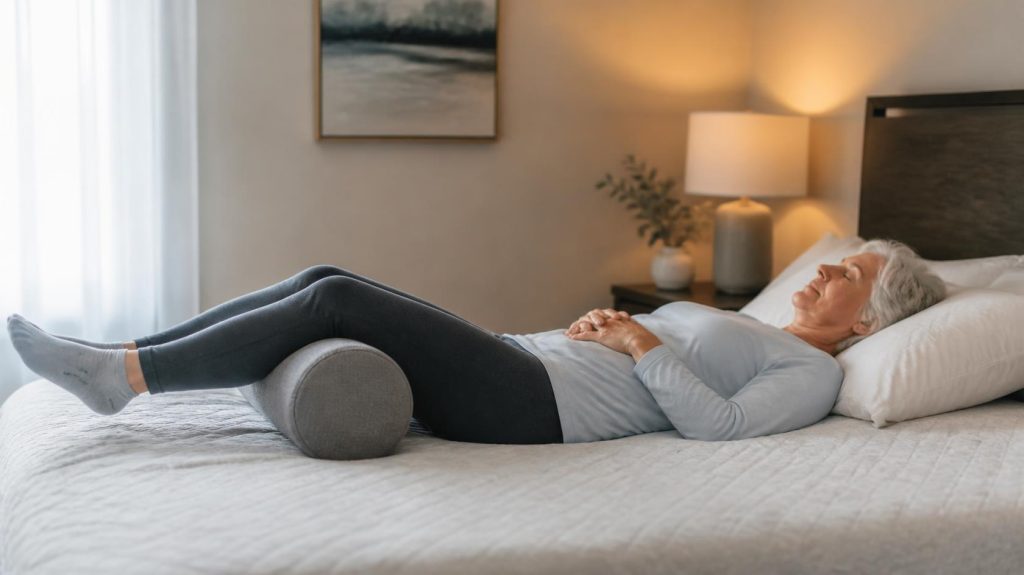
The Back Sleeper Needs Medium Loft
Back sleepers need a pillow that supports the natural curve of the neck without pushing the head forward toward the chest.
Stomach Sleeping
If your parent sleeps on their stomach, this is likely a primary source of neck and back pain. This position forces the neck to turn sharply at a 90-degree angle to breathe and hyperextends the spine.
Caregiver Action: Gently encourage a shift to side or back sleeping. This can be a difficult habit to break. You can use a long body pillow tucked tightly behind their back to prevent them from rolling onto their stomach during the night. If they absolutely cannot sleep otherwise, they need a very thin, soft pillow under their head to minimize neck strain, and another flat pillow under the pelvis to lift the lower back.
3. Shoulders & Arms
Shoulder arthritis, bursitis, or rotator cuff injuries make side sleeping excruciatingly painful if the weight of the body rests directly on the affected joint.
The Side Sleeper: Offloading the Shoulder

- The Technique: Encourage sleeping on the unaffected side.
- The Crucial Addition: The Hugging Pillow. When lying on the good side, the affected arm is unsupported and tends to hang forward, pulling on the painful shoulder joint. Have your parent hug a soft pillow to their chest. This supports the weight of the arm and keeps the shoulder in a stable, comfortable position.
The Back Sleeper: Supporting the Rotator Cuff
If sleeping on the back, the shoulder may still hurt as the arm falls backward slightly.

- The Technique: Place a small, thin pillow or a folded hand towel underneath the elbow and forearm of the affected arm.
- Why it works: This subtle lift prevents the shoulder joint from hyper-extending backward, reducing tension on the rotator cuff and ligaments.
3 Specialized Pillows – My Top Picks
While standard bed pillows can work for minor adjustments, specialized cushions provide superior, more consistent support for seniors living with severe arthritis. Here are my top 3 picks for therapeutic pillow
setups:
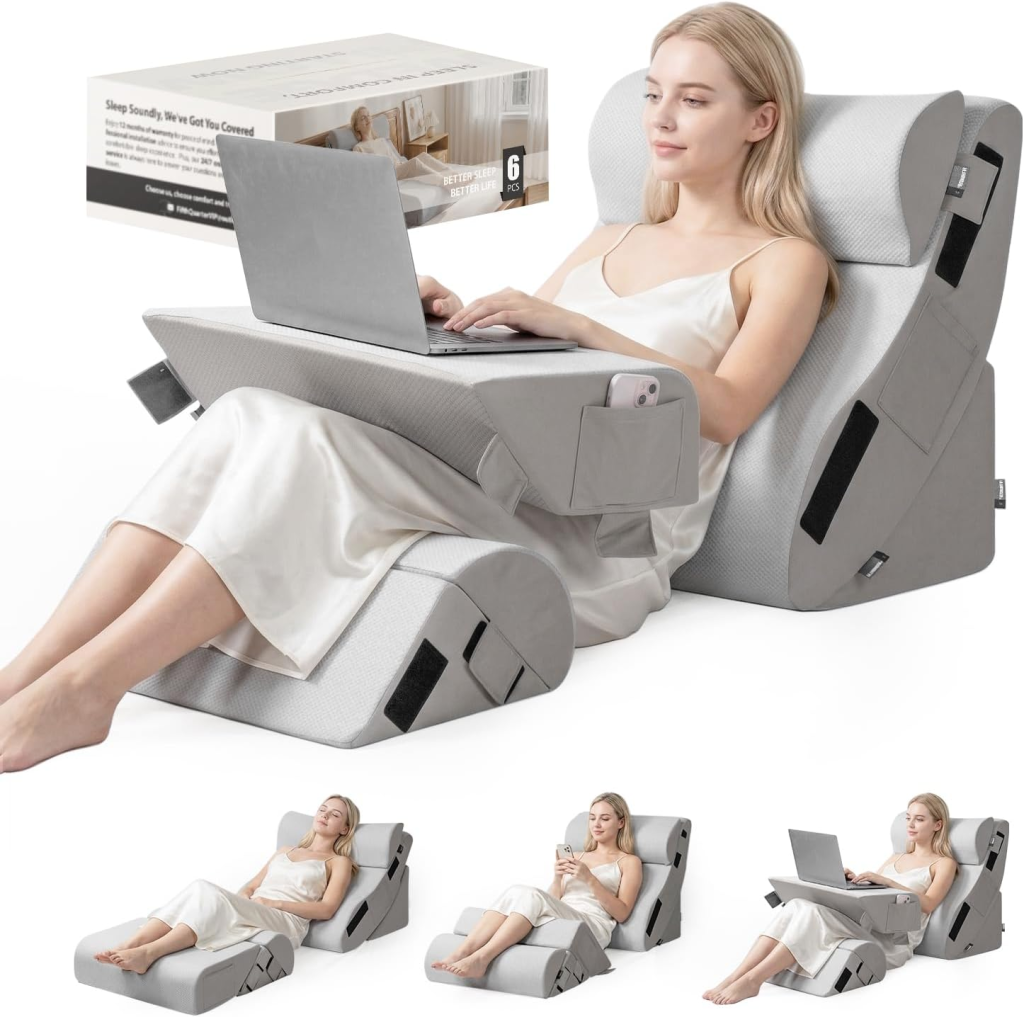
FifthQuarter 6PCS Orthopedic Wedge Pillow Set
Why It Helps Arthritis: Built with a supportive dual-layer design (40D memory foam over high-density 25D foam), this set allows you to adjust the incline for back support, lumbar curve alignment, and leg elevation independently.
Caregiver Advantage: Modular pieces stay securely in place compared to loose pillows, making post-surgery or flare-up resting setup vastly easier.
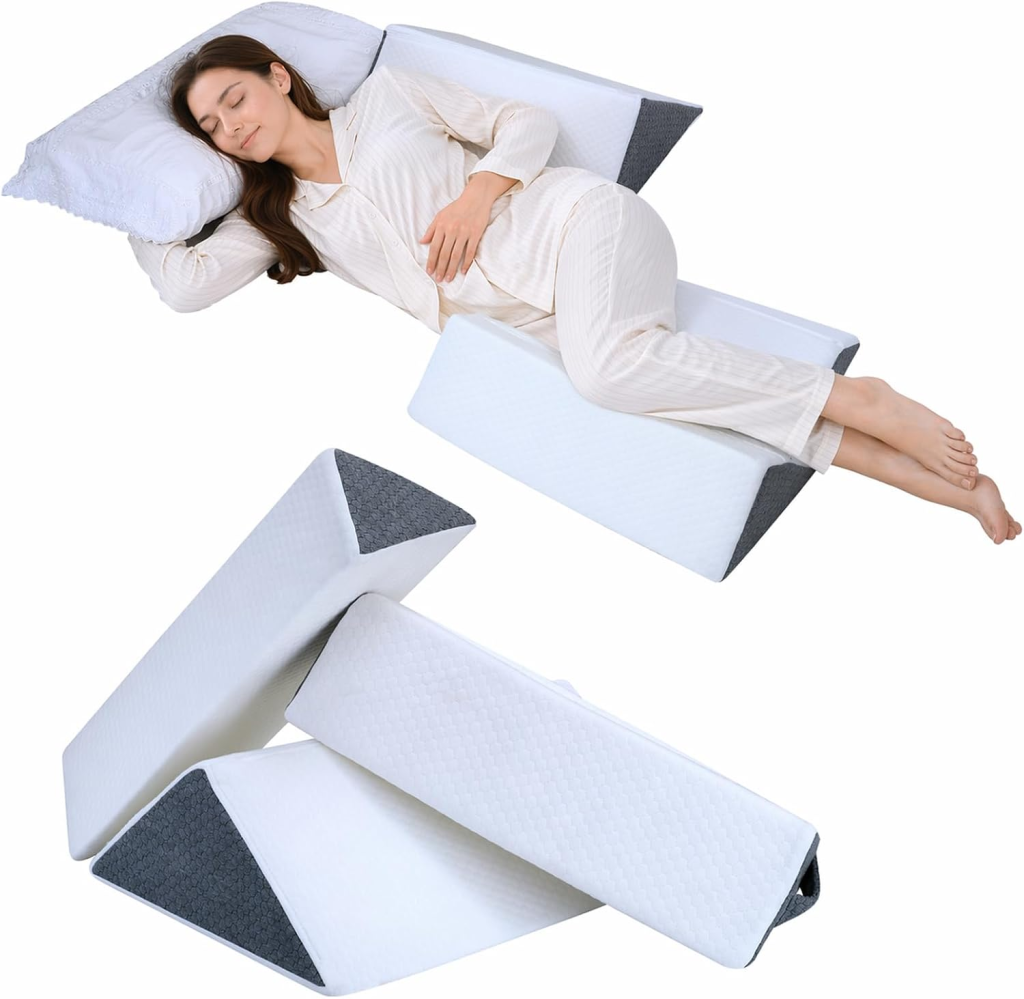
SJFFDP 3-Piece Positioning Wedge Pillow Set
Why It Helps Arthritis: Medium-firm foam wedge positioners act as dedicated body bolsters. Placed between the knees or tucked behind the back, they keep the pelvis square and prevent the upper leg from twisting forward.
Caregiver Advantage: Lightweight wedges make it simple for caregivers to log-roll or stabilize a senior safely without risking joint strain.
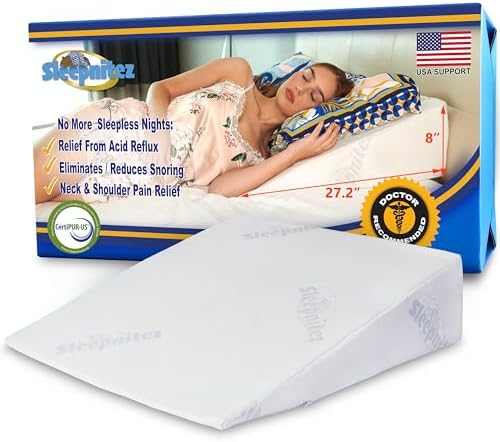
Sleepnitez 8″ Bed Wedge Pillow
Why It Helps Arthritis: Features a generous 3.25-inch memory foam top layer that offers soft pressure relief for stiff shoulders and upper back joints while maintaining a gentle, supportive slope.
Caregiver Advantage: Includes a soft, breathable Tencel cover with a U-shaped zipper for quick, hassle-free removal and washing.
When Pillows Aren’t Enough

Pillows are meant to fill the gaps created by the natural contours of the body and to maintain alignment. However, they are not designed to fix a mattress that is fundamentally wrong for an arthritic senior.
If your parent needs a fortress of pillows just to get comfortable, it’s a signal that the mattress itself may be the primary problem.
The Link Between Mattress Support and Pillow Needs:
- If the mattress is too firm: It creates pressure points on the hips and shoulders, forcing the senior to lie awkwardly or constantly shift positions. Pillows can only provide so much cushioning against a board-like surface.
- If the mattress is too soft: The heavier parts of the body (hips and midsection) sink in too deeply, causing the spine to hammock. This renders proper pillow positioning ineffective because the foundational alignment is already compromised.
If you constantly need multiple pillows to feel comfortable, your bed may lack adequate pressure relief. Check out our recommendations for the best mattress for arthritis and osteoporosis to restore proper alignment.
A high-quality, supportive mattress with good pressure relief (such as those using advanced memory foam, latex, or hybrid constructions) allows the body to “sink in” just enough to relieve pressure points, while still supporting the spine. When the mattress does its job, you often need fewer pillows to maintain alignment.
Nighttime Mobility Routine

Positioning pillows only works if the senior can actually get into the bed and adjust them without strain. Often, the pain is so severe that the very act of climbing into bed or shifting their legs causes agony.
You can help your parent prepare their body for sleep with a gentle pre-bedtime routine. This is not exercise; it is lubrication and relaxation.
Gentle Pre-Bed Stretches (Performed sitting on the edge of the bed or lying down):
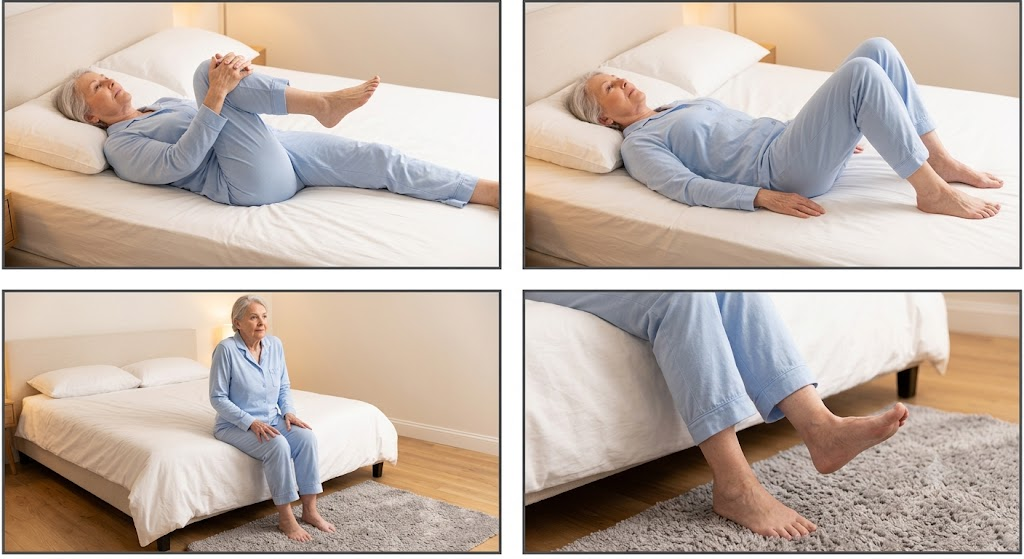
- Gentle Knee-to-Chest (Low Back): While lying on the back, gently pull one knee toward the chest using both hands. Hold for 10-15 seconds, breathing deeply. Repeat with the other leg. This eases tension in the lumbar spine.
- Pelvic Tilts (Low Back/Hips): Lying on the back with knees bent, feet flat. Tighten the stomach muscles and flatten the back against the mattress. Hold for 5 seconds. Relax. Repeat 5-10 times. This gently mobilizes the pelvis.
- Shoulder Shrugs & Rolls (Shoulder/Neck): While sitting upright, shrug shoulders up toward the ears, then roll them back and down. Repeat slowly 5 times. This releases tension in the upper back and neck.
- Ankle Circles (General Circulation/Stiffness): While sitting on the edge of the bed, rotate both ankles clockwise 10 times, then counter-clockwise 10 times. This reduces swelling and stiffness in the lower legs.
The Warm-Up: Encourage your parent to take a warm shower or bath an hour before bed. The warmth relaxes muscles and softens stiff joints, making it much easier to get comfortable once they are in bed.
Caregiver Tip: Assist with Placement. Even with these routines, your parent may struggle to lift their legs to place the bolster or turn onto their side and tuck the pillow behind their back. Offer to physically assist them with these adjustments once they are lying down. Ask, “Is the knee pillow in the right spot?” or “Do you need the pillow under your arm moved up slightly?” This shared effort ensures they are perfectly supported before you say goodnight.
Final Thoughts
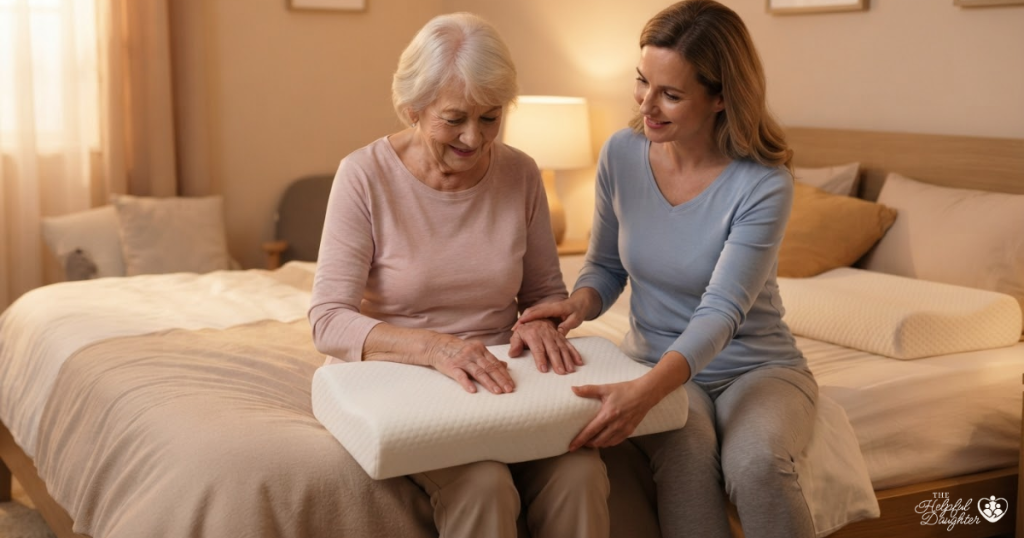
Helping an aging parent manage severe arthritis pain at night requires patience, observation, and creativity. There is no single “magic pillow,” but rather a toolkit of strategies you can apply based on their specific needs on any given night.
By mastering the techniques of side-sleeper knee spacers, back-sleeper knee bolsters, and targeted neck and shoulder support, you can transform their bed from a place of pain into a sanctuary of rest.
Remember to start small, use firm pillows (or invest in specialized ones if needed), and always pay attention to the base mattress support. Your gentle assistance in setting up these nightly routines demonstrates a level of care that goes beyond medication, providing comfort and dignity in the face of chronic pain.
Frequently Asked Questions About Pillow Positioning for Severe Arthritis
1. My mother has severe arthritis in her hips AND neck. Which position should I prioritize?
This is very common. You should prioritize whichever pain is most severe. Often, getting the hips aligned with a knee pillow also allows the spine to relax, which can indirectly help neck tension. However, if the neck pain is acute, a contoured cervical pillow is essential. You may need to experiment: try the knee pillow first. If that doesn’t help the neck, try the specialized neck pillow while keeping the knee pillow in place. The goal is finding a combination that balances both issues.
2. My father hates having pillows between his legs. What are the alternatives?
If he refuses a knee pillow because it feels hot or restrictive, the alternative is a full-length body pillow. This allows him to drape one leg over the side of the long pillow, which still provides some separation for the hips and supports the upper leg, but it feels less confined than a small, dense block between the knees. You might also try a cool-gel memory foam knee spacer, which addresses the temperature issue.
3. Should I buy feather pillows or memory foam for my mother’s neck arthritis?
For arthritis, memory foam or a firm latex pillow is generally superior to feather or down. Feather pillows are soft and moldable, which feels comfortable initially, but they compress easily and offer little actual support to hold the neck in alignment. Memory foam contours to the head and maintains its loft throughout the night, providing consistent support that is crucial for arthritic joints.
4. My parent has dementia and keeps pulling pillows out from under their knees. How can I help?
This is challenging. If they don’t understand why the pillow is there, they will remove it. In this case, consider an adjustable bed frame or a firm foam bed wedge. These are built into the bed setup and cannot be easily “kicked out” like a loose pillow. An adjustable bed can raise the head slightly (for breathing) and the feet slightly (for lower back decompression) at the touch of a button, achieving the needed alignment without relying on loose cushions.
5. Can a pillow actually fix her chronic shoulder bursitis?
A pillow cannot fix bursitis—that requires medical treatment. However, a pillow is critical for managing the pain caused by bursitis at night. By supporting the affected arm with a pillow (if back sleeping) or hugging a pillow (if side sleeping on the healthy side), you remove the gravitational pull on the inflamed joint. This stops the joint from being aggravated during sleep, allowing the body’s healing processes to work rather than being constantly reinjured by poor positioning.
6. Do wedge pillows really help seniors with breathing issues?
Yes, absolutely. Seniors with congestive heart failure (CHF), chronic obstructive pulmonary disease (COPD), or severe acid reflux (GERD) often cannot lie flat. A bed wedge pillow elevates the upper torso, allowing gravity to assist breathing and keep stomach acid down. Unlike stacking pillows, which cause the senior to slump in the middle of the night, a wedge provides a stable, consistent incline.
7. Are U-shaped pregnancy pillows good for elderly people?
Generally, no. While they provide excellent support, they are massive and very difficult for a frail or mobility-impaired senior to maneuver. Getting in and out of bed becomes a major task, potentially increasing fall risk. They also tend to retain body heat, which is uncomfortable for many seniors. Smaller, targeted pillows are almost always a better choice than a giant, enveloping pillow.
8. How often should I replace my parent’s pillows?
Pillows used for therapeutic support for arthritis should be replaced more frequently than standard sleep pillows. If you press down on a foam knee spacer and it doesn’t spring back immediately, or if it has permanently compressed, it is no longer providing the correct alignment. Generally, quality memory foam pillows for joint support should be replaced every 18–24 months, depending on usage and firmness.
9. Should I use a towel instead of a pillow for neck support?
A tightly rolled-up, firm towel can be an excellent, inexpensive alternative for neck support when placed inside the pillowcase, especially for back sleepers who need subtle neck elevation. It is firm and holds its shape better than