
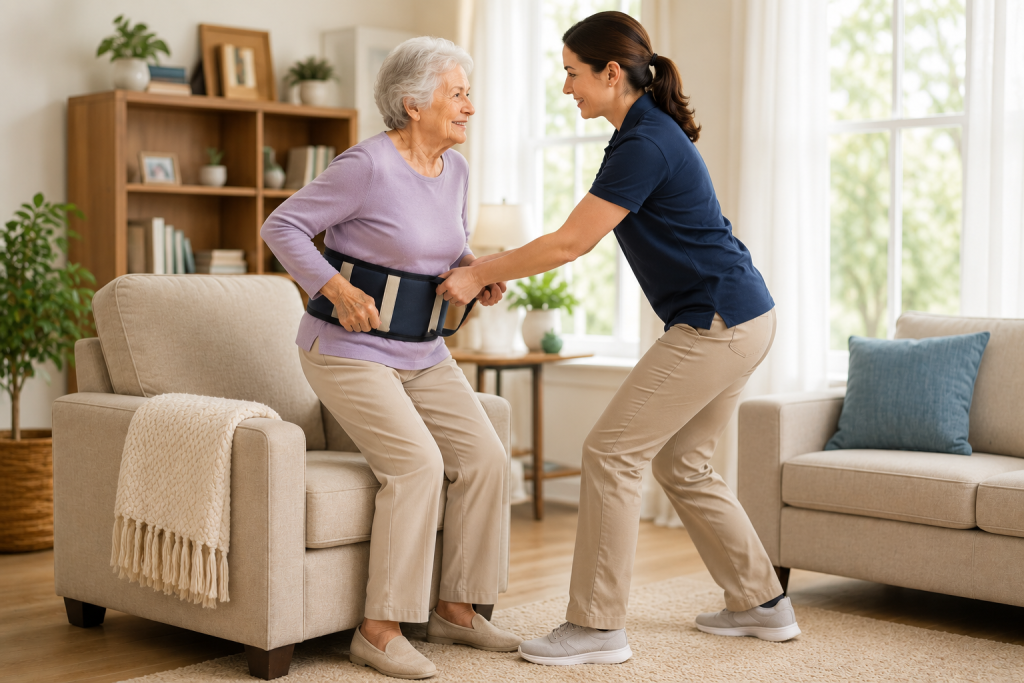
Your back feels like it’s locked in place, and your heart is pounding against your ribs every time your dad asks to get out of his armchair. You know the routine all too well: you bend forward, loop your arms awkwardly around his waist, he grabs your neck for leverage, and you both heave upward on a silent prayer. By the end of the day, your lower back aches, and the sheer anxiety of dropping him casts a heavy shadow over your caregiving routine. You want to keep him mobile and independent, but you are terrified of a fall—or of putting yourself out of commission with a severe injury.
You are definitely not alone in this heavy balancing act. Moving a loved one safely requires more than just raw physical strength; it requires the right technique and the right tool.
In this comprehensive guide, you will learn what a gait belt is, how it works to protect both you and your senior loved one, and how to master a gait belt transfer with proper body mechanics for bed-to-wheelchair, sit-to-stand, and toilet transfers. By the end, you will feel thoroughly equipped to handle mobility transitions with confidence, grace, and physical safety.
Let’s jump in
What Is a Gait Belt and How Does It Work?
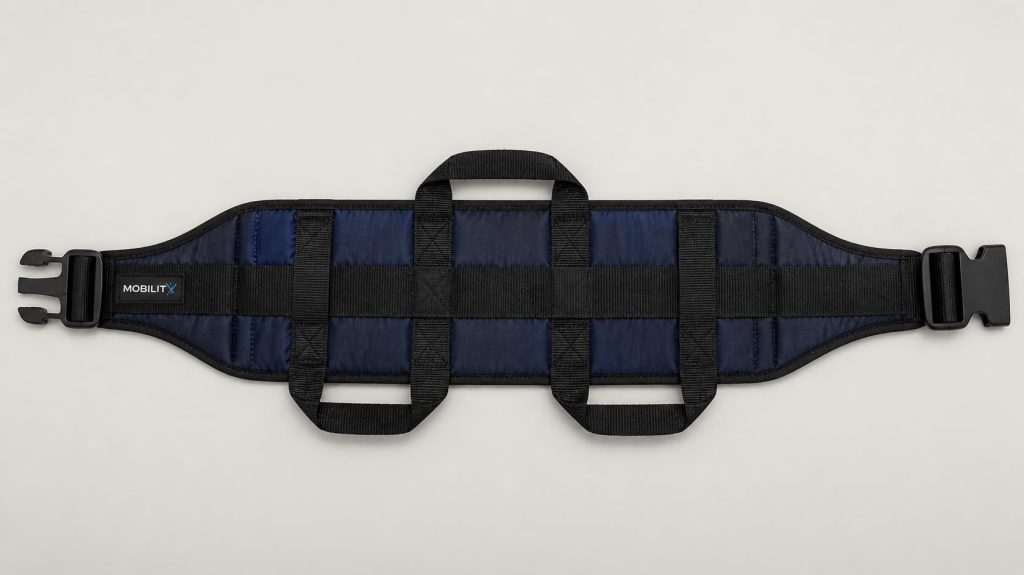
A gait belt—sometimes called a transfer belt—is a sturdy strap made of cotton web, nylon, or leather, typically about two inches wide and four to five feet long. It features a secure metal or plastic buckle designed to lock tightly into place once adjusted around a person’s waist.
Despite its simple appearance, it serves as a literal lifeline in home care settings.
Why the Gait Belt is Your Back’s Best Friend
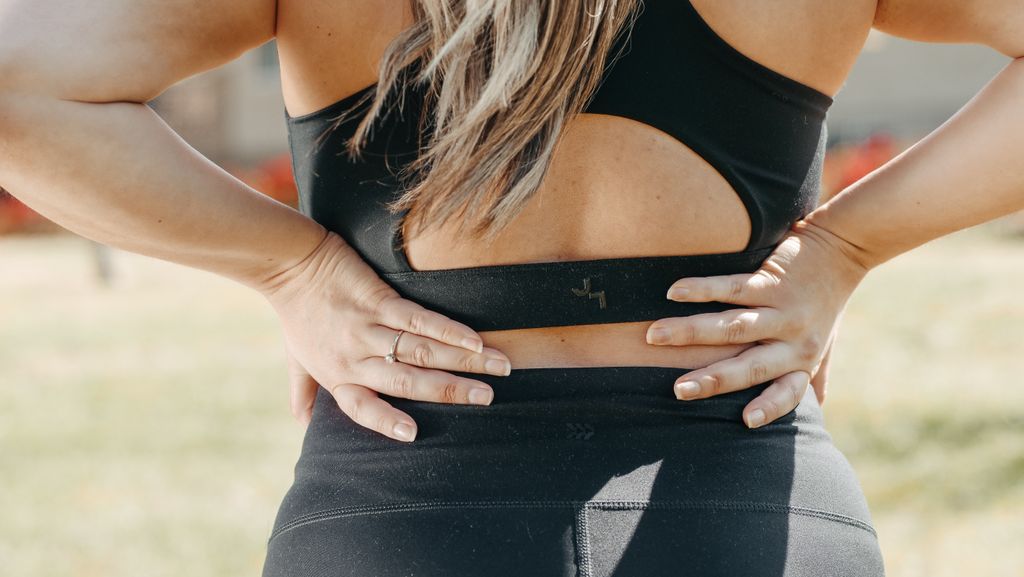
When helping someone stand or pivot, the greatest hazard is having nowhere secure to hold onto. Grabbing a senior by their clothing can cause their shirt to rip, sending them off balance. Grabbing them under their arms puts dangerous pressure on their shoulder joints and ribs, and forces you into a hazardous, rounded-back lifting posture.
A gait belt solves this mechanical dilemma by providing a secure, rigid handle anchored directly to the center of gravity at the waist.
- For the Caregiver: It creates a mechanical handle that allows you to use your legs instead of your back. You maintain an upright posture, keeping your core engaged while controlling their momentum.
- For the Senior: It offers a sense of security. Instead of fearing a sudden slip, they feel firmly supported around their core, which naturally reduces panic and sudden jerky movements during the transfer.
Important Safety Note: A gait belt is not a lifting device. It is designed to assist, guide, and support a person who can bear at least some weight on their legs. Never use a gait belt to lift a completely non-weight-bearing person entirely off the ground, as this can cause severe abdominal compression or spinal strain.
Essential Preparation and Weight-Bearing Checks
Before you even touch the belt, you must evaluate the environment and assess your loved one’s physical capacity for that specific moment. Fatigue, medication side effects, or a restless night can drastically change a senior’s mobility from morning to afternoon.
Essential Preparation & Safety Checklist
- Lock brakes on all equipment (wheelchair, bed, or commode).
- Swing footrests completely out of the path.
- Clear away throw rugs, cords, or clutter.
- Ensure both you and your senior are wearing non-skid footwear.
- Full/Partial Weight-Bearing: Safe to proceed with gait belt assistance.
- Non-Weight-Bearing: ⚠️ STOP. Do not use a standard gait belt transfer; use a mechanical lift or ask for assistance.
Step-by-Step Tutorials for Common Transfers
Mastering a few fundamental movement patterns will transform chaotic, stressful transitions into smooth, predictable routines.
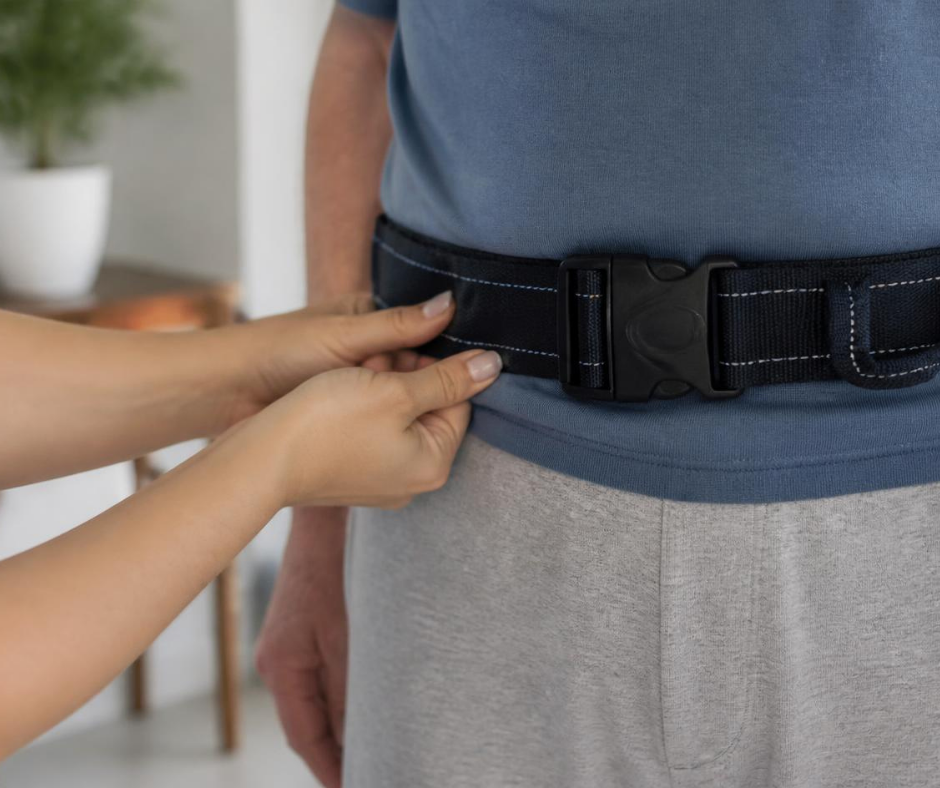
Step-by-Step Guide 1: Applying the Gait Belt Correctly
An improperly fitted belt can slip upward toward the ribs during a transfer, causing discomfort or breathing restriction. Proper placement is essential.
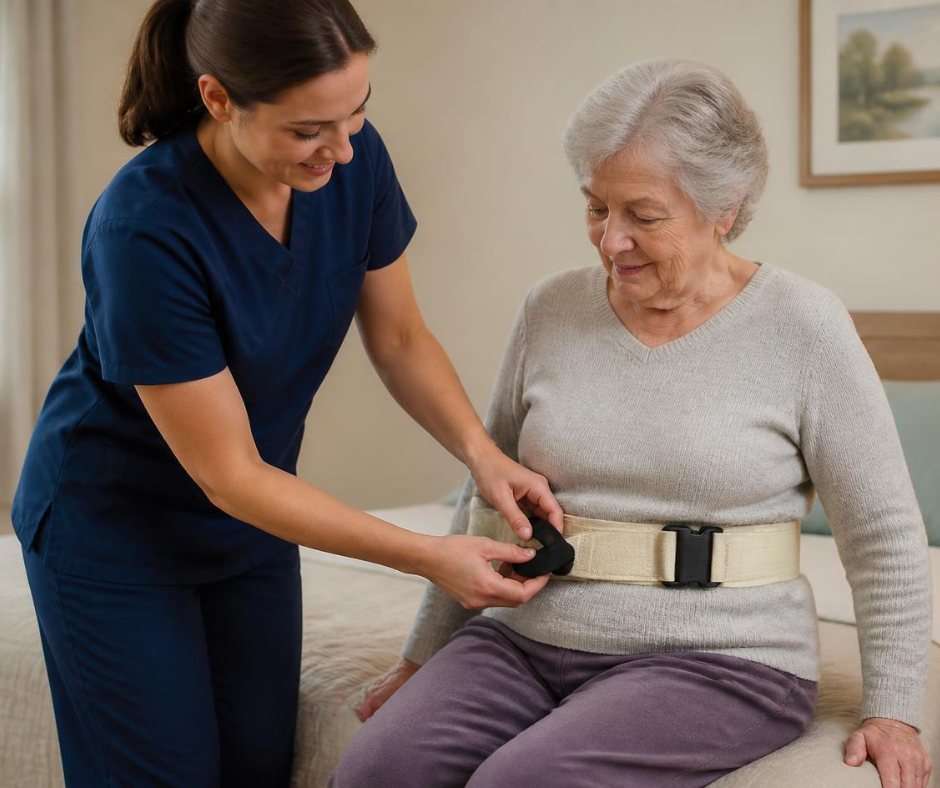
- Position the Belt: Stand or sit your loved one comfortably. Wrap the belt around their waist, placing it directly over their clothing. Never place a gait belt directly against bare skin, as the friction can pinch or bruise fragile skin.
- Check the Buckle: Thread the belt end through the metal teeth (if using a metal buckle) following the correct “teeth-first” locking sequence, or click the heavy-duty plastic quick-release buckle securely.
- Verify Snugness: Pull the belt so it is snug, but not tight. You should be able to comfortably slide two flat fingers underneath the belt. If you can fit a whole fist underneath, it is too loose and will ride up.
- Tuck the Tail: Tuck any remaining slack or tail of the belt back into the loop so it doesn’t become a tripping hazard for either of you.
Step-by-Step Guide 2: Bed-to-Wheelchair Transfer
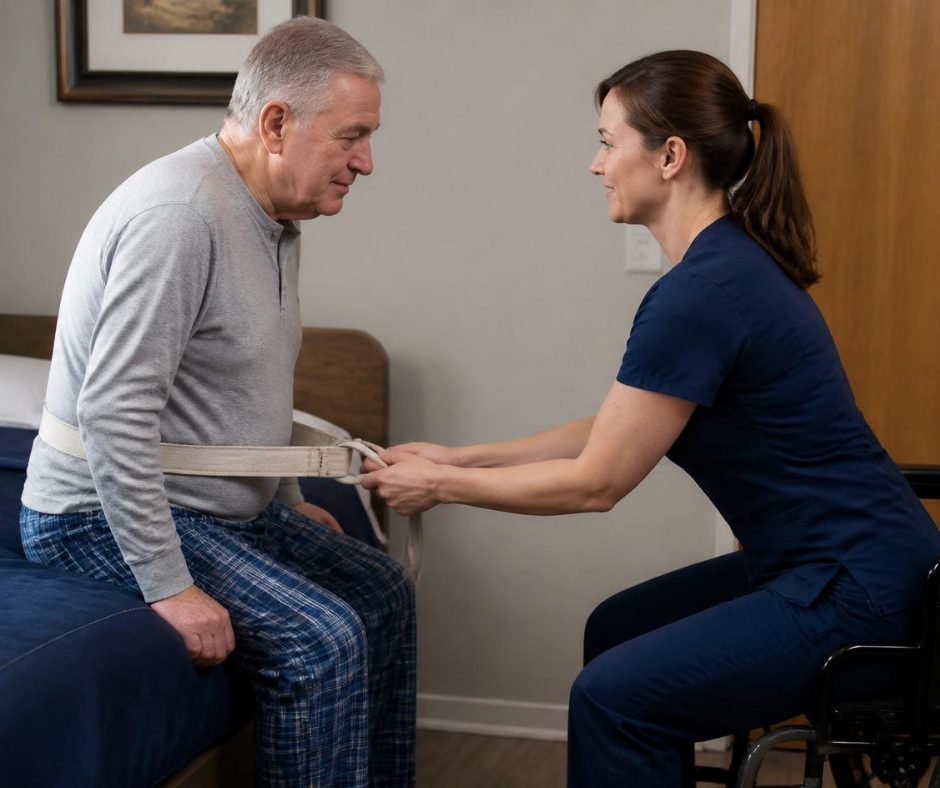
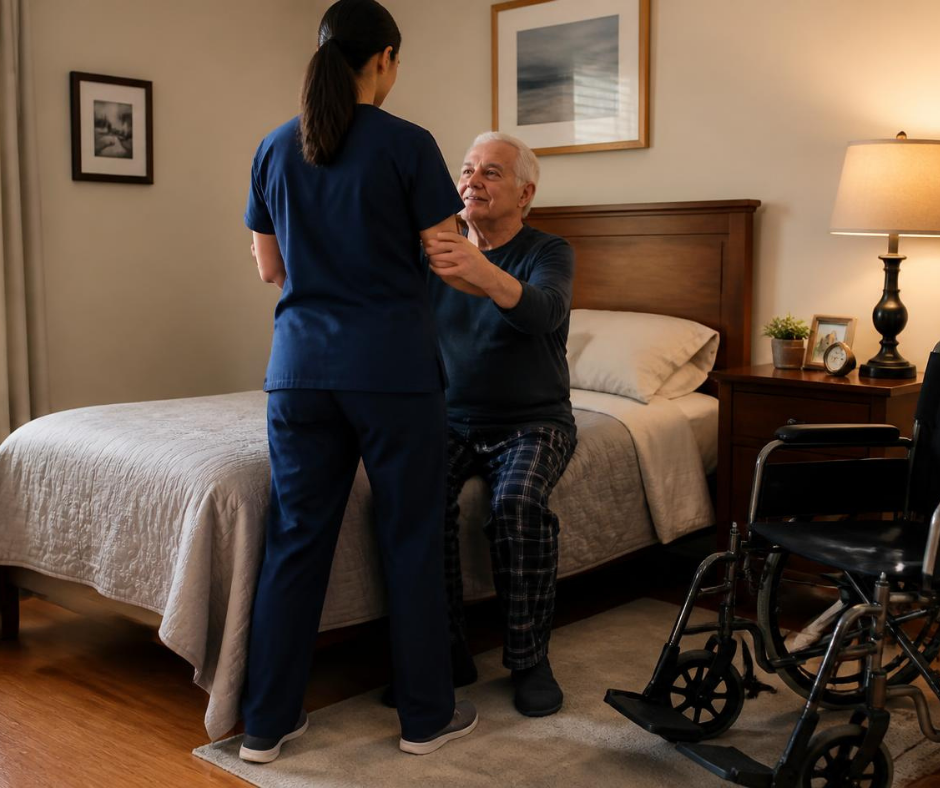
Moving from a lying position to a seated wheelchair is one of the most common daily routines, yet it holds a high risk of backward falls if momentum isn’t managed properly.
- Prepare the Setup: Position the wheelchair at a 45-degree angle to the side of the bed on the senior’s stronger side whenever possible. Lock the wheelchair brakes completely and swing the footrests away.
- Bring to a Sit: Help your loved one roll onto their side. Swing their legs over the edge of the mattress while simultaneously pushing their upper body up with your other arm. Let them sit on the edge of the bed for a full minute to prevent dizziness or orthostatic hypotension (blood pressure drops).
- Put on Footwear: Ensure they are wearing secure, non-skid shoes or slippers. Their feet must rest flat firmly on the floor.
- Apply the Gait Belt: Secure the belt snugly around their waist following the steps outlined above.
- Establish Your Stance: Stand directly in front of them. Place your feet outside theirs, blocking their feet with your feet (or knees) to prevent slipping. Keep your back straight, bend your knees, and hinge at your hips.
- Grip the Belt: Reach around their waist and grasp the gait belt underhand (palms facing upward) with both hands—one hand on the side, one at the back center.
- The Count and Pivot: On a counted three (“One, two, three, up”), shift your weight from your back foot to your front foot, straightening your knees to bring them to a standing position. Do not pull up with your arms; use your legs. Once they are standing and stable, pivot together toward the wheelchair.
- Lower Safely: Bend your knees again to lower them gently into the center of the wheelchair seat. Remove or reposition the belt.
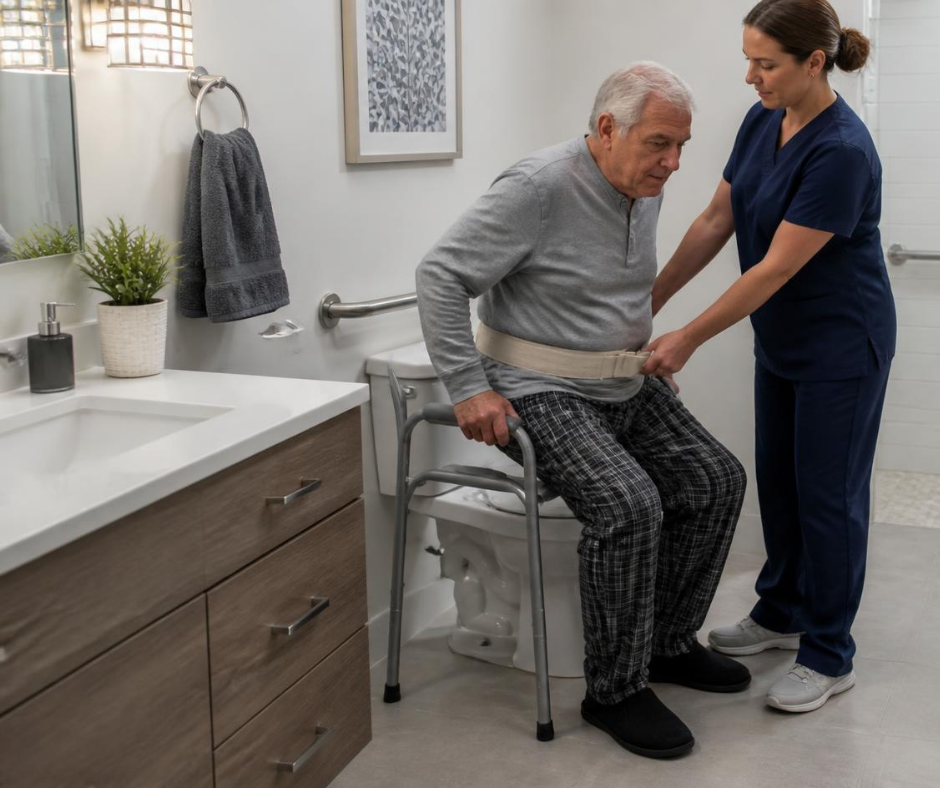
Step-by-Step Guide 3: Sit-to-Stand and Toilet Transfers
Bathroom transfers are notoriously tricky due to tight spaces and slippery tile floors.
- Check the Commode or Chair: Ensure the commode or armchair is stable, non-slip, and equipped with secure armrests. Lock any rolling commode chair brakes.
- Scoop Forward: Have your loved one scoot their hips forward until their feet are flat on the floor underneath them or slightly behind their knees. Leaning forward (“nose over toes”) is the golden rule of standing.
- Secure the Belt: Check that the gait belt is snug and properly positioned.
- Position Your Body: Stand close, block their knees with yours to keep their joints from buckling, and grasp the gait belt underhand.
- Execute the Rise: Have them push off the armrests of their current seat while you drive upward with your legs, using the belt to guide their momentum forward and up.
- Pivot and Sit: Once upright, take a small, controlled step to pivot their backside toward the toilet or chair, then guide them down smoothly by bending your own knees.
Product Spotlight: My Top 5 Picks for Gait Belt Transfer
Not all gait belts are created equal. When shopping for a reliable belt for home use, certain features separate high-quality safety gear from cheap novelties. Here are my top 5 picks for gait belt transfer:
1. Secure STWB-52 Transfer & Walking Belt with EZ Release Plastic Buckle
Best Overall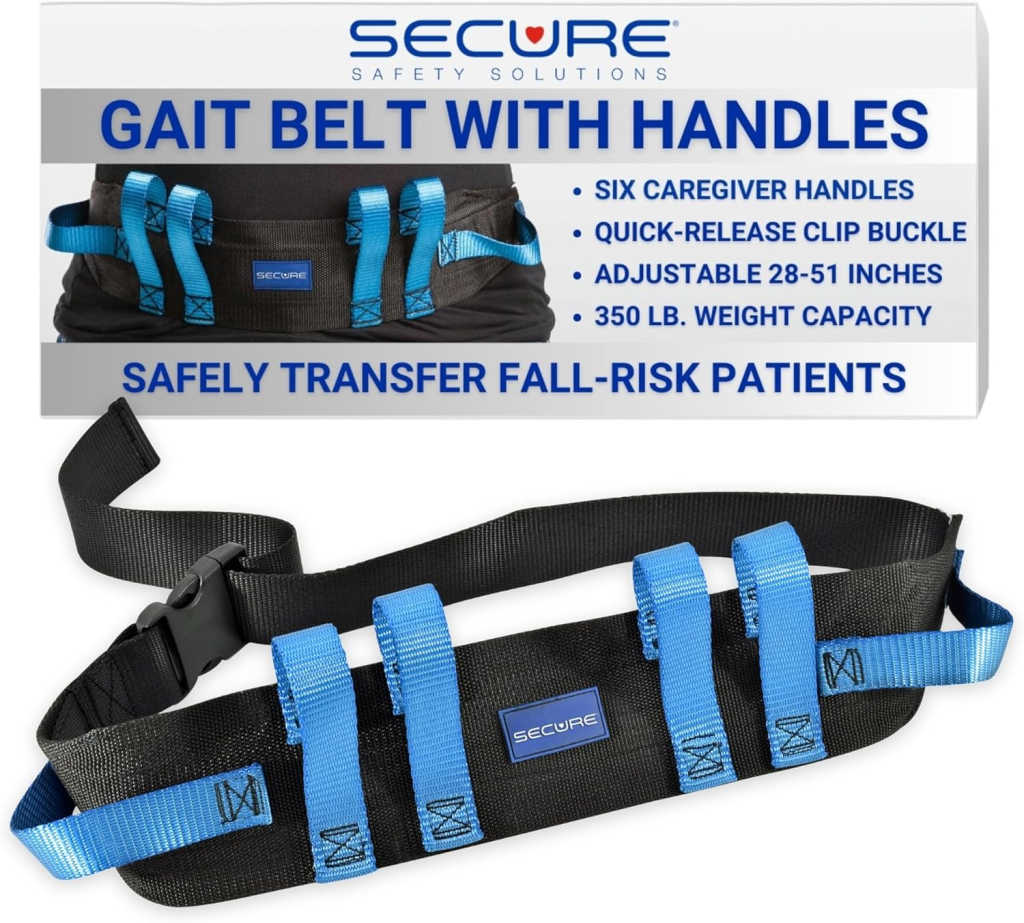
Best For: Everyday transfers, home walking assistance, and seniors recovering from surgery with mild balance problems.
Not Ideal For: Bariatric transfers or caregivers needing multiple grab handles for complex lifting positions.
Price: Around $20–30 USD
Product Overview
If someone asked me to recommend just one gait belt for most families, this would be it. The Secure STWB-52 has been used in hospitals, rehabilitation centres, and home care settings for years. Instead of adding extra features that many caregivers never use, it focuses on getting the basics exactly right: strong webbing, a dependable buckle, and a comfortable fit.
Key Features & Ease of Use
- Hospital-quality heavy-duty webbing construction (2″ width x 52″ length)
- Smooth EZ-release plastic buckle for quick and secure fastening
- Lightweight, durable, and easy to wipe clean
- Simple, non-bulky design suitable for repeated daily use
- Ease of Use: Excellent. The simple design makes it very intuitive for first-time caregivers to learn and operate quickly.
Things We Loved
- Extremely durable and trusted medical brand
- EZ-release buckle feels very secure yet operates easily
- Lightweight enough for walking assistance without feeling bulky
- Exceptional overall value for everyday caregiving
Things to Know Before Buying
- No dedicated grab handles included on the belt
- Less ideal for complex or heavy wheelchair and bed transfers
2. Supregear Anti-Slip Gait Belt with 7 Handles
Best for Bariatric Care & Difficult Transfers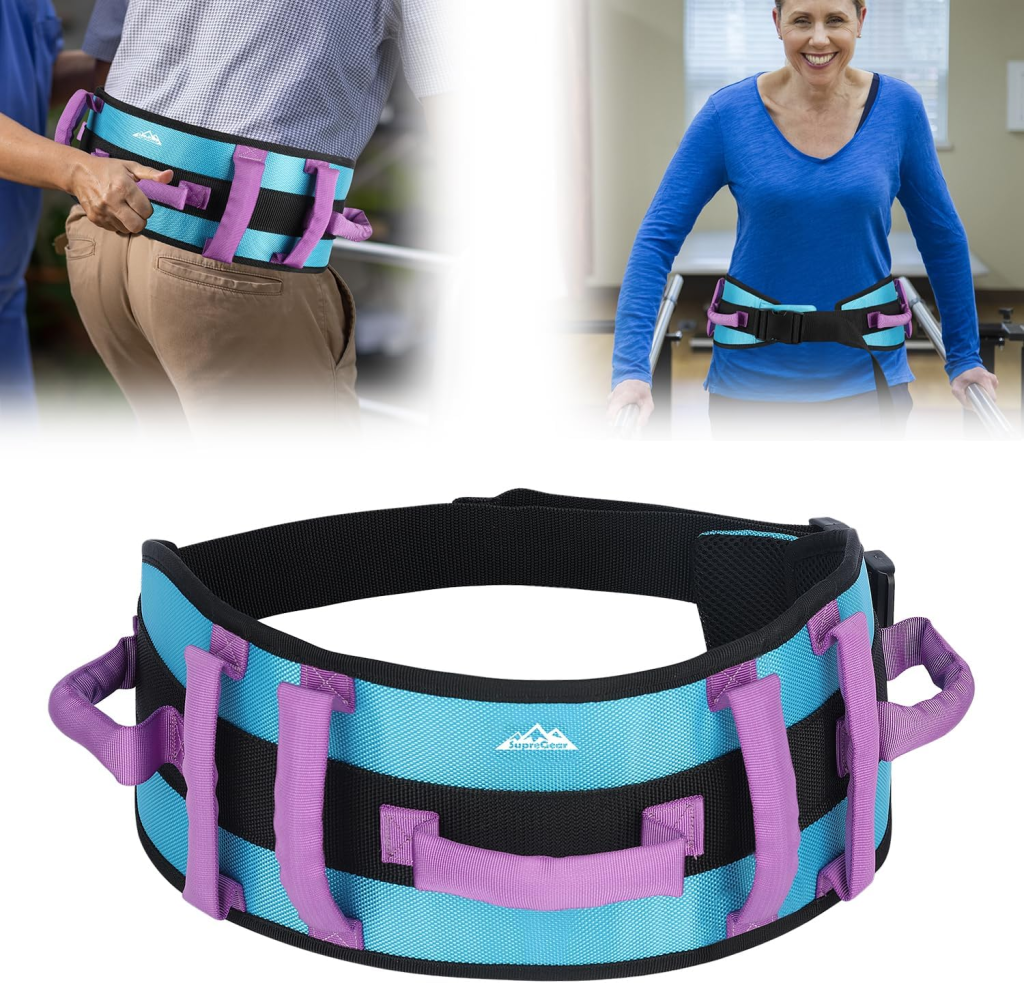
Best For: Bariatric users, wheelchair and bed transfers, and caregivers needing maximum control during difficult movements.
Not Ideal For: Seniors needing simple walking assistance or caregivers wanting the lightest possible belt.
Price: Around $25–35 USD
Product Overview
Some transfers are simply more challenging than others. If your loved one needs considerable physical assistance—or if you’re often helping them move between a wheelchair, bed, recliner, or toilet—the Supregear’s seven-handle design gives you much more flexibility. Instead of grabbing wherever you can, you always have a secure handle within reach.
Key Features & Ease of Use
- Seven reinforced handles for multiple grip angles
- Anti-slip inner lining prevents belt shifting during transfers
- Extra-wide support surface with strong reinforced stitching
- Quick-release buckle for easy fastening and removal
- Comfortable padded grip handles
- Ease of Use: Excellent. Multiple handles make it vastly easier to maintain proper body mechanics during physically demanding transfers.
Things We Loved
- Outstanding control during wheelchair and bed transfers
- Anti-slip lining stops the belt from sliding up or twisting
- Comfortable handles reduce hand and wrist strain for caregivers
- Great stability for heavier individuals
Things to Know Before Buying
- Bulkier than standard single-strap gait belts
- May be unnecessary for seniors who only need light balance support
3. Jacobable Gait Belt with 7 Padded Nylon Handles
Best Value for Money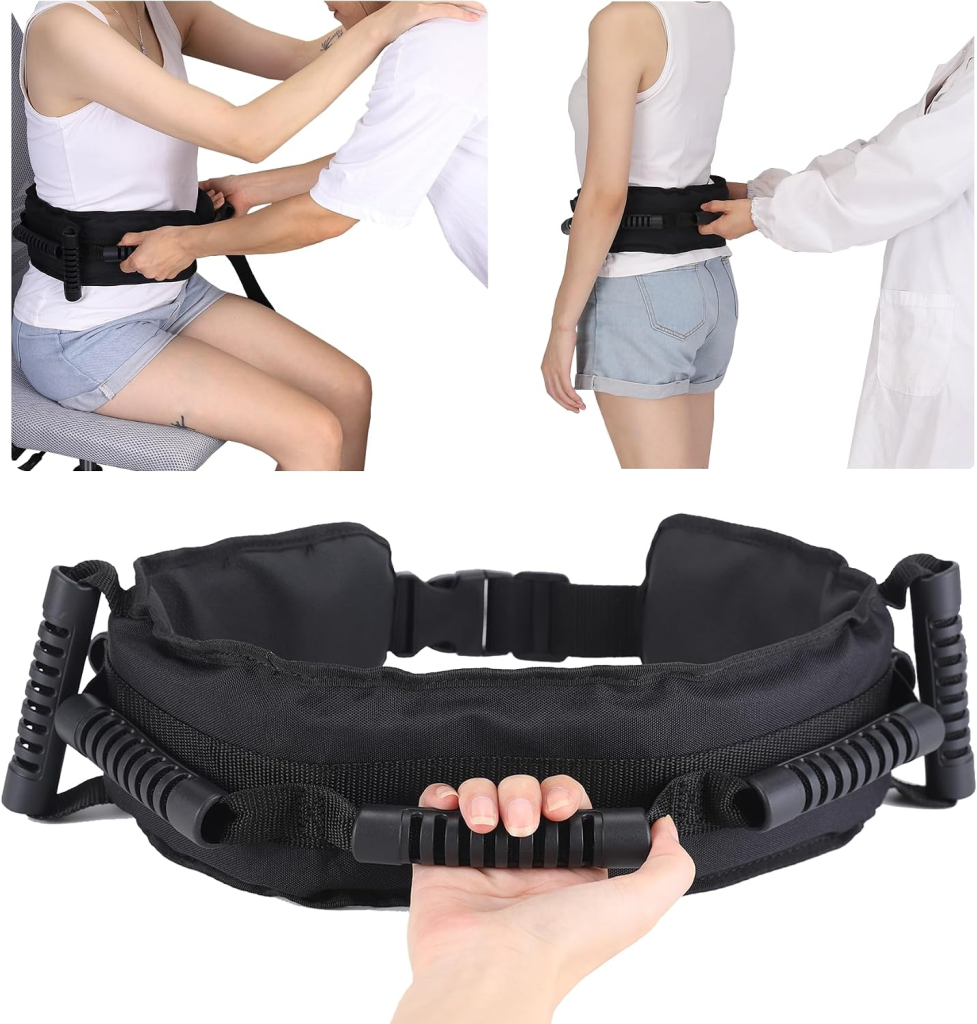
Best For: Everyday home caregiving, families seeking a multi-handle belt without spending a lot, and versatile transfer assistance.
Not Ideal For: Seniors who only need basic walking support without extra grab handles.
Price: Around $20–30 USD
Product Overview
The Jacobable gait belt offers many of the same features found on more expensive transfer belts but at a price that’s easier on most family caregivers. Its seven padded handles are positioned well around the belt, making it easier to assist from the side, back, or front without constantly adjusting your grip. The padding also makes a noticeable difference during longer transfer sessions, reducing pressure on both the caregiver’s hands and the senior’s waist.
Key Features & Ease of Use
- Seven padded nylon grab handles strategically positioned for easy gripping
- Comfortable waist padding (~4-inch width) to reduce pressure
- Durable, reinforced nylon construction for daily reliability
- Quick-release buckle for effortless securing and removal
- Fully adjustable length to fit a variety of waist sizes
- Ease of Use: Excellent. Multiple padded handles offer great versatility and comfort for caregivers assisting from different angles.
Things We Loved
- Outstanding value for a multi-handle padded transfer belt
- Padded handles protect caregiver hands from strain
- Wide design distributes leverage safely across the waist
- Versatile grip angles make daily transfers much easier
Things to Know Before Buying
- Bulkier than a simple standard single-strap belt
- Takes slightly more time to adjust on smaller frames
4. N1NZDYY Gait Belt for Seniors with Padded Handle
Best for Comfortable Everyday Use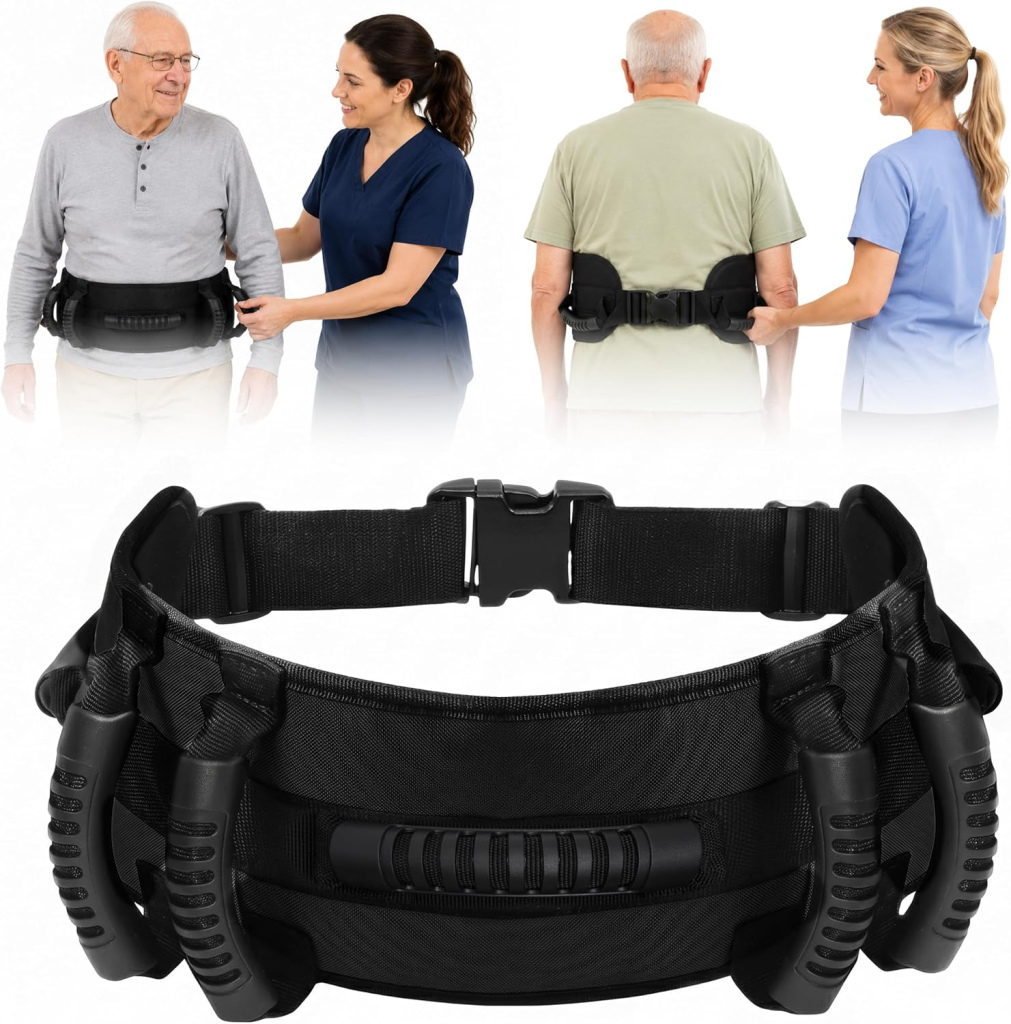
Best For: Daily home caregiving, seniors with sensitive skin or thin clothing, and comfortable walking assistance.
Not Ideal For: Heavy bariatric transfers requiring extreme weight capacity.
Price: Around $20–30 USD
Product Overview
The N1NZDYY gait belt is designed specifically with daily comfort in mind. Featuring soft padding along the waist area and ergonomically placed padded handles, it minimizes friction and digging during transfers. It is an ideal option for family caregivers helping loved ones stand, sit, or walk routinely throughout the day without sacrificing support or safety.
Key Features & Ease of Use
- Ergonomic padded handles for enhanced caregiver grip and wrist comfort
- Soft waist padding to prevent skin irritation and pressure marks
- Secure quick-release buckle for easy application and removal
- Durable, heavy-duty webbing for reliable daily support
- Ease of Use: Excellent. Straightforward design that offers enhanced comfort for both caregiver and senior during routine assistance.
Things We Loved
- Padded construction protects delicate skin
- Comfortable handles make guiding movement much easier on hands
- Quick-release buckle operates smoothly and securely
- Great balance of softness and stability
Things to Know Before Buying
- Padding adds a bit of bulk compared to plain nylon belts
- Fewer grip angles than specialized 7-handle bariatric belts
5. Silimore Gait Belt for Seniors with 7 Handles
Best for Physical Therapy & Walking Assistance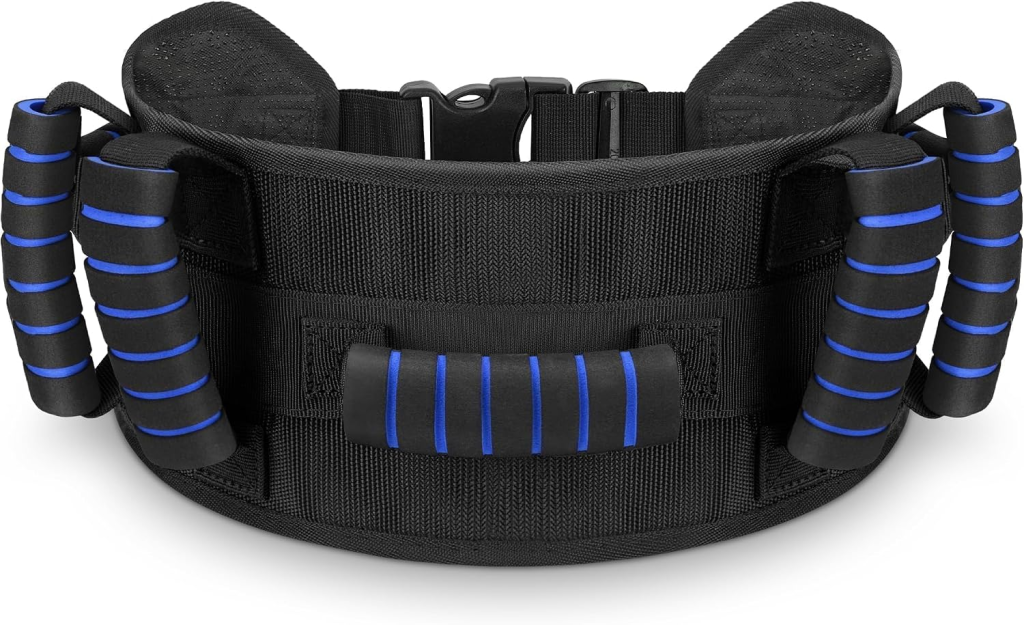
Best For: Physical therapy sessions, post-surgery rehab, and seniors needing active, guided walking support.
Not Ideal For: Individuals needing a basic minimalist belt without extra handles.
Price: Around $20–30 USD
Product Overview
Designed with rehab and gait training in mind, the Silimore Gait Belt provides exceptional stability for seniors working on regaining their mobility. With seven strategically placed handles, caregivers and physical therapists can comfortably support walking exercises, stair navigation, and balance correction from any position.
Key Features & Ease of Use
- 7 multi-directional handles for flexible support during walking and transfers
- Durable, heavy-duty nylon construction built for active therapy use
- Secure quick-release buckle for rapid, hassle-free fastening
- Wide waist band design to distribute leverage and protect skin
- Ease of Use: Excellent. Multi-grip handles allow quick adjustments in hand placement as the senior moves or shifts weight.
Things We Loved
- Ideal for physical therapy exercises and ambulation training
- Multiple handles give exceptional control from side, back, or front
- Durable materials stand up well to repeated daily practice
- Strong buckle ensures safe, worry-free support
Things to Know Before Buying
- Has more handles than necessary if you only need occasional standing help
- Requires proper size adjustment to ensure handles stay properly aligned
Safety Tips from an Experienced Caregiver
Protecting your own physical health is just as important as keeping your loved one safe. If you get injured, your entire caregiving system falls apart.
- Never Twist Your Spine: When pivoting a senior, move your entire set of feet rather than twisting your torso. Twisting while bearing weight is the primary cause of sudden caregiver disc herniation.
- Keep Your Center of Gravity Low: Bend your knees and keep your parent pulled in close to your chest. The further away they are from your center of gravity, the heavier they will feel on your lower back.
- Communicate Every Step: Talk through the movement before you start. Say, “Ready? On three, we’re going to stand up and pivot to the chair. One, two, three.” Predictability keeps seniors from getting startled and pulling off balance.
- Know When to Ask for Backup: If your loved one is having a particularly weak day, or if you feel muscle spasms coming on, do not attempt a solo transfer. Call a secondary family member or neighbor to assist with a two-person transfer.
Final Thoughts
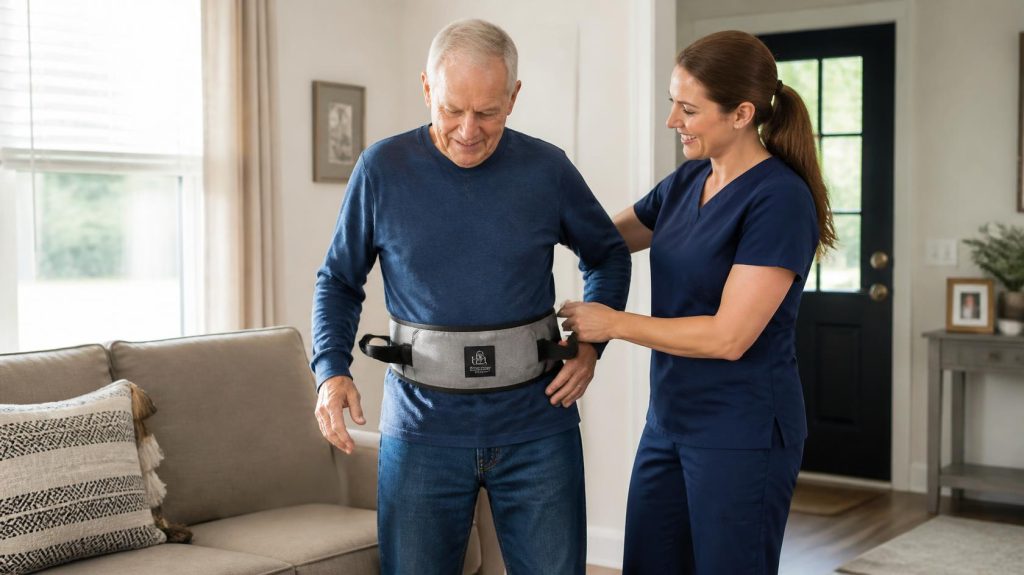
Mastering the gait belt transfer takes patience, practice, and mindfulness about your body mechanics. It is completely normal to feel clumsy or nervous during your first few attempts. Give yourself grace as you and your loved one establish a new rhythm.
By prioritizing proper preparation, using a well-fitted belt, and protecting your own back with smart leg drive, you are building a sustainable foundation for home care. You don’t have to sacrifice your own health to keep your parent safe and mobile.
Frequently Asked Questions
Can I use a regular belt instead of a medical gait belt?
No, you should never use a regular fashion belt for mobility transfers. Regular belts are not designed to withstand pulling forces, lack proper width to distribute pressure safely, and their buckles can snap or slip under body weight. A certified medical transfer belt is constructed with high-tensile strength webbing specifically engineered to support human weight safely.
Where should the gait belt be positioned on the body?
The gait belt should always be placed around the natural waistline, directly over clothing. Never place it over bare skin to avoid pinching or friction burns. Ensure it is positioned low enough that it will not slide upward onto the ribs, but high enough that it doesn’t slip over the hips.
What should I do if my parent starts falling during a transfer?
If your parent begins to fall, do not try to catch their full weight with your upper body, as this will pull you down and cause injury to both of you. Instead, keep a firm grip on the gait belt, pull them close against your body, bend your knees, and slide or guide them down your leg toward the floor in a controlled descent.
Can a gait belt be washed?
Yes, most cotton and nylon gait belts can be washed. Check the manufacturer’s care label first. Many cotton belts can be machine washed on a gentle cycle inside a pillowcase or hand-washed with mild soap, then air-dried flat. Avoid using harsh chemical bleaches that can degrade the fabric fibers.
Is a gait belt safe for someone with osteoporosis?
Special caution is required when using a gait belt on individuals with severe osteoporosis or fragile ribs. Because the belt applies localized pressure around the midsection during pulls, you must ensure the belt is snug rather than tight, and avoid sudden, jerky hauling movements that could stress fragile bones. Consult their physician or physical therapist for tailored positioning advice.
How tight should the gait belt be adjusted?
The belt should be snug enough that it remains securely in place around the waist without sliding, but loose enough that you can easily slide two flat fingers underneath it. If you can fit a fist underneath, it is too loose; if it leaves deep indentations or restricts breathing, it is too tight.
Can a senior use a gait belt on themselves independently?
Gait belts are designed strictly for caregiver-assisted transfers and stability support. A senior cannot safely tighten or utilize a gait belt on themselves to stand up independently without an assistant holding the belt or providing balance support.
What is the weight limit for a standard gait belt?
Most standard-duty medical gait belts are rated to support weights ranging from 300 to 500 pounds, while heavy-duty or bariatric models can support significantly more. Always check the specific manufacturer’s weight capacity rating before use to ensure it matches your loved one’s needs.