
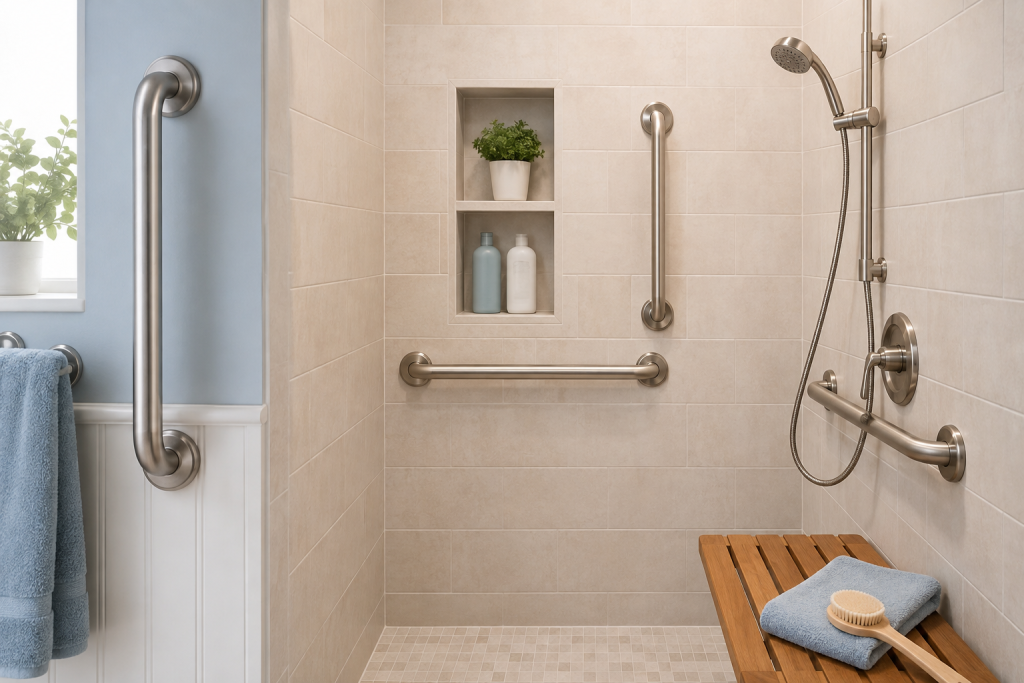
The moment a parent’s hand slips on wet tile while stepping into the shower is a moment every family caregiver dreads. Soap, water, and hard porcelain create a high-risk environment, making the bathroom the most dangerous room in the house for older adults. Installing bathroom safety rails is one of the most effective ways to prevent devastating falls, yet a grab bar only protects if it is placed where a hand naturally reaches during a loss of balance.
Getting the layout right takes more than screwing a metal bar into the nearest wall stud. Different mobility levels, shower stall layouts, and physical heights dictate where support is truly needed. This comprehensive guide walks through the exact science and practical art of shower grab bar placement, breaking down proper heights, angles, and configurations so aging parents can bathe safely and independently.
Why Proper Shower Grab Bar Placement Matters
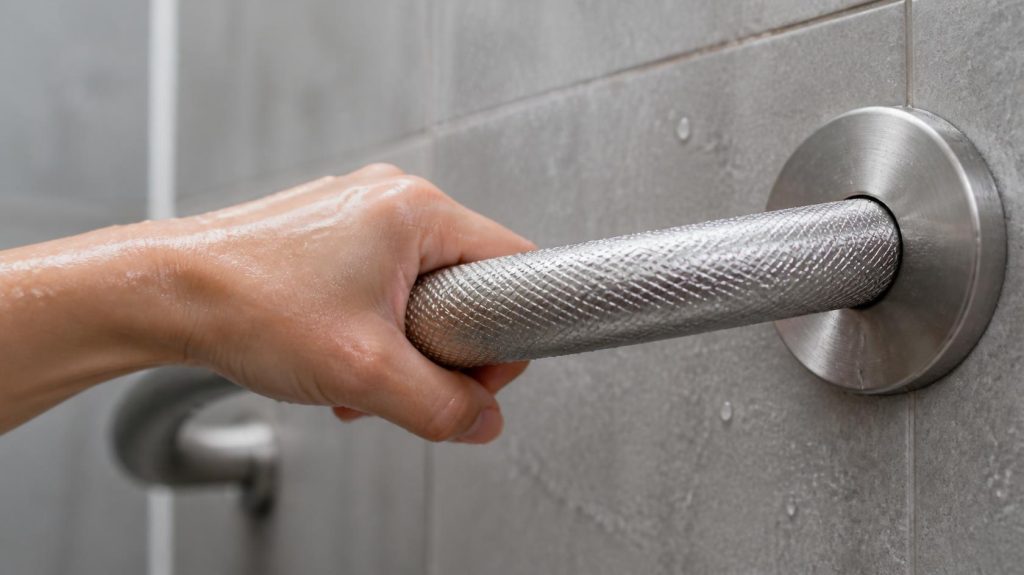
When an older adult starts to fall, their reaction time is measured in fractions of a second. They will not calculate where a bar is located; they will reach out blindly, expecting solid support to be right where their hand falls.
If a grab bar is mounted too high, too low, or tucked around an awkward corner, it becomes useless in an emergency. Proper placement bridges the gap between panic and security. It provides stability during the three most hazardous phases of showering:
- The Threshold Transition: Stepping over the slippery tub rim or shower curb.
- The Standing Pivot: Turning around or shifting weight underneath the running water.
- The Sit-to-Stand Motion: Rising from a shower chair or bench.
Understanding the biomechanics of a fall helps caregivers look past aesthetics and focus purely on functional safety.
Types of Grab Bars and Materials
Not all bathroom safety rails are created equal. Selecting the right finish and texture ensures long-term comfort and durability.
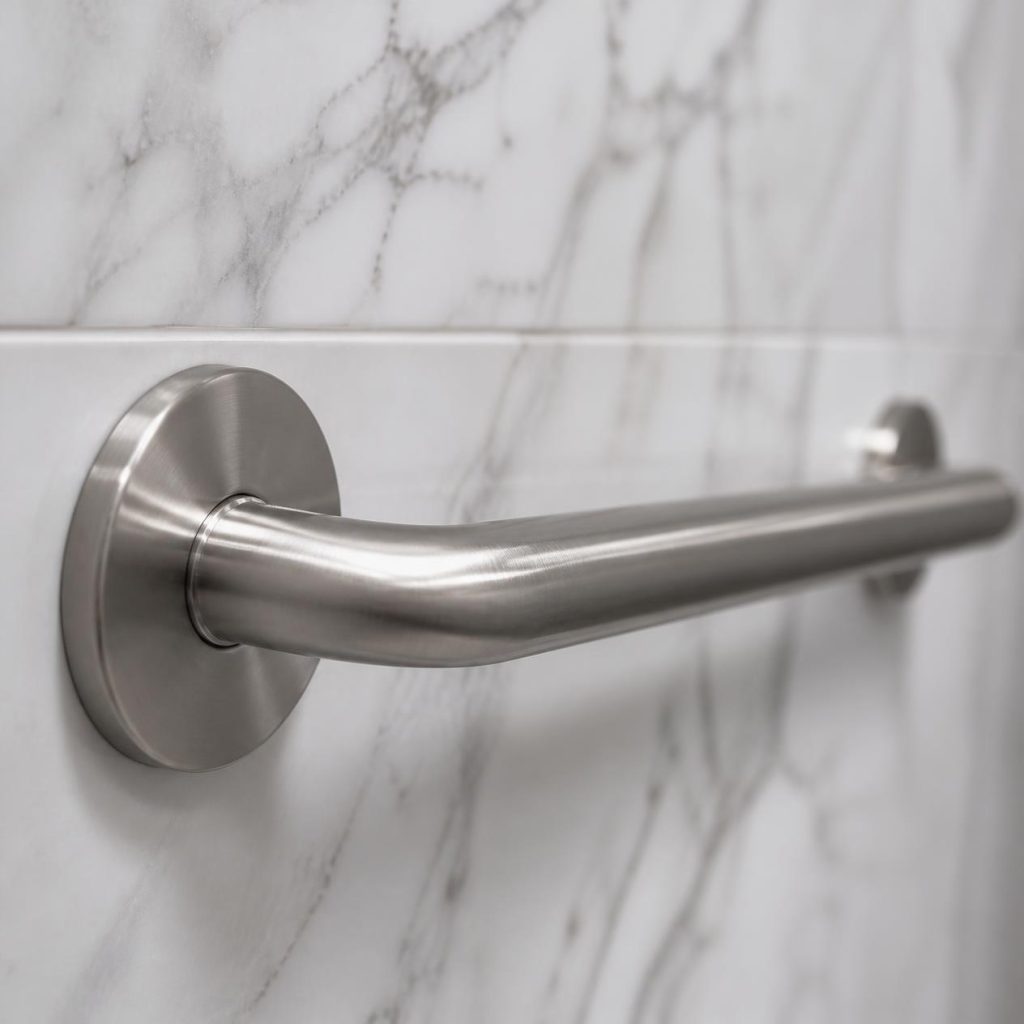
Stainless Steel & Chrome
Highly durable and rust-resistant, making them ideal for wet shower environments. Look for brushed finishes if glare from overhead bathroom lights bothers your parent.
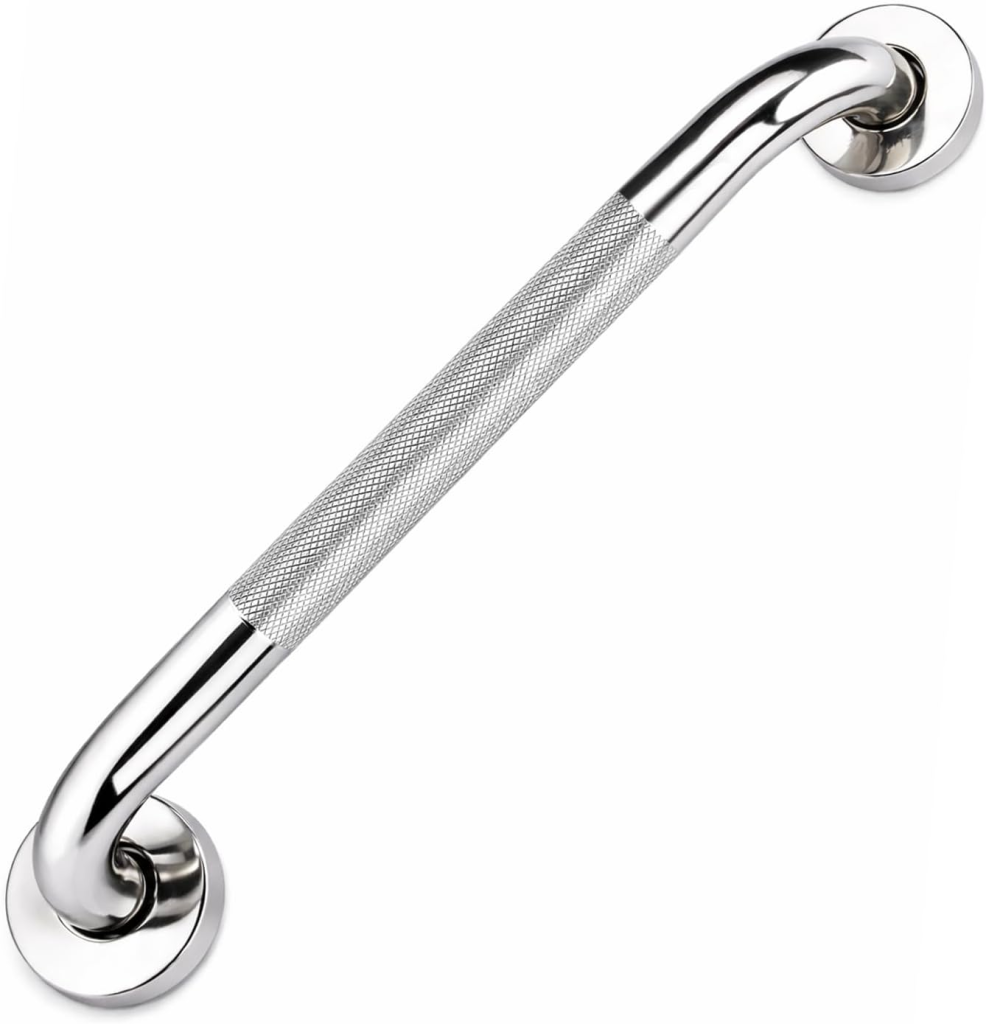
Peened or Textured Grips
Featuring a slight knurling or rubberized grip pattern, these bars prevent wet hands from slipping. They are exceptionally helpful for seniors with weak hand strength or arthritis.
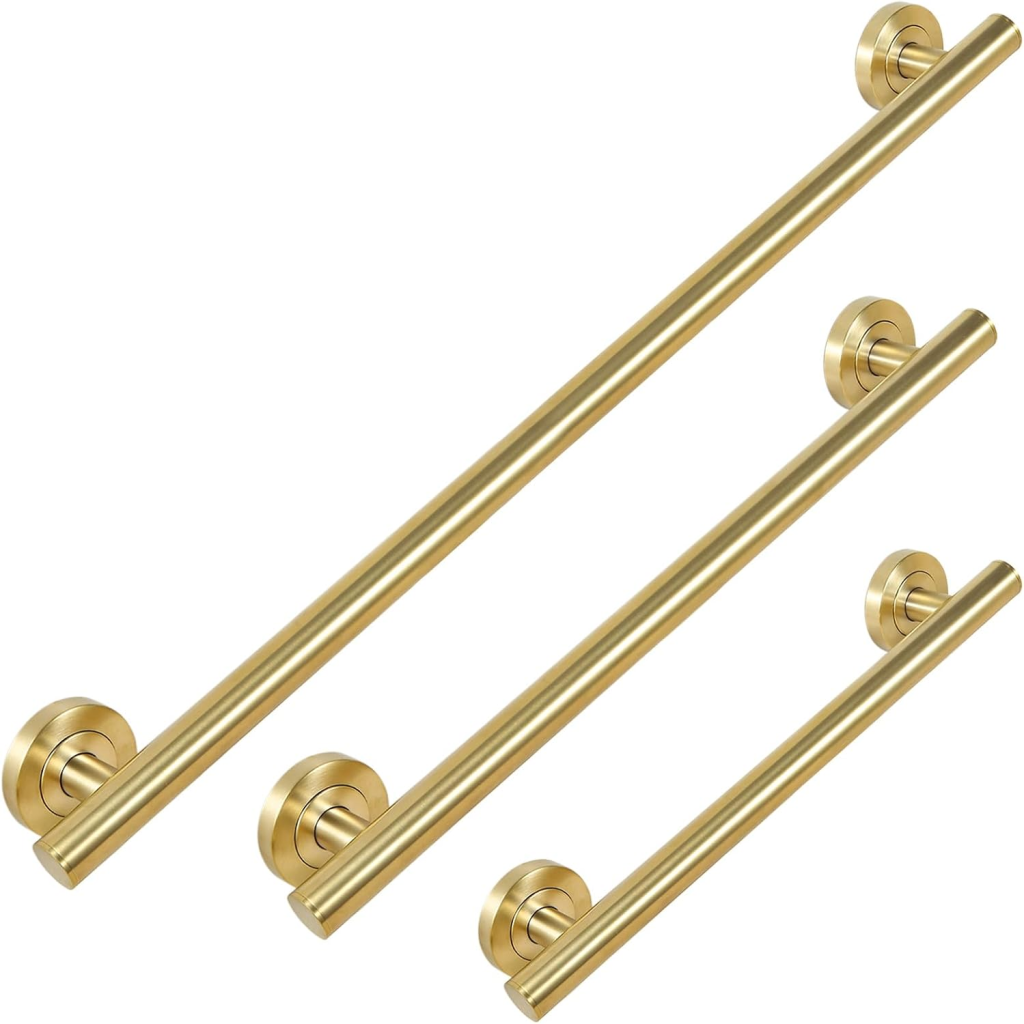
Decorative Designer Bars
Modern safety bars double as architectural towel racks or soap-dish holders, blending seamlessly into high-end bathroom decor without looking institutional.
Caregiver Tip: Avoid suction-cup grab bars for permanent shower safety. While convenient for travel or temporary use, suction cups can lose their seal unexpectedly under sudden body weight, creating a false sense of security that leads to severe falls.
Core ADA Guidelines vs. Real-World Homes
Commercial buildings follow strict rules set by the Americans with Disabilities Act (ADA), which provides an excellent baseline for residential safety. However, private homes require a personalized touch.
Standard ADA guidelines recommend mounting horizontal shower grab bars between 33 and 36 inches above the finished floor. While this works well for many adults, a caregiver must always factor in the actual height of their parent. Someone who is 5 feet tall will require a slightly lower placement than someone who stands 6 feet 2 inches tall.
Key Structural Rules for Safety
- Weight Capacity: Every bar and its mounting hardware must support a minimum of 250 pounds of sudden, dynamic force.
- Wall Anchoring: Grab bars must screw directly into vertical wood wall studs or utilize heavy-duty toggle anchors rated for grab bar use. Never anchor a safety bar into drywall or plastic tile anchors alone.
- Grip Clearance: Maintain a clear space of exactly 1.5 inches between the wall and the bar so fingers can wrap securely around the metal without scraping knuckles.
- Bar Diameter: The gripping surface should measure between 1.25 and 1.5 inches across, which fits comfortably inside an aging or arthritic hand.
Room-by-Room Layout: Where to Place Shower Grab Bars
A standard walk-in shower requires a multi-point approach to ensure complete safety from the moment your parent steps inside to the moment they step out.
1. The Entry Wall (Vertical Bar)
The transition zone between the dry bathroom floor and the wet shower base is where most slips happen.
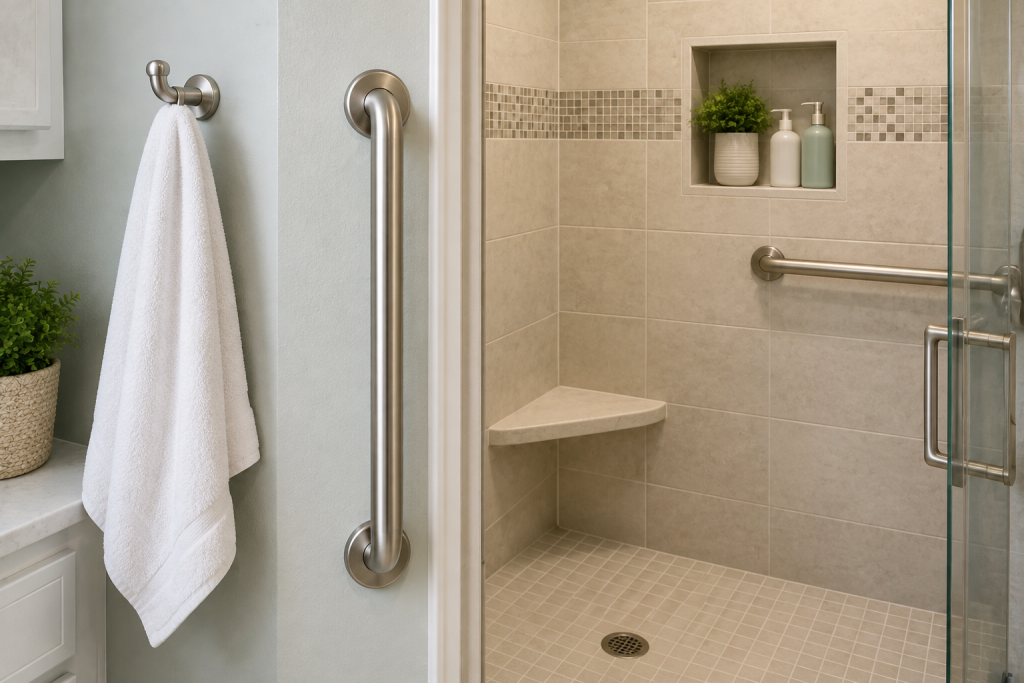
- Best Placement: Install an 18-inch to 24-inch bar vertically on the wall just outside or immediately inside the entry door jamb. Position it about 4 to 6 inches inward from the outer edge.
- Height: The bottom of the vertical bar should sit roughly 34 to 38 inches from the floor, allowing a seated or standing person to grab it naturally before lifting a foot.
- Why It Works: A vertical orientation accommodates users of varying heights, giving them a ladder-like handhold to pull themselves forward or steady a hesitant step.
2. The Side or Control Wall (Horizontal or Angled Bar)
Navigating the slippery center of the shower while adjusting water temperature requires stable lateral support.
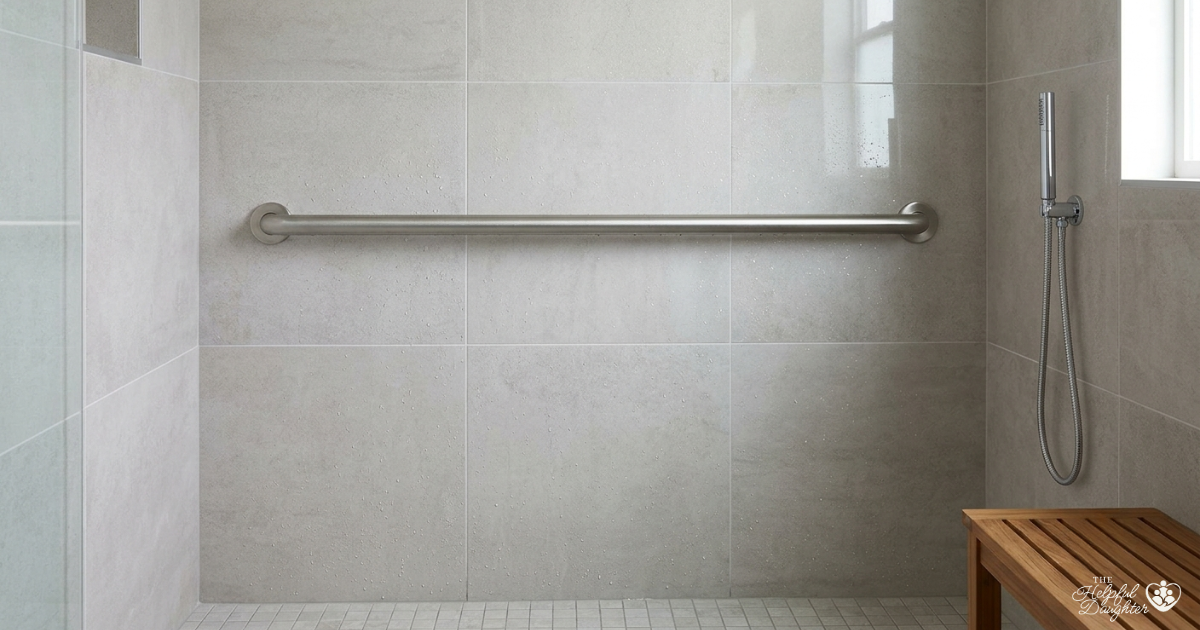
- Best Placement: Mount a 24-inch to 36-inch bar horizontally along the side wall at waist height, typically 33 to 36 inches from the floor.
- Alternative Angle: If your parent uses a shower chair, consider a 45-degree diagonal bar or an L-shaped configuration near the faucet to assist with the push-pull motion of standing up.
- Why It Works: It provides a continuous horizontal plane to hold onto while washing or moving laterally away from the water stream.
3. The Back Wall (Horizontal Bar)
In larger stalls or tub-shower combinations, the back wall acts as a safety net when individuals turn away from the entrance.
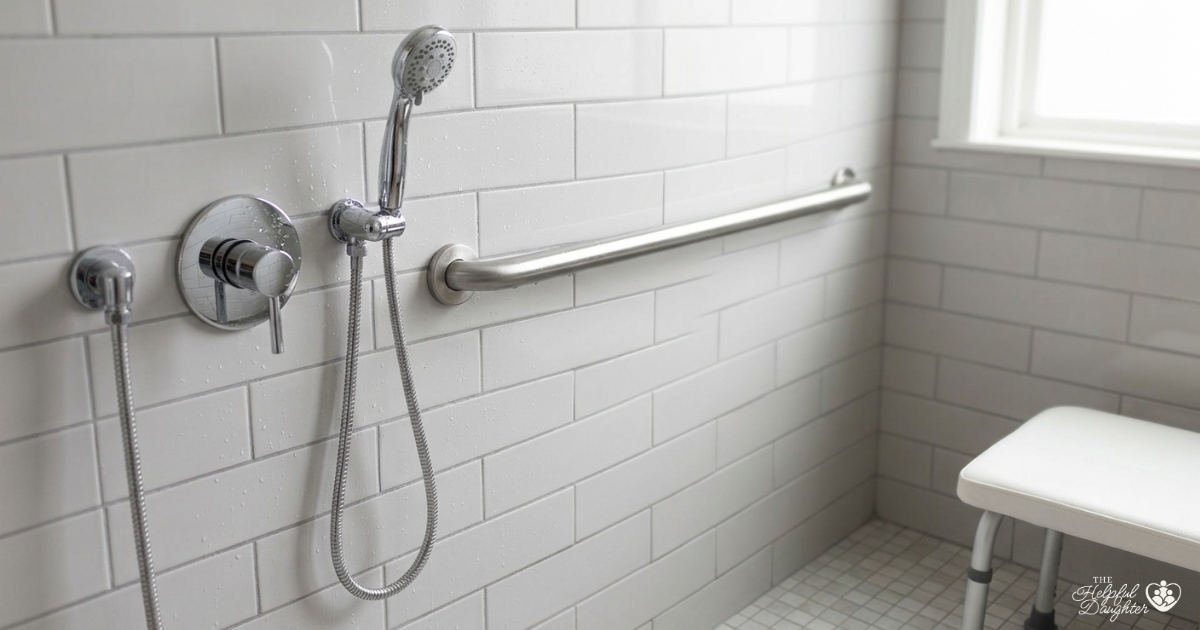
- Best Placement: A 36-inch or 48-inch horizontal bar mounted directly across the back wall at standard waist height (33 to 36 inches).
- Why It Works: It ensures that no matter where an individual moves along the rear of the shower, a secure handhold is always within arm’s reach.
Product Review: Top-Rated Safety Solutions for Showers
When outfitting a parent’s bathroom, choosing reliable hardware matters. Here is an honest review of two leading options trusted by professional installers and family caregivers.
1. Supregear Bathroom Grab Bar Rail (304 Stainless Steel, 10 Inch)
Best Compact Permanent Bar
Best For: Tight spaces, narrow doorway entries, single steps, and next to the toilet.
Not Ideal For: Large shower enclosures requiring longer continuous grab surface area.
Price: Around $19.99–$22.99 USD
Personal Thoughts
If you need permanent support in a compact spot—like next to a small shower step or right beside a doorway jamb—this is a solid choice. The anti-slip knurled pattern feels very secure under wet hands, and the concealed flange design gives it a clean, professional look that hides mounting screws.
Key Features & Specifications
- ADA Compliance: Yes (when anchored properly into wood wall studs).
- Weight Rating: Supports up to 300 lbs.
- Water Resistant: Yes (Rust-proof 304 stainless steel).
- Mounting Type: Permanent wall mount (Screws and hardware included).
- Center anti-slip knurled pattern provides high-friction traction.
- Concealed screw flange design keeps hardware clean and minimalist.
Things We Loved
- Heavy-duty 304 stainless steel construction
- Textured knurled center grip won’t slip in soapy water
- Compact 10-inch size fits where standard bars won’t
- Concealed screws offer a clean visual look
Things to Know Before Buying
- Requires drilling into studs or tile for installation
- Short length provides less hand placement area
2. Lava Odoro Modern Stainless Steel Safety Bars (Brushed Gold, 3-Pack)
Best Overall & Most Stylish
Best For: Modern bathroom remodels, full body-weight support, and high-end aesthetic safety.
Not Ideal For: Budget-focused shoppers or renters unable to drill into wall studs.
Price: Around $165.99 USD (Set of 18″, 24″, 36″)
Personal Thoughts
This set proves that safety hardware doesn’t have to look like a hospital room. The brushed gold finish looks stunning in contemporary bathrooms, and the impressive 500 lb load rating provides unmatched peace of mind for permanent home modifications.
Key Features & Specifications
- ADA Compliance: Yes (exceeds ADA standards when stud-mounted).
- Weight Rating: Supports over 500 lbs.
- Water Resistant: Yes (Heavy-gauge rustproof 304 stainless steel).
- Mounting Type: Permanent wall mount (Concealed flange).
- Comes as a versatile 3-piece set containing 18″, 24″, and 36″ length bars.
- Subtle knurled texturing integrated into the modern brushed gold handle.
Things We Loved
- Massive 500+ lb capacity ensures top-tier physical security
- Gorgeous brushed gold design elevates home decor
- 3-pack covers shower entry, main wall, and toilet areas
- Rust-proof commercial grade stainless steel
Things to Know Before Buying
- Higher initial price point for the complete 3-pack
- Requires precise stud alignment and tile drilling
Professional Installation vs. DIY
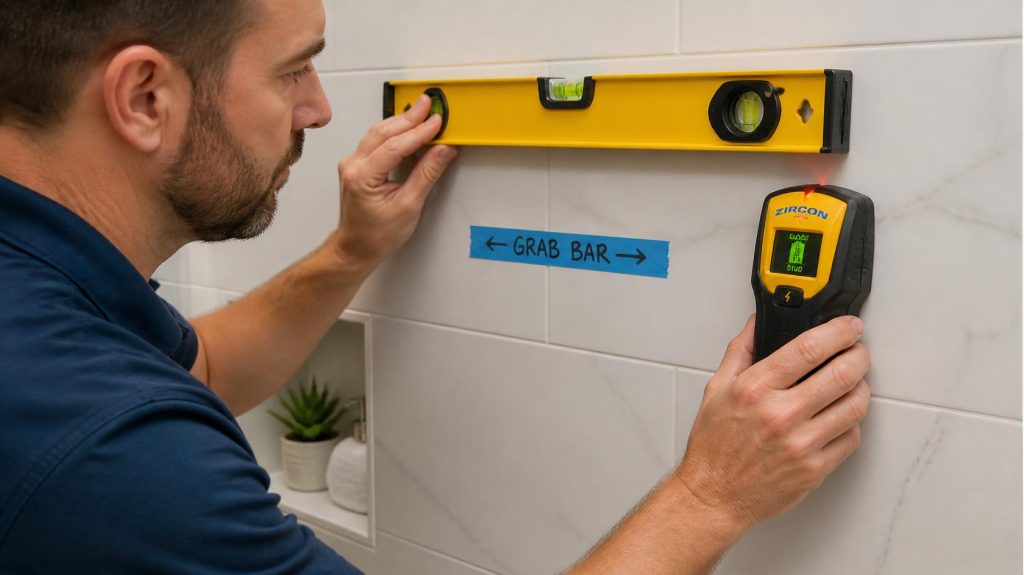
While handy family members often consider installing grab bars themselves, bathroom walls present unique challenges. Drilling through ceramic, porcelain, or natural stone tile requires specialized diamond-tipped hole saws and precise techniques to avoid cracking expensive tile.
More importantly, waterproofing is critical. If mounting screws breach the waterproof membrane behind the shower wall without proper silicone sealant, moisture will seep into the wall cavity, causing hidden mold growth and structural wood rot.
If you are confident in your stud-finding and masonry skills, a DIY installation can cost under $50 in materials. However, hiring a certified aging-in-place specialist (CAPS) or a local handyman experienced in mobility modifications typically costs between $150 and $400 per bar (including labor), guaranteeing absolute structural integrity and peace of mind.
Conclusion
Securing your parent’s bathroom doesn’t have to feel overwhelming. By focusing on smart shower grab bar placement—matching heights to their natural reach, selecting the right mix of vertical and horizontal angles, and anchoring every bar securely into solid studs—you create an environment where independence and safety go hand in hand. Take it one step at a time, involve your parent in the planning process, and give yourself peace of mind knowing their daily routine is protected.
Frequently Asked Questions
What is the correct height to install a shower grab bar?
The standard installation height for a horizontal shower grab bar is between 33 and 36 inches measured from the finished shower floor to the top of the gripping surface. However, this is a general guideline. Caregivers should adjust this height slightly up or down based on the physical stature of their aging parent, ensuring their hand naturally falls on the bar when standing or stepping.
Can I install shower grab bars without finding wall studs?
No, you should never install grab bars into drywall or plastic tile anchors alone. Grab bars must anchor directly into solid wood wall studs or utilize heavy-duty toggle anchors specifically rated for grab bar weight capacities. A bar anchored only to surface materials will pull loose under the sudden force of a fall, causing catastrophic injury.
Are suction cup grab bars safe for seniors?
Suction cup grab bars are not safe for permanent or weight-bearing support. While they can serve as temporary balance guides during travel, their rubber seals can lose suction without warning when exposed to steam, soap scum, or sudden body weight. Permanent screwed-in hardware anchored to structural studs remains the only reliable standard for home safety.
Should shower grab bars be horizontal or vertical?
Both orientations serve distinct safety purposes in a shower layout. Horizontal bars are ideal for maintaining balance while standing, walking, or washing along a wall. Vertical bars work best at entry points and thresholds to assist with stepping over high curbs or transitioning from a seated position to a standing posture.
How much weight do ADA-compliant grab bars hold?
ADA-compliant grab bars are engineered to withstand a minimum of 250 pounds of static force applied in any direction. When an individual falls against a bar, dynamic forces can briefly exceed their actual body weight, making this structural load rating essential for preventing failure during an emergency.
What is the best diameter for a senior’s grab bar?
The ideal grip diameter is between 1.25 and 1.5 inches. This specific sizing allows older adults—including those dealing with arthritis, joint stiffness, or reduced grip strength—to wrap their fingers securely around the bar without straining or losing their hold.
How many grab bars do I need in a standard shower?
For basic safety, most experts recommend installing at least two grab bars: one vertical bar at the shower entrance and one horizontal bar along the side wall. Comprehensive setups for individuals with higher fall risks often include a third bar on the back wall or an angled bar near a shower seat.
Can I install grab bars on fiberglass or acrylic shower walls?
Yes, but fiberglass and acrylic shower enclosures require special backing support. Because these walls are hollow, mounting hardware cannot grip the thin shell alone. Installers must use specialized mounting plates or reinforcement behind the unit to tie directly into the wood stud framing so the enclosure does not crack or flex under pressure.