
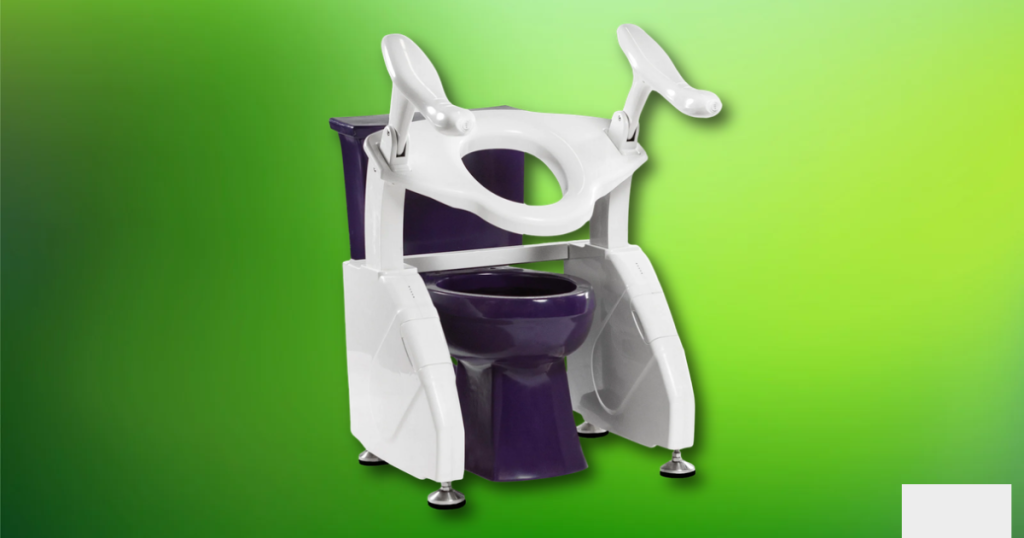
Choosing the right toilet lift for seniors can take the stress and fear out of a daily routine that shouldn’t feel like a battle. For many older adults and individuals facing mobility challenges, the bathroom can quickly become a source of anxiety.
As joint pain, stiffness, or muscle weakness sets in—whether due to advanced arthritis, Parkinson’s disease, recovering from hip replacement surgery, or general lower-body weakness—simply sitting down and standing back up requires careful planning and exhausting physical effort.
When bending and lowering become painful, the emotional weight of losing independence and dignity weighs heavily on both seniors and their family caregivers. Naturally, the first instinct for many families is to look for a quick fix.
The Hidden Downsides of Raised Toilet Seats and Extra-Tall Bowls
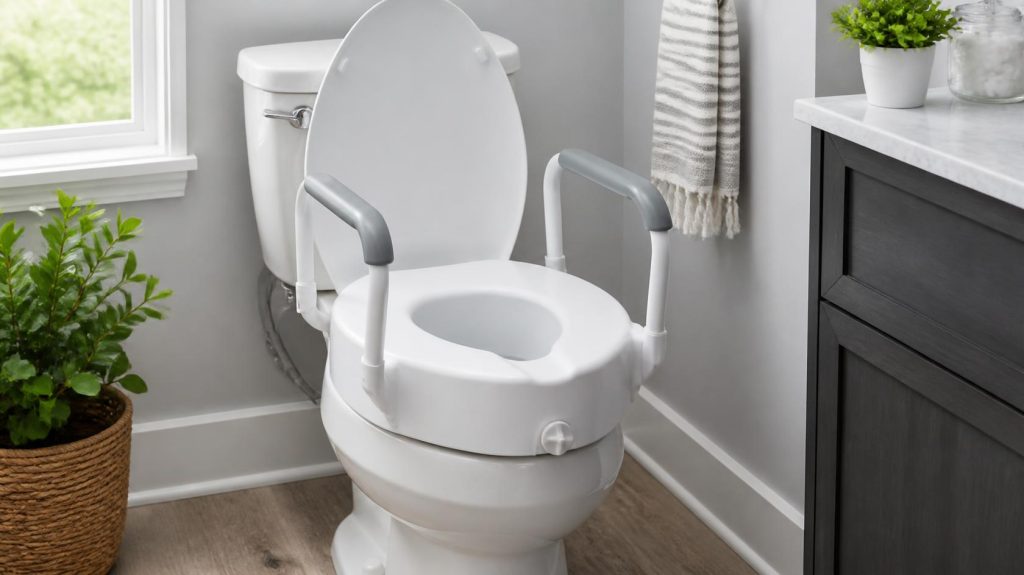
At first glance, a raised toilet seat or an 18.5-inch comfort-height bowl makes logical sense—the less you have to bend your knees and hips, the easier it should be to stand back up. However, these static options come with significant drawbacks:
- The Constipation Connection: Human anatomy is specifically designed for optimal elimination in a squatting or low-seated posture. Extra-tall toilets and thick raised seats flatten the body’s natural alignment, often leading to straining, incomplete evacuation, and chronic constipation.
- Numbness and Circulation Issues: Sitting high up without proper foot support can cause legs to dangle or put heavy pressure on the back of the thighs, cutting off circulation and causing limbs to go numb.
- The False Sense of Security: While a raised seat makes sitting down easier, it does nothing to help you actually stand back up. If leg strength fades or balance falters, a static raised seat provides no active assistance, leaving users just as vulnerable to getting stuck.
The Biomechanics of Proper Toilet Height
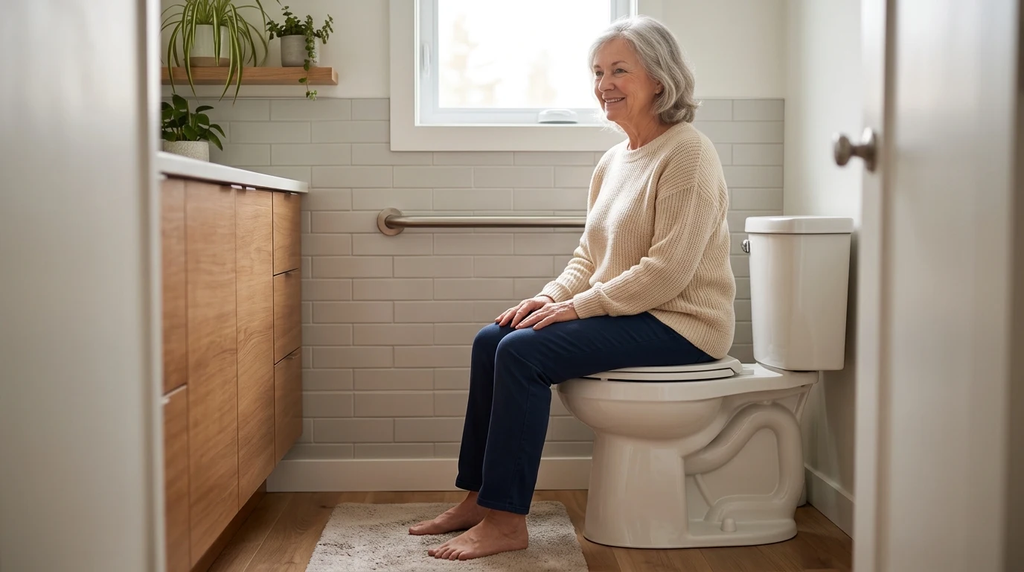
To maintain healthy digestion and avoid bodily strain, experts recommend a lower seating position during the actual use of the restroom. The ideal setup allows your body to relax into a natural posture without forcing your joints to endure the pain of a deep, unassisted squat when it is time to rise.
This is where active mobility engineering outperforms static hardware. Instead of forcing you to live with a permanent high seat that disrupts your body’s natural alignment, advanced solutions adapt to your needs at different stages of the process.
Use an Automatic Toilet Lift for Seniors
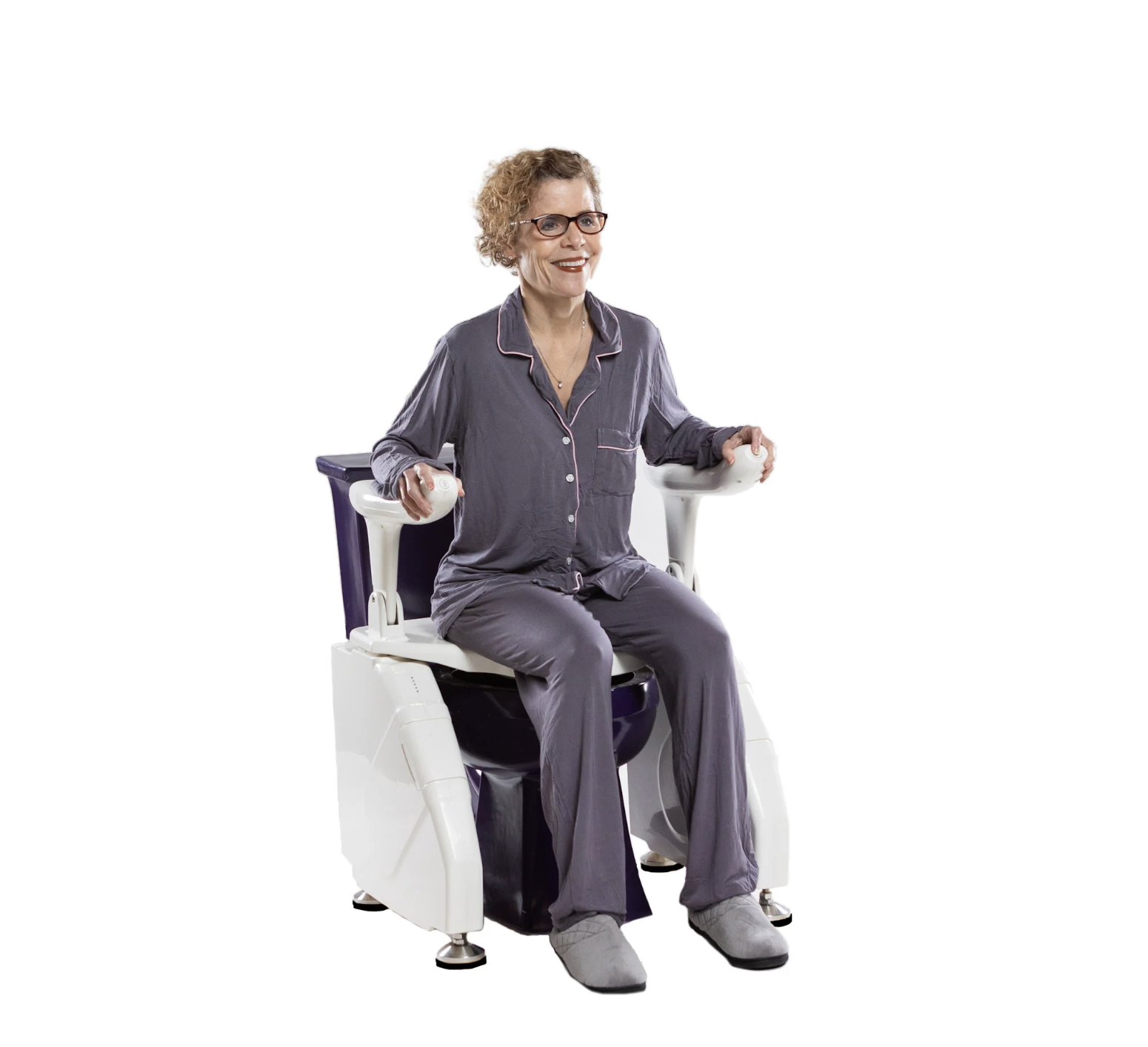
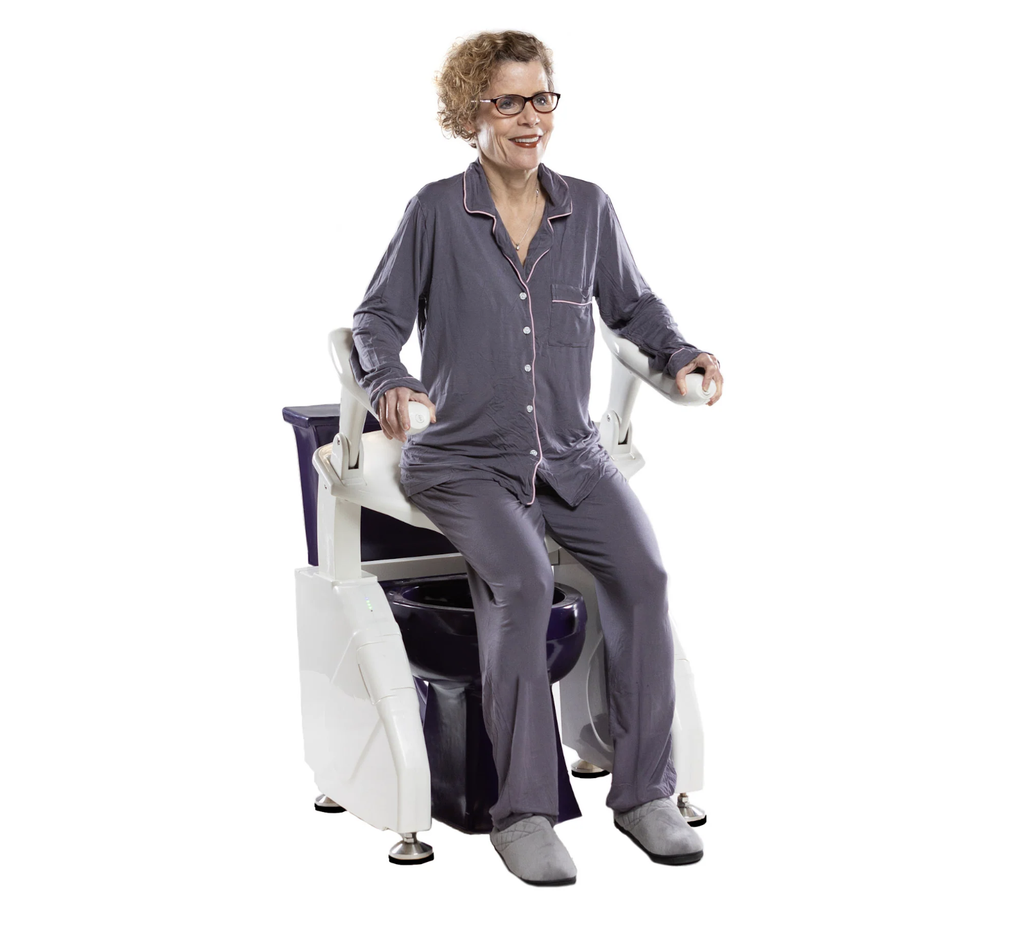
Rather than compromising between comfortable elimination and safe standing, the Deluxe Toilet Lift – DL2 provides the best of both worlds. Designed to function as a motorized lifting seat, it revolutionizes bathroom safety without requiring a costly bathroom remodel.
How the Deluxe Toilet Lift Works
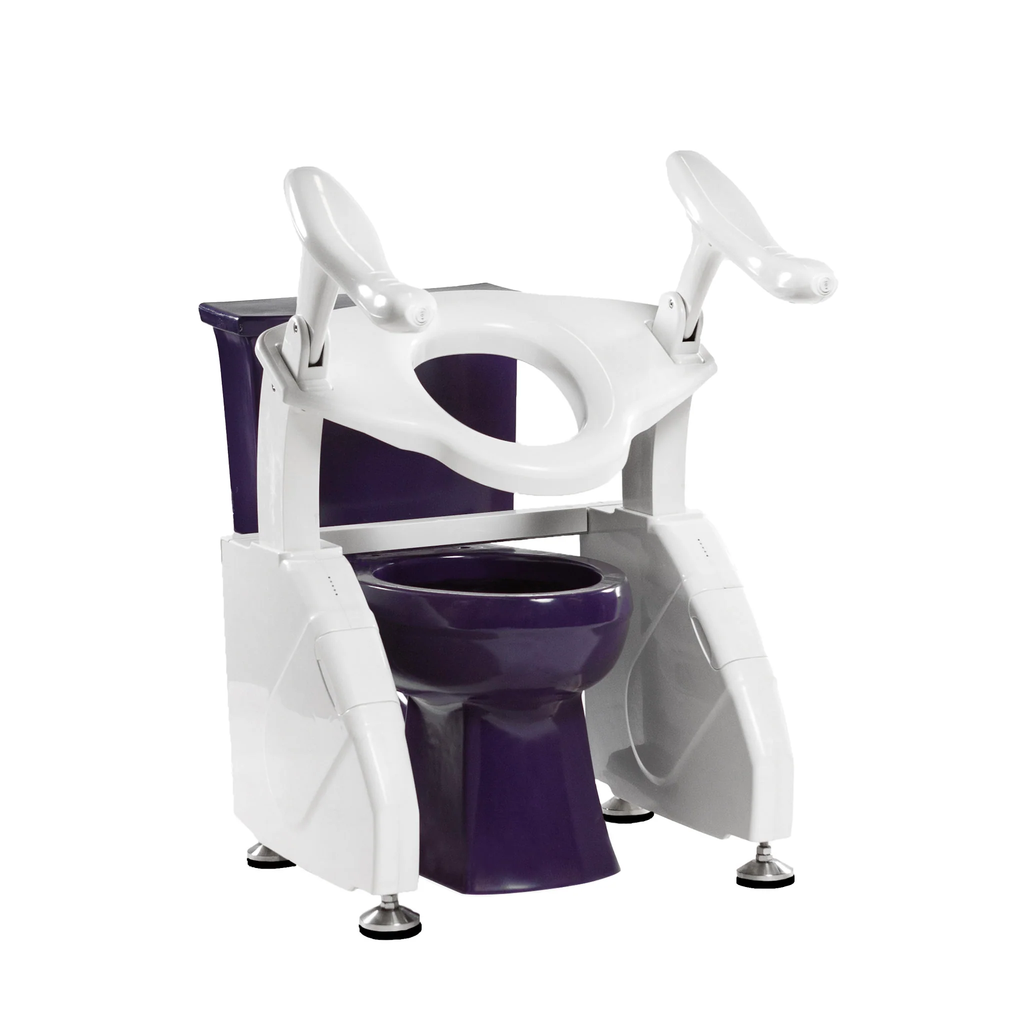
When someone struggles with mobility, joint stiffness, or weakness in their legs, traditional toilets require a painful, unassisted squat to sit down and an exhausting push to stand back up. The Deluxe Toilet Lift for seniors removes that physical strain through a motorized, mechanical lifting seat that acts like a gentle elevator for the bathroom.
Unlike a fixed raised toilet seat that stays permanently high—which forces unnatural body alignment and can lead to constipation—the lift starts in a standard, low position so the user’s body can naturally relax into the ideal posture for elimination. When it is time to stand up, the user simply presses a button integrated right into the sturdy handlebars. This engages a motor that takes a steady, controlled 20 seconds to raise them from sitting to standing. That deliberate, unhurried pace prevents light-headedness from orthostatic hypotension and gives stiff joints time to wake up smoothly.
With dual-sided operating buttons, users can maintain a secure, balanced hold with either hand while the motor does the heavy lifting. Supporting up to 300 pounds, the unit completely eliminates the risk of getting stuck on the toilet while removing the physical strain and awkwardness for family caregivers.
Make Your Bathroom Safer Today
You don’t have to settle for uncomfortable makeshift fixes or rush into expensive assisted living arrangements just because of bathroom mobility hurdles. Upgrading to an active assistance device like the Deluxe Toilet Lift – DL2 protects your joints, preserves your daily independence, and keeps your home safe for years to come.
To see if a toilet lift for seniors is right for your home layout, check out the Dignity Lifts Store to explore specifications, sizing guides, and customer reviews.
Frequently Asked Questions
1. What are the main limitations of traditional raised toilet seats?
While raised toilet seats reduce the sitting and standing distance, they often cause negative side effects. The extra height can disrupt natural lower-body alignment during elimination, leading to straining or constipation. Additionally, high seats can cause legs to dangle and cut off circulation, and they provide zero active physical assistance when it is time to stand back up.
2. How do motorized toilet lifts for seniors differ from standard raised seats?
Unlike static raised seats that remain fixed in one high position, motorized toilet lifts start at a standard, lower height to support proper posture and natural digestion. When the user is ready to get up, a powered lifting mechanism smoothly raises them to a standing position, combining comfortable elimination with safe, active support.
3. Are bathroom mobility devices difficult to install?
Most modern bathroom mobility aids are designed to be user-friendly and install directly onto existing toilet bowls without requiring a full bathroom remodel. They typically replace your existing toilet seat and secure using standard mounting hardware, though setup times and weight can vary depending on whether you choose a manual or motorized model.
4. How can caregivers best support seniors with bathroom accessibility?
Caregivers should look beyond quick fixes and evaluate the long-term safety, comfort, and independence of their loved ones. Assessing whether a senior struggles more with sitting down or standing back up can help determine whether a simple height adjustment, grab bars, or an active lifting device is the right choice for the home.
5. Will a toilet lift for seniors fit on my existing toilet bowl?
Most high-quality toilet lifts—including the Deluxe Toilet Lift – DL2—are engineered to fit both standard round and elongated toilet bowls. However, it is always wise to double-check the manufacturer’s dimensional specifications and measure your porcelain bowl clearance before purchasing.
6. Do toilet lifts require regular electrical power, and what happens during an outage?
Most motorized models plug into a standard household electrical outlet operating at low, safe voltages. Many units also feature built-in battery backup systems (or manual fallback options), ensuring that a power outage will never leave a family member stranded on the seat.
7. Are automatic toilet lifts covered by insurance or Medicare?
Coverage varies significantly depending on your specific health insurance provider, supplemental plans, or regional funding programs. While standard Medicare Part B rarely covers comfort items or convenience bathroom aids outright, some medical insurance policies or long-term care insurance programs may reimburse durable medical equipment (DME) if accompanied by a formal doctor’s prescription and a medical necessity letter.
8. How easy is it to clean and maintain a motorized toilet lift?
Because hygiene is paramount in the bathroom, motorized toilet lifts are built with smooth, water-resistant shrouds and quick-release seat mechanisms. This allows caregivers or family members to easily wipe down all surfaces with standard bathroom disinfectants and access hard-to-reach areas around the mounting bolts.