
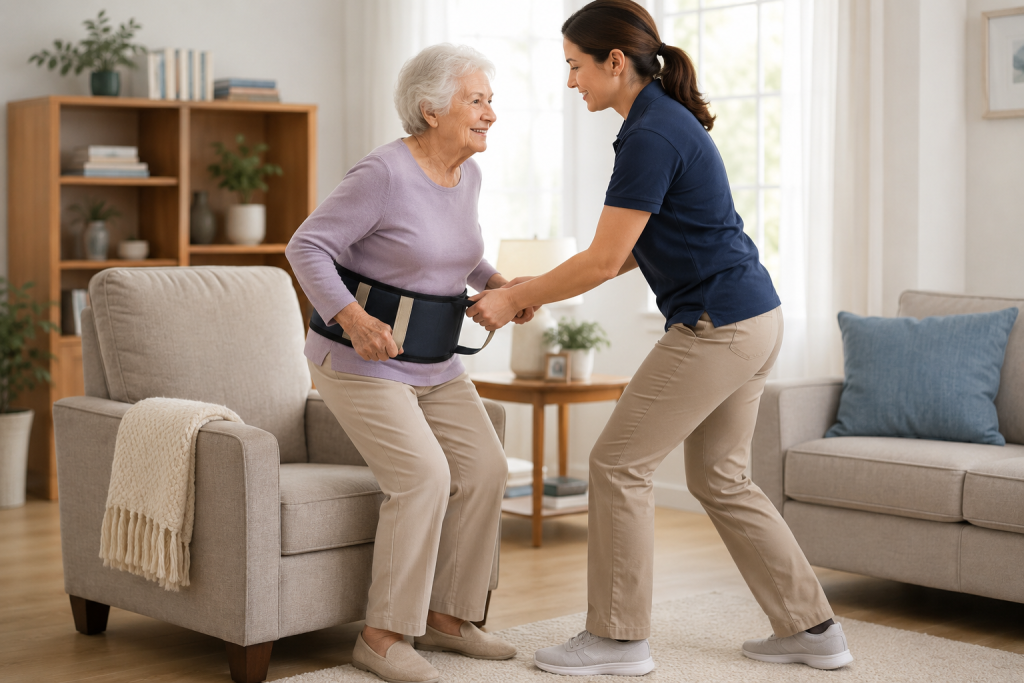
Caring for an aging parent or loved one often means helping them move safely from one place to another. Whether it is standing up from a favourite chair, getting out of bed, or walking to the bathroom, mobility is one of the biggest daily challenges for both seniors and home caregivers.
A gait belt with handles (also called a padded transfer belt) is one of the simplest and most effective mobility aids available. Unlike traditional cotton gait belts, handled belts feature multiple reinforced handholds wrapped around the waist. Instead of grabbing clothing, arms, or fragile shoulders, caregivers can hold sturdy handles to guide and support transfers safely.
What is a Gait Belt With Handles?
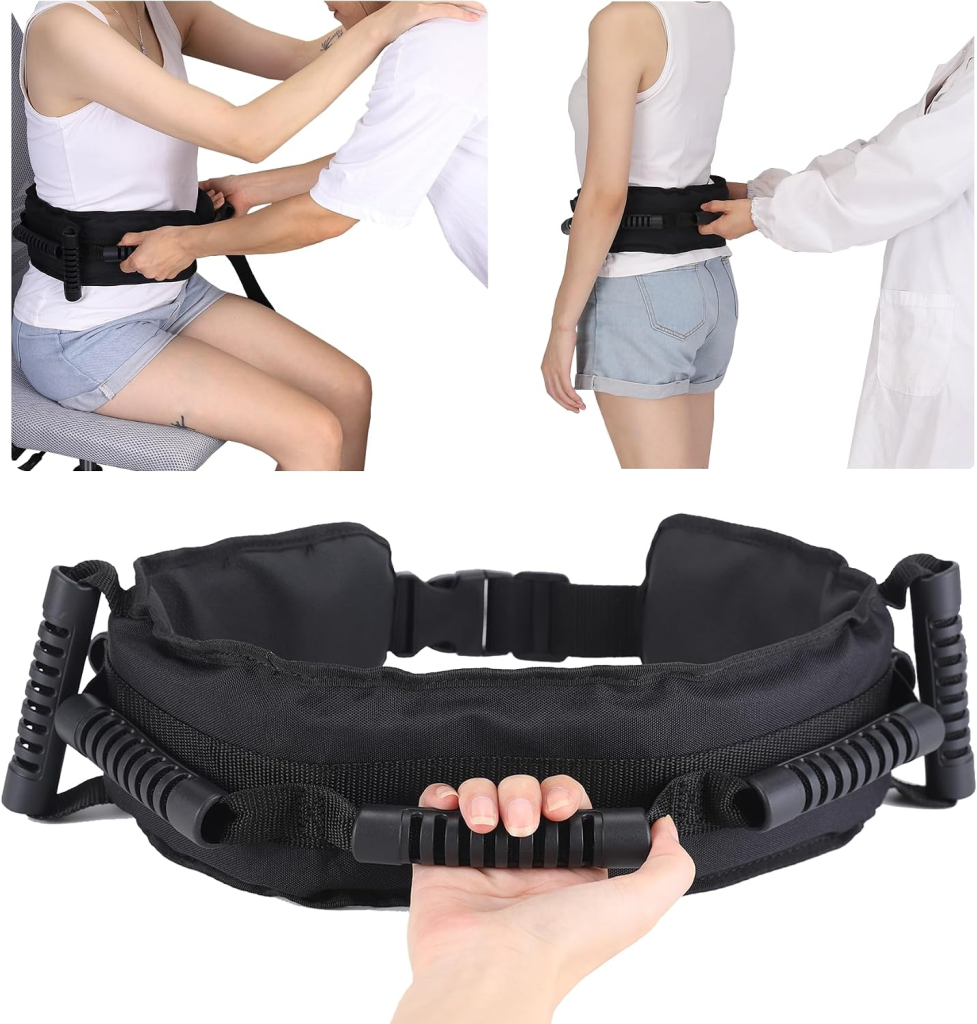
Unlike traditional cotton gait belts—which are simple, flat strips of fabric—handled gait belts feature multiple heavy-duty, reinforced handholds stitched into the exterior of the belt. They often feature extra width and interior foam padding to distribute pressure evenly and protect sensitive skin.
How A Gait Belt With Handles Works
- Provides Secure Leverage Points: Instead of grabbing clothing, arms, or fragile shoulder joints—which can cause pain, skin tears, or joint dislocations—caregivers grip the belt’s handles.
- Stabilizes the Center of Gravity: The belt acts as an anchor point at the person’s torso. It allows a caregiver to guide their movement, keep them balanced, and react instantly if they lose footing, without having to lift their entire body weight.
- Encourages Proper Body Mechanics: The handles—positioned vertically and horizontally—allow caregivers to use an underhand grip, stay close to the care recipient, keep their back straight, and push up using their leg muscles rather than straining their arms and back.
Why Caregivers Should Use a Gait Belt With Handles
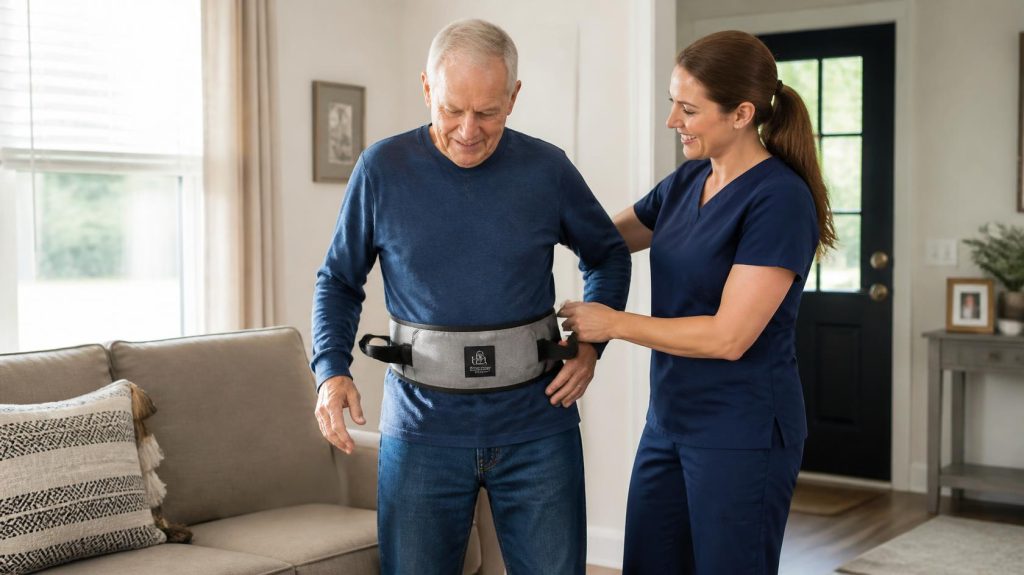
While standard physical therapy belts have their place, belts with integrated handles offer distinct advantages for home caregiving.
Superior Grip and Multiple Leverage Angles
Instead of squeezing a thin, flat strip of fabric against someone’s waist, handled belts feature heavy-duty vertical and horizontal loops.
- Side handles provide control when walking alongside someone.
- Rear handles give stability when guiding from behind.
- Vertical handles give superior leverage when helping someone stand up.
Better Stability Without Sudden Pulling
Helping someone stand isn’t about lifting their full weight—it’s about stabilizing their center of gravity. A gait belt acts as a secure point of control, allowing you to react immediately if your loved one loses balance without pulling on delicate joints.
Reduced Risk of Caregiver Back Injury
The most common injuries among home caregivers are back strains, shoulder pulls, and wrist pain. Using handles allows you to maintain proper body mechanics: keeping your back straight, bending your knees, and using your leg muscles to assist the movement rather than pulling with your arms.
Increased Confidence and Fall Prevention
Fear of falling often causes seniors to hesitate, tense up, or rush movements—all of which increase fall risks. Knowing a caregiver has a secure hold gives older adults the confidence to walk further, practice physical therapy exercises, and maintain their mobility.
Who Should (and Should Not) Use a Gait Belt
Ideal Candidates
A gait belt with handles is designed for individuals who need assistance with mobility but can still bear at least partial weight on their legs. It is ideal for seniors who:
- Experience mild to moderate balance issues or muscle weakness
- Are recovering from surgery (e.g., hip or knee replacements)
- Are rehabilitation patients following a stroke or hospital stay
- Have conditions like Parkinson’s disease or arthritis
Contraindications
Do not use a gait belt if the care recipient has:
- Recent abdominal or thoracic surgery
- Unhealed abdominal wounds, ostomy bags, or feeding tubes near the waistline
- Severe osteoporosis, rib fractures, or unstable spinal injuries
- An inability to bear any weight (a mechanical patient lift or hoyer lift should be used instead)
Types of Transfer Belts Compared
My Top 3 Picks: Gait Belt With Handles
Choosing the right transfer belt comes down to comfort, durability, and how much leverage you need during daily transfers. After evaluating strap design, padding, handle placement, and buckle security, these three top-rated gait belts stand out as the safest and most reliable options for family caregivers.
1. Secure STWB-52 Transfer & Walking Belt with EZ Release Plastic Buckle
Best Overall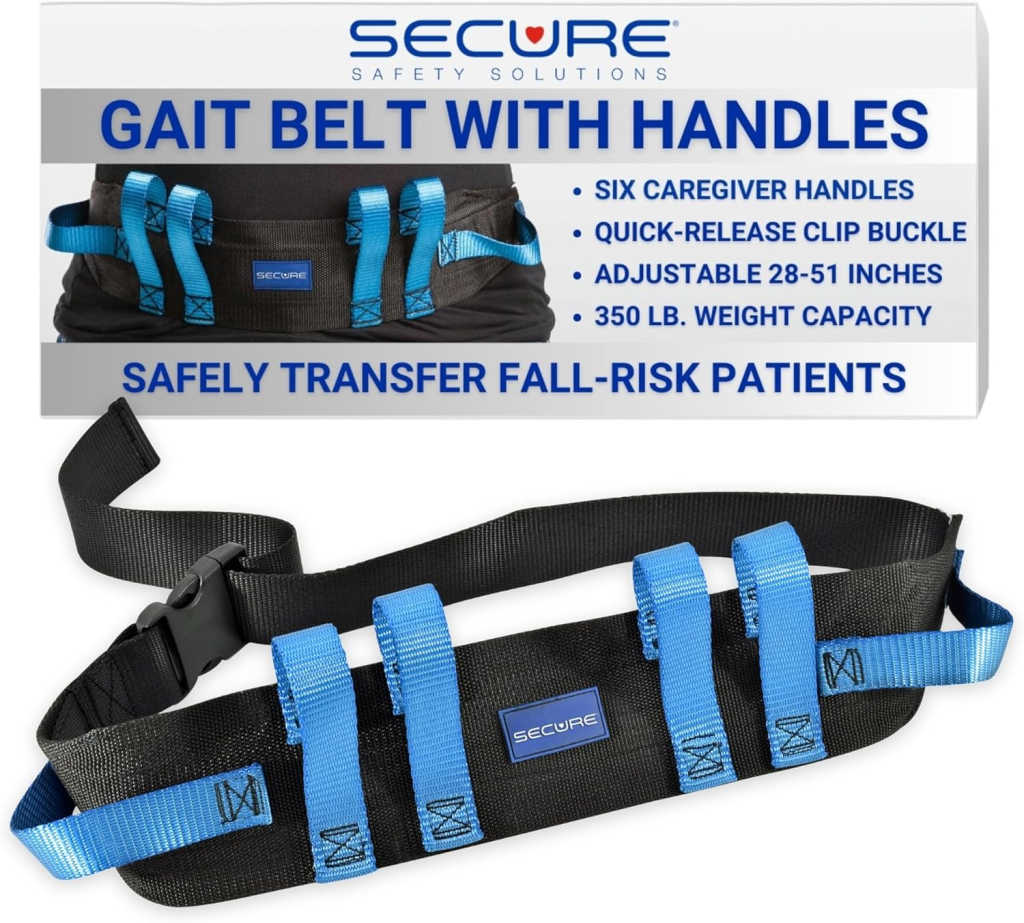
Best For: Everyday transfers, home walking assistance, and seniors recovering from surgery with mild balance problems.
Not Ideal For: Bariatric transfers or caregivers needing multiple grab handles for complex lifting positions.
Price: Around $20–30 USD
Product Overview
If someone asked me to recommend just one gait belt for most families, this would be it. The Secure STWB-52 has been used in hospitals, rehabilitation centres, and home care settings for years. Instead of adding extra features that many caregivers never use, it focuses on getting the basics exactly right: strong webbing, a dependable buckle, and a comfortable fit.
Key Features & Ease of Use
- Hospital-quality heavy-duty webbing construction (2″ width x 52″ length)
- Smooth EZ-release plastic buckle for quick and secure fastening
- Lightweight, durable, and easy to wipe clean
- Simple, non-bulky design suitable for repeated daily use
- Ease of Use: Excellent. The simple design makes it very intuitive for first-time caregivers to learn and operate quickly.
Things We Loved
- Extremely durable and trusted medical brand
- EZ-release buckle feels very secure yet operates easily
- Lightweight enough for walking assistance without feeling bulky
- Exceptional overall value for everyday caregiving
Things to Know Before Buying
- No dedicated grab handles included on the belt
- Less ideal for complex or heavy wheelchair and bed transfers
2. Supregear Anti-Slip Gait Belt with 7 Handles
Best for Bariatric Care & Difficult Transfers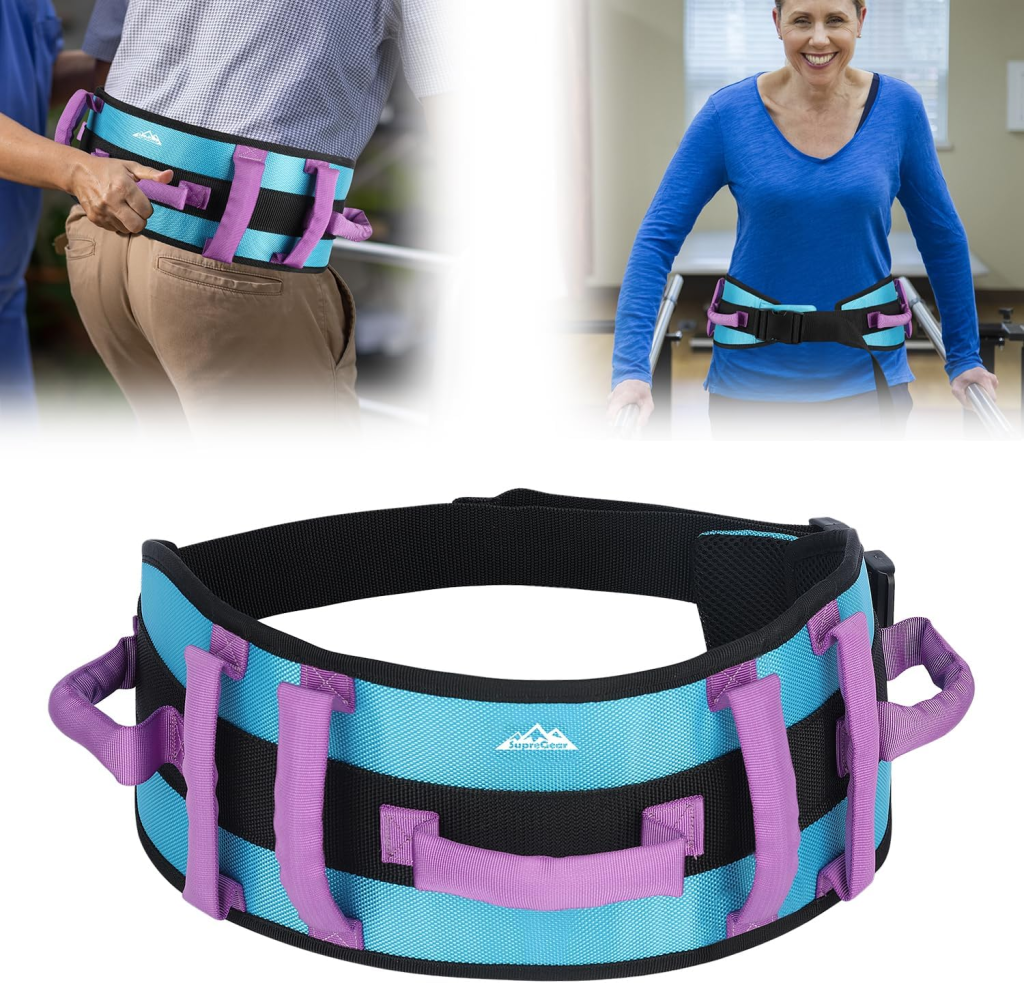
Best For: Bariatric users, wheelchair and bed transfers, and caregivers needing maximum control during difficult movements.
Not Ideal For: Seniors needing simple walking assistance or caregivers wanting the lightest possible belt.
Price: Around $25–35 USD
Product Overview
Some transfers are simply more challenging than others. If your loved one needs considerable physical assistance—or if you’re often helping them move between a wheelchair, bed, recliner, or toilet—the Supregear’s seven-handle design gives you much more flexibility. Instead of grabbing wherever you can, you always have a secure handle within reach.
Key Features & Ease of Use
- Seven reinforced handles for multiple grip angles
- Anti-slip inner lining prevents belt shifting during transfers
- Extra-wide support surface with strong reinforced stitching
- Quick-release buckle for easy fastening and removal
- Comfortable padded grip handles
- Ease of Use: Excellent. Multiple handles make it vastly easier to maintain proper body mechanics during physically demanding transfers.
Things We Loved
- Outstanding control during wheelchair and bed transfers
- Anti-slip lining stops the belt from sliding up or twisting
- Comfortable handles reduce hand and wrist strain for caregivers
- Great stability for heavier individuals
Things to Know Before Buying
- Bulkier than standard single-strap gait belts
- May be unnecessary for seniors who only need light balance support
3. Jacobable Gait Belt with 7 Padded Nylon Handles
Best Value for Money
Best For: Everyday home caregiving, families seeking a multi-handle belt without spending a lot, and versatile transfer assistance.
Not Ideal For: Seniors who only need basic walking support without extra grab handles.
Price: Around $20–30 USD
Product Overview
The Jacobable gait belt offers many of the same features found on more expensive transfer belts but at a price that’s easier on most family caregivers. Its seven padded handles are positioned well around the belt, making it easier to assist from the side, back, or front without constantly adjusting your grip. The padding also makes a noticeable difference during longer transfer sessions, reducing pressure on both the caregiver’s hands and the senior’s waist.
Key Features & Ease of Use
- Seven padded nylon grab handles strategically positioned for easy gripping
- Comfortable waist padding (~4-inch width) to reduce pressure
- Durable, reinforced nylon construction for daily reliability
- Quick-release buckle for effortless securing and removal
- Fully adjustable length to fit a variety of waist sizes
- Ease of Use: Excellent. Multiple padded handles offer great versatility and comfort for caregivers assisting from different angles.
Things We Loved
- Outstanding value for a multi-handle padded transfer belt
- Padded handles protect caregiver hands from strain
- Wide design distributes leverage safely across the waist
- Versatile grip angles make daily transfers much easier
Things to Know Before Buying
- Bulkier than a simple standard single-strap belt
- Takes slightly more time to adjust on smaller frames
Step-by-Step: How to Put On a Gait Belt Correctly
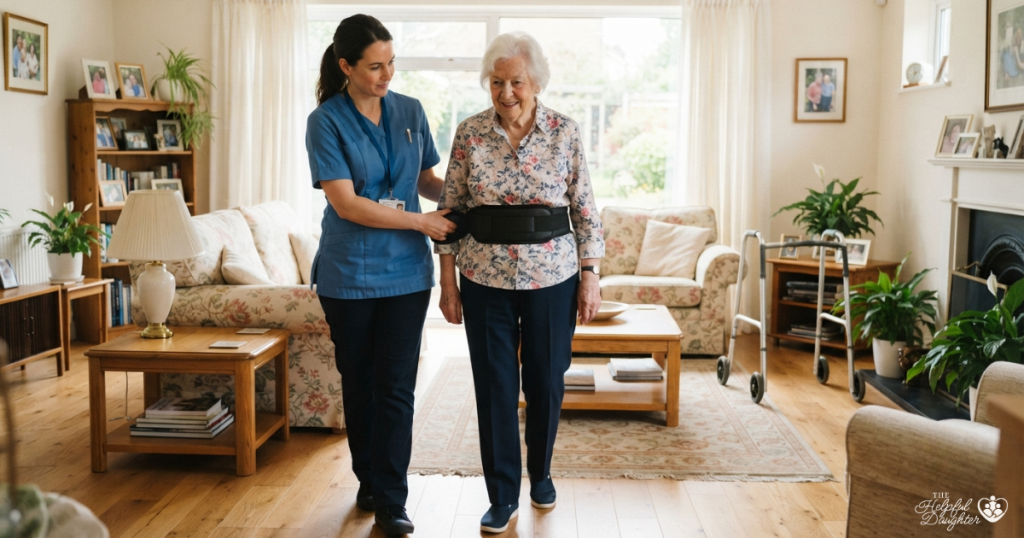
- Communicate First: Explain what you are doing before putting the belt on to reduce anxiety.
- Position Over Clothing: Wrap the belt around the waist, above the hips and below the rib cage, directly over clothing. Never place a gait belt on bare skin or over surgical incisions.
- Perform the Two-Finger Test: Fasten the buckle securely. Slide two flat fingers between the belt and the person’s body. The belt should feel snug enough that it won’t slide up during a transfer, but comfortable enough to allow normal breathing.
- Check the Buckle and Handles: Give a gentle tug on the handles to ensure the buckle is locked in place and the stitching is intact before moving.
Care and Maintenance Instructions
To ensure your gait belt with handles remains reliable:
- Inspect Webbing and Handles: Check stitching before each use. If you notice frayed threads, cracked buckles, or torn handles, replace the belt immediately.
- Washing: Wash according to the manufacturer’s directions (usually machine wash cold, air dry). Avoid high heat in dryers as it can degrade the internal rubber or plastic backing.
- Storage: Store the belt hanging or loosely rolled in a dry environment to keep moisture from weakening the fibers.
Final Thoughts on Gait Belt With Handles
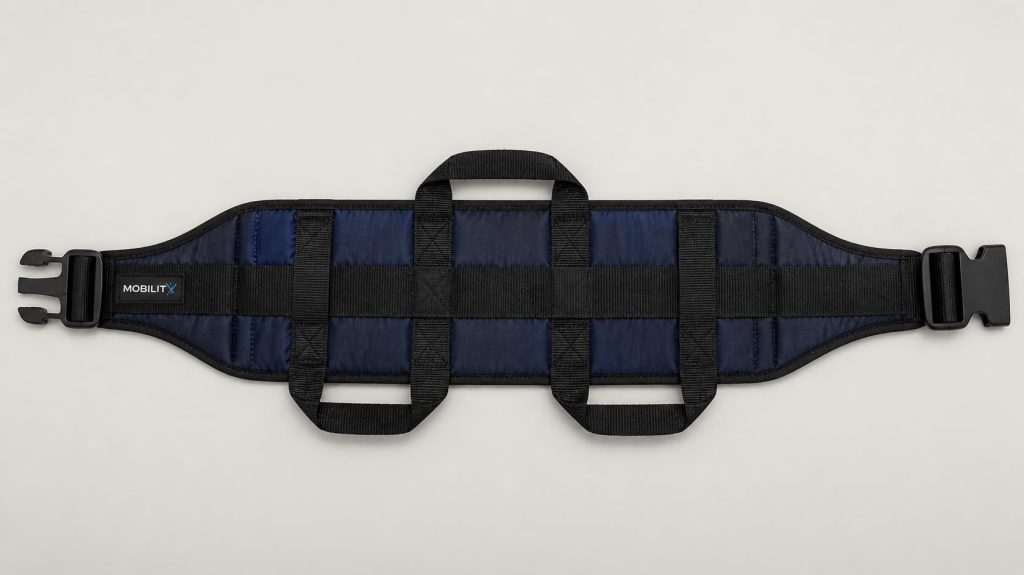
At the end of the day, transfer safety comes down to having the right equipment and using proper technique. Upgrading from a standard strap to a padded gait belt with handles gives you superior leverage, better control, and peace of mind during everyday movements.
Take a moment to assess your loved one’s mobility needs, select a belt with durable handles and secure buckles, and incorporate it into your daily care routine.
Frequently Asked Questions
Is a gait belt with handles better than a standard gait belt?
Yes, for most family caregivers, a handled belt is superior. The handles offer a much firmer, ergonomic grip from multiple angles, reducing wrist strain and providing better control during transfers than flat cotton webbing.
Can you use a gait belt to lift someone off the floor after a fall?
No. Gait belts are not intended for unassisted floor lifts. If someone has fallen and cannot assist in getting up, evaluate them for injuries and call emergency services or use a specialized floor-lift device.
How tight should a gait belt be?
A gait belt should fit snugly around the waist. Use the two-finger rule: you should be able to comfortably slide two fingers under the belt, but not your whole hand.
Are gait belts covered by Medicare or insurance?
Standard gait belts are occasionally covered under durable medical equipment (DME) if prescribed by a physical therapist or doctor, though they are usually very affordable out-of-pocket (typically $15–$35).