
It’s the phone call every caregiver dreads. Your mother’s voice is shaky, she’s in the emergency room, and the diagnosis is a hip fracture.
You replay the conversation you had just yesterday about using her walker in the kitchen. You feel a knot of guilt, even though you know you can’t be everywhere at once. The reality hits hard: a fall resulting in a broken hip is a life-altering event for an older adult, often leading to a long recovery, loss of independence, and significant health complications.
In my years navigating senior care for my own family and researching safety solutions, I’ve seen the devastating impact firsthand. It’s why fall prevention is paramount. But despite our best efforts—removing rugs, improving lighting, installing grab bars—accidents still happen.
This is where hip protectors for elderly adults become such a critical layer of protection. Think of them as tiny, personal airbags worn around the hips. If your loved one loses their balance and tumbles sideways, these garments are designed to absorb and deflect the impact away from the fragile hip bone.
This guide is born from my experience researching these products, speaking with healthcare professionals, and understanding the practical challenges caregivers face daily. We will cut through the marketing jargon, look at the evidence, and help you decide if hip protectors are the right choice for your loved one—and how to actually get them to wear them.
Understanding the True Cost of a Fall
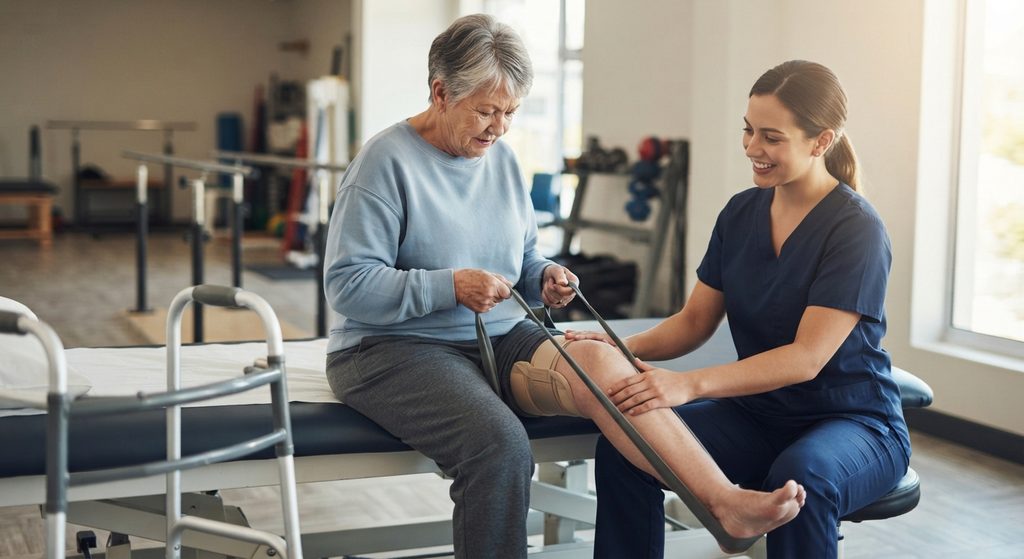
Before diving into the gear, it’s crucial to understand why we are having this conversation.
A hip fracture in a senior isn’t like breaking your arm. The recovery process is long and arduous. It often involves surgery, weeks in a rehabilitation facility, and intensive physical therapy. Tragically, studies consistently show that a significant percentage of older adults who suffer a hip fracture never regain their previous level of mobility. Even more concerning, these injuries carry a high mortality rate within the first year due to complications from surgery and immobility.
For an active senior who values their independence—who still loves gardening, visiting friends, or attending church—a hip fracture can signal the end of that lifestyle. That is the context. And that is why preventing that specific break is worth every effort.
What Are Hip Protectors and How Do They Work?
In simple terms, a hip protector is a specialized undergarment or accessory that holds protective pads securely over the greater trochanter. That’s the knobby bone you can feel on the side of your hip, right where the thigh bone meets the pelvis. This is the exact point of impact during a sideways fall.
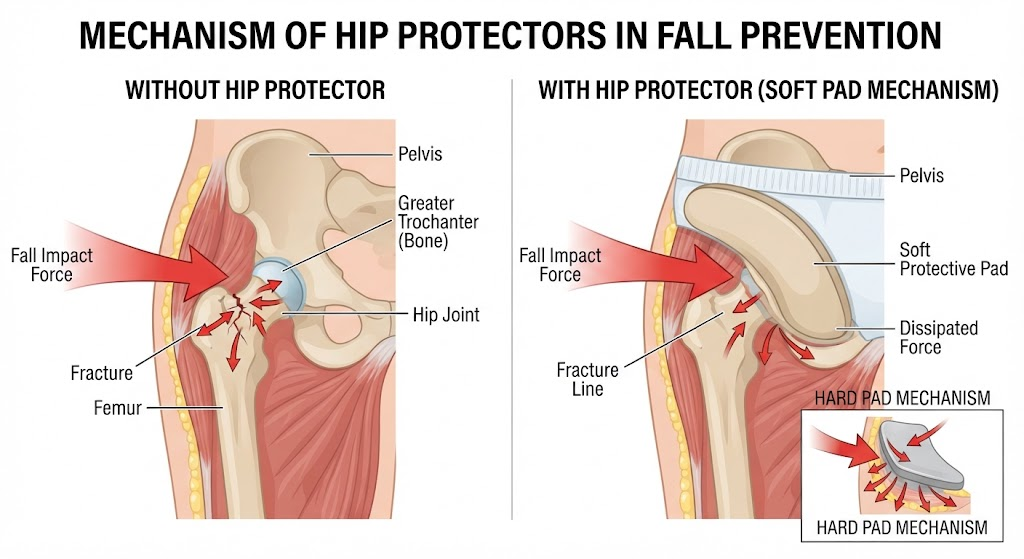
The pads are made of specific materials designed to mitigate force. There are two main types:
1. Energy-Absorbing (Soft) Pads: These pads are typically made of foam or viscoelastic materials. Their job is similar to a bicycle helmet. Upon impact, the material compresses, absorbing much of the energy before it reaches the bone. They are generally more comfortable and flexible.
2. Energy-Shunting (Hard) Pads: These pads are made of rigid plastic or composite material. Instead of absorbing the force, they are designed to be hard and slippery, causing the impact to “shunt” or glide away from the hip bone and dissipate into the surrounding soft tissues (thigh muscles and fat).
Do Hip Protectors Really Work?
This is the most important question. The honest answer is: Yes, but only if they are worn correctly and consistently during high-risk times.
As an experienced caregiver, I’ve learned to be skeptical of products that promise 100% safety. Hip protectors are not magic armor. They won’t prevent every fracture.
The medical research—the randomized controlled trials and Cochrane reviews—can sometimes seem confusing, showing varied results. Why? Because of compliance. It’s difficult to prove a negative; it’s hard to measure how many fractures didn’t happen because someone was wearing a pad. Studies have shown that in many cases where a hip fractured while wearing a protector, the garment was either not being worn at the time of the fall, or the pad had shifted out of position.
However, high-quality studies focusing on seniors in long-term care (where compliance can be monitored) show a clear benefit, successfully reducing the incidence of hip fractures. For older adults living at home, the challenge is ensuring consistency when you aren’t there 24/7.
My Takeaway: Hip protectors are an excellent evidence-based risk reduction strategy. They do not replace other fall prevention measures (like exercises to improve balance or medication reviews). But when combined with other safety efforts, they provide a vital second line of defense.
Who Benefits Most from Wearing Hip Protectors?

They aren’t necessary for every single senior. You need to weigh the risks and benefits for your specific situation.
Consider hip protectors if your loved one:
- Has fallen sideways in the past.
- Has low bone density (osteoporosis or osteopenia).
- Has significant balance or gait issues requiring a cane, walker, or assistance.
- Has conditions that cause sudden drops in blood pressure or dizziness.
- Is recovering from surgery or a stroke.
- Lives alone and is at risk of spending hours on the floor post-fall.
Types of Hip Protectors for Elderly: Garments vs. External Devices
The market has evolved significantly beyond bulky, uncomfortable pads. Today, you have two main options:
1. Integrated Garments (Most Common)
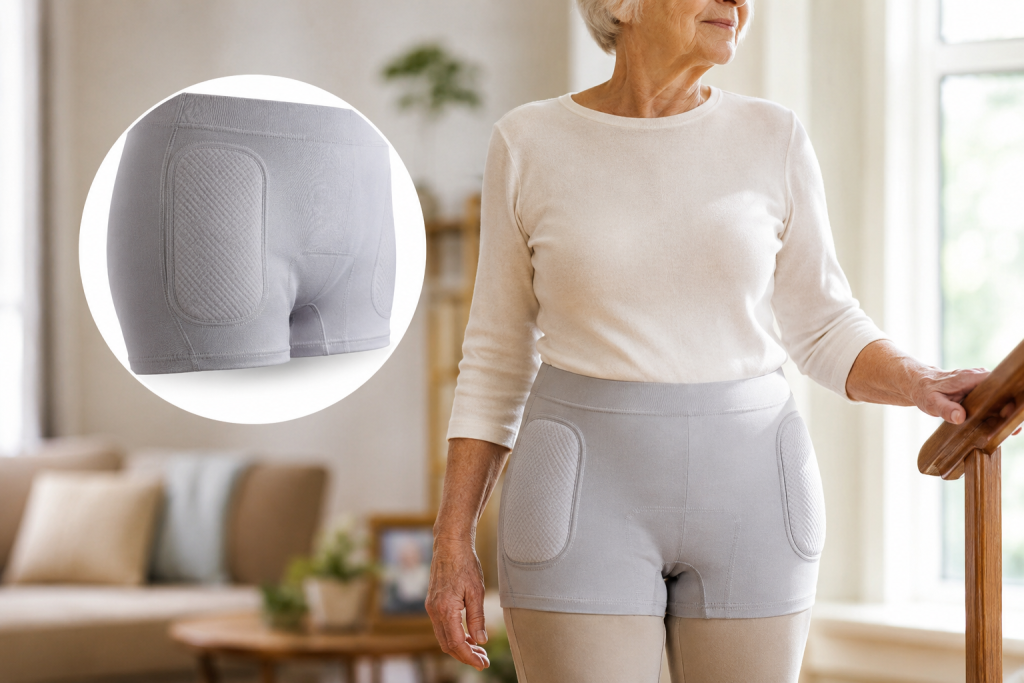
These look and feel like regular underwear, boxer briefs, or yoga pants with internal pockets sewn into the sides for protective pads.
- Briefs/Panties: The most popular style for women.
- Boxer Briefs: A great, comfortable option for men.
- Soft Pants/Leggings: Ideal for lounging or layering.
2. External Belt Systems
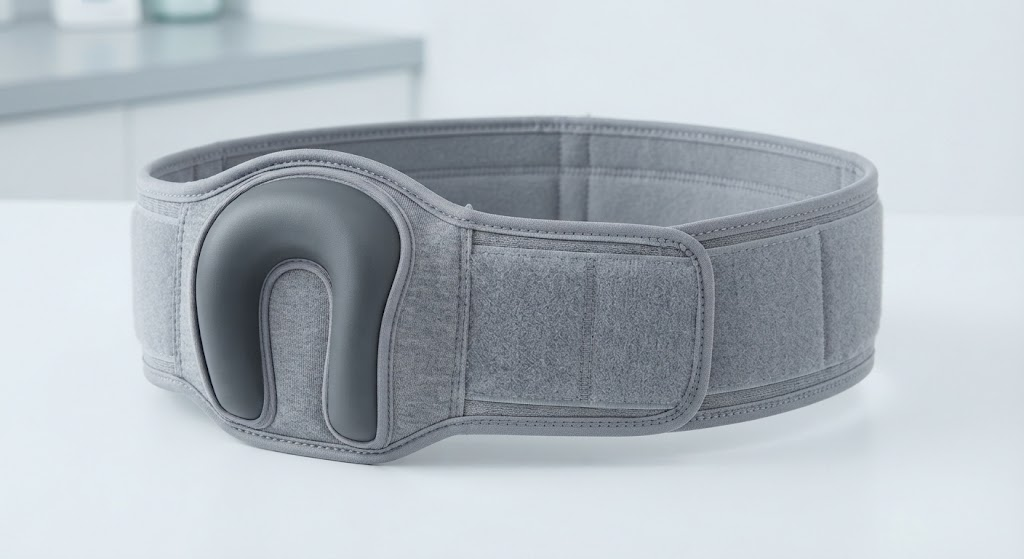
These are specialized belts worn over regular underwear with pads sitting directly over the hip bones. While easy to put on independently, they are often bulkier, more prone to shifting, and can carry a social stigma for seniors who feel they look clinical.
- Recommendation: For most home users, integrated garments are far superior for comfort, discretion, and consistency of pad placement.
Top Hip Protectors for Elderly Product Reviews
Based on professional reviews and caregiver feedback, here are the top models available:
1. ANBANREY Crash Pants with Hip Pads
1. ANBANREY Crash Pants with Hip Pads
Best for Active Seniors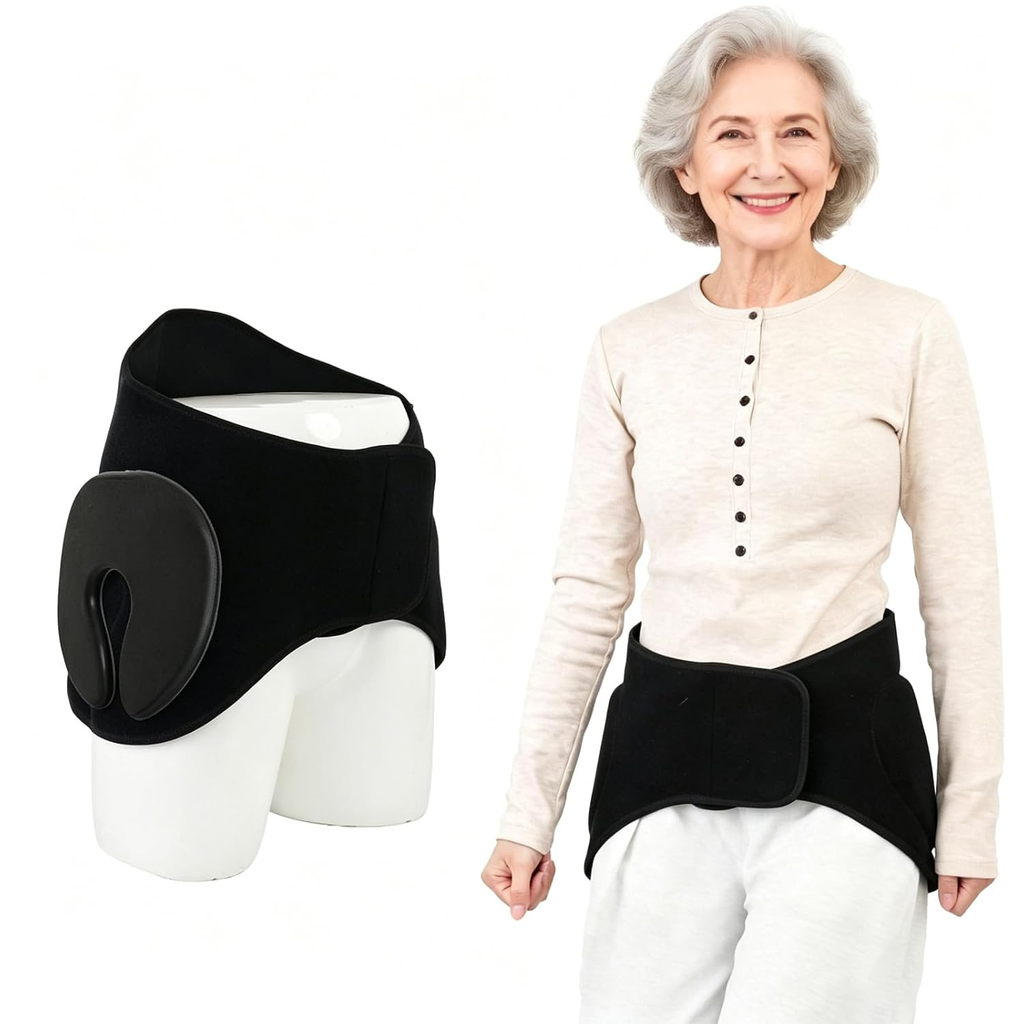
Best For: Active seniors living independently at home who want lightweight, discreet protection during outdoor walks, chores, or higher-risk daytime activities.
Not Ideal For: Seniors needing advanced multi-layer institutional impact technology or those prone to heavy, daily high-impact wear.
Price: Check Amazon for Current Pricing
Product Overview
The ANBANREY Crash Pants offer a low-profile, athletic approach to hip protection. Featuring high-density EVA foam padding built into stretchable, moisture-wicking fabric, they mimic standard compression shorts for seamless everyday wear.
Key Features & Ease of Use
- High-density shock-absorbing EVA foam padding in hip and tailbone areas
- Breathable, stretchable, and moisture-wicking compression fabric
- Discreet design that fits comfortably under standard trousers or skirts
- Ease of Use: High. Slips on just like regular athletic shorts with zero complicated adjustments or straps.
Things We Loved
- Lightweight and low-profile profile minimizes clothing bulk
- Exceptional comfort for extended daily wear during walks and chores
- Great overall value compared to heavy medical-grade alternatives
Things to Know Before Buying
- Foam padding can slowly compress or lose resilience over prolonged heavy use
- Lacks the rigid multi-layer protection found in institutional clinical gear
My Thoughts
“If your main hurdle is getting a senior to wear protective gear without feeling like they are wearing clinical medical equipment, these crash pants bridge the gap. They look and feel like activewear while offering essential peace of mind.”
2. TYTEX Hip Protector Belt
Best Adjustable External System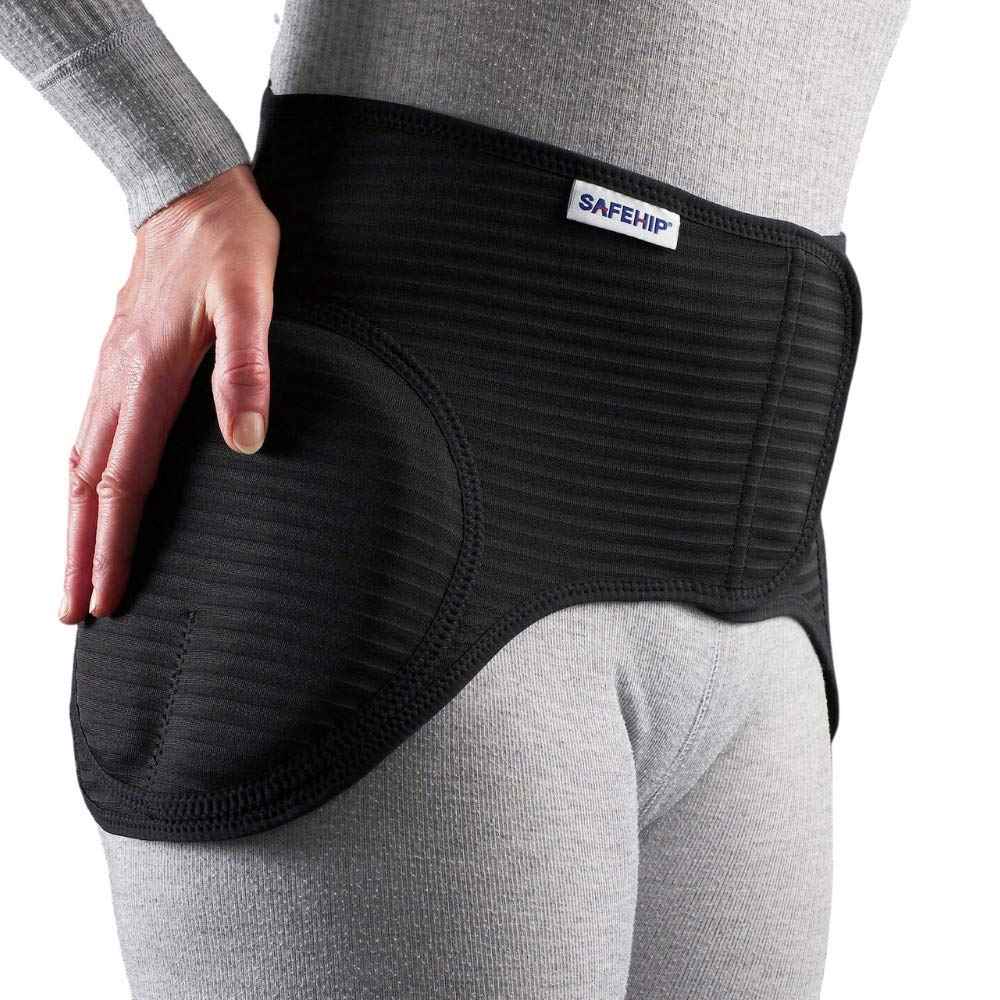
Best For: Seniors or rehabilitation patients who need an adjustable, easy-on/easy-off external system that can be quickly worn over regular undergarments.
Not Ideal For: Individuals looking for completely invisible undergarment styling or those prone to forgetting proper belt alignment.
Price: Check Amazon for Current Pricing
Product Overview
The TYTEX Hip Protector Belt utilizes clinically tested Safehip technology to protect against fractures. Designed to be worn externally over standard underwear, it features a horseshoe-shaped shield configuration that redirects impact energy away from the vulnerable femoral head.
Key Features & Ease of Use
- Patented horseshoe-shaped shield design (Safehip technology) to deflect impact energy
- Secure hook-and-loop (Velcro) closure for easy adjustments
- External wear design allows pairing with any regular underwear
- Ease of Use: Moderate. Simple to put on independently, though users must ensure alignment stays centered over the hip bone.
Things We Loved
- Clinically backed design supported by extensive research studies
- Straightforward putting on and taking off process for quick changes
- Versatile fit that works seamlessly over standard daily clothing layers
Things to Know Before Buying
- Can feel bulkier or more visible beneath lightweight clothing than integrated briefs
- May shift out of correct alignment if the belt loosens throughout the day
My Thoughts
“For caregivers assisting patients during rehabilitation, a belt system provides massive convenience because you don’t have to change underlying garments. While it has a slightly more clinical feel, the engineering focus on energy-shunting provides unmatched clinical reassurance.”
3. Skil-Care Soft-Pad Hip Protectors
Best for Institutional & Frail Care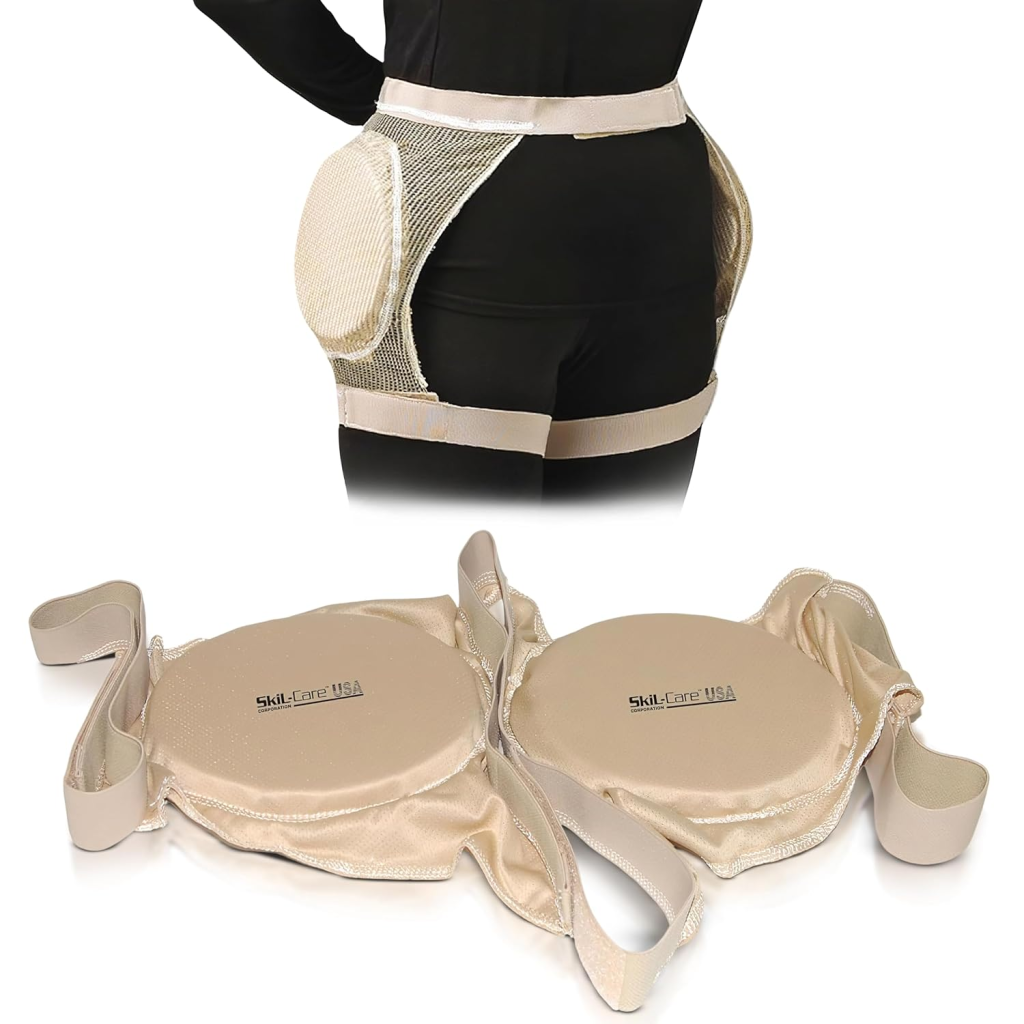
Best For: Frail elders or long-term/institutional care residents who require durable, medical-grade protection designed to withstand frequent industrial laundering.
Not Ideal For: Fashion-conscious seniors looking for modern athletic styles or sleek, minimal underwear cuts.
Price: Check Amazon for Current Pricing
Product Overview
The Skil-Care Soft-Pad Hip Protectors are built for rigorous medical and long-term care environments. Utilizing contoured soft foam inserts housed within a sturdy cotton-poly brief, they prioritize skin safety and industrial durability.
Key Features & Ease of Use
- Contoured shock-absorbing soft foam pads that prevent skin pressure points
- Sturdy cotton-poly blend brief built for heavy-duty washing cycles
- Skin-friendly construction designed to minimize pressure sores for bed-bound seniors
- Ease of Use: High. Functions like a standard protective brief with secure internal pockets keeping pads fixed.
Things We Loved
- Exception durability built to survive repeated industrial laundering
- Soft foam padding prevents pressure ulcers and skin breakdown in fragile users
- Dependable institutional design trusted by professional caregivers
Things to Know Before Buying
- Classic utilitarian brief styling is thicker and less sleek than athletic options
- Can feel warmer under clothing due to the medical-grade fabric density
My Thoughts
“If your aging parent has very fragile skin or low body weight, hard plastic shells can cause dangerous pressure bruises. Skil-Care’s soft pads offer medical-grade protection while safeguarding delicate skin against pressure sores.”
How to Introduce Hip Protectors to Your Loved One
Introducing safety gear can trigger resistance or fear of decline. Approach the conversation with empathy:
- Choose the Right Time: Bring it up during a calm, neutral moment—never right after a fall.
- Frame It Around Independence: Avoid talking about fear. Instead, say: “Mom, you love working in your garden, but I worry about the uneven ground. I found these comfortable briefs with special pads so you can keep doing what you love safely.”
- Involve Them: Let them choose the style and color.
- Prioritize Comfort First: Order a single pair to test for fit, itchiness, or bulkiness.
- Start Slow: Suggest wearing them during high-risk activities (morning walks, chores) rather than 24/7 at first.

My mother was adamantly opposed to hip protectors, calling them “diapers.” I changed tactics by ordering a pair of soft boxer briefs in lavender and casually leaving them on her bed as comfy wear for her art studio. She adjusted the pads herself, realized what they were for, and now proudly wears them whenever she leaves the house!
Frequently Asked Questions (FAQ) About Hip Protectors for Elderly
These are the questions I hear most often from fellow caregivers.
What is the best hip protector for a very frail elder with thin skin?
For frail seniors with fragile skin or low body weight, Skil-Care Soft-Pad Hip Protectors are ideal because their contoured soft foam padding prevents pressure ulcers and skin breakdown. Avoid hard plastic shells, which can cause pressure bruises if the user lies on their side for extended periods.
Do hip protectors completely prevent hip fractures?
No protective gear can guarantee 100% prevention. However, when worn correctly and consistently during high-risk activities, options like the ANBANREY Crash Pants or TYTEX Hip Protector Belt significantly absorb and deflect impact forces, dramatically lowering the likelihood of a severe fracture during a sideways fall.
Can my loved one wear hip protectors overnight or in bed?
Generally, it is not recommended for seniors to wear hip protectors 24/7 because prolonged pressure while lying down can cause skin irritation or pressure ulcers. For nighttime bathroom trips or overnight fall risks, look into specially designed comfortable soft-pad nightwear rather than heavy-duty daytime gear.
How often should hip protector pads and garments be replaced?
Check the manufacturer guidelines for your specific product (such as ANBANREY or Skil-Care), but as a rule of thumb, inspect pads and garments every 6 to 12 months. If foam pads show permanent compression, loss of elasticity, or degradation from washing, they should be replaced to ensure optimal impact absorption.
Are hip protectors covered by Medicare or insurance?
In most standard cases, Medicare and private health insurance do not cover routine hip protectors because they are classified as preventative garments rather than durable medical equipment (DME). However, it is always worth checking with your provider or utilizing a Flexible Spending Account (FSA) or Health Savings Account (HSA) if applicable.
How do I convince a resistant parent to wear them?
Start slow by introducing a single comfortable option, such as the athletic-style ANBANREY Crash Pants, which look and feel like regular apparel. Focus the conversation entirely on preserving their active lifestyle and independence—such as safety gear for gardening or walking—rather than dwelling on the fear of falling.