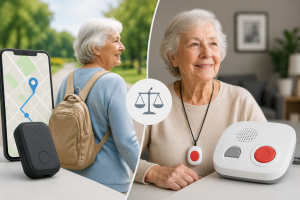
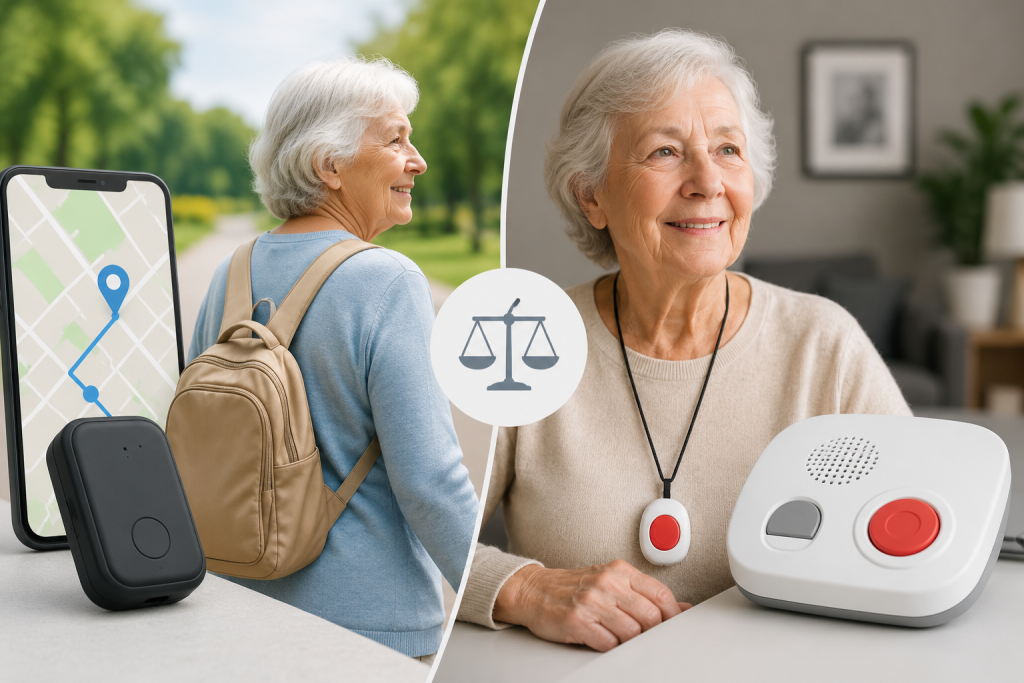
Keeping an aging loved one safe is one of the biggest responsibilities caregivers face. Whether you’re supporting a parent with dementia, a spouse with mobility challenges, or an independent senior who lives alone, finding the right safety device can provide invaluable peace of mind.
Two of the most commonly recommended options are dedicated GPS trackers and traditional medical alert systems. At first glance, they may seem similar, but they serve entirely different purposes.
Many caregivers assume a medical alert button automatically monitors a senior’s daily whereabouts, or believe a pocket GPS tracker can dispatch an ambulance. To clear up the confusion, let’s look at how these technologies work side-by-side using real-world examples.
The Quick Summary
Choosing the right safety device depends on your primary caregiving concern.
Dedicated GPS Tracker
Best for: Cognitive decline & memory loss
Choose this if your main worry is preventing wandering and keeping continuous visual eyes on a map.
Medical Alert System
Best for: Physical frailty & fall risks
Choose this if your main worry is securing immediate, professional emergency dispatch during a sudden health crisis.
What Is a GPS Tracker?
A GPS tracker is a cellular-enabled elderly tracking device focused entirely on continuous location monitoring and wandering prevention. Rather than waiting for a medical crisis to occur, it acts as an active digital safety net so caregivers can look after their loved ones remotely.
As caregivers, the last thing we need is another complicated tech device to manage. That’s why dedicated trackers are built to do one thing incredibly well: keep eyes on a map.
Best Dedicated GPS Tracker
ShadowTrack Battery Powered GPS Tracker
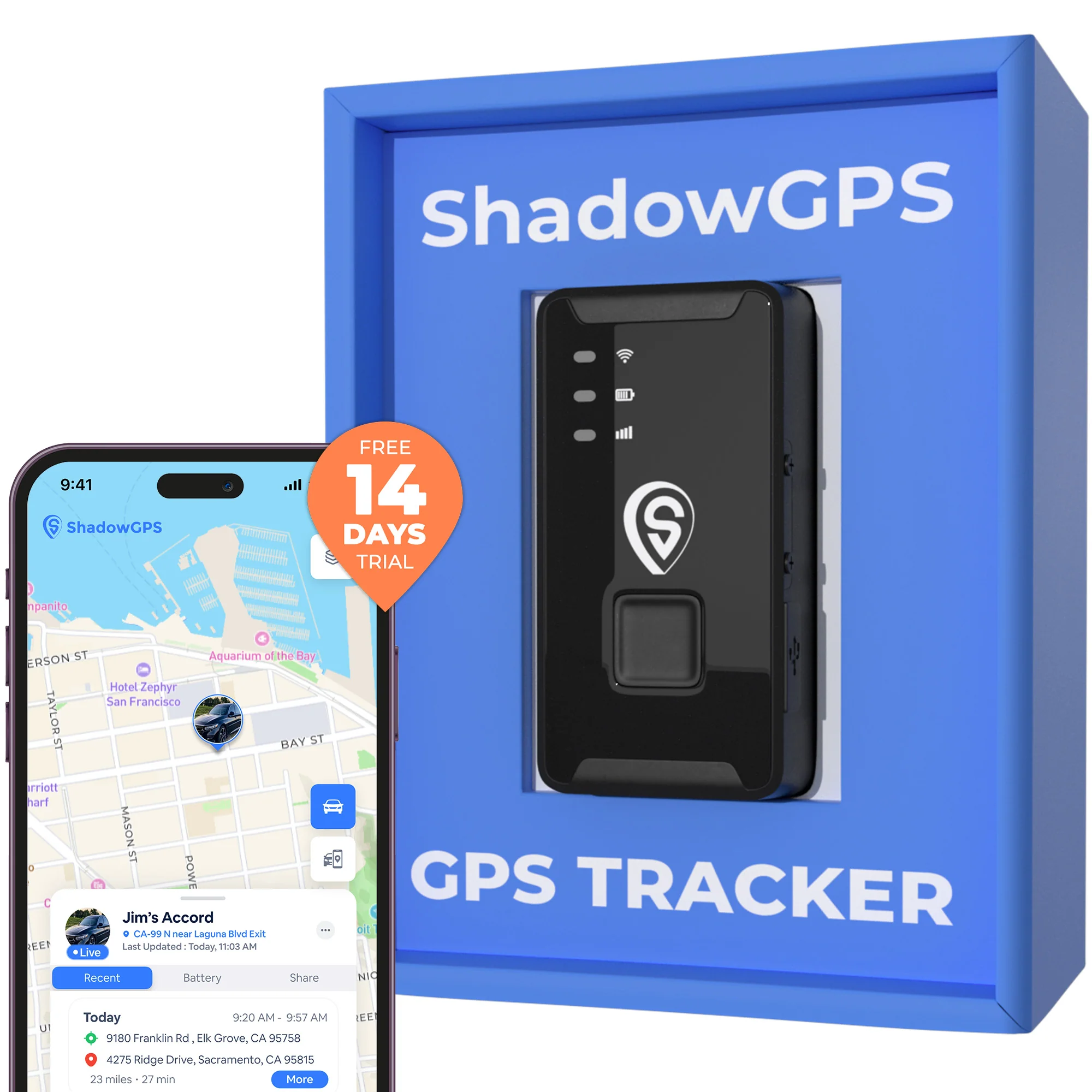
Designed as a pure “place and trace” device, the ShadowTrack Battery Powered GPS Tracker is an ultra-compact option weighing under 50 grams. It is ideal for continuous location tracking and wandering prevention without being overly intrusive.
- • Real-Time Tracking: Delivers rapid location coordinate updates every 3 to 5 seconds through a clean mobile application, allowing caregivers to see exactly where their loved one is moving.
- • Geofencing & Alerts: Caregivers can establish digital perimeters (like around a neighborhood). If the senior crosses that boundary, the app instantly fires a push notification to your phone.
- • Extended Battery Performance: Unlike typical smartwatches that need to be plugged in every single night, this device’s rechargeable battery lasts between 7 and 14 days depending on your refresh interval.
- • Passive Safety: It focuses purely on active map visibility and route history playback. Please note that it does not connect to professional emergency medical response dispatch centers.
What Is a Medical Alert System?
A medical alert system is a dedicated life-safety device designed for high-stakes speed during a sudden health crisis. Its entire workflow is built around a wearable help button that immediately connects the user to live, professional assistance.
Best Traditional In-Home System
Medical Care Alert “HOME”
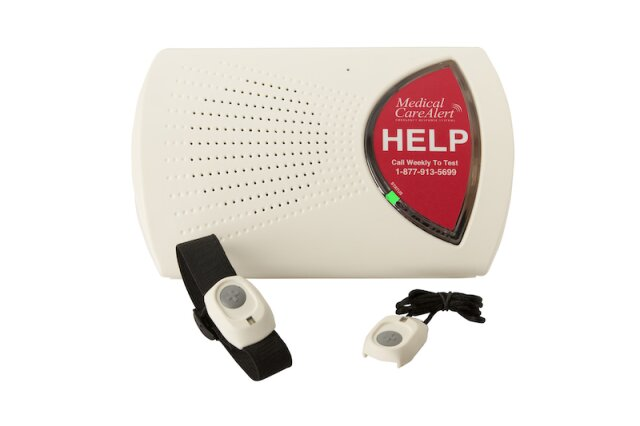
For seniors who spend the vast majority of their time inside the house, a traditional base-station setup like the Medical Care Alert HOME System is the industry gold standard.
- • 24/7 EMT-Certified Response: Pressing the lightweight (0.4 oz) wrist or neck pendant instantly triggers a whole-house two-way speaker console, connecting the senior to EMT/EMD-certified operators.
- • Massive Coverage Range: The wearable button works up to 1,000 feet away from the base station—the length of three football fields—easily covering the home, basement, and yard.
- • Zero-Maintenance Battery: The sealed button batteries never require charging and last up to 5 to 7 years, taking the charging burden completely off the caregiver’s plate.
- • Add-On Safety: It offers optional AutoFALL fall detection and works via landline or built-in cellular modules.
The Hybrid Alternative: Medical Alert with GPS Tracking
But what if your loved one splits their time between the living room and the local grocery store? That’s where hybrid units bridge the gap. If you want emergency medical dispatch and location tracking while away from home, mobile medical alert systems blend the 24/7 response of an alert button with nationwide cellular GPS tracking.
Best Mobile Hybrid System
Medical Care Alert “HOME & AWAY FLEX”
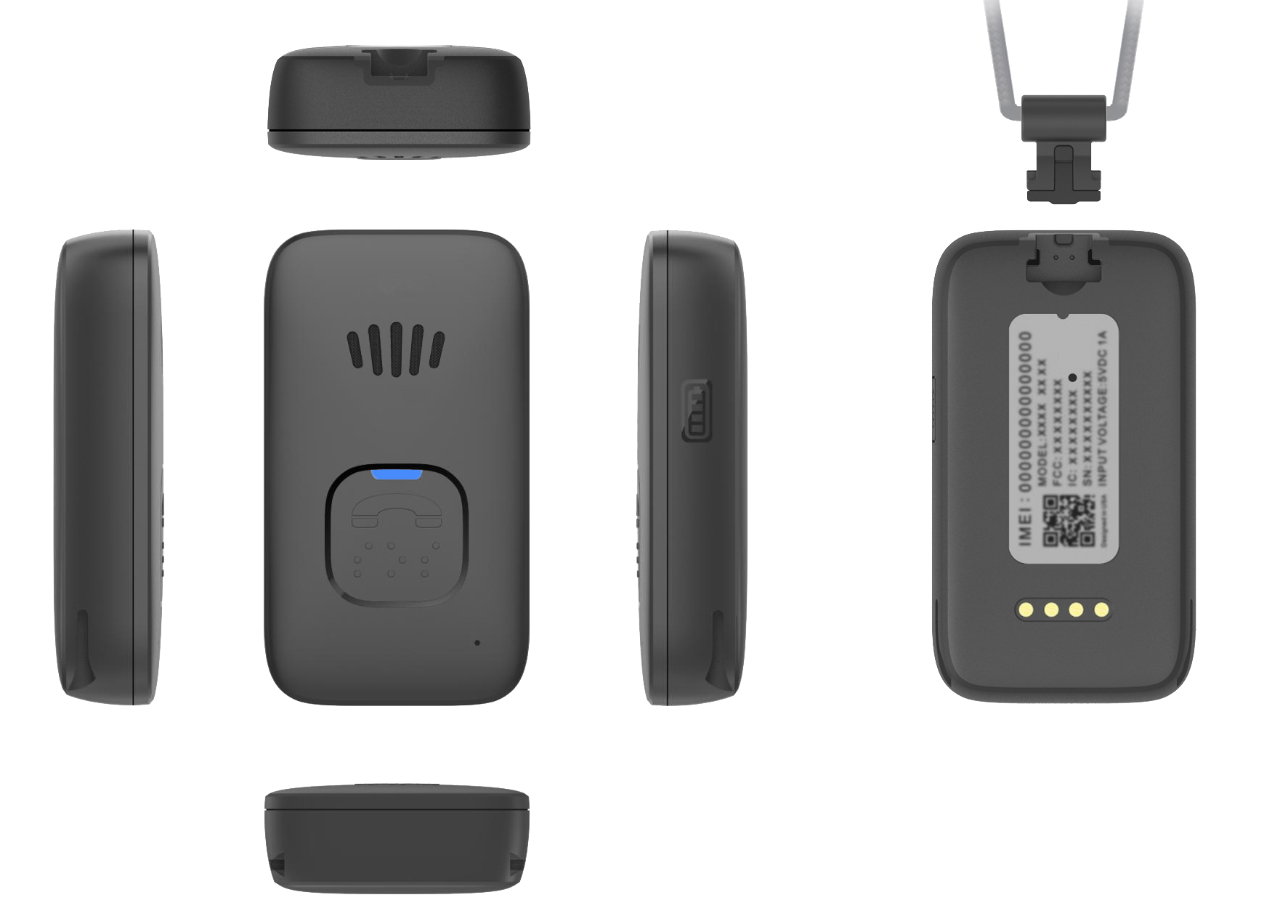
For active seniors who split their time between the living room and running errands, the Medical Care Alert HOME & AWAY FLEX seamlessly blends 24/7 emergency response with nationwide cellular location tracking.
- • Triple Location Services: Pinpoints the user’s exact position instantly during a crisis by utilizing a combined network of GPS, Wi-Fi, and cellular triangulation.
- • Caregiver Portal: Family members can log into a free Connect365 web portal to actively “ping” the current location or ring the device if it gets lost under a cushion.
- • Crisis Ready Layout: Features direct two-way voice communication right through a shower-safe pendant, alongside optional automatic fall detection.
- • Battery Life: The rechargeable battery lasts 2 to 5 days in “Advanced Mode” (which prioritizes rapid response times and regular location readiness) before needing a top-up.
Head-to-Head Comparison
Choosing the right device depends heavily on your senior’s daily habits, environment, and specific medical needs.
| Feature | GPS Tracker ShadowTrack |
Traditional In-Home System Medical Care Alert HOME |
Mobile Hybrid System HOME & AWAY FLEX |
|---|---|---|---|
| Visual Preview |
|
|
|
| Primary Focus | Continuous tracking & wandering prevention | In-home emergency dispatch & fall response | On-the-go protection with on-demand location sharing |
| Real-Time Tracking | Yes (Constant 3–5 second updates) | No | Limited (Pings via portal or upon button press) |
| Emergency Dispatch | No (Sends app alerts to family) | Yes (24/7 EMT-Certified Center) | Yes (24/7 EMT-Certified Center) |
| Battery Life | 7 to 14 days (Rechargeable) | 5 to 7 years (No charging needed) | 2 to 5 days in Advanced Mode (Rechargeable) |
| Best For | Dementia, memory loss, and wandering risks | Independent seniors living alone with physical fall risks | Active seniors who travel or run errands solo |
Quick Decision Guide: Which One to Buy?
- Choose a Dedicated GPS Tracker if: Your primary worry is cognitive decline, memory loss, or a loved one wandering away from safety. It gives you absolute visual oversight without relying on the senior to remember to press a button.
- Choose a Traditional Medical Alert if: Your loved one is mentally sharp but physically frail, stands at a high risk for accidental falls, lives alone, and spends most of their time inside the house.
- Choose a Mobile Medical Alert if: The senior is active outside the home but suffers from chronic health conditions or severe vertigo and needs nationwide emergency backup while running errands.
Other Marketplace Alternatives
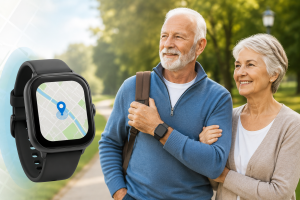
If you are looking for other wearable form factors, the market also features discrete emergency options like the Senior Smart Watch With GPS or ultra-simple mobile buttons like the SOS Smart Pendant, making it easier than ever to find a style that your loved one will comfortably agree to wear every single day.
Cost Comparison
| Cost Factor | Dedicated GPS Tracker |
Traditional In-Home System |
Mobile Hybrid System |
|---|---|---|---|
| Upfront Device Cost | $50 – $300 | $50 – $250 | $50 – $250 |
| Monthly Subscription | $10 – $40 | $20 – $60 | $20 – $60 |
| Fall Detection Cost | Rarely Available | Optional add-on fee | Optional add-on fee |
| Emergency Monitoring | No (Caregiver-reliant) | Yes (24/7 Professional Centers) | Yes (24/7 Professional Centers) |
| Geofencing Capabilities | Included (Free in app) | No | Rare (Mobile units only) |
| Two-Way Voice Fees | Sometimes included | Included in base plan | Included in base plan |
Final Thoughts
When comparing a GPS tracker vs medical alert system, there is no universal winner. The right choice depends entirely on your loved one’s specific health risks, cognitive status, and daily lifestyle.
As caregivers, we often discover that safety isn’t about forcing a single piece of technology onto an aging parent. It’s about identifying the exact vulnerabilities they face, accommodating their willingness to wear the device, and building a support system that balances their independence with your peace of mind.
Frequently Asked Questions
Is a GPS tracker better than a medical alert system?
Not luxury vs. necessity—they serve different needs. GPS trackers excel at continuous location monitoring and wandering prevention, while medical alert systems are engineered to provide immediate emergency response and EMS dispatch during a sudden physical crisis.
Do medical alert systems track location?
Traditional home-based lifeline buttons do not track location. However, modern mobile medical alert systems include cellular connectivity and built-in GPS capabilities to pinpoint a user’s exact location if they press the button while away from home.
Which device works best for dementia patients?
A dedicated GPS tracker is generally the superior option for dementia wandering prevention. Because spatial disorientation can happen quickly, these devices allow caregivers to actively monitor boundaries using geofencing without relying on the senior to remember to press an SOS button.
Are there devices with both GPS and fall detection?
Yes. Many modern mobile medical alert systems act as hybrid devices, combining professional emergency monitoring, automatic fall detection, and on-demand GPS location sharing into a single wearable pendant or smartwatch.
How much do these systems cost monthly?
GPS trackers typically require a cellular data subscription costing between $10 and $40 per month. Medical alert systems range from $20 to $60 per month, depending on whether you opt for basic landline home monitoring or advanced mobile protection with fall detection.
Does Medicare cover GPS trackers or medical alert systems?
In most cases, original Medicare (Part A and Part B) does not cover standard GPS trackers or medical alert systems. However, some private Medicare Advantage (Part C) plans offer supplemental safety benefits that may cover a portion of the equipment or monthly fees.
Can a GPS tracker call 911?
Most standard GPS trackers cannot directly dial emergency services. Some include basic SOS buttons, but these typically send automated push notifications, text messages, or direct cellular calls to designated family caregivers rather than an emergency dispatch center.
How often do GPS trackers need charging?
Most wearable GPS units require charging every 1 to 5 days, depending on how frequently the device pings its coordinates. This is a significantly higher charging demand than a home-based medical alert button, which features an internal battery that lasts for years without maintenance.
Are medical alert systems worth the monthly fee?
For seniors who live completely alone, experience mobility issues, or face a high risk of dangerous falls, most families find that the immediate access to a professional, 24/7 monitoring center fully justifies the ongoing monthly investment.