

If you have noticed that walking around the house or running errands feels a bit less steady lately, you are certainly not alone. Maybe you find yourself holding tightly to walls, leaning on the grocery cart, or sitting down more often just to catch your breath. When balance changes, finding the right support can give you back your confidence and keep you moving safely.
When you start looking into walking aids, the choices can feel overwhelming. Standard walkers, rolling walkers, transport chairs—it is easy to get lost in all the medical terms.
Put simply, a rollator is a four-wheeled walking aid that comes with handbrakes, a built-in seat, and handlebars. Unlike a traditional walker that you have to lift up with every step, a rollator glides smoothly forward on wheels. It is built for anyone who can walk independently but needs a little extra balance support, a guard against fatigue, and a comfortable place to sit down whenever and wherever they need a rest.
Throughout this guide, we will break what is a rollator, how they compare to standard walkers, the different types available, key safety features to look for, and how to find a model that fits your daily routine.
What Exactly is a Rollator?
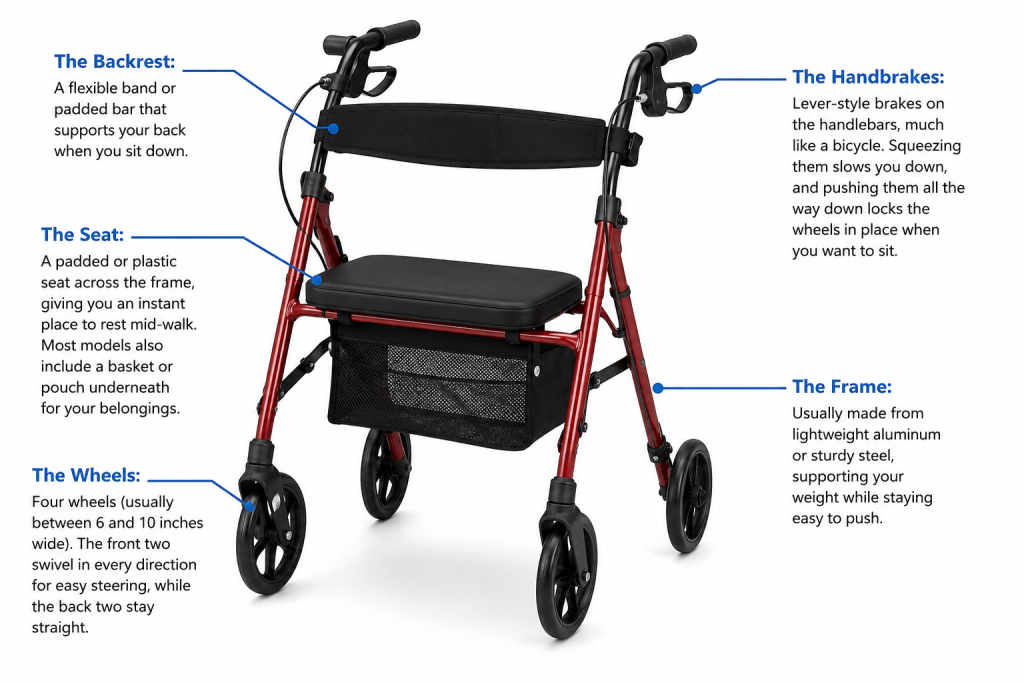
When people talk about a rollator, they usually mean a rolling walker with four wheels. While traditional walkers offer a sturdy, rigid frame with rubber tips on the legs, a rollator trades those stationary legs for wheels to keep you moving smoothly.
The Main Parts of a Rollator
- The Frame: Usually made from lightweight aluminum or sturdy steel, supporting your weight while staying easy to push.
- The Wheels: Four wheels (usually between 6 and 10 inches wide). The front two swivel in every direction for easy steering, while the back two stay straight.
- The Handbrakes: Lever-style brakes on the handlebars, much like a bicycle. Squeezing them slows you down, and pushing them all the way down locks the wheels in place when you want to sit.
- The Seat: A padded or plastic seat across the frame, giving you an instant place to rest mid-walk. Most models also include a basket or pouch underneath for your belongings.
- The Backrest: A flexible band or padded bar that supports your back when you sit down.
Rollator vs. Standard Walker: What is the Difference?
One of the most common questions people ask is whether they need a traditional walker or a rollator. The right choice depends entirely on your balance, upper body strength, and where you plan to use it.
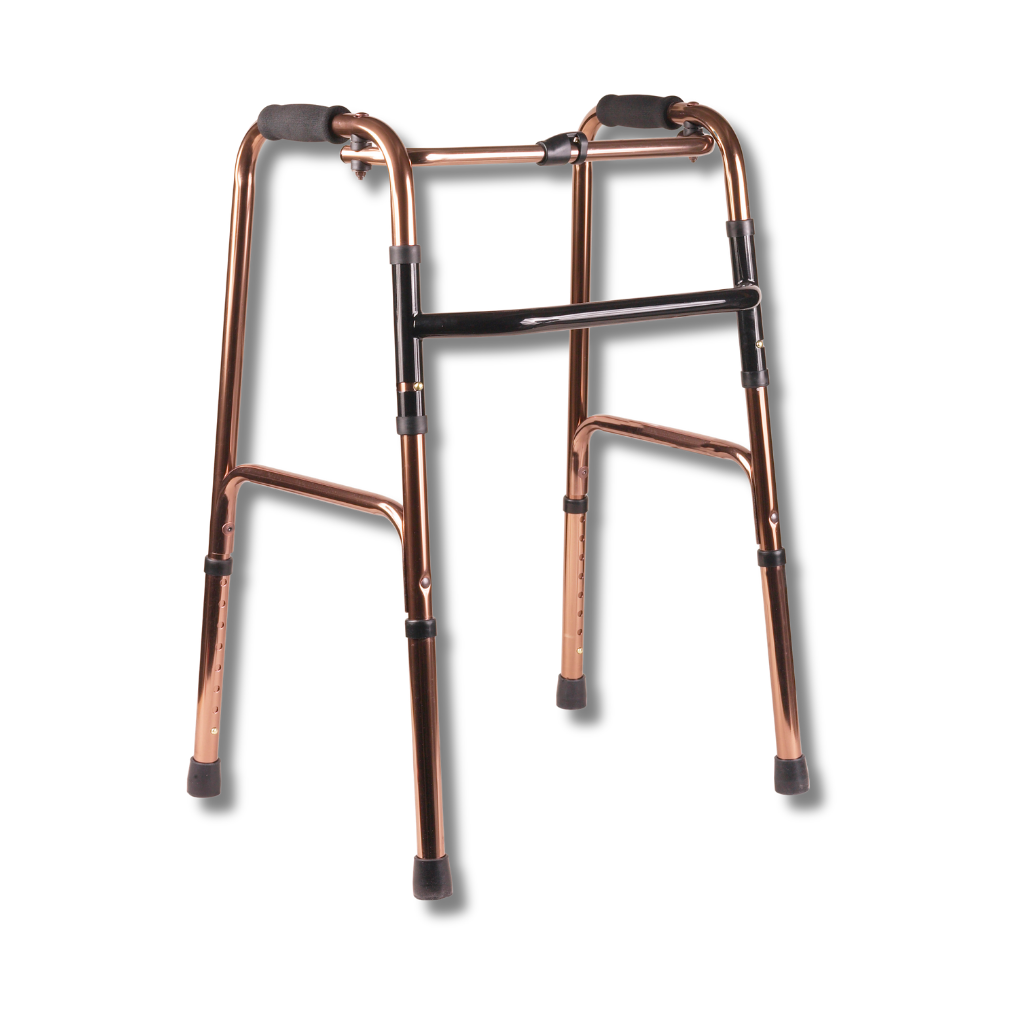
Traditional Walkers
A standard walker has no wheels (or sometimes just two small front wheels) and requires you to pick the device up and place it forward with each step.
- Best For: Individuals who need maximum weight-bearing support due to significant balance issues.
- The Catch: They require good upper-body strength and coordination. If you tend to shuffle your feet, lifting a standard walker can cause you to trip.
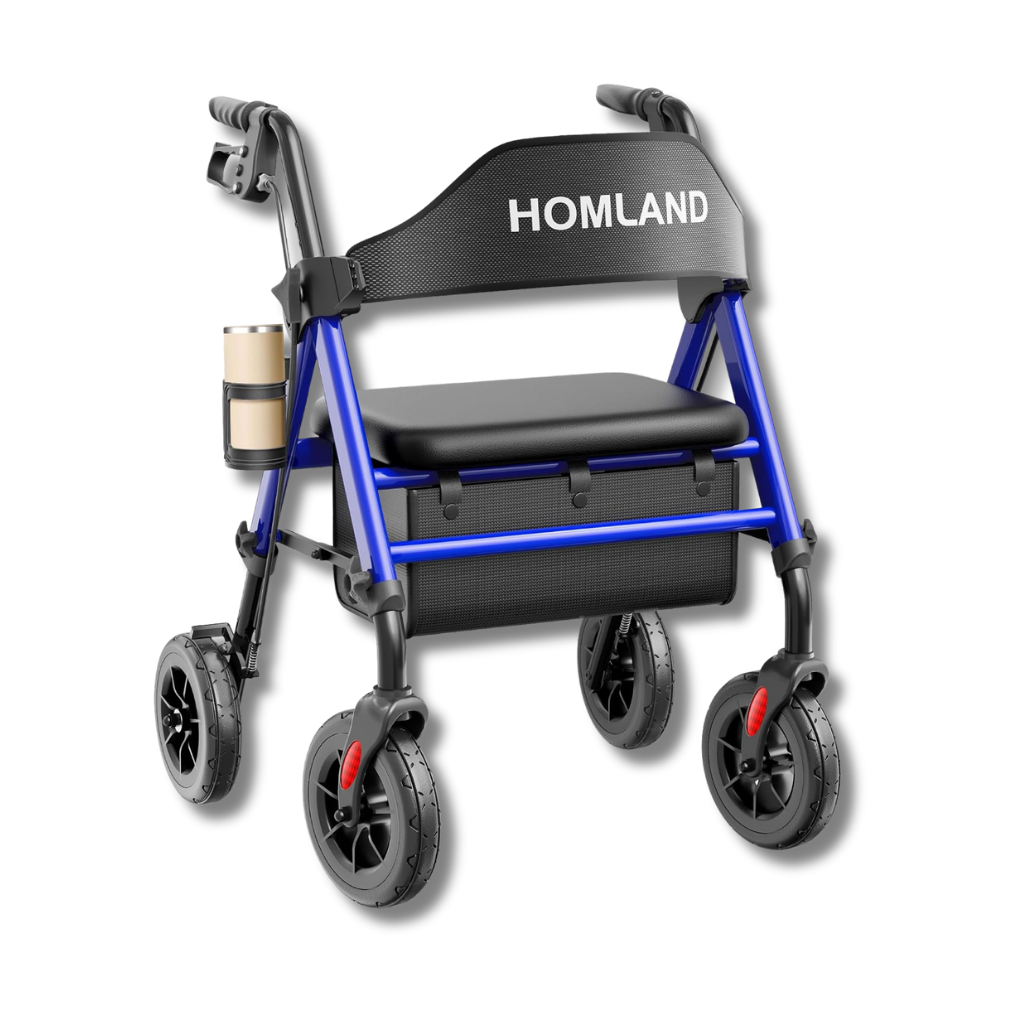
Rollators
Rollators roll continuously. Instead of lifting the device, you simply push it along as you walk.
- Best For: Anyone who can stand upright and walk well, but deals with fatigue, mild balance concerns, or limited endurance.
- The Catch: Because they roll freely, you need reliable hand strength to use the brakes and steady coordination so the device does not move too fast ahead of you.
The Different Types of Rollators
Not all rollators are built the same way. Manufacturers design different models to match various lifestyles, heights, and walking surfaces.
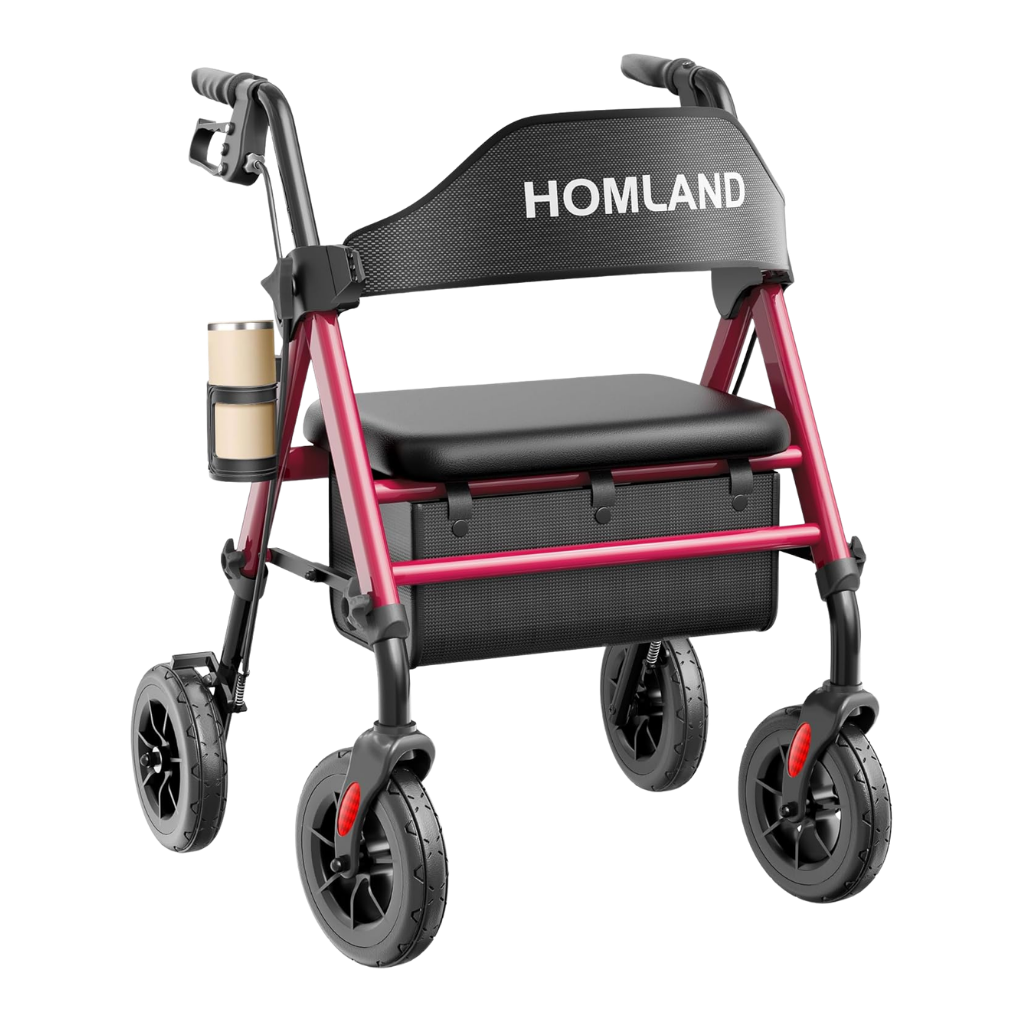
1. Standard Four-Wheel Rollators
This is the most popular model you will see. It features four large wheels, a padded seat, and a storage basket underneath. It is very stable and versatile, working wonderfully both inside your home and out on paved walkways.
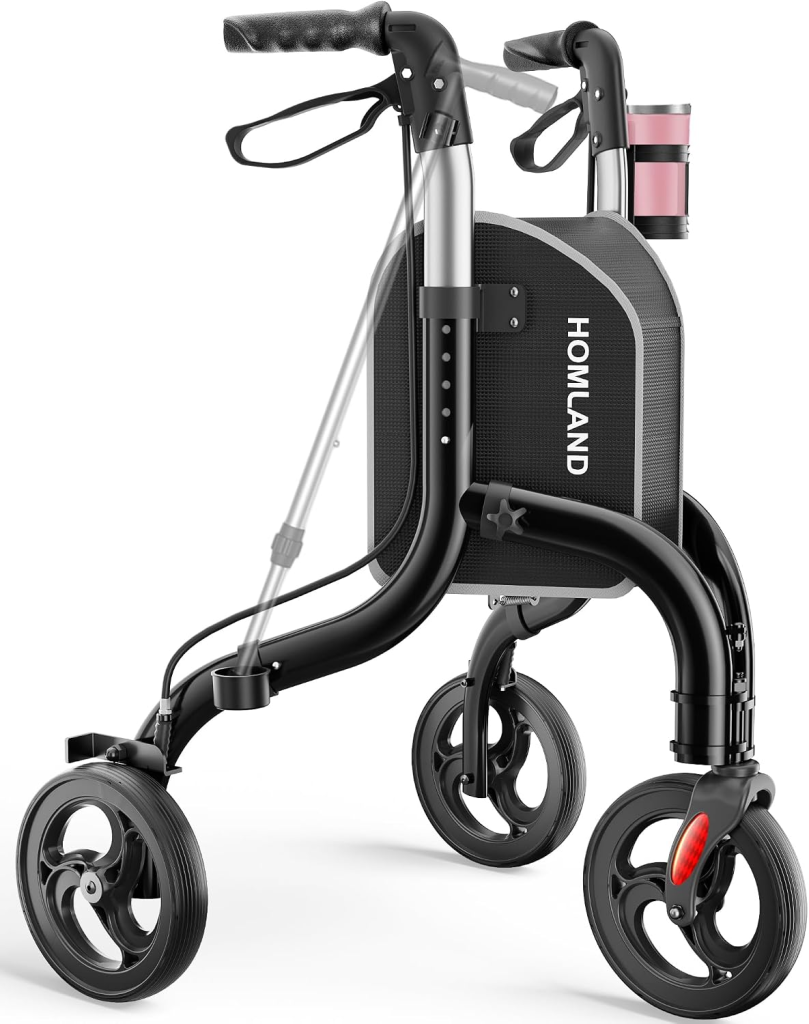
2. Three-Wheel Rollators (Tri-Walkers)
Instead of a square four-wheel base, these have one front wheel and two back wheels, forming a triangle shape.
- Pros: They are narrower, making them much easier to steer through tight hallways, small bathrooms, or crowded grocery aisles.
- Cons: They do not include a built-in seat, and they are less stable than four-wheel models because the base is smaller. They are best if you do not need to sit down frequently while out.
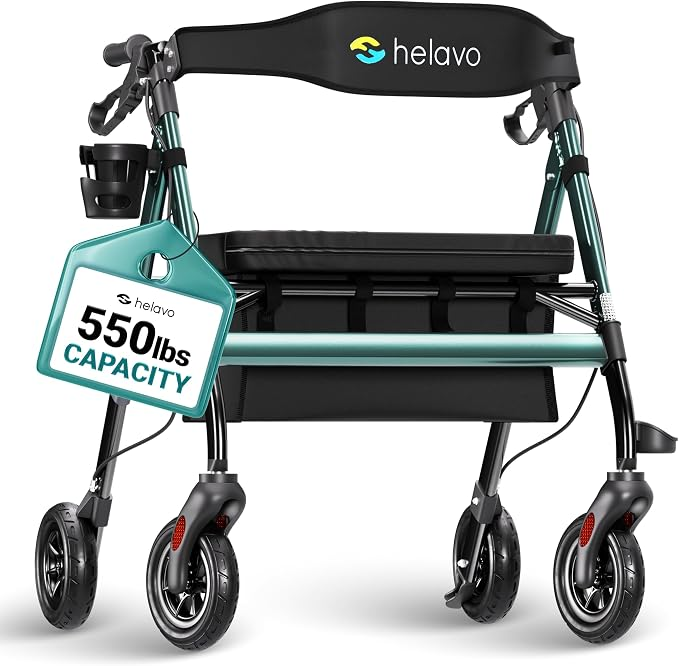
3. Heavy-Duty (Bariatric) Rollators
Built with reinforced steel frames, wider seats, and sturdier wheels, these models support higher weight capacities—often up to 400 or 500 pounds—while offering a wider base for extra stability.
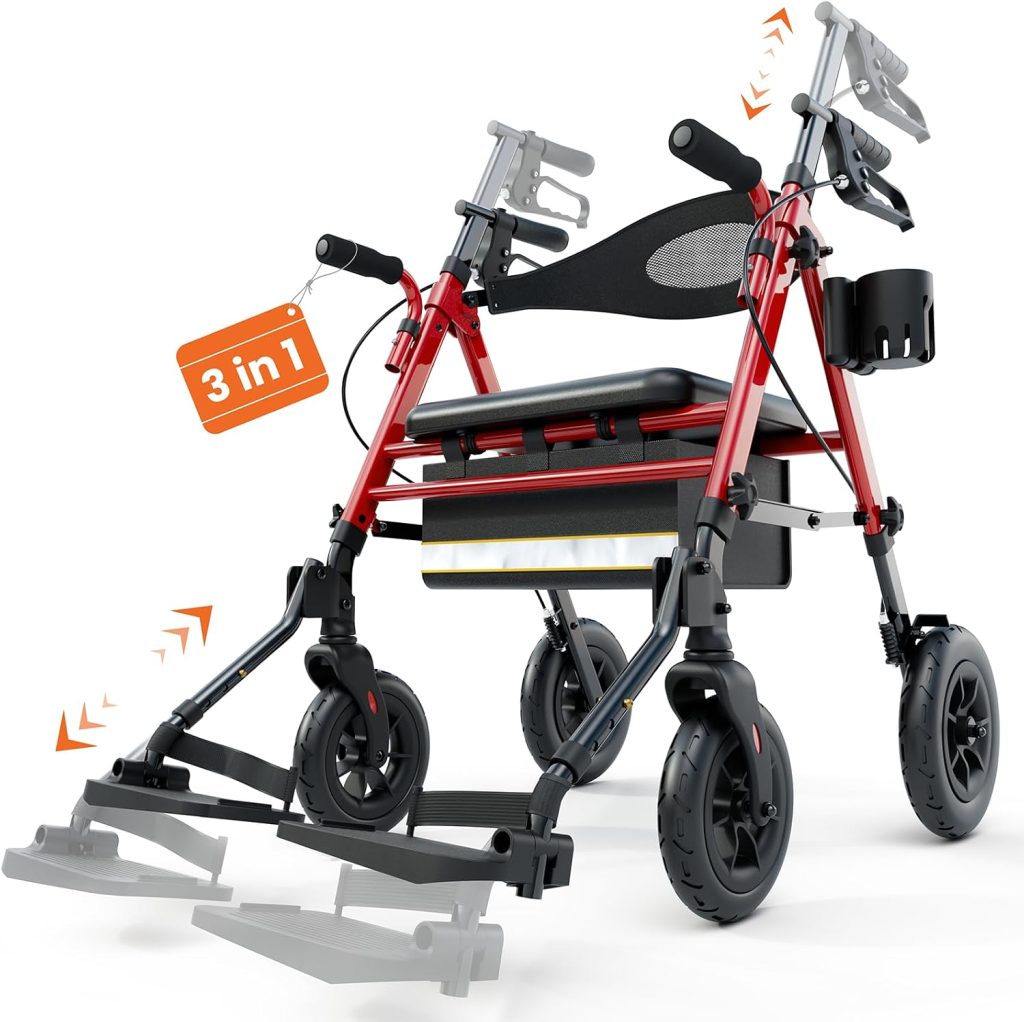
4. Transport Rollators (Hybrid Models)
Some advanced models combine a rollator with a transport wheelchair. They feature removable footrests and special push handles, allowing a family member or caregiver to push you like a wheelchair if you get tired halfway through an outing.
My Top Picks for Rollators
Here is an honest review of four leading options of rollators trusted by professionals and family caregivers:
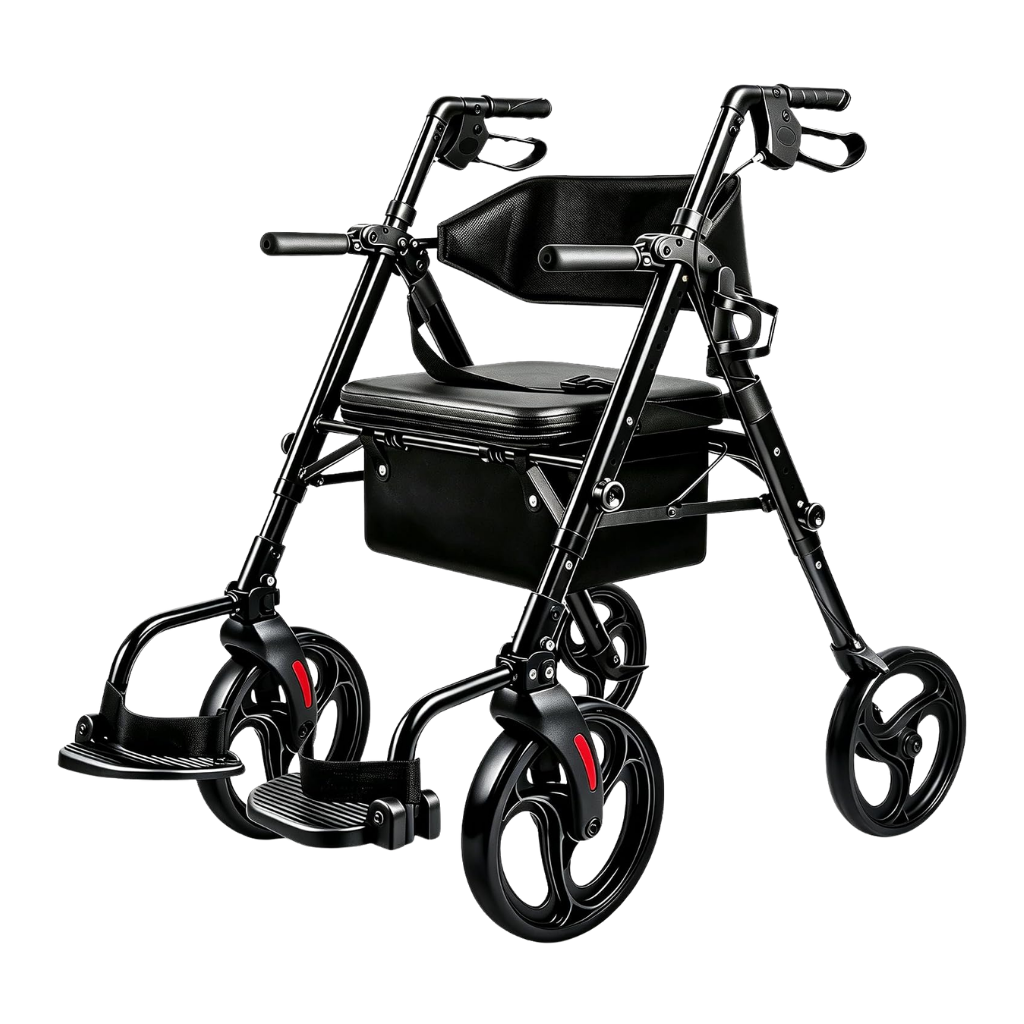
FlyingJoy 2-in-1 Rollator Walker & Transport Chair
Best For: Active seniors who need standard walking support but want the flexibility of a transport chair for longer outings.
Pros
10-inch wheels handle outdoor terrain effortlessly; seamless 2-in-1 chair conversion.
Cons
Slightly heavier frame due to dual-functionality design.
HOMLAND Lightweight Foldable Rollator Walker
Best For: Daily routine use, easy car loading, and seniors prioritizing extra seating comfort with convenience features.
Pros
Ultra-manageable 17 lb frame; wide comfortable seat with handy cup holder included.
Cons
Standard frame width requires careful maneuvering in narrow doorways.
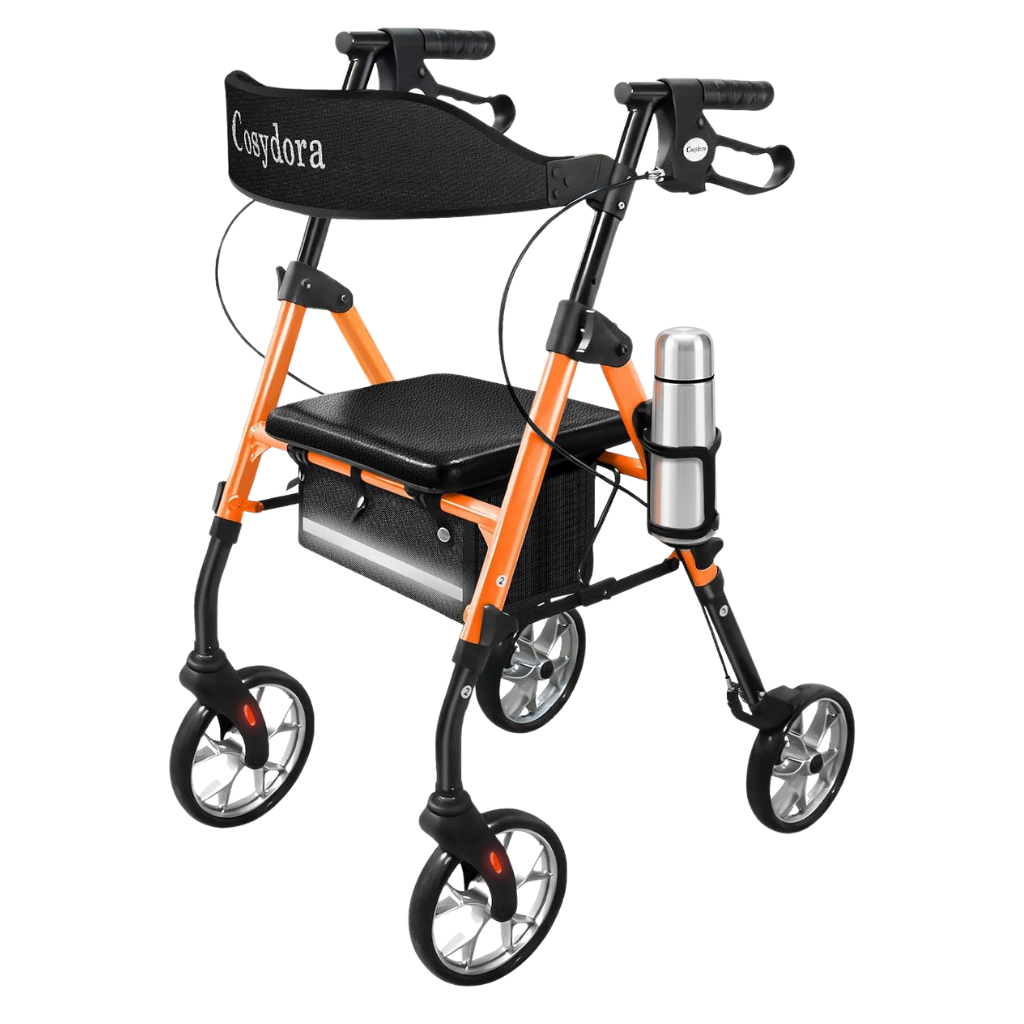
Cosydora Heavy-Duty Ultra Lightweight Walker
Best For: Seniors who require high weight-capacity stability without sacrificing light portability or stylish visibility.
Pros
Supports 350 lbs while weighing only 15 lbs; dual height adjustability for custom fit.
Cons
Vibrant colorway may not suit users preferring traditional neutral colors.
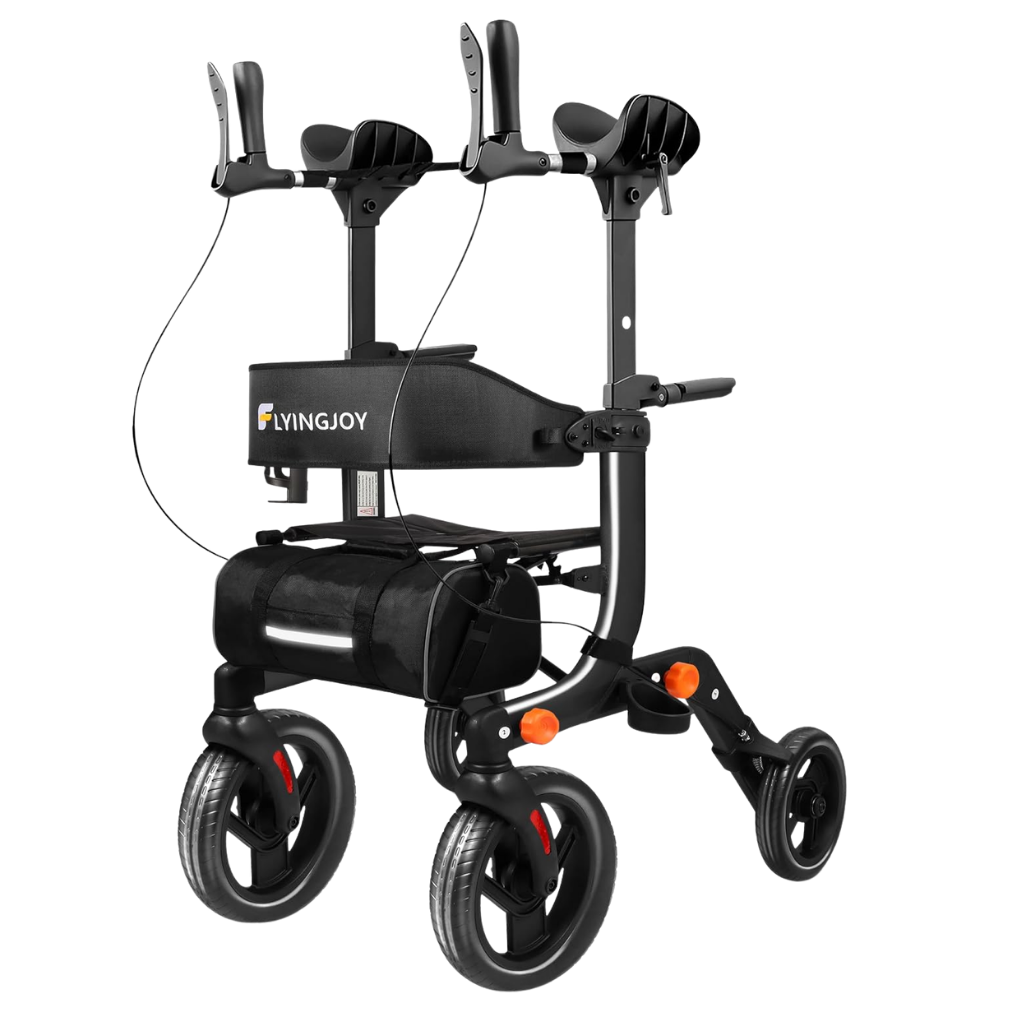
FlyingJoy Lightweight Upright Rollator Walker
Best For: Seniors with back pain or posture issues who benefit from upright armrests, stable terrain navigation, and built-in cane storage.
Pros
Upright design relieves lower back strain; large front wheels easily roll over obstacles.
Cons
Upright armrest frame makes it slightly bulkier when folded than basic rollators.
Key Features to Look For When Buying a Rollator
Small design details make a massive difference in whether a mobility aid feels comfortable and easy to use every day.
Wheel Size Matters
- Small Wheels (6 inches): Great for indoor use on smooth floors and navigating tight spaces. However, they can catch easily on cracks in sidewalks or gravel.
- Large Wheels (8 to 10 inches): Essential if you love taking walks outside, visiting parks, or dealing with uneven pavement and grass. Larger wheels roll over outdoor bumps with much less effort.
Finding the Right Height
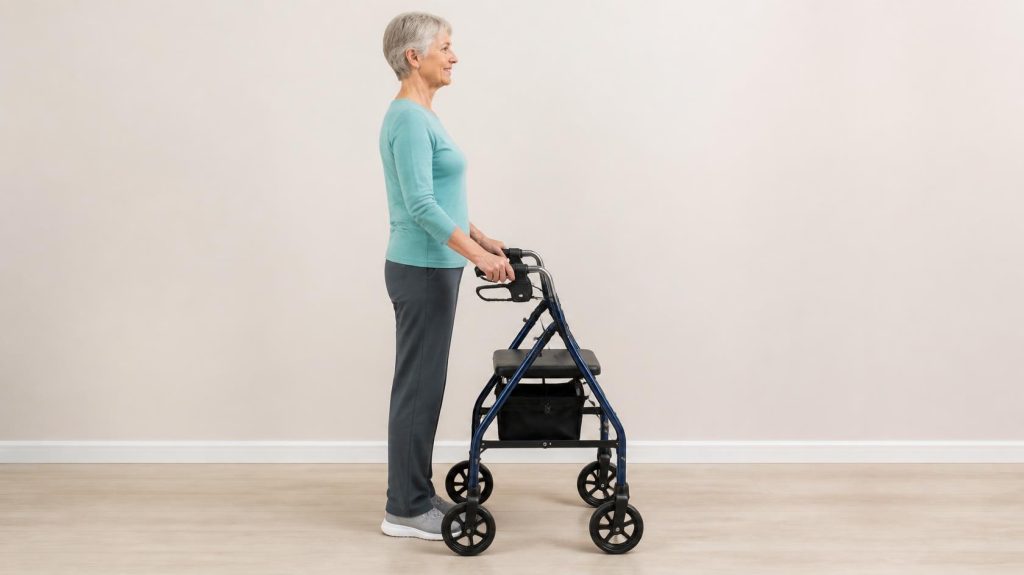
A rollator that is too low will force you to hunch over, causing back pain and poor posture. One that is too high forces you to reach upward, reducing your control and stability.
How to check your height: Stand up straight with your shoes on, arms hanging naturally at your sides. The top of the rollator handgrips should line up right with the crease of your wrist. When you hold the handles, your elbows should bend at a comfortable 15-to-20-degree angle.
Easy-to-Use Brakes

Check how easy the handbrakes are to squeeze. If you experience arthritis or hand weakness, stiff brake levers can be frustrating. Look for ergonomic brake loops that engage smoothly with minimal finger pressure.
Important Safety Reminder: Testing the Brakes
Before you take your new rollator outside, practice clicking the parking brake indoors. Always make sure the parking brake is pushed down until it locks completely before you try to sit on the seat. Sitting down on a rollator with unlocked wheels is a leading cause of accidental slips and falls.
Final Thoughts
Choosing the right mobility aid is a wonderful step toward keeping your independence, staying active, and feeling secure wherever you go. A rollator bridges the gap between walking on your own and having reliable support, offering freedom of movement paired with a comfortable place to rest whenever you feel tired.
By focusing on proper height, matching the wheels to your favorite walking paths, and practicing safe braking habits, you can enjoy your daily walks with complete peace of mind.
Frequently Asked Questions
What is the main purpose of a rollator?
The primary purpose of a rollator is to provide mobility support and balance assistance for anyone who can walk independently but experiences fatigue, mild instability, or endurance limits. Unlike standard walkers that must be lifted with each step, rollators glide smoothly on four wheels. They also feature a built-in seat and a storage basket, giving you a safe place to rest whenever you need a break during shopping trips or walks in the neighborhood.
Can a rollator be used safely indoors?
Yes, rollators can be used indoors, though you should measure the width of your doorways and hallway turns before purchasing. Standard four-wheel rollators usually measure between 24 and 28 inches wide. If your home has narrow hallways or tight bathroom doors, a three-wheel rollator or a narrow indoor-specific model with smaller wheels might be a more practical choice to prevent scraping walls or bumping into furniture.
How do you properly adjust the height of a rollator?
To adjust your rollator correctly, stand up straight wearing your usual walking shoes with your arms hanging relaxed at your sides. Adjust the handle height so that the top grip aligns exactly with the crease of your wrist. When your hands rest on the handles, your elbows should bend at a comfortable 15 to 20-degree angle. Having the handles at the right height prevents hunching over and reduces strain on your shoulders and lower back.
Is it safe to sit on a rollator seat while someone pushes it?
No. Standard rollators are never designed to be used as transport wheelchairs while someone else pushes you. The frame construction, small wheels, and braking system are built to support a stationary seated person taking a resting break, not for motion while occupied. If you need a device that functions both as a rolling walker and a push-along wheelchair, look specifically for a hybrid transport rollator equipped with footrests and caregiver push handles.
How do you lock the brakes on a rollator?
Most rollator brakes operate like bicycle handbrakes. To slow down while walking, you gently squeeze the levers upward. To lock the wheels in place—which is mandatory before sitting down or standing up—you push the brake levers downward until they click and lock into a fixed position. To release the parking brake, simply pull the levers back up to the neutral position. Always practice this locking motion indoors on a carpeted surface first.
Are rollators covered by Medicare or insurance?
In many cases, standard walkers and rollators are partially or fully covered by Medicare Part B or private insurance providers if they are prescribed by a doctor as medically necessary equipment. You will need to obtain a face-to-face examination and a formal written prescription from your primary care physician, and purchase the equipment through an approved supplier to qualify for reimbursement.
What is the weight limit for standard rollators?
Standard adult rollators typically support a weight capacity between 250 and 300 pounds. However, heavy-duty or bariatric rollators are readily available for individuals requiring extra structural support, featuring wider seats and reinforced steel frames designed to safely support anywhere from 400 to 500 pounds. Always review the manufacturer’s specified weight limit before purchasing to ensure your safety and stability.
How do you fold and transport a rollator in a car?
Most modern rollators feature a simple folding mechanism. Typically, you lift the fabric or padded seat cushion, pull upward on a central strap or folding bar located beneath the seat, and the frame collapses inward from side to side. Once folded, most models easily fit into the trunk of a car, either laid flat or stood upright on the floorboard behind the front passenger seat for quick access when you reach your destination.